
Carry On vs Checked Bag: How to Decide Before You Pay the Fee
Trip length, airline type and what you pack decide it. The rule we use, the official numbers behind it, and the trips that showed us where it breaks.
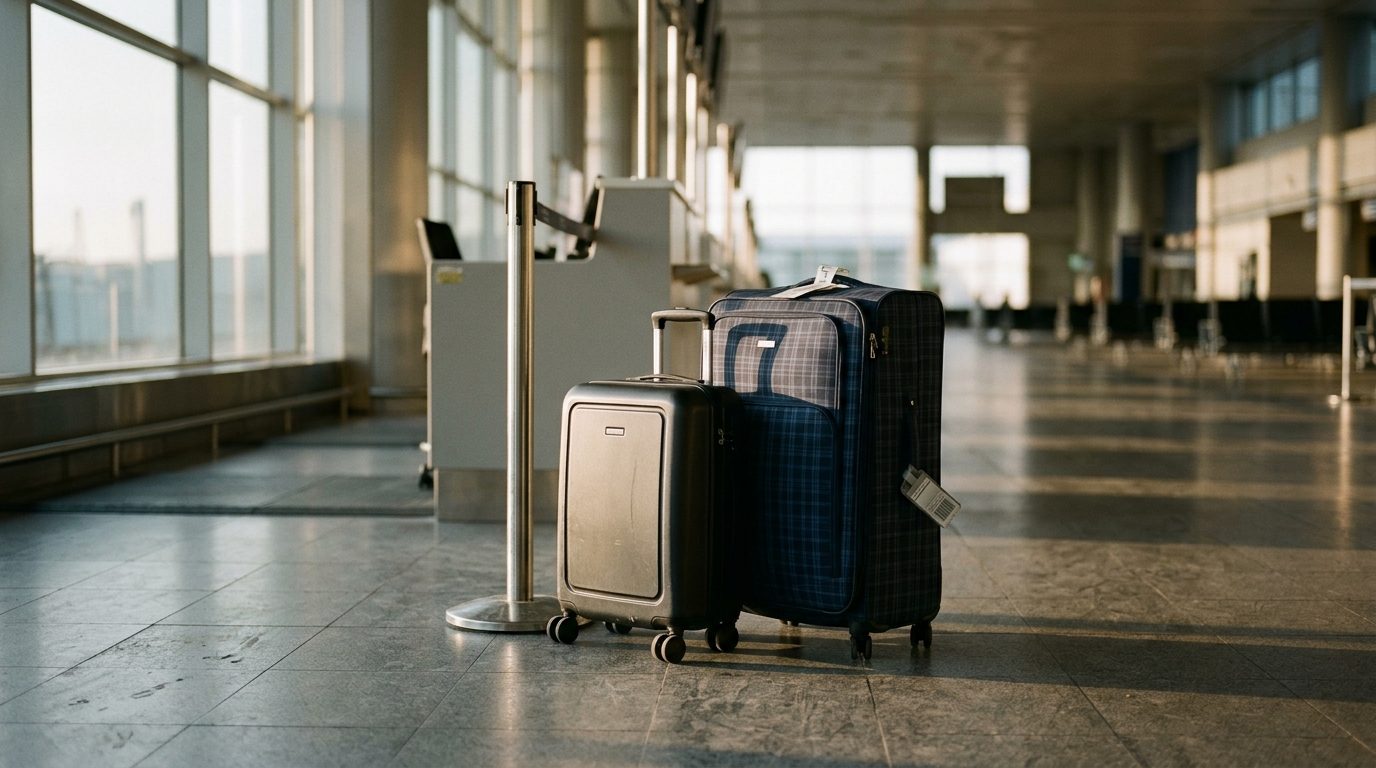
Carry on vs checked bag is a decision most of us make at the booking screen, with a fee staring back and no real rule to apply. I did three and a half weeks across the US on carry-on only. The two-hour connection in LA was easy. The hard part was every repack after that, and coming home with no room for anything I bought.
That trip is the reason this page exists. Not because carry-on only is the right answer, but because it was the right answer for that trip and the wrong one for a five-day villa stay in Bali. The difference was never the bag. It was the trip.
So this is a decision page, not a packing list. It gives you a rule you can apply in a minute, the published size and weight numbers behind it, and the honest costs on both sides. If you land on carry-on, the cases we rate are on our best carry-on luggage page.
Carry On vs Checked Bag: The 60-Second Answer
What Actually Goes Where
A carry-on rides in the cabin with you, in the overhead bin. A checked bag goes in the hold and comes back on the carousel. That sounds obvious, and it is, but every rule on this page follows from it: the cabin has a size limit on most airlines and a weight limit on some, and the hold has a weight limit on almost all of them.
The numbers below come from the carriers’ own baggage pages and the TSA, read on 2 November 2026. Airlines change them, so treat this as the shape of the rules and check your own airline before you fly.
Carry-on vs checked bag at a glance (as published by the carriers)
| What | Carry-on bag | Checked bag |
|---|---|---|
| Where it goes | Overhead bin, with you | Aircraft hold, collected at the carousel |
| Typical US size limit | 22 x 14 x 9 in (56 x 35 x 23 cm) at United and Delta, handles and wheels included | 62 linear inches (158 cm) in total at United, handles and wheels included |
| Typical weight limit | None published at United or Delta; 35 lb at Frontier; 7 kg on a Jetstar Starter fare | 50 lb (23 kg) in United Economy; 40 lb at Frontier before overweight fees apply |
| Liquids | 100 ml (3.4 oz) per container, all in one quart-size bag (TSA) | No cabin rule applies; full-size bottles go here |
| What it costs | Included on most full-service fares; a paid extra on budget carriers and most basic fares | Usually a fee per bag per direction, cheapest when prepaid |
| The risk | A gate check when the bins fill, or an over-limit bag at a budget gate | A delayed or lost bag, and the wait at the carousel |
Sources: the TSA liquids rule; United carry-on bags and United checked bags; Delta carry-on baggage; Frontier bag options; Jetstar baggage. Jetstar has already flagged new carry-on rules from 2 February 2027, which is the kind of change this table will not catch for you.
Two lines in that table decide more trips than the rest. The liquids rule means anything over 100 ml, from a full bottle of sunscreen to a bottle of wine coming home, has to be checked. And the weight line is where the two kinds of airline part ways: United and Delta publish a cabin size and no cabin weight, while Frontier and Jetstar publish both, and Jetstar’s standard allowance is seven kilograms shared across two items.
The Real Cost of Each
The fee is the visible cost. Checked bag fees on US carriers depend on the route, the cabin and the date you bought the ticket. United’s published fees for a bag on a basic fare bought from 3 April 2026 start at US$45 prepaid, US$50 at the counter and US$75 at the gate, and Frontier charges US$75 per direction for a checked bag that weighs in between 41 and 50 pounds. The pattern matters more than the numbers: the earlier you pay, the less you pay, and the gate is always the most expensive place to find out.
The hidden cost of carry-on only is time and space. Every pack has to fit, which on a long trip means late-night repacks and early-morning repacks, and there is no room for anything you buy on the way. The hidden cost of checking is the carousel: twenty to forty minutes at the far end of every flight, and a small but real chance your bag takes a different route from you.
On the trips behind this page nobody has ever been forced to gate-check a bag or pay for one at the airport, and the reason is not luck. The decision was made at booking, with the airline’s own numbers open, not at the gate with a queue behind.
When Carry-On Only Wins
Carry-on only wins when the trip moves. The longest carry-on-only trip behind this page ran three and a half weeks: Melbourne to Los Angeles, a two-hour connection to Chicago, then Orlando and Houston, then home. The LA transfer, with a terminal change, was the moment the decision paid for itself. No carousel, no re-check, just a walk to the next gate.
It wins on short, cheap, shared trips too. Florence to Bologna to Manchester in about 36 hours, sleeping in shared accommodation, was a backpack and nothing else. Price decided that one: a checked bag would have cost more than it carried.
The conditions that make it work are laundry and a system. You pack for about a week, wash on the way and wear things more than once, and the system matters more than the bag. As JL puts it: “I always thought packing cubes were unnecessary. Then I used my partner’s on a trip to Auckland.” The sets that hold up are on our packing cubes page.
The honest limit is what you cannot bring home. On that US trip there was no room for anything bought along the way, and that was the price of moving fast. No regret, but it is a price, and you should know it before you choose.
When You Should Check a Bag
Check a bag when the trip stays still. A spur-of-the-moment five-day villa stay in Bali, with a direct transfer from the airport, got checked luggage for comfort and lost nothing by it: the bag went from carousel to car to a secure room and stayed there for the week. Long-haul trips and longer stays get the larger hard case for the same reason. When you are not moving every two days, the carousel is a one-off and the space is worth it.
The general cases are the ones the table already pointed to. Winter gear and anything bulky. Full-size liquids, whether that is sunscreen for a family or a bottle for a friend. Gifts going out and souvenirs coming home. Family travel, where one checked bag replaces three overstuffed carry-ons and an argument over the bin. If two or more of those apply, check the bag and stop thinking about it.
Budget Airlines Change the Maths
On a full-service carrier the carry-on decision is mostly about size. On a budget carrier it is about weight, and that is where experienced travellers get caught, because a bag that has never been questioned on a legacy airline can be over the limit by a wide margin on a low-cost one. Jetstar’s Starter fare allows seven kilograms across two items, with more only if you buy it in advance; Frontier sells the carry-on as an extra and caps it at 35 pounds.
The two carriers that have been strictest on the trips behind this page are Ryanair and Jetstar, with an AirAsia near miss for good measure. The rule we took away is simple: they are budget carriers, so if you flirt with the size and weight limits you should expect to get stung. Buy the allowance you need when you book, or fly carry-on only with a bag you have actually weighed. How strict each airline really is deserves its own page, and it is coming.
What to Keep On You Either Way
Whether the big bag is in the bin or the hold, a small set of things never leaves your seat. Charger cables. The iPad or laptop, sometimes both. Downloaded long-form audio or video, because a thirteen-hour leg is long and the seat-back screen is a gamble. A snack. Spare socks, and on a long haul, a full change of clothes.
That last one earns its place on any trip that crosses climates. Melbourne to Rome via Singapore and Dubai started at close to 35 degrees, went humid in Dubai and landed in the high teens; a change and a shower in the Dubai lounge made the final leg a different flight. Medication, travel documents and chargers never go in a checked bag, on any airline, for any trip.
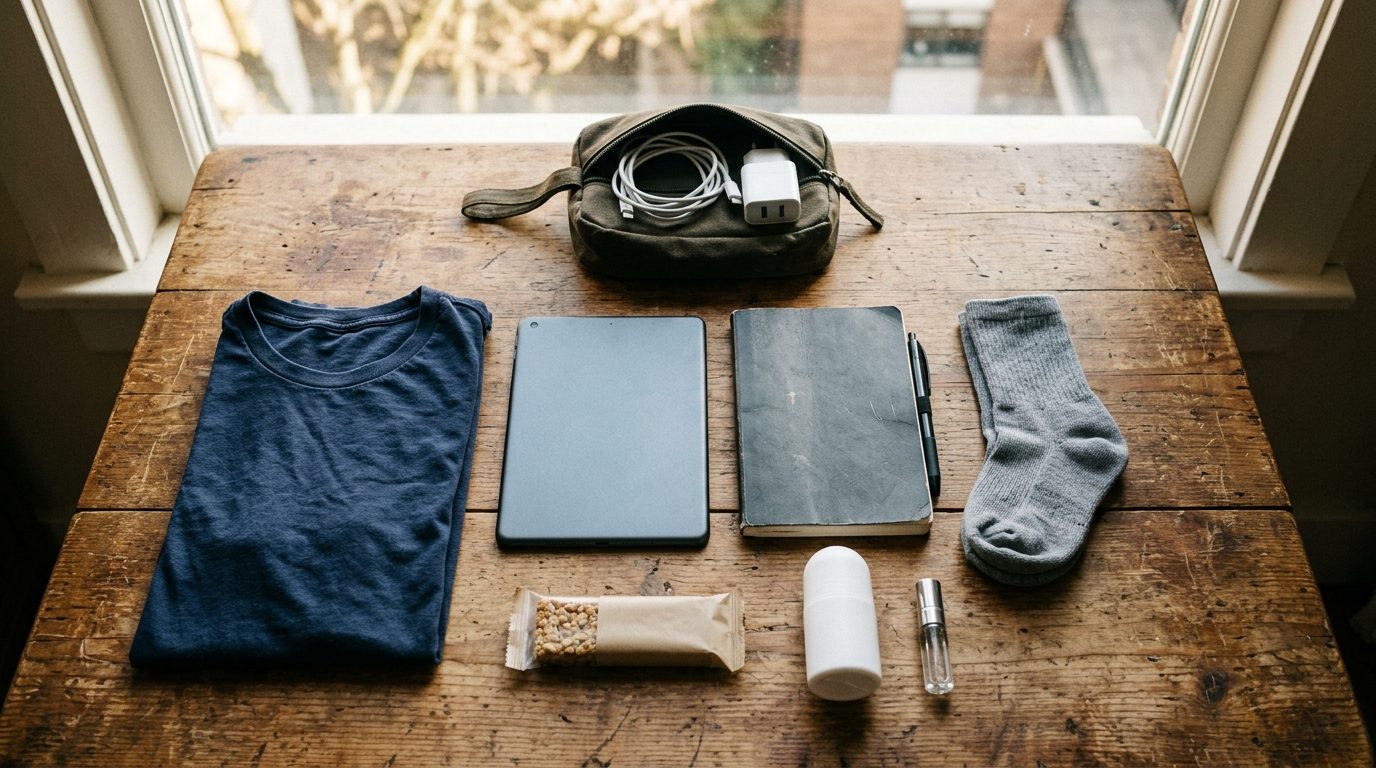
Liquids, for the record: a roll-on deodorant and a small refillable atomiser for cologne, both well under 100 ml, which is why nothing has ever been taken at a checkpoint.
Hard Case or Backpack for Your Carry-On?
If you have landed on carry-on, the next decision is the bag itself, and the answer again depends on the trip. For a two-day domestic work trip, a hard-shell carry-on: it stands up, it protects a laptop and a jacket, and it rolls through a terminal. For an overnight or a 36-hour trip, a backpack, because you will be carrying it up stairs and onto trains. For long-haul and longer stays, the larger hard case, checked, with the same under-seat kit on top.
The cases we rate are on our best carry-on luggage page, the bags on our travel backpacks page, and the rest of the kit in our travel gear guides. Hard side against soft side gets its own comparison soon.
If you want one case to start with, this is the one we rate best overall across every carry-on we have compared. We have not tested it ourselves; the rating is Amazon’s customer rating and the caveats come from what reviewers consistently report.
Samsonite Freeform Hardside Carry-On Spinner 21-Inch
Best for: One hard case for domestic and US-style carry-on limits, with a lock and real wheels
A 34-litre polypropylene shell at about 6.5 lb, with a TSA combination lock and eight dual spinner wheels. It is the case our carry-on luggage page ranks first, and the one to start with if you fly US and Australian domestic routes more than European budget ones.
Pros
- Light for a hard shell at about 6.5 lb
- TSA combination lock built in
- Eight spinner wheels that roll flat through a terminal
- 34 litres is enough for a week with laundry
Cons
- Sits over the stricter European cabin size limits
- The shell picks up scratches

One Rule, and a Line to Pack By
Here is the whole page in one sentence: if the trip moves, carry on; if the trip stays still, check. I have done both and regretted neither, because the bag matched the trip rather than a principle. Thoreau was not writing about overhead bins, but he had the rule a century and a half before any of us needed it.
A man is rich in proportion to the number of things which he can afford to let alone.
Trip length, airline type and what you pack. Answer those three before you pay for anything, and the carry-on vs checked bag decision stops being a guess. If you want the rest of our packing thinking in your inbox each week, 3-2-1-Go! is just below.
Carry-on vs checked bag: the questions people ask
What is the difference between carry-on and checked baggage?
A carry-on travels in the cabin, in the overhead bin, and on US full-service carriers such as United and Delta it is limited to 22 x 14 x 9 inches with no published weight. A checked bag travels in the hold, is collected at the carousel, and is limited by weight (50 lb or 23 kg in United Economy) and by total size (62 linear inches). Liquids over 100 ml can only go in a checked bag.
How much does it cost to check a bag?
It depends on the carrier, the route, the cabin and when you bought the ticket. United’s published fees for a bag on a basic fare bought from April 2026 start at US$45 prepaid and reach US$75 at the gate; Frontier prices by weight band, with US$75 per direction for a bag between 41 and 50 pounds. Budget carriers price by weight and route. Price it at booking, when it is cheapest, and use the airline’s own page, which we link above.
What happens if my carry-on is too big at the gate?
On most budget carriers it is checked at the gate for a fee, and the gate fee is the highest one on the list. On full-service carriers a bag that meets the size limit is usually gate-checked free when the bins are full, and Delta notes that on its smallest regional flights larger items are tagged and loaded into the hold as a matter of routine. How strict each airline is in practice is a separate question, and it gets its own page.
Is it worth paying for a checked bag on a short trip?
Usually not for a solo trip under a week: the fee buys space you will not use and a wait at the carousel at both ends. The exception is comfort, when the accommodation is secure and the transfer is direct, as with a five-day villa stay and a car waiting at arrivals.
Can I bring a carry-on and check a bag?
On most standard fares, yes: one carry-on, one personal item and as many checked bags as you pay for. Basic economy fares on United exclude the carry-on on most routes, and a Jetstar Starter fare includes carry-on only, so read the fare rules before you assume both.


Walden is a book about what a life needs and what it only thinks it needs. Carry-on only is the airport version of the same question: three and a half weeks on a bag that fits, and nothing missed. The line was read in the original text at Project Gutenberg.