
Lake quotes: 27 lines with the book and the year
Thoreau at Walden, Twain at Tahoe, Muir in the Sierra, Byron on Lake Geneva and Yeats at Innisfree, every line read out of the complete text it came from. Plus the Thoreau line page one prints that is not in Walden at all.
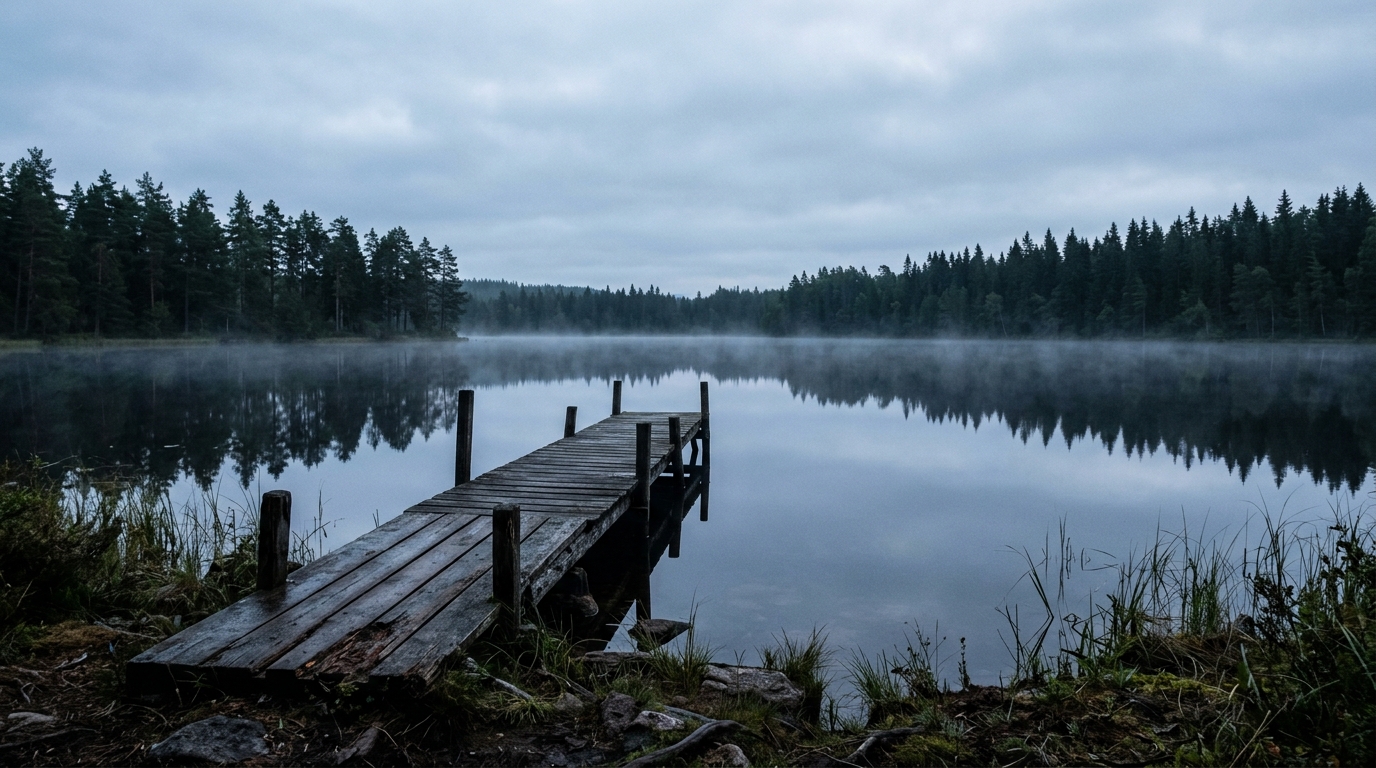
Search lake quotes and the first line most people meet is credited to Thoreau. It sounds like him, it is calm and well made, and it is printed on caption sites, picture-quote boards and at least one social media tool. It is not in Walden. The sentence Thoreau actually wrote about lakes is better, and it is sitting in a chapter called The Ponds, free to read, where almost nobody checks.
That is the pattern on this search in miniature. The AI summary above the results names five writers and gives a work for none of them. Most of the organic results are caption lists. Not one of them tells you which book a line came from, which chapter, or what year, so there is no way to know whether you are quoting Thoreau or somebody doing an impression of him.
So this page took the slow route. Every line below was read out of the complete text it came from, as plain text, and fenced to the chapter, canto or stanza named on its card. The drifted Thoreau line is shown too, marked, with the search that failed described so you can repeat it.
This page is still water: lakes, ponds, lochs and tarns. Falling water, the woods and the open outdoors each have their own collection, and the broad set lives on the nature travel quotes hub. Thirty sourced lines from Thoreau, Emerson, Muir and Wordsworth sit on the nature quotes page. Salt water is on the ocean and coast quotes page, and every attribution this site has traced is on the travel quotes fact check hub.
What are the best lake quotes? The short answer
The Thoreau line page one gets wrong
The drifted version first, then the real one. The difference is small on the screen and large in meaning: one is a mood, the other is an argument.
A lake is a landscape’s most beautiful expression of peace
A lake is the landscape’s most beautiful and expressive feature. It is earth’s eye; looking into which the beholder measures the depth of his own nature.
The sentence the internet rewrote. The real one makes a claim you can argue with, that a lake is the feature a landscape is organised around, and then earns it with the eye image: you look into the water and measure yourself. The drifted version swaps both moves for the word peace.
The same results page prints a line that begins Not all who wander are lost and ends with somebody finding lakes. It is a joke built on Tolkien, whose real line is part of a verse in The Fellowship of the Ring, and this site has already traced the original and how it drifted. The lake ending belongs to nobody, which is fine for a caption and not fine for a quotation.
Of the five names in the AI summary, three have real, sourced water writing and all three are on this page: Thoreau throughout, Edgar Allan Poe, whose poem is simply called The Lake, and Lao Tzu, in a translation old enough to quote in full. The other two are contemporary writers whose books this page has not read, so they are left out rather than guessed at.
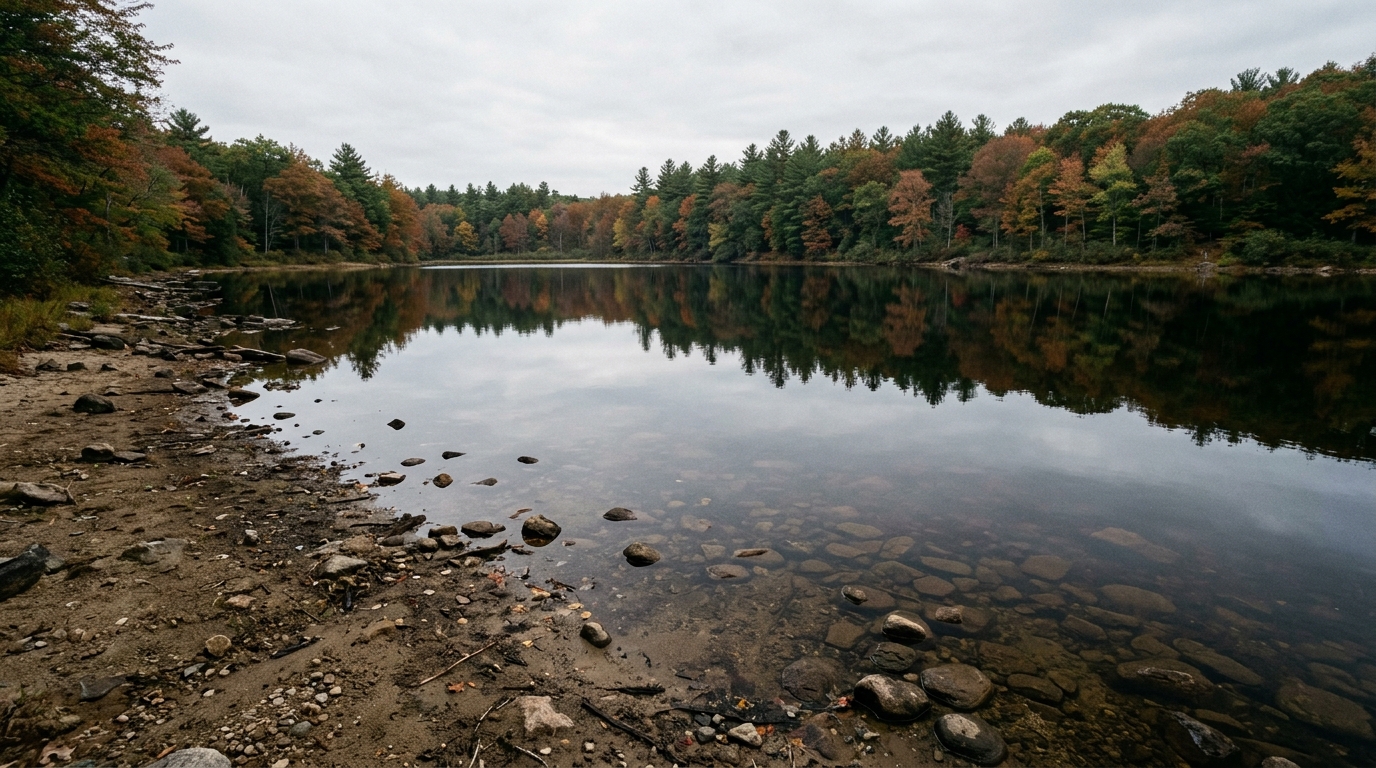
Walden: the pond behind half the lake quotes
Thoreau lived beside Walden Pond, outside Concord in Massachusetts, from 1845 to 1847, and wrote about one small body of water more closely than almost anyone before him. These are the lines worth having, all from the book he published about it.
Nothing so fair, so pure, and at the same time so large, as a lake, perchance, lies on the surface of the earth. Sky water. It needs no fence. Nations come and go without defiling it.
Sky water is a phrase doing the work of a paragraph. The sentence after it is the one to keep: nations come and go without defiling it, written by a man who could hear the railway from his door.
It is a mirror which no stone can crack, whose quicksilver will never wear off, whose gilding Nature continually repairs;
The mirror is the oldest lake image there is, and Thoreau knows it, which is why he spends the sentence making it strange: quicksilver that never wears off, gilding that Nature repairs herself. The card stops at the semicolon. The sentence keeps going, and is worth reading whole.
A field of water betrays the spirit that is in the air. It is continually receiving new life and motion from above. It is intermediate in its nature between land and sky.
The most exact line here and the most mystical, at once. He is describing wind on water accurately, calling it spirit, and does not think those are different jobs.
Walden is blue at one time and green at another, even from the same point of view. Lying between the earth and the heavens, it partakes of the color of both.
Anyone who has photographed a lake and been annoyed that it came out the wrong colour has met this sentence without knowing it. His answer is that there is no right colour: the water borrows from the ground and from the sky.
White Pond and Walden are great crystals on the surface of the earth, Lakes of Light.
White Pond is a smaller pond nearby that Thoreau rated almost as highly. Note the capitals on Lakes of Light. He is naming them, not describing them.
I am no more lonely than the loon in the pond that laughs so loud, or than Walden Pond itself. What company has that lonely lake, I pray? And yet it has not the blue devils, but the blue angels in it, in the azure tint of its waters.
From the chapter on solitude, and it earns its place on a lake page in its second sentence, where Walden Pond becomes that lonely lake. He uses pond and lake for the same water in consecutive sentences, which settles the pond or lake question better than any definition.
Muir and the Sierra lakes
John Muir gave the glacier lakes of the Sierra Nevada a whole chapter of The Mountains of California, and it is natural history that also reads like a love letter. He has no profile on this site yet, which is the largest gap this collection has.
All the upper branches of the rivers are fairly laden with lakes, like orchard trees with fruit.
Muir’s gift was scale. He could look at a whole range and see an orchard. The chapter goes on to count the lakes basin by basin, which is Muir all over: the metaphor first, then the survey.
The forests and the glaciers and the snowy fountains of the streams advertise their wealth in a more or less telling manner even in the distance, but nothing is seen of the lakes until we have climbed above them.
The practical truth about mountain lakes, and why they surprise people. A forest shows itself from the valley. A lake does not, and you have to earn the view from above.
In Lake Hollow, on the north side of the Hoffman spur, immediately above the great Tuolumne cañon, there are ten lovely lakelets lying near together in one general hollow, like eggs in a nest.
The simile is homely on purpose. Muir had a scientist’s eye and a farm boy’s vocabulary, and the combination is why his descriptions still read as fresh.
When a mountain lake is born,—when, like a young eye, it first opens to the light,—it is an irregular, expressionless crescent, inclosed in banks of rock and ice,—bare, glaciated rock on the lower side, the rugged snout of a glacier on the upper.
The eye again, a generation after Thoreau, and this time newborn. The long dashes are Muir’s own punctuation, reproduced as printed.
So the young lake grows in beauty, becoming more and more humanly lovable from century to century.
The science is sound: a glacier lake fills with sediment and plants over the centuries. Humanly lovable is the phrase nobody else would have written.
But while its shores are being enriched, the soil-beds creep out with incessant growth, contracting its area, while the lighter mud-particles deposited on the bottom cause it to grow constantly shallower, until at length the last remnant of the lake vanishes,—closed forever in ripe and natural old age.
Lakes die, and Muir says so plainly, then makes the death sound like a good ending rather than a loss. The long sentence is the point: it moves as slowly as the process it describes.
Lake Tahoe, by Mark Twain
Mark Twain went to Lake Tahoe as a young man to stake a timber claim and mostly lay in a boat instead. The two chapters of Roughing It that cover the trip are the gentlest thing he ever wrote, right up until he sets the forest on fire.
As it lay there with the shadows of the mountains brilliantly photographed upon its still surface I thought it must surely be the fairest picture the whole earth affords.
The most reliable deflater in American letters walks over a ridge and drops the jokes for one sentence. It does not last: the next paragraph has him making his companion row.
So singularly clear was the water, that where it was only twenty or thirty feet deep the bottom was so perfectly distinct that the boat seemed floating in the air!
The clarity of Tahoe is still what it is famous for. The next sentence italicises the depth, because Twain expects you not to believe him.
We seldom talked. It interrupted the Sabbath stillness, and marred the dreams the luxurious rest and indolence brought.
The best line on this page about what a lake is actually for. Not the view: the permission to stop talking.
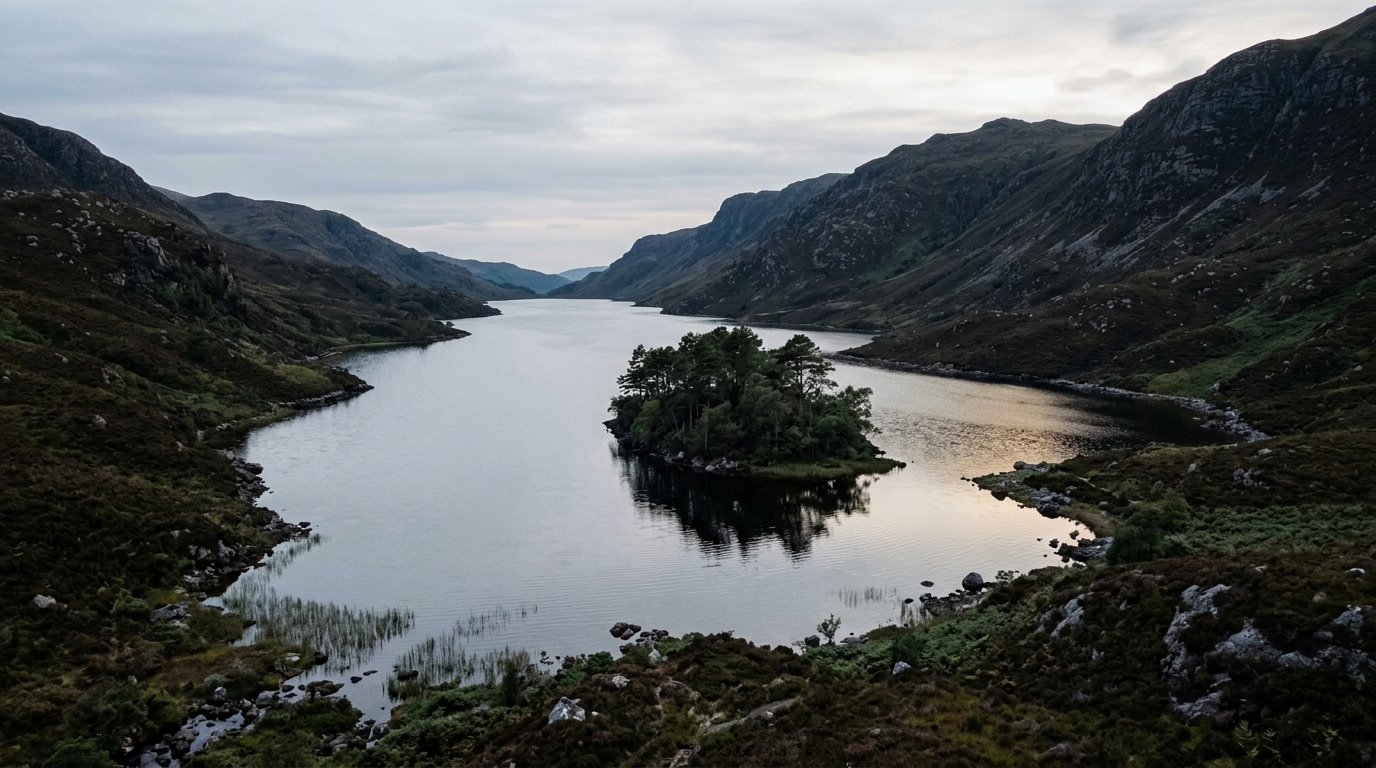
The poets at the water’s edge
The Romantic poets went to lakes the way later travellers went to cities, and they left the lines behind. Every one below is read from a complete edition of the poem, with the canto, stanza or part named.
Lake Leman woos me with its crystal face, The mirror where the stars and mountains view The stillness of their aspect in each trace Its clear depth yields of their far height and hue:
Byron spent the summer of 1816 on the shores of Lake Geneva, which he calls by its old name. The stars and mountains studying their own stillness in the water is the mirror image again, from a poet who wanted to be anywhere but among people.
Clear, placid Leman! thy contrasted lake, With the wild world I dwelt in, is a thing Which warns me, with its stillness, to forsake Earth's troubled waters for a purer spring.
Further into the same canto, on the same water, and now the stillness is a warning: give up the storms you preferred. For Byron, that is close to a confession.
Would enter unawares into his mind With all its solemn imagery, its rocks, Its woods, and that uncertain heaven, receiv'd Into the bosom of the steady lake.
Winander is Windermere. The boy in the poem hoots to the owls across the water, and in the silence after, the lake takes the sky into itself and into him. Uncertain heaven, steady lake: the whole poem is in that contrast.
One burnished sheet of living gold, Loch Katrine lay beneath him rolled, In all her length far winding lay, With promontory, creek, and bay,
The poem that made the Trossachs a tourist destination. Loch Katrine at sunset, from the point where the hunter first sees it laid out below him.
By the shores of Gitche Gumee, By the shining Big-Sea-Water, Stood the wigwam of Nokomis, Daughter of the Moon, Nokomis.
Gitche Gumee is Lake Superior, and Big-Sea-Water is the same lake in translation. Among the most recited lines in American poetry, and it names a lake so large the poem calls it a sea.
So lovely was the loneliness Of a wild lake, with black rock bound, And the tall pines that towered around.
Poe is one of the names the AI summary offers without a source. This is the poem, from his first book, published while he was still a teenager.
Whose solitary soul could make An Eden of that dim lake.
The closing turn, and the one the poem spends every line setting up: the lake is frightening, the fear is a pleasure, and a lonely enough mind can make paradise out of it.
Innisfree: Yeats reading Thoreau
The best loved lake poem of its century has a Thoreau connection that the quote sites never mention, and Yeats told the story himself.
I had still the ambition, formed in Sligo in my teens, of living in imitation of Thoreau on Innisfree, a little island in Lough Gill, and when walking through Fleet Street very homesick I heard a little tinkle of water and saw a fountain in a shop-window which balanced a little ball upon its jet, and began to remember lake water.
Yeats explaining, decades later, where the poem came from. The ambition was to live like Thoreau at Walden, and the trigger was a toy fountain in a London shop window. One of the best known lake poems in English was set off by water that was not a lake at all.
I will arise and go now, for always night and day I hear lake water lapping with low sounds by the shore; While I stand on the roadway, or on the pavements gray, I hear it in the deep heart’s core.
The stanza the memoir explains. In the same passage Yeats says he would later not have written the old-fashioned Arise and go of the opening line, which is worth knowing before you print it on anything.
Still water
Most of the peaceful lake quotes in circulation are reaching for an idea these writers stated first and more exactly.
Who can (make) the muddy water (clear)? Let it be still, and it will gradually become clear.
Not a lake, strictly: water that clears when it is left alone. It belongs here because it is the thought most peaceful lake quotes are trying to have. James Legge’s translation, with his brackets left in as he printed them.
We can find these enchantments without visiting the Como Lake, or the Madeira Islands. We exaggerate the praises of local scenery.
Emerson naming one of the most admired lakes in Europe in order to say you do not need it. The passage goes on to argue that the point of astonishment is where sky meets earth, visible from the nearest hill.
Short lake quotes
Many of the related searches on this term want something caption-length, so here are the shortest fully sourced lines on the page: card 6, card 8, card 12, card 22, card 23 and card 26. The shortest of the lot is card 23, at eleven words, and it still carries a work and a year.
What this page will not do is hand you a wall of six-word lines with no author. If you need something short, cut from a sourced line and keep the name and the year with it. Sky water, from Thoreau, is about as short as a real quotation gets, and it still carries a book.
Lake, pond or loch: where the lines come from
Most of these lines are about a real, named body of water you can still visit. Here is which is which.
The real water behind the lines
| Water | Where | Writer | Work and year |
|---|---|---|---|
| Walden Pond | Concord, Massachusetts | Henry David Thoreau | Walden, 1854 |
| Windermere, as Winander | Lake District, England | William Wordsworth | There Was a Boy, 1800 |
| Loch Katrine | The Trossachs, Scotland | Walter Scott | The Lady of the Lake, 1810 |
| Lake Geneva, as Leman | Switzerland and France | Lord Byron | Childe Harold’s Pilgrimage, 1816 |
| Lake Superior, as Gitche Gumee | United States and Canada | Henry Wadsworth Longfellow | The Song of Hiawatha, 1855 |
| Lake Tahoe | California and Nevada | Mark Twain | Roughing It, 1872 |
| Lough Gill, for Innisfree | County Sligo, Ireland | W. B. Yeats | The Lake Isle of Innisfree, 1890 |
| Lake Como, named to be skipped | Lombardy, Italy | Ralph Waldo Emerson | Nature, 1844 |
1. Walden and Civil Disobedience (Penguin Classics)
Best for: Readers who want the full text of Walden that the Thoreau lines on this page come from.
A 336 page Penguin Classics paperback carrying the complete text of Thoreau’s Walden alongside Civil Disobedience. A good way to read The Ponds chapter and the rest of the book in context.
Pros
- Complete Walden from a long established classics list
- Civil Disobedience included in the same volume
- Low priced paperback
Cons
- Paperback, so it is not a gift edition
- Fewer reviews than the cheapest reprints

Notes on the selection
How this page was built. Twelve complete primary texts were read as plain text and every line was matched against them word for word, with the extraction fenced inside the chapter, canto or stanza the card names, so the locator is measured rather than remembered. Every one of the twenty-seven lines comes from a work published before 1930, which is why the verification cost nothing. Eleven writers are represented and Thoreau carries the most, with seven cards, which is the honest shape of the subject. Every line appears on this site for the first time. Every line was also checked against the nature hub, both published neighbours and the two unpublished nature drafts, so that no quote runs on two pages. The drifted Thoreau line was probed as the whole sentence and as separate fragments against all twenty-eight texts, and none of the probes appears in any of them. One distinction worth being exact about: the wording, the work and the locator on every card come from the text itself, while the year is the standard publication date of the work rather than something a plain text file can confirm. For the Lao Tzu card the year is the translation’s.
What was cut, and why. No line from a captions site, a quote aggregator or a Pinterest board survived. Two lines that carry real visibility on this search are left out: a lake and lotus line credited to Amit Ray, and a line credited to Mehmet Murat ildan. Both are contemporary writers whose work is in copyright and was not read for this page, so neither is quoted. Matsuo Basho belongs here too, for the old pond, and is not carded: this page could not source an English version from a complete public-domain text, so it names the poem rather than printing a translation it cannot cite.
Lake quotes: the questions people actually ask
Did Thoreau say a lake is a landscape’s most beautiful expression of peace?
No. That sentence is not in Walden. What Thoreau wrote, in the chapter called The Ponds, in 1854, is: a lake is the landscape’s most beautiful and expressive feature. It is earth’s eye; looking into which the beholder measures the depth of his own nature. The circulating version keeps the shape and swaps the ending for the word peace.
What is a good caption for a picture of a lake?
Cut from a real line and keep the name with it. Three that work: “Sky water. It needs no fence.” Henry David Thoreau, Walden, 1854; “Lakes of Light.” Henry David Thoreau, Walden, 1854; and “An Eden of that dim lake.” Edgar Allan Poe, The Lake, 1827. Each is a fragment of a card on this page, so you can see the full line before you use it.
What did Basho write about still water?
The old pond: a frog jumps in and the only thing that happens is the sound of the water. It is probably the most famous haiku ever written. This page does not print an English version because it could not source one from a complete public-domain text, and a translation needs a translator’s name beside it. His profile on this site, linked below, covers the travel writing.
Where is Walden Pond, and is it a pond or a lake?
Walden Pond is outside Concord, Massachusetts, west of Boston, and Thoreau lived beside it from 1845 to 1847. In New England a body of water that size is usually called a pond whatever its depth, and Thoreau uses both words for it, sometimes in consecutive sentences: see card 7.



This is the version page one prints, credited to Thoreau. Walden does not contain it. The complete text was searched for the whole sentence and separately for each of its distinctive fragments, and none of them appears in the book or in any other text read for this page. The real sentence is the next card. The shape survived the retelling; the claim did not.