
Up movie quotes, read as a travel story: eight lines with commentary
Eight lines from Pixar’s Up, each with its speaker and scene, the real Venezuelan mountains behind Paradise Falls, and what Ellie’s Adventure Book says about the trips we postpone.
Most pages of Up movie quotes are screenshots and fan lists with no scene attached. This page is commentary on a short set of lines from the film, not a reproduction of it: every line names the character who says it and the scene it comes from, and the writing around each line does the work.
We read Up as a travel story, because it is one. A man and a woman promise each other a trip to a waterfall in South America, keep putting it off, and run out of time. Then he goes anyway, decades late, and discovers the trip was never really the point. If you have a trip like that waiting in a drawer, this film was written with you in mind.
We also went looking for the real place. Paradise Falls is invented, but the flat topped mountains it stands on are not, and the Pixar team went up one to sketch it. For more lines on getting out the door, our adventure quotes collection picks up where Up leaves off, and the whole site starts at the 100 best travel quotes.
What are the best Up movie quotes? The 60 second answer
Up movie quotes, with speaker and scene
The lines run in the order the film gives them. Half of them come from the first minutes, when two children meet in a derelict house and make a promise. The rest follow Carl, now old and widowed, as he finally keeps it: by tying balloons to the same house and floating it to South America, with a stowaway scout on the porch.
Adventure is out there!
Paradise Falls, a land lost in time.
Young Ellie is reading the caption under a picture of a waterfall that she has torn out of a library book, which she admits with some pride. It is the moment the destination gets a name, and it is pure travel brochure: remote, timeless, a little unreal. The joke is that the real landscape behind it is stranger than the caption, which we come to below.
Well, I’m saving these pages for all the adventures I’m gonna have.
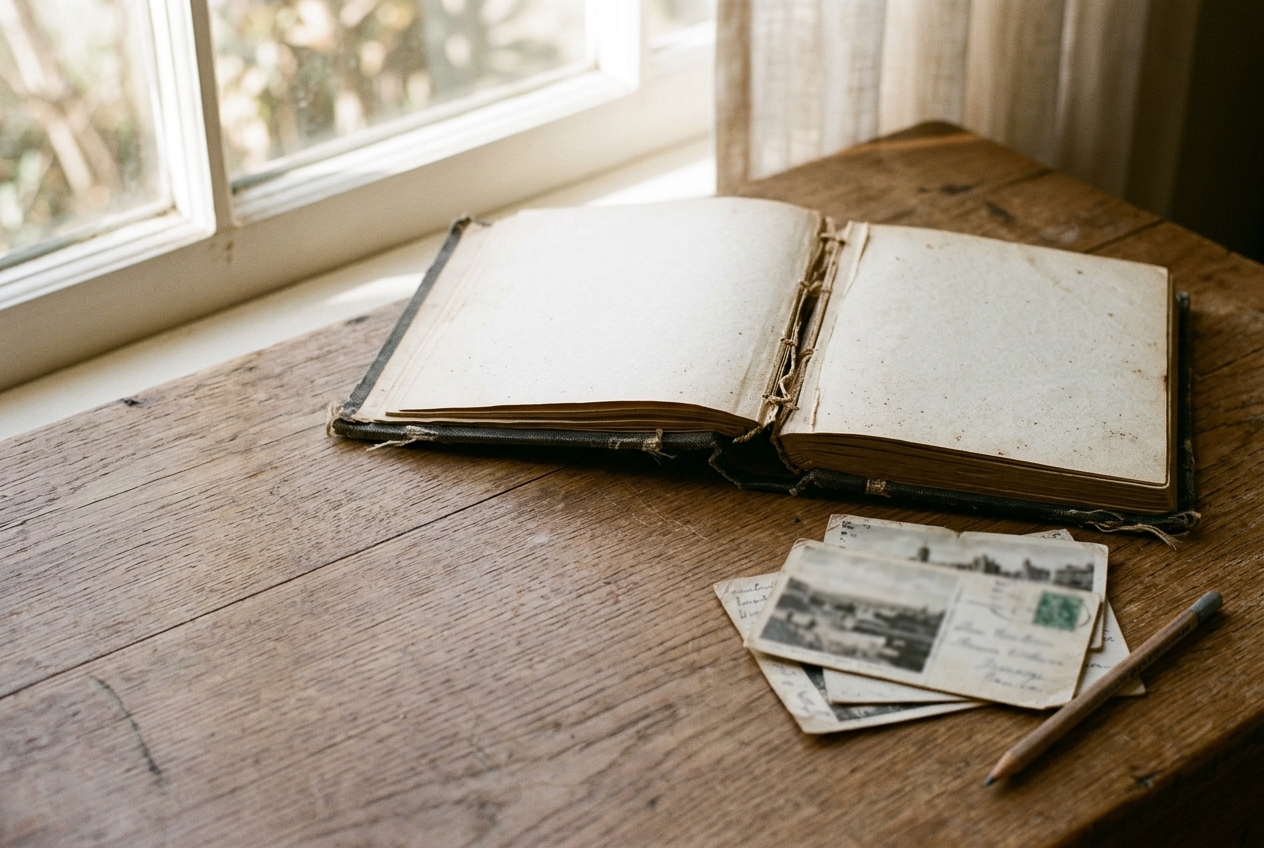
Ellie is showing Carl her Adventure Book, a scrapbook of explorer clippings with a page for the things she is going to do, followed by nothing but blank pages. This is her explanation for the blanks. Most travellers keep a version of that book, whether it is a list, a folder or a map full of saved pins, and most of us are saving pages too. The rest of the film is about what ends up on them.
You can take us there in a blimp! Swear you’ll take us! Cross your heart!
Same afternoon, same clubhouse. Ellie has just admitted she has no idea how she will ever reach Paradise Falls, and Carl, who has barely said a word, looks at his toy airship. She takes it as a yes and makes him swear, and he crosses his heart. It is the promise the whole film turns on: a lifetime later, an old man flies his house to South America because of a vow he made as a boy who could not say no to her.
My name is Dug. I have just met you, and I love you.
The talking dog, on first meeting Carl and Russell in the jungle. Dug wears a collar that turns his thoughts into speech, and his thoughts are exactly what you would expect of a dog: friendly, sincere and easily distracted by squirrels. The line is here for the lightness, but it is also true of travel friendships, which have a way of skipping the slow part.
That might sound boring, but I think the boring stuff is the stuff I remember the most.
Russell, the young Wilderness Explorer who stowed away on Carl’s porch, is describing ice cream with his dad: the same flavours every time, the same curb outside, counting blue cars against red ones. He says this on the trek through the jungle, and Carl, who spent his life waiting for the big trip, goes quiet. It is the wisest line in the film, given to its youngest character, and the one most worth carrying home from any journey: the ordinary moments are the ones that stay.
Thanks for the adventure — now go have a new one!
Not spoken at all. Near the end, alone in the house beside the falls, Carl opens the Adventure Book and finds the blank pages are no longer blank: Ellie has filled them with photographs of their life together, the picnics and birthdays and ordinary days. Beneath the last photograph she has written this. It turns the film around. The adventure she was saving pages for was the marriage, and her last instruction is to keep going.
You know, it’s just a house.
Russell apologises for the house, which has just drifted off into the clouds, and Carl answers with this. A man who spent the whole film dragging his home across a mountain top on a garden hose lets it go in a single sentence. Every traveller who has ever over packed should hear it once.
Carl is not the only reluctant adventurer on this site. Bilbo Baggins also had to be pushed out of a comfortable front door, and our Hobbit quotes follow him the whole way. For a longer road with the same lesson at the end, try the Lord of the Rings quotes, or the story behind not all those who wander are lost.
Is Paradise Falls real? The tepuis behind the film
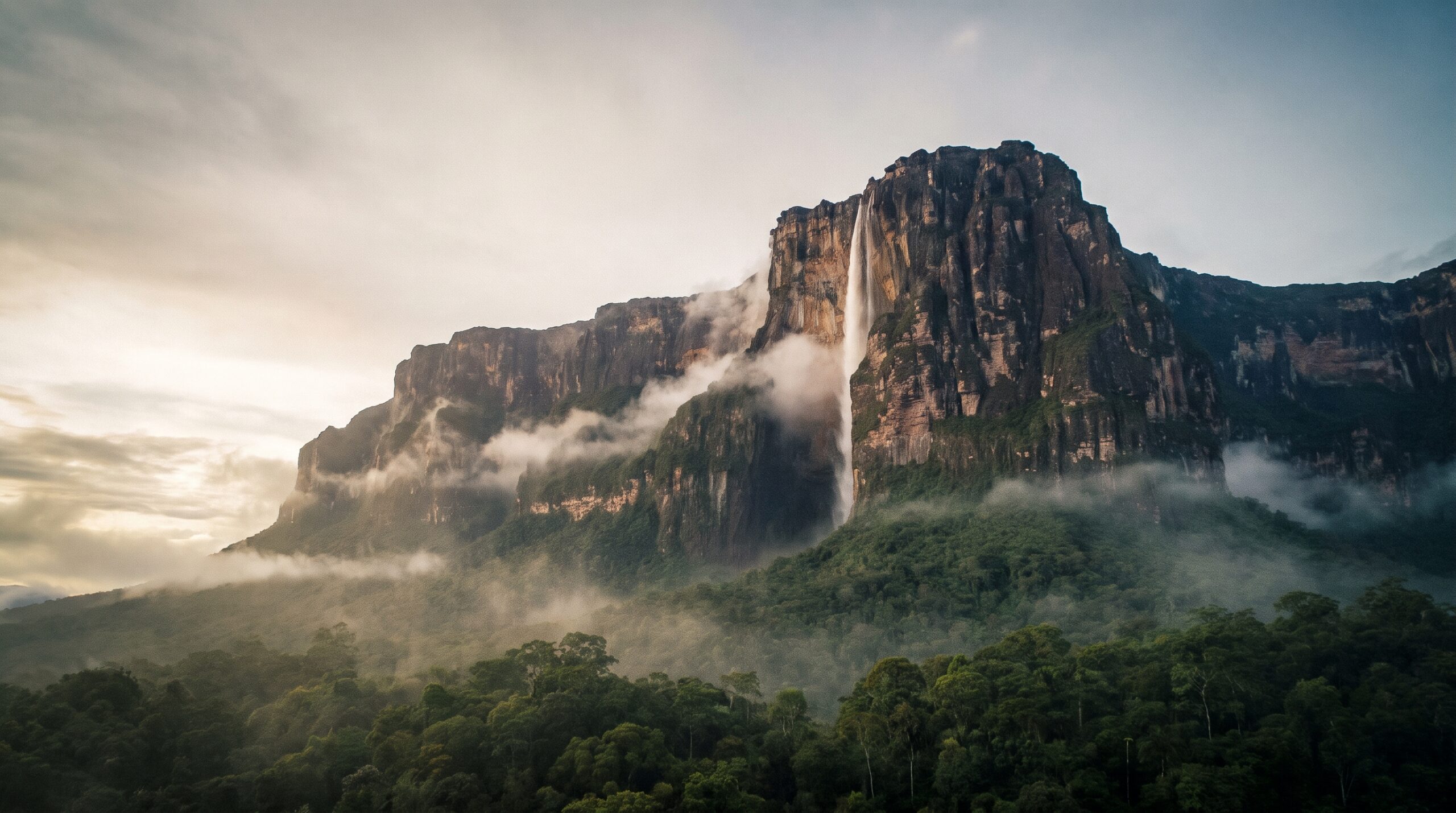
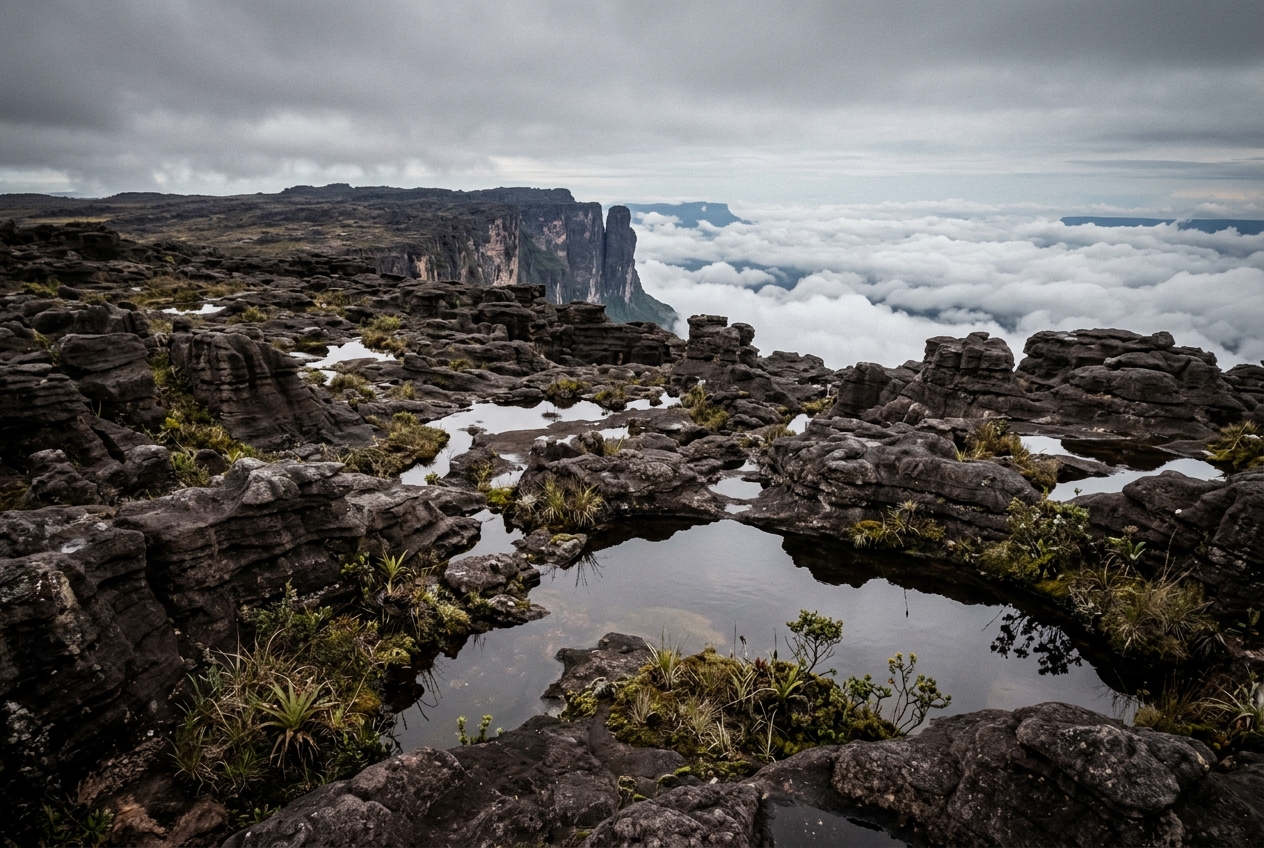
The waterfall is invented. The landscape is real. The flat topped mountains in Up are tepuis, the table mountains of south eastern Venezuela, and many of the most famous ones stand inside Canaima National Park. UNESCO, which lists the park as a World Heritage site, describes it as spreading over 3 million hectares along the borders with Guyana and Brazil, with roughly 65 per cent of it covered by tepui formations, and with sheer cliffs and waterfalls that include the highest in the world, at about 1,000 metres. That waterfall is Angel Falls, which drops off the edge of a tepui much as Paradise Falls does in the film.
The setting came from a video. Production designer Ralph Eggleston gave director Pete Docter footage of the tepui mountains, which is how the film ended up in Venezuela, as Animation World Network reported from his Comic-Con presentation in July 2008, while Up was still in production. Then the team went to see them. A group of Pixar artists, Docter and co-director Bob Peterson among them, reached the summit of Mount Roraima by plane, jeep and helicopter to sketch and paint. In an interview after the film came out, Docter described a storm closing in so fast that some of the crew were stuck on top until the helicopter could fly again.
In the same interview Peterson explained the choice: the tepuis are ancient, remote, rugged and a little dangerous, but beautiful in a soulful way, which he pointed out is also a fair description of Carl. Many of the plants and rock shapes in the film were drawn from what the team saw up there. That is the travel reading in a sentence. The place Ellie dreamed about was real all along, only harder to reach than a page torn from a library book suggests.
If the film has put the tepuis on your own list, check your government’s official travel advice for Venezuela before you plan anything. It changes, and it is the only source worth trusting on that question.
Ellie’s Adventure Book: the trip we keep postponing
The part of Up everyone remembers has almost no dialogue at all. In the montage of Carl and Ellie’s marriage, they set out a jar for the Paradise Falls fund and start dropping in coins. Then life reaches into the jar: a blown tyre, a broken leg, a tree through the roof. Each time, the jar is smashed and the trip moves back. By the time Carl finally buys two tickets to South America, Ellie is too ill to go.
Most of us know that jar. The trip planned for after the promotion, after the kids, after the mortgage, until after becomes a destination of its own. The film is not cruel about it, but it is honest: the postponing is ordinary, and so is the price. If that is where you are, our guide to the long escape is written for exactly that reader, the one who has done the sensible thing for years and wants to know what the alternative really costs.
But the honest turn of the film is not that they should have gone sooner, although Carl clearly wishes they had. It is that Ellie’s pages were never empty. The book she was saving for adventures filled up with a life, and when Carl finally reads it, the waterfall matters less than the person he shared the waiting with. That is why Up belongs as much with our travel love quotes as on any list about adventure: the best journeys in it are the ones taken together.
It is also why the film ends where it does. Ellie’s note does not say go back, or go home. It says go have a new one, and Carl does, with a boy and a dog he met on the way. Not a bad instruction to leave in anyone’s book.
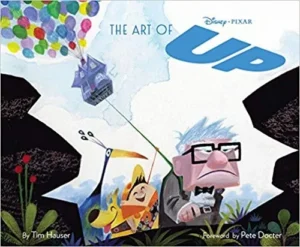
If the adventure book is the part of Up you keep coming back to, the studio published the concept art behind it. The Art of Up has the pastels and storyboards for the married-life sequence, the tepui studies drawn after the crew flew to Venezuela, and the notes from the people who made the choices this page describes.
The Art of Up (Tim Hauser, foreword by Pete Docter)
Best for: Anyone who wants to see Paradise Falls being invented
The Chronicle Books hardcover (2009, 160 pages) collects more than 250 pieces of concept art from the film: storyboards, colour scripts, pastels, pencil sketches and character studies, with quotes from the director, the artists and the production team on why the film looks the way it does. It is the only place the adventure book and the tepuis exist on paper.
Pros
- Concept art for the married-life sequence and the tepui landscapes
- Production notes in the crew's own words, including the Venezuela research trip
- Large format, so the colour scripts read as they were painted
Cons
- A coffee-table book, heavy and not cheap for what is mostly pictures
- No script or dialogue, so it will not settle a quote for you
Notes on the selection
How this page was built. Every line was checked word for word against two texts: a published screenplay of Up credited to Pete Docter, Bob Peterson and Tom McCarthy, and a transcript of the finished film. They agree on the wording; where they differ on punctuation, we followed the film. Ellie’s note is handwriting on screen rather than dialogue, so its wording comes from the screenplay, with the screenplay’s capitals set in ordinary case. Each card names the character speaking and the scene. The facts about the tepuis come from UNESCO, from Animation World Network’s 2008 report on Docter’s presentation, and from the directors’ own account of the research trip.
What was left out, and why. Up is in copyright, so this page quotes eight short lines and lets the commentary carry it. That ruled out the longer speeches, including the explorer’s newsreel and the scenes with Muntz in his airship, and the running dog jokes, which work on screen far better than on a page. There are no song lyrics here because Up has none: its music is Michael Giacchino’s score. None of the film’s artwork is reproduced. The images on this page are our own landscapes and objects, and nothing in them is drawn from the film’s designs.
Up movie quotes: the questions people actually ask
What is the most famous quote from Up?
“Adventure is out there!” It is the motto of the explorer Charles Muntz, heard in the newsreel that opens the film, and young Ellie shouts it back moments later, which is how she and Carl meet.
Is Paradise Falls a real place?
Not by that name. It is modelled on the tepuis of Canaima National Park in south eastern Venezuela, a UNESCO World Heritage site that also holds Angel Falls, the highest waterfall in the world. Pixar artists visited Mount Roraima, one of the tepuis, while developing the film. Check official travel advice before planning a visit.
What does Ellie write at the end of the Adventure Book?
Under the last photograph of the two of them, Ellie has written “Thanks for the adventure — now go have a new one!” Carl finds it near the end of the film, after he has finally reached the falls, and it is what sends him back out into the world.
What is the message of Up?
That the adventure you keep postponing may already be happening. Carl spends his life saving for a trip with Ellie and never takes it, then learns from her scrapbook that she counted their ordinary life together as the adventure. The film still sends him on a new one.


The first words of the film belong to neither Carl nor Ellie. They belong to Charles Muntz, the explorer in the newsreel young Carl is watching in a cinema, who signs off with this motto. A few minutes later a girl’s voice shouts it back from inside an empty house, and that is how Carl meets Ellie. It is a child’s slogan, and the film takes it seriously enough to build everything else on it.