
Jon Krakauer's Into Thin Air: The 1996 Everest Disaster, the Book, and the Controversy
What the book actually says, what happened on the mountain in May 1996, why Anatoli Boukreev wrote a rival account, and which edition to start with.
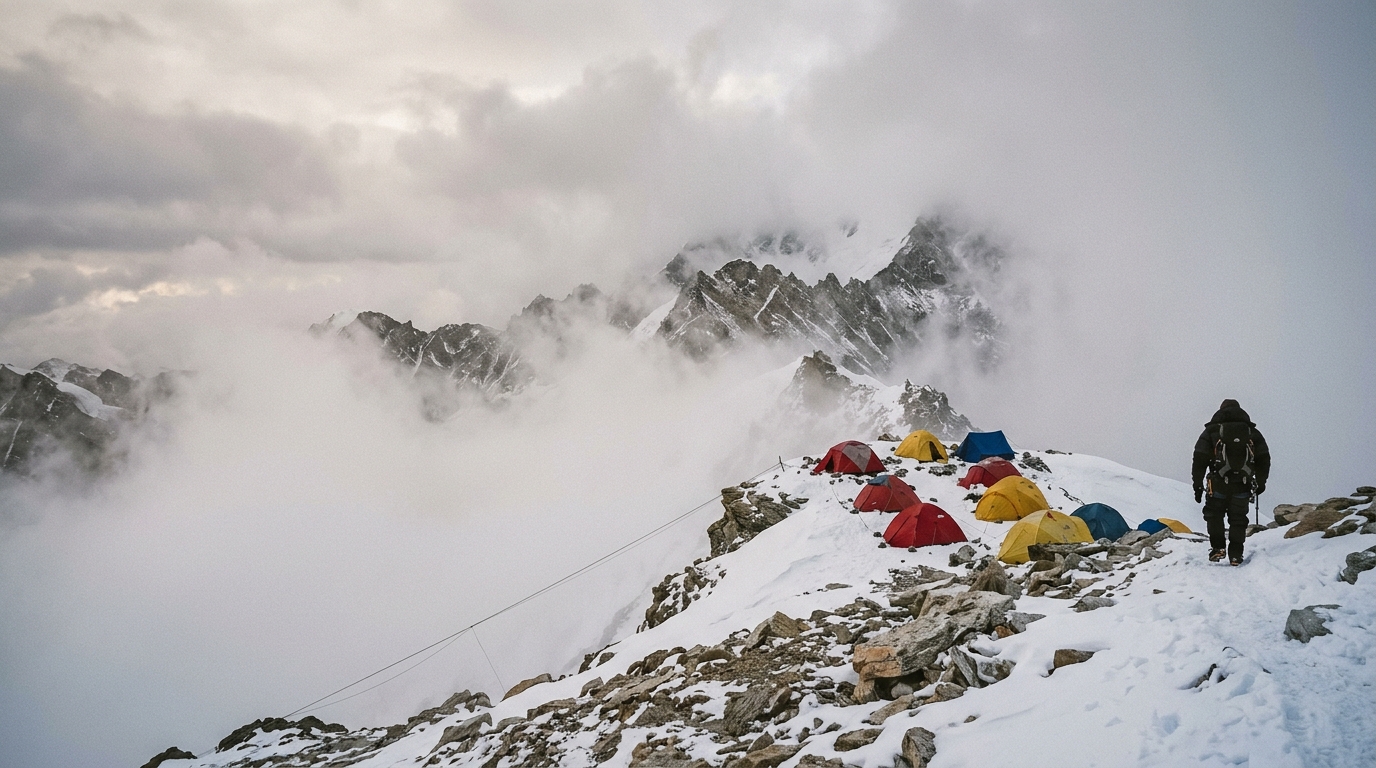
Thirty years on, the 1996 Everest season is still the story people reach for when they want to talk about ambition getting out of hand. Most of what circulates about it comes from one book, and a good deal of what circulates about that book is second hand: that Jon Krakauer blamed a guide, that a Hollywood film adapted it, that the numbers are settled. None of those three is quite right.
Here is the whole of it in one place: what Into Thin Air is, what happened on the mountain on 10 and 11 May 1996, what Krakauer argues and where he says his own account runs out, why Anatoli Boukreev answered with a book of his own, and which edition of each is worth your evening.
What is Jon Krakauer’s Into Thin Air? The short answer
Into Thin Air is a 1997 non-fiction book by Jon Krakauer, and it is a first-person account rather than a reconstruction. Krakauer was on the mountain. Outside magazine had sent him to Nepal as a client of Rob Hall’s Adventure Consultants to report on how commercial guiding had changed Everest, and he reached the summit in the early afternoon of 10 May 1996, having not slept in fifty-seven hours. On the descent a storm caught the climbers still on the upper mountain.
The book came out of the magazine piece, not the other way round. Krakauer filed his article, titled Into Thin Air, for Outside’s September 1996 issue, then spent the following months expanding it into the book Villard published in 1997. The version most readers hold today is the Vintage paperback reprint, 332 pages, first issued in October 1999.
What has kept it in print is not the summit. It is the reckoning. Krakauer went looking for what turned an ordinary bad day into eight deaths, and he included himself in the inquiry rather than standing outside it.
What happened on the mountain, plainly
Three expeditions were pushing for the summit along the Southeast Ridge on 10 May 1996, the route Edmund Hillary and Tenzing Norgay pioneered in 1953. Two of them were commercial: Rob Hall’s Adventure Consultants, a New Zealand operation with the strongest guiding record on the mountain, and Scott Fischer’s Mountain Madness, an American outfit with Anatoli Boukreev among its guides. Krakauer was a paying client on Hall’s team.
The mountain was crowded and the day ran late. Fixed ropes that should have been in place were not, and bottlenecks built at the Hillary Step. There is a standing convention on Everest that a climber not on the summit by early afternoon turns around whatever the weather looks like. That afternoon the convention was not held to. Climbers were still reaching the top after two o’clock, some considerably later, with the descent to Camp IV ahead of them and their oxygen running down.
The storm arrived in the late afternoon and closed the upper mountain in darkness and blowing snow. Climbers who had been strung out along the ridge were now trying to find a camp they could not see. Both commercial expedition leaders died: Scott Fischer high on the mountain, Rob Hall near the South Summit, in radio contact until close to the end.
Outside, the magazine that had sent Krakauer, puts the toll from that push at eight dead, four of them from his own six-person summit team. Across the whole 1996 season twelve people died on Everest. Figures you will see elsewhere differ, usually because they close the window on a different date or count both sides of the mountain, and the disagreement is worth knowing about before you quote a number at anyone.
Krakauer’s account, and the limits he draws around it
The book’s method is the reason it lasted. Krakauer interviewed survivors, cross-checked radio logs and timings, and then set out a sequence of ordinary decisions, each defensible on its own, that compounded into a catastrophe. He is unsparing about the commercial pressure on guides whose clients had paid tens of thousands of dollars for one attempt, and about what oxygen depletion does to judgment at 8,000 metres.
He is hardest on himself. The passage readers most often remember is not a summit scene but Krakauer’s account of passing a climber he later realised he had misidentified, and what that error cost. Mark Bryant, who edited Outside from 1990 to 1999 and published the original article, wrote in 2017 that the piece works as reportage and as an act of atonement at the same time.
Krakauer also marks where his own reliability ends, which is the part most summaries skip. He was hypoxic, exhausted and, by his own account, not a trustworthy witness to parts of that afternoon. Some of what he first reported he later corrected. A book that says so in its own pages is a better source than one that does not, and it is also the reason the argument that followed was possible at all.
The controversy: Boukreev, The Climb, and the argument that never settled
Anatoli Boukreev was a Kazakhstani high-altitude climber of the first rank, guiding for Mountain Madness that season. Krakauer questioned two of his decisions: that he climbed without supplemental oxygen, and that he descended ahead of the clients he was guiding rather than staying with them.
What is not in dispute is what Boukreev did next. When the storm closed in he went back out from Camp IV, alone, into the dark, more than once, and brought stranded climbers in. Several people are alive because of it. Krakauer says so in the book. The question was never whether Boukreev was brave; it was whether a guide should have been in a position to need that kind of rescue at all.
Boukreev answered in 1997 with The Climb, written with the American journalist G. Weston DeWalt. His case is that a guide climbing without oxygen was operating to a European and Central Asian standard of self-sufficiency rather than an American one, that descending fast was a deliberate choice to be rested and able to help, and that the outcome supports him. He also had an answer Krakauer did not: no Mountain Madness client died that day.
Boukreev was killed in an avalanche on Annapurna in December 1997, a year after the season that made him famous. The argument outlived him. DeWalt kept pressing it, Krakauer replied in a postscript to later editions of Into Thin Air, and the 1999 edition of The Climb answers back again. Readers coming to the two books today are walking into a quarrel that neither side conceded.
Our position on it is the one this site takes everywhere: we are not going to resolve it for you. Two men wrote honest accounts of the same afternoon from inside two different oxygen states, two different jobs and two different traditions of what a guide owes a client. Read both, in that order, and you will understand the 1996 season better than any single summary can leave you.
The two accounts, side by side
| Aspect | Into Thin Air (1997) | The Climb (1997) |
|---|---|---|
| Who is telling it | Jon Krakauer, a journalist climbing as a paying client | Anatoli Boukreev, a working guide, written with G. Weston DeWalt |
| Vantage point | Hall’s Adventure Consultants team, on oxygen | Fischer’s Mountain Madness team, climbing without oxygen |
| The prose | Fluent narrative journalism, built to carry a reader | Plainer and more literal, filtered through translation |
| What it adds | The fullest picture of how the day unravelled | The guide’s reasoning, plus primary documents |
| Read it | First | Second, if the argument holds you |
Which version to get
Two books, each in three formats. The ranking below is a reading order, not a quality score, and the honest starting point is the cheapest one.
1. Into Thin Air (paperback)
Best for: Anyone starting from nothing but the name
The Vintage paperback, 332 pages, the edition most readers, courses and book clubs use. It is a fast book despite its subject: two or three evenings, and the pacing is the point, because Krakauer built the narrative to move the way the day moved. Later printings carry his postscript answering the criticism the book attracted, which is worth having and is the reason to buy new rather than pick up a first printing second hand.
Pros
- The complete account, including the reporting the film cannot carry
- Krakauer marks his own unreliable stretches rather than smoothing them
- Later printings include the postscript responding to his critics
Cons
- It is one man's vantage point on a mountain that had several, and it reads more settled than the record actually is
- The early chapters on Krakauer's own climbing history are a slow start for readers who came for 1996

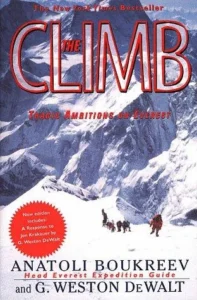
2. The Climb, by Anatoli Boukreev and G. Weston DeWalt (1999 edition)
Best for: Readers who finished Into Thin Air and want the guide's answer
Buy this one by its edition. The St. Martin’s Griffin second edition of July 1999 runs to 416 pages because it appends what the first did not have: the complete transcript of the Mountain Madness debriefing recorded at base camp five days after the disaster, and DeWalt’s response to Krakauer. The transcript is the closest thing either book gives you to raw evidence, climbers describing the day before anyone had a position to defend.
Pros
- The only sustained account from inside the Mountain Madness team
- The 1999 edition appends the base-camp debriefing transcript, a primary document neither narrative can spin
- Reading it changes how the more famous book lands
Cons
- The prose is flatter than Krakauer's, and Boukreev is working in his second language through a co-author
- DeWalt's closing response to Krakauer argues a case rather than telling the story, and it is the weakest part of the book
Notes on this ranking
Into Thin Air goes first because it is the better door into the events and because The Climb is written partly as a reply to it: read the reply first and half of it will not land. The Climb is second and not optional if you intend to have an opinion about Anatoli Boukreev, which most people who have read one book about 1996 turn out to have.
If you only have one evening, take the Into Thin Air paperback and stop there. If you have a commute rather than an evening, both books exist in audio, and the audio editions are linked on the cards above rather than split into cards of their own.
The lines people quote, and where they actually come from
A word on sourcing, because this is a quotes site and the honest answer is not the convenient one. Into Thin Air is in copyright and there is no public archive of its text, so the lines that circulate under Krakauer’s name cannot be checked against a page the way a 1901 travel memoir can. Our standing rule is that we print a quotation only when we can put it next to its source, so the lines that live on quote aggregators under this title are not reproduced here. If you want them, they are in the book, on the pages where they belong.
Two things are worth correcting anyway. The first is attribution drift: lines spoken by characters in the 2015 film Everest circulate widely as Krakauer quotations, and they are not. The second is the framing that Krakauer wrote to condemn Boukreev, which the book itself does not support and which the postscript in later printings explicitly pushes back on.
What can be sourced exactly is what the people who published the original piece thought of it.
“That he was never harder on anyone than he was on himself, that the piece functions as both riveting storytelling and an act of atonement, makes it all the more powerful.”
For Krakauer’s own words, verified line by line against the books they come from and printed with their years, his author page collects them. That is the habit this whole site is built on: the line next to the page it came from, or no line at all.
If Into Thin Air held you, read these next
Three more, all Krakauer, all verified on his page here. The first is the one to reach for if it was the mountains you came for; the second if it was the reckoning.
3. Eiger Dreams
Best for: Readers who want the mountaineering rather than the disaster
Twelve pieces of climbing journalism collected from the years before Everest, and the book where you can watch Krakauer become the writer who could handle 1996. The reporting is lighter, funnier and often about failure rather than catastrophe, which is a truer picture of what climbing usually is.
Pros
- Short pieces, so it survives being read in fragments
- Shows the craft that Into Thin Air later spends on a much heavier story
- Funny in places, which the famous book is not
Cons
- Assembled from magazine work, so it has no single arc
- The thinnest review base of the five here, though still well clear of our floor

4. Into the Wild
Best for: Readers who came for the reckoning rather than the altitude
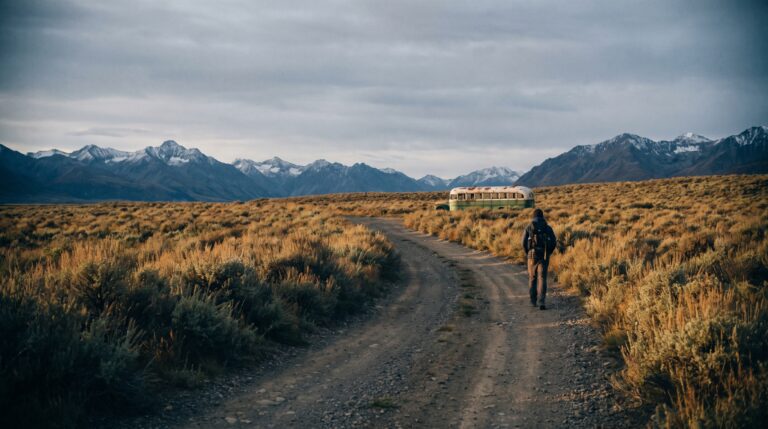
Published the year before Into Thin Air and built the same way: a death, a body of evidence, and a writer refusing to settle for the easy reading of it. If what held you was Krakauer weighing what a person was doing out there and declining to make it simple, this is the other half of that work.
Pros
- The same method applied to a quieter, stranger story
- Reads in a weekend
- We have covered it in full, so you can see the sourcing before you buy
Cons
- Krakauer digresses into his own climbing history for two chapters
- The timeline is deliberately non-linear

5. Classic Krakauer
Best for: Readers who want the reporting without another disaster
Collected magazine work spanning three decades, including the surfing piece that gives the US edition its longer title. It is the least known of the five and the easiest to dip into, and it shows how much of Krakauer’s career has been spent on the same question: what people are willing to risk, and what they tell themselves about it afterwards.
Pros
- Range: the pieces are not all about mountains
- Good entry point if a full book feels like a commitment
Cons
- Previously published work, so a long-time reader will know some of it
- No connection to 1996 beyond the author

Our full account of the other book, the sourcing behind the lines it made famous and which version to read, is here: Jon Krakauer’s Into the Wild. And if it is the pull of hard places you came for rather than the books, the adventure quotes collection gathers the verified lines from the whole tradition these climbers were reading.
Frequently asked questions
Is Into Thin Air accurate?
It is Jon Krakauer’s first-person account, reported from interviews, radio logs and his own experience, and he marks the places where his memory was compromised by exhaustion and oxygen depletion. Parts of it are disputed, most visibly by the guide Anatoli Boukreev, whose book The Climb (1997, with G. Weston DeWalt) gives a counter-account from inside the other expedition.
How many people died in the 1996 Everest disaster?
Outside, the magazine that sent Krakauer, puts the toll from the 10 and 11 May summit push at eight, four of them from Krakauer’s own six-person team. Twelve people died on Everest across the whole 1996 season. Other figures circulate because sources close the counting window on different dates or include both sides of the mountain.
Was Jon Krakauer on Everest himself?
Yes. He climbed as a paying client on Rob Hall’s Adventure Consultants expedition, on assignment for Outside magazine to report on commercial guiding, and he reached the summit in the early afternoon of 10 May 1996.
Is the 2015 film Everest based on Into Thin Air?
No. Universal’s Everest covers the same events but is not an adaptation of Krakauer’s book. Its publisher credits The Climb as the account behind key events in the film, and Krakauer has publicly disputed the film’s handling of his own actions. Lines spoken in the film are frequently quoted online as though Krakauer wrote them.
Should I read The Climb as well, and in which order?
Read Into Thin Air first and The Climb second. The Climb is written partly as a reply, so it makes far more sense with the first book behind you. Get the 1999 St. Martin’s Griffin edition of The Climb: it appends the Mountain Madness base-camp debriefing transcript, recorded five days after the disaster, which is the closest thing to primary evidence either book offers.




Bryant is the editor who sent Krakauer to Everest and then ran the article, so this is not a reviewer’s verdict from outside the story. It also names the thing that separates Into Thin Air from the shelf of disaster books around it: the author is inside the inquiry, not conducting it from a safe distance.