
Sailing quotes: 30 lines with the boat, the book and the year
Every line below was read out of the text it came from, with the chapter or the poem named. Conrad, Slocum, Dana, Masefield, Grahame, Childers and Jack London, plus five of the most shared sailing lines on the internet, each one credited to the wrong person.

Search sailing quotes and page one gives you two charter-company blogs, two sailing blogs, a Reddit thread, a Pinterest board, an aggregator and a historical seaport trust. Not one of them attaches a book and a year to a line. The AI Overview on this search sources itself to seven pages, six of which are blogs and forum threads.
Which is a strange gap, because sailing has better literature than almost any other subject on this site, and most of it is out of copyright and free to read. Conrad commanded ships before he wrote about them, in his third language, and thirteen of the lines here come from one book of his. Joshua Slocum sailed around the world on his own and published the log. Richard Henry Dana went to sea as an undergraduate and wrote down what the work was actually like. Erskine Childers put real North Sea shoal-water cruising into a spy novel. Jack London built a boat without knowing how to navigate and wrote that down too.
So this page took the slow route. Thirty lines, each matched word for word against a complete text, each carrying the author, the work, the year and a place inside the work you can point at. Every one of the thirty lines comes from a book published before 1930, which is why the whole verification pass cost nothing.
Then the part that is actually useful. Five of the most shared sailing lines anywhere are credited to the wrong person, and two of them have already been run to ground on this site. The most famous one gets its own section, immediately below.
This page is about the act and the vessel: the boat, the crew, the wind, the anchor, the passage. The wider coastal collection lives on the ocean and coast quotes hub, and every attribution this site has traced sits on the travel quotes fact check hub.
What are the best sailing quotes? The short answer
Who really said “lose sight of the shore”?
This is the most shared sailing line on the internet and the search results cannot agree on who wrote it. On the current page one for sailing quotes it is credited to Christopher Columbus at one position and to Andre Gide at another, three results apart, in the same set of results. Quotes on Travel has already run this one to ground, so the answer here is short and the working is on its own page.
One doesn’t discover new lands without consenting to lose sight, for a very long time, of the shore
Worth saying plainly what that card does and does not settle. The underlying sentence is Gide’s and the trail runs to a dated page. The popular rewording is nobody’s: no book, no letter, no speech. Neither of those is a claim about Columbus’s own writings, which were not searched here. Every phrasing was checked against the 83 complete texts this page draws on and returns nothing, which tells you it is not a line from the sailing canon.
Sailing quotes about setting out
Six lines about the decision and the first day, which is the part of sailing that the caption pages get closest to and still miss. Three of them are Slocum leaving Boston in a boat he rebuilt himself, and two are a water rat in a children’s book who understands the whole thing better than anybody.
As for myself, the wonderful sea charmed me from the first.
The plainest possible statement of the thing, from a man who had just failed at fishing and was about to sail around the world alone. He was eight years old when he started going out on the bay, and he notes in the same breath that the odds were against surviving it. No metaphor, no uplift, just a fact about himself.
I had resolved on a voyage around the world, and as the wind on the morning of April 24,1895, was fair, at noon I weighed anchor, set sail, and filled away from Boston
The moment the voyage starts, and notice how little ceremony there is in it. The wind was fair, so he went. The date is in the sentence because Slocum put it there, and the comma in April 24,1895 is his printer’s rather than ours. He came back to Newport in the same boat three years and two months later, having been the first person to do it alone.
A thrilling pulse beat high in me. My step was light on deck in the crisp air. I felt that there could be no turning back, and that I was engaging in an adventure the meaning of which I thoroughly understood.
Six sentences later, off East Boston, and this is the best account of the first hour of a long passage that this page found anywhere. Read what he actually claims: not confidence, and not that it would be fine. He says he understood the meaning of what he was doing. Most writing about setting out claims the first thing. Almost none claims the second.
Believe me, my young friend, there is <em>nothing</em>—absolute nothing—half so much worth doing as simply messing about in boats.
The most quoted sentence about boats in the language, and the version you know is misprinted. Grahame wrote absolute nothing, not absolutely nothing, and the Project Gutenberg text of the 1908 book prints it that way with the emphasis on nothing. It matters a little: absolute nothing is stranger and more childlike, which is the Water Rat exactly. Read the scene and the joke lands harder too, because he is so deep in his own speech that he rows the boat into the bank while making it.
Nothing seems really to matter, that’s the charm of it. Whether you get away, or whether you don’t; whether you arrive at your destination or whether you reach somewhere else, or whether you never get anywhere at all
The other half of the Rat’s speech, and the part nobody quotes. It is a complete rejection of arrival as the point of a journey, written for children in 1908, and it is a better description of why people cruise than anything on the first page of this search. Whether you arrive at your destination or whether you reach somewhere else is the sentence to sit with.
That is why I am building the <em>Snark</em>. I am so made. I like, that is all. The trip around the world means big moments of living.
London on why he was building the boat, and the honesty of it is the reason it is here. The book goes on to admit that neither he nor his co-navigator knew any navigation and that they intended to teach themselves on the way to Hawaii out of the books, and that the co-navigator believed the surface of the earth was concave and that we live inside a hollow sphere. Both of those are in the same chapter as this line. The Snark set out anyway.

Sailing quotes about the boat and the craft of handling her
Five lines from the book that supplies more of this page than any other, Conrad’s The Mirror of the Sea. Thirteen of the thirty cards come from it, and it is the best book about seamanship in English. The handful of pages that get quoted online are the lyrical ones. These are the working sentences instead.
The love that is given to ships is profoundly different from the love men feel for every other work of their hands—the love they bear to their houses, for instance—because it is untainted by the pride of possession. The pride of skill, the pride of responsibility, the pride of endurance there may be, but otherwise it is a disinterested sentiment.
Conrad’s explanation of why people are strange about boats, and it turns on one word. Untainted by the pride of possession. A house makes its owner proud of owning it; a boat cannot, because she is judged by whether she works, and the owner is judged the same way. That is why the feeling survives selling her.
A ship is not a slave. You must make her easy in a seaway, you must never forget that you owe her the fullest share of your thought, of your skill, of your self-love.
Five words, then the instruction. This is the whole ethic of handling a boat and it is expressed as an obligation rather than a technique: she is owed thought, skill and self-love, and self-love is the surprising one. Conrad means that a sailor who does not mind being embarrassed will eventually hurt the boat. The sentence continues past the card to say that if you remember the obligation she will sail, stay and run for you as long as she is able.
After all, the art of handling ships is finer, perhaps, than the art of handling men.
Said in the middle of an argument about yacht racing, and it is the quietest boast in the book. Conrad had handled both: he commanded ships and he wrote novels about people. He is not saying ships are harder. He is saying the art is finer, because a ship cannot be persuaded, flattered or managed, and so the work is judged by something that has no opinion of you.
And so much depends upon the craft which, made by man, is one with man, that the sea shall wear for him another aspect.
One clause, and it is the reason a small boat and a big ship are not the same experience of the same ocean. Made by man, is one with man. The sea does not change; what changes is what you are in, and Conrad is saying the boat is the instrument you perceive the water through.
Every sort of demand is made upon the master of a sailing-yacht, and to be penalized in proportion to your success may be of advantage to the sport itself, but it has an obviously deteriorating effect upon the seamanship. The fine art is being lost.
Conrad in 1906 complaining that competitive sailing was ruining seamanship, which is a thoroughly modern complaint arriving a century early. The argument is specific: handicap by size alone and you reward the skipper who takes the risk that pays, which is not the same as the skipper who is good. He had just read a newspaper article praising exactly that system.
Sailing quotes about the crew and the work
Five lines about the part of sailing that is labour. This is the register that almost nothing on this search touches, because a caption wall has no use for reef-points, and it is where the two best first-hand books live.
“Ships!” exclaimed an elderly seaman in clean shore togs. “Ships”—and his keen glance, turning away from my face, ran along the vista of magnificent figure-heads that in the late seventies used to overhang in a serried rank the muddy pavement by the side of the New South Dock—“ships are all right; it’s the men in ’em. . .
An old sailor in shore clothes, asked about ships, correcting the question. Conrad prints the pause and the trailing dots, and the card keeps them. The whole argument of the book is in the answer: the hulls were the highest achievement of shipbuilding and the man will not talk about them, because the variable was never the boat.
If we pull together, you'll find me a clever fellow; if we don't, you'll find me a bloody rascal.
The second mate’s entire speech to the crew on the first night at sea, and the reason it belongs on a page about sailing is that it is a management philosophy delivered to people who cannot leave. Dana was nineteen and writing it down. Note that the offer and the threat use the same word, and the word is together.
I was of some service on a yard, and could knot my reef-point as well as anybody.
The first gale of the voyage, and the sentence that marks the change from passenger to crew. A reef-point is a short line used to tie a reduced sail to the yard, in the dark, in a blow, with your body over the water. As well as anybody is the whole promotion, and Dana gives it exactly one clause.
If you <em>do</em> want a sit-down lunch, there’s nothing like running aground for it.
The funniest line on this page and every shoal-water sailor knows it is true. The boat is hard aground on a falling tide in the Frisian estuaries, the narrator is horrified, and his skipper is laying out an unusually good lunch. Childers wrote the sailing in this novel from his own cruising, which is why the details are right and the jokes are specific.
The sailing and racing of yachts has developed a class of fore-and-aft sailors, men born and bred to the sea, fishing in winter and yachting in summer; men to whom the handling of that particular rig presents no mystery.
Conrad, in 1906, describing what we would now call a weekend sailor, and doing it without a trace of condescension. Fishing in winter and yachting in summer is a working life. The point of the sentence is the last clause: familiarity with one rig, all the way down, is its own kind of expertise.

Sailing quotes about wind and weather
Five lines about the thing that actually decides a passage. Two are Captain MacWhirr, the least imaginative man in Conrad, steering into a typhoon because going around it would have looked untidy in the log. Two are Masefield, and they are the only poems on this page.
There's just so much dirty weather knocking about the world, and the proper thing is to go through it with none of what old Captain Wilson of the Melita calls 'storm strategy.'
MacWhirr refusing to alter course, and the line just before it in the book is A gale is a gale, Mr. Jukes. He is objecting to what he calls storm strategy on the grounds that he would have to explain the extra days to the owners. Conrad is not endorsing him. The novel spends two hundred pages showing what that reasoning costs, and MacWhirr is still the man who brings the ship through.
How can you tell what a gale is made of till you get it?
The same conversation, and this one is harder to argue with. MacWhirr is reading a book of storm rules written by a man who is not on board, and asking the only question that matters at sea: what is actually happening here, now. Every forecast is a claim about a place you are not standing in yet.
For, after all, a gale of wind, the thing of mighty sound, is inarticulate. It is man who, in a chance phrase, interprets the elemental passion of his enemy.
Conrad on why weather writing is so often bad, and it is the most useful thing on this page for anybody who writes about sailing. A gale is inarticulate. It has no intention, no message and no opinion, and every menacing adjective in every sailing story was supplied by a person afterwards. He then spends a page describing one anyway, which he knows is the joke.
I must down to the seas again, to the lonely sea and the sky, And all I ask is a tall ship and a star to steer her by, And the wheel’s kick and the wind’s song and the white sail’s shaking, And a grey mist on the sea’s face and a grey dawn breaking.
The first stanza of the most famous sailing poem in English, and the wording is not what the internet prints. The text reads I must down to the seas again, with no go and with seas in the plural. Note what he actually asks for: a tall ship, a star, the wheel’s kick, the wind’s song. Three of the four are jobs. The scope note is in the selection notes below, because which printing was read matters here.
In the harbour, in the island, in the Spanish Seas, Are the tiny white houses and the orange-trees, And day-long, night long, the cool and pleasant breeze Of the steady Trade Winds blowing.
The other Masefield on this page, and it is here to be read against the marked trade-winds card further down. This is what a trade wind actually is in the poem: a steady breeze, white houses, a fiddle and a watch below. Not a slogan about seizing opportunity.
Sailing quotes about anchors, harbours and landfall
Five lines about the two ends of a passage, all of them Conrad, because nobody else wrote about anchors as though they were a moral subject. Read these before the marked section at the bottom, where the most famous harbour line on the internet turns out to belong to a man almost nobody has heard of.
BEFORE an anchor can ever be raised, it must be let go; and this perfectly obvious truism brings me at once to the subject of the degradation of the sea language in the daily press of this country. Your journalist, whether he takes charge of a ship or a fleet, almost invariably “casts” his anchor. Now, an anchor is never cast, and to take a liberty with technical language is a crime against the clearness, precision, and beauty of perfected speech.
Conrad’s opening move on the subject, and then a complaint that is either pedantry or the whole point, depending on how you feel about language. You do not cast an anchor. You let it go, and then you weigh it. He calls getting the verb wrong a crime against the clearness, precision and beauty of perfected speech, in a chapter he wrote because a newspaper had done it again.
The anchor is an emblem of hope, but a foul anchor is worse than the most fallacious of false hopes that ever lured men or nations into a sense of security.
The line the harbour posters should be quoting and never do, because the warning is in the second half. A foul anchor is one that has fouled its own cable or snagged something on the bottom: it looks set and it is not. Conrad’s point is that a false sense of security is worse than known danger, and he says so in the next sentence: the sense of security, even the most warranted, is a bad councillor.
From first to last the seaman’s thoughts are very much concerned with his anchors. It is not so much that the anchor is a symbol of hope as that it is the heaviest object that he has to handle on board his ship at sea in the usual routine of his duties. The beginning and the end of every passage are marked distinctly by work about the ship’s anchors. A vessel in the Channel has her anchors always ready, her cables shackled on, and the land almost always in sight. The anchor and the land are indissolubly connected in a sailor’s thoughts.
The practical version, and it corrects the sentiment in his own more famous line. The anchor is not mainly a symbol of hope. It is the heaviest thing on board that a sailor handles by routine, and the beginning and the end of every passage are marked by work about it. Then the last sentence earns the whole passage: the anchor and the land are indissolubly connected in a sailor’s thoughts.
The term “Landfall” is more easily understood; you fall in with the land, and it is a matter of a quick eye and of a clear atmosphere.
A definition, and it is worth having because the two words get used as synonyms for leaving and arriving. A Landfall is not arrival. It is the moment you see the land you predicted you would see, which is why Conrad’s test for it is a quick eye and a clear atmosphere rather than a distance run.
Fogs, snowstorms, gales thick with clouds and rain—those are the enemies of good Landfalls.
The enemies, named. All three are the same enemy, which is not being able to see, and the reason a Landfall is good or bad is therefore mostly out of the navigator’s hands. Conrad’s rule, in the sentence before this one, is that a Landfall is good if the land appears on the bearing you expected.
Sailing quotes about sailing alone
Four lines from the one man on this page who did it by himself, on a boat he rebuilt from a rotting hulk in a field. Seven of the thirty cards on this page are Slocum, which is a concentration this page is happy to defend: almost everything written since about being alone at sea is a footnote to his log.
I lashed the helm, and my vessel held her course, and while she sailed I slept.
The most practical sentence ever written about single-handed sailing, and it is one clause of technique followed by one clause of consequence. The Spray would hold her course with the helm lashed, which is why one man could cross oceans in her and sleep. Slocum reports elsewhere in the book that on one twenty-three day run he spent about three hours steering.
When fine weather returned, then came the sense of solitude, which I could not shake off.
The honest counterweight, and it is the reason to trust the rest of it. The loneliness did not arrive in the gale, when there was work. It arrived when the weather turned fine. He started talking to an imaginary man at the helm, and he tells you so.
Then was the time to uncover my head, for I sailed alone with God.
After thirty hours at the wheel getting clear of the Strait of Magellan, and this is the only religious sentence in the book. Uncover my head is the gesture of taking a hat off, and the sentence is doing the same thing the rest of the log does, which is to record exactly what he did and let the reader decide what it meant.
The days passed happily with me wherever my ship sailed.
The last sentence of the book. Not a triumph, not a summary, just a plain statement after three years and the first solo circumnavigation in history. He went back to sea and disappeared on another single-handed passage in 1909.

Four more sailing lines credited to the wrong person
The shore line at the top of this page has its own section because it is the most shared of them. Here are four more, and each card says exactly what was searched, because an unproved claim about a quote is the same failure as the one it is correcting. Two of these rest on published archival work by somebody else, which is credited. One rests on a fact check this site published itself. One rests only on an absence, and says so.
A ship in harbor is safe, but that is not what ships are built for.
The most quoted harbour line in the world, and it belongs to a man who printed his sayings privately. Shedd published the collection in 1928 and the citation is carried in the Yale Book of Quotations, edited by Fred R. Shapiro. The trail is Quote Investigator’s, including a 1931 newspaper column by Ed Howe quoting the book, a 1949 newspaper filler crediting J. A. Shedd, and a 1965 syndicated column doing the same. Grace Hopper really did use it, in a port rather than harbor variant, and said in a 1981 interview that it had stuck with her, which is how her name attached. The Einstein credit is unsupported. There is also an 1901 Minnesota newspaper item making the same point about warships that rust and rot in harbor, credited in substance to Theodore Roosevelt, so the idea was in the air before Shedd gave it its sentence.
Twenty years from now you will be more disappointed by the things that you didn’t do than by the ones you did do. So throw off the bowlines. Sail away from the safe harbor. Catch the trade winds in your sails. Explore. Dream. Discover.
The sailing metaphor everyone attributes to Twain, and there is no trace of it in his books, his letters or his speeches. The earliest known source is Brown’s 1990 collection of his mother’s sayings, and he credited her rather than himself. Quotes on Travel traced this one in full, on the page linked in the section intro above. Worth reading next to card 21 as well, because Masefield’s actual trade winds are a steady breeze and a watch below, not a slogan about seizing the moment.
We cannot direct the wind, but we can adjust the sails.
The most reproduced sailing metaphor that has nothing to do with sailing, and the modern names credited with it were all born after it was already in circulation. Quote Investigator found the earliest close match in an 1859 newspaper report of a lecture by the spiritualist medium Cora L. V. Hatch: you could not direct the wind, but you could trim your sail so as to propel your vessel as you pleased, no matter which way the wind blew. Earlier relatives exist, including an 1852 sailors’ prayer book making the opposite point, that trimming the ship is not always enough. The finding is Quote Investigator’s and this page is repeating it rather than claiming it.
A smooth sea never made a skilled sailor.
This one is different from the other three, and the difference is the point. Three instruments were used and all three come back empty. Quote Investigator has no entry for it. WIST has no entry for it. All three common phrasings, smooth sea, calm sea and skillful sailor, return zero matches across the 83 complete texts searched for this page. Every aggregator printing it under Roosevelt’s name gives no book, no speech and no date. That is not proof he never said it: his own papers were NOT searched here, and the sentence reads like an older proverb that has been given a famous name. The honest position is no source located, which is a weaker claim than the other three cards on this page are making, and it is stated here so the warning styling does not imply otherwise.
Notes on the ranking and the sources
The order is not a popularity ranking. Lines are grouped by what they are about, because a sentence on rigging and a sentence on solitude are not competing for the same slot. Within each group the strongest line leads.
How each line got here. Every quote was extracted from a complete text by string match, not recalled, and the chapter, section or poem was read off the same file rather than typed. Every one of the thirty cards comes from a pre-1930 book held by Project Gutenberg, so the whole verification pass cost nothing. The locators for The Mirror of the Sea name both the numbered section and the part it belongs to, and the part names come from the book’s own table of contents.
The Masefield scope note, and it closes a gap this site left open. Card 20 was read from the Macmillan printing of Salt-Water Ballads whose own author’s note, dated 9 June 1913, says the book is re-issued much as it was when first published nearly eleven years before, which puts the original at 1902. A separate Quotes on Travel page checked the 1916 Salt-Water Poems and Ballads and stated that it could only speak for that printing. Both printings read I must down to the seas again. Two independent texts now agree, and the popular I must go down to the sea again matches neither.
What was cut, and why. Register did most of the cutting. Lines about the water itself rather than the boat belong on the coastal collection at the ocean and coast quotes hub and were left there. Robert Louis Stevenson has a profile on this site and is not quoted here, which is a deliberate call: his sea book is the account of an Atlantic crossing in steerage, and a paying passenger watching the weather is a different subject from sailing a boat. He is worth reading anyway, at Robert Louis Stevenson. Living writers on sailing are underrepresented here for a copyright reason rather than a quality one.
Aggregators, named rather than hidden. BrainyQuote and the Pinterest boards on this search were used to find out which sailing lines people actually share, which is the only thing they are good for, and neither was used as evidence for a single card. Quote Investigator is a different kind of source and is credited as one: it did the archival work on the harbour line and on the wind and sails line, and this page is repeating findings rather than claiming them. The Yale Book of Quotations is named on the harbour card because that is where the 1928 citation sits.
Honest limits. Fifteen of the thirty cards are Conrad and seven are Slocum, which is a real concentration in two writers and reflects who wrote best about handling boats in English before 1930 rather than a balanced survey. Seven writers and eight separate works are represented in total. Not one of the thirty verified cards can carry a link to an author profile on this site, because none of these writers has one yet. And an absence proof is only ever as wide as what was searched: the corpus check behind the marked cards covers 83 complete texts of sea and travel literature, and nothing else.
If you want one line to start with
Take card 8, Conrad’s A ship is not a slave, and read the sentence that follows it. It is the only line on this page that tells you how to behave rather than how to feel, and it applies the first time you take a tiller. Then read The Mirror of the Sea, which is free, short, and the best thing written about the craft in English.
After that, check one line you already believe. Pick a sailing quote you have shared, find the book it is credited to, and search the text for it. That is all five marked cards on this page, and two of them turned into investigations this site published. For the wider collection the travel quotes pillar is the way in, and the travel quotes fact check hub is every attribution traced so far.
Sailing quotes: the questions people actually ask
Who said “You can never cross the ocean until you have the courage to lose sight of the shore”?
Not Christopher Columbus, and not in that wording. The underlying sentence is Andre Gide’s, from Les Faux-monnayeurs (1925), translated by Dorothy Bussy in 1927 as: One doesn’t discover new lands without consenting to lose sight, for a very long time, of the shore. The popular rewordings, including the ocean version and the courage version, have no primary source. The line is also widely credited to the novelist Angela Elwell Hunt, who quoted Gide in a 1998 novel. The full trail, in both languages, is on this site’s own fact-check of the line.
Who said “A ship in harbour is safe, but that is not what ships are built for”?
John A. Shedd, in Salt from My Attic, a collection of sayings he printed in 1928. The citation is in the Yale Book of Quotations. Grace Hopper used a variant with port instead of harbor and said in 1981 that it had stuck with her, which is why her name is attached to it now. The Albert Einstein credit is unsupported. Quote Investigator traced the newspaper record from 1931 onward.
What did Joshua Slocum write about sailing alone?
He wrote the log of the first solo circumnavigation as Sailing Alone Around the World (1900), and the most useful sentence in it is technical: I lashed the helm, and my vessel held her course, and while she sailed I slept, from chapter 3. He is also honest about the cost. In the same chapter he records that the loneliness arrived when the weather turned fine rather than during the gale, and that he took to calling orders to an imaginary man at the helm.
What is a good short sailing quote for Instagram?
Three that are short and fully sourced. “A ship is not a slave.” Joseph Conrad, The Mirror of the Sea, 1906. “The anchor is an emblem of hope.” Conrad, same book. “There is nothing, absolute nothing, half so much worth doing as simply messing about in boats.” Kenneth Grahame, The Wind in the Willows, 1908, chapter 1, and note that the printed text reads absolute nothing rather than absolutely nothing. Each fits a caption with the book and the year still attached.
What did Conrad write about seamanship?
The Mirror of the Sea (1906) is the book, and it is short and free. The three sentences worth memorising are that a ship is not a slave and is owed your thought, skill and self-love; that the art of handling ships is finer, perhaps, than the art of handling men; and that the anchor is an emblem of hope while a foul anchor is worse than the most fallacious of false hopes. He also insists that an anchor is let go and weighed, never cast, and calls the wrong verb a crime against precise speech.

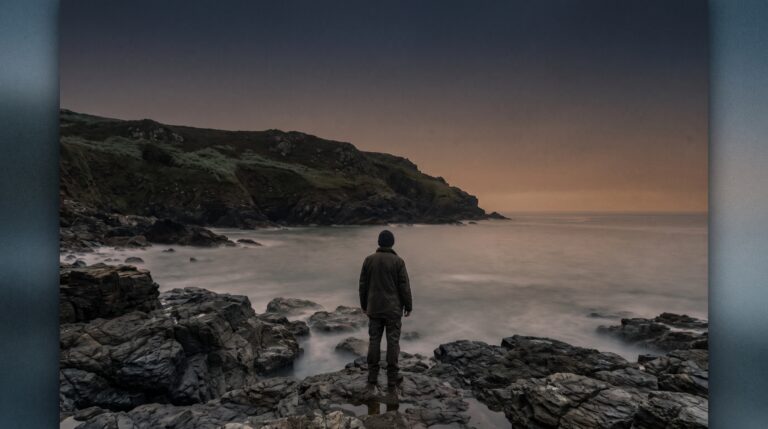




Columbus did not write it and neither did the American novelist it is also credited to. The sentence closes a passage in the fourteenth chapter of the third part of Gide’s novel, and the French text is digitised on Wikisource. Angela Elwell Hunt quoted it inside a longer reflective passage in her 1998 novel The Golden Cross, aggregators lifted the passage whole, kept her byline and dropped the quotation marks. The wording almost everybody shares, Man cannot discover new oceans unless he has the courage to lose sight of the shore, is not Gide’s either: it is a mutation with no primary source at all. The full trail, both languages and the credit that survives checking, are on the fact-check page linked in the paragraph above.