
Into the Wild quotes: 25 lines, sorted by who actually wrote them
Chris McCandless’s own notes, the books he was reading, Jon Krakauer’s reporting and the 2007 screenplay are four different writers. Page one of this search runs them together. This page does not.
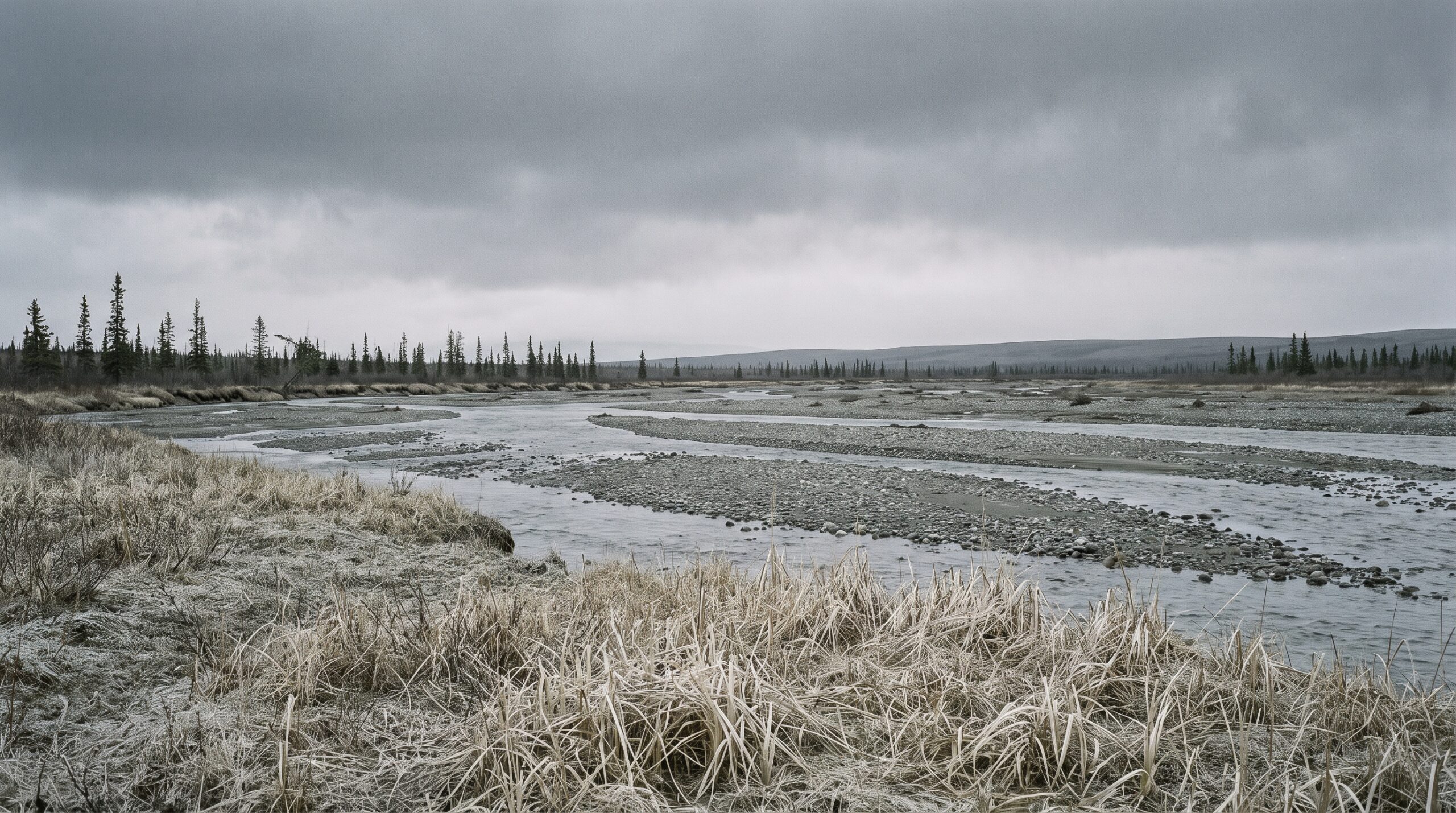
Search “into the wild quotes” and you get a single undifferentiated list. Krakauer sentences, McCandless postcards, Thoreau, Jack London, Tolstoy and lines written by Sean Penn in 2007 all sit under one heading with one credit. That is not a small tidiness problem. It is the difference between something a dying man wrote on a page of a novel and something a screenwriter gave an actor to say fifteen years later.
The most quoted four words on this whole subject are “Happiness only real when shared”, and they are not from the body of Krakauer’s book at all. They are a note in the margin of a paperback, in block capitals, and even their reading is recorded as disputed. Almost nothing on page one tells you that.
So this page sorts by voice. Nine cards of McCandless’s own documents with the date and the carrier attached. Eight from the writers he was actually reading, each one matched word for word against the complete text on Project Gutenberg with the chapter named. Two from Krakauer himself, kept deliberately short because our Jon Krakauer profile already carries twelve of his lines with chapters. Six from the 2007 film, labelled as screenplay.
Then three lines that do not survive a check, including the Thoreau quotation half the internet prints in the film’s wording rather than Thoreau’s. For the wider collection, the travel quotes library is sorted by what you actually want to say.
What are the Into the Wild quotes people actually search for? The short answer
Read Into the Wild
1. Into the Wild (paperback)
Best for: Anyone coming to the story for the first time
The book itself, in the standard Anchor paperback. Krakauer’s reconstruction of McCandless’s two years on the road runs a little over 200 pages and reads in two or three sittings. This is the version to start with: the film is built from it, the famous lines live in it, and the arguments about what McCandless was doing out there only make sense once you have seen Krakauer’s evidence laid out in order.
Pros
- The complete story, including the investigation the film cannot carry
- Short enough to finish in a weekend
- The edition most readers, courses and book clubs use
Cons
- Krakauer spends two chapters on his own climbing history, which some readers find a digression
- The timeline is deliberately non-linear; a straight chronology it is not

2. Into the Wild (audiobook)
Best for: Listeners whose reading time lives in the car or on the trail
Philip Franklin’s unabridged narration for Random House Audio. It is a steady, unshowy reading that suits Krakauer’s reportorial tone, and a road story turns out to be a natural fit for the format. If the paperback would sit unopened on your nightstand, this is the honest alternative.
Pros
- Unabridged; nothing trimmed
- Restrained narration that stays out of the story's way
- The natural format for a story that lives on the road
Cons
- The audio edition carries only a few dozen ratings, so its 4.6 rests on a thin sample
- No maps or photographs, and this story leans on geography

Chris McCandless in his own words
These are documents, not dialogue: postcards, letters, a sheet of plywood, a margin note and two notes left in the bus. Every one of them reaches us through Krakauer’s book, which is why each card names the carrier as well as the date. Where the original spelling is wrong it is left wrong. The aggregators quietly correct it, and in doing so they smooth out a twenty-four-year-old writing fast.
I now walk into the wild.
If this adventure proves fatal and you don’t ever hear from me again I want you to know your a great man.
Two sentences above the famous one, and almost nobody quotes it. Note your for you’re. The sourced record marks it as written, and most quote pages silently fix it. We leave it, because a man writing in a hurry on a postcard is the actual historical object here.
Two Years He Walks The Earth. No Phone, No Pool, No Pets, No Cigarettes. Ultimate Freedom. An Extremist. An Aesthetic Voyager Whose Home Is The Road.
The opening of a much longer declaration he cut into the bus on his second day there, signed Alexander Supertramp, May 1992. The capitalisation is his. It reads like a trailer for a life, written by the person about to live it, and it is the most cinematic thing in the whole documentary record, which is probably why the 2007 film uses it almost unaltered.
So many people live within unhappy circumstances and yet will not take the initiative to change their situation because they are conditioned to a life of security, conformity, and conservatism, all of which may appear to give one peace of mind, but in reality nothing is more damaging to the adventurous spirit within a man than a secure future.
Written to an eighty-year-old man he had met in California, urging him to sell up and get on the road. It is the longest sustained piece of argument he left behind, and it is usually quoted in three-word fragments that turn it into a poster. Whole, it is a young man telling a much older one how to live, which is either bracing or unbearable depending on the day you read it.
The joy of life comes from our encounters with new experiences, and hence their is no greater joy than to have an endlessly changing horizon, for each day to have a new and different sun.
From the same letter, and the most reproduced sentence in it. Their for there, again left as written. This is the line that gets printed over a photograph of a road, which is a fair enough use of it, though the sentence immediately before it is doing the harder work.
You are wrong if you think Joy emanates only of principaly from human relation. God has placed it all around us. It is in everything and anything we might experience. We just have to have the courage to turn against our habitual lifestyle and engage in unconventional living.
Worth reading against the margin note three cards below. In April he tells Franz that joy does not come chiefly from other people. In late July, in the bus, he writes four words that say close to the opposite. Both are his. Any page that gives you only one of them is giving you half a person.
HAPPINESS ONLY REAL WHEN SHARED
The four most searched words on this subject, and three things about them are routinely got wrong. It is not Krakauer’s prose, it is a note in a paperback margin. It is not a sentence, there is no verb and no full stop. And the sourced record files it as disputed rather than settled, because it is a handwritten marginal note being read by other people. The wording trace, including what happens when the tidy version inserts an is, is argued on our Krakauer profile, linked on the attribution above. What belongs here is the other half: the Pasternak passage he was annotating runs the other way round, that an unshared happiness is not happiness. He was agreeing with a novel, in its margin, in the last weeks of his life.
ATTENTION POSSIBLE VISITORS. S.O.S. I NEED YOUR HELP. I AM INJURED, NEAR DEATH, AND TOO WEAK TO HIKE OUT OF HERE. I AM ALL ALONE, THIS IS NO JOKE. IN THE NAME OF GOD, PLEASE REMAIN TO SAVE ME. I AM OUT COLLECTING BERRIES CLOSE BY AND SHALL RETURN THIS EVENING. THANK YOU, CHRIS McCANDLESS. AUGUST?
He signs his own name, not Alexander Supertramp. That detail does more work than any of the famous lines. The question mark after August is his: by then he had lost track of the date.
I HAVE HAD A HAPPY LIFE AND THANK THE LORD. GOODBYE AND MAY GOD BLESS ALL!
The last thing he wrote. The journal had stopped five days earlier on two words about blueberries. Note that the search term “last line of Into the Wild” has three plausible answers: this note, the end of Krakauer’s book, and the film’s closing voice-over. Three different texts by three different authors.

The writers Chris McCandless was reading
This is the section the rest of page one does not have, and it is the cheapest one to get right. A large share of the lines circulating as “Into the Wild quotes” are not from the book at all. They are Henry David Thoreau, Jack London and Tolstoy, quoted inside it, underlined in paperbacks found in the bus, or read aloud in the film. All three are out of copyright and readable in full, so every card below was matched word for word against the complete text and carries its chapter.
Rather than love, than money, than fame, give me truth.
The sentence at the centre of this whole story, and the one most often printed wrong. What circulates, and what the 2007 film says, is a longer version with faith and fairness added. The film is honest about it: the script has the character announce that he is paraphrasing. The internet dropped that part. Thoreau’s nine words are above, matched in the Conclusion of Walden.
I went to the woods because I wished to live deliberately, to front only the essential facts of life, and see if I could not learn what it had to teach, and not, when I came to die, discover that I had not lived.
Carried here for one reason: McCandless was attempting in a literal sense a thing Thoreau never was. Thoreau’s cabin was a twenty-minute walk from his mother’s house and he went back for meals. The Stampede Trail bus was about twenty miles from the nearest road, with a river in between. Same sentence, two completely different bets.
The mass of men lead lives of quiet desperation. What is called resignation is confirmed desperation.
Almost always quoted as the first sentence alone. The second sentence is the one that bites, and it is right there in the same paragraph of Economy. Half a quotation is how a diagnosis becomes a mood.
However mean your life is, meet it and live it; do not shun it and call it hard names. It is not so bad as you are. It looks poorest when you are richest. The fault-finder will find faults even in paradise. Love your life, poor as it is.
The passage that sits a few lines away from “give me truth” and almost never travels with it. Read together they are an argument about staying rather than leaving, which is an awkward fit for the way this story usually gets told.
There was clearly felt the presence of a force not bound to be kind to man. It was a place for heathenism and superstitious rites,—to be inhabited by men nearer of kin to the rocks and to wild animals than we.
Read aloud in the 2007 film, and worth having in Thoreau’s wording because the film changes two words. The film says a place of heathenism and the wild animals. Thoreau wrote a place for heathenism and wild animals, matched in Ktaadn. It is also the passage that most complicates the romance: Thoreau on a real mountain is unnerved, not uplifted.
There is an ecstasy that marks the summit of life, and beyond which life cannot rise.
Regularly quoted as though Krakauer wrote it. He did not. It is London, and McCandless had carved Jack London is king into the bus before he ever got near the bottom of it. Chapter III of The Call of the Wild, matched word for word against the full text.
He was mastered by the sheer surging of life, the tidal wave of being, the perfect joy of each separate muscle, joint, and sinew in that it was everything that was not death, that it was aglow and rampant, expressing itself in movement, flying exultantly under the stars and over the face of dead matter that did not move.
The sentence the short famous one comes out of, and one of the very few places where the Alaska of McCandless’s reading and the Alaska he actually walked into can be held side by side without flinching. London is describing a dog hunting. The romance and the indifference are in the same paragraph.
If we admit that human life can be ruled by reason, the possibility of life is destroyed.
Quoted in the 2007 film and credited there to Tolstoy, correctly. What the film does not say is where: it is the closing sentence of the first chapter of the First Epilogue, matched against the complete text. Tolstoy is arguing about historians and great men. In the film it becomes a young man’s licence, which is a long way from what the paragraph is doing.
Jon Krakauer’s own lines
Two only, deliberately. Krakauer is the author of the book and the narrator of two of its chapters, and our guide to Krakauer’s Into the Wild and his author profile already carry twelve of his sentences with chapters attached. Repeating them here would make this page longer and the site no more useful. What belongs here is the pair that gets misfiled as McCandless.
The trip was to be an odyssey in the fullest sense of the word, an epic journey that would change everything.
Krakauer describing McCandless setting out, and constantly reposted as though McCandless said it about himself. He did not. This is a reporter writing four years after the fact, and the sentence is carrying the irony the reader already knows about.
It is easy, when you are young, to believe that what you desire is no less than what you deserve, to assume that if you want something badly enough, it is your God-given right to have it.
From the two chapters where Krakauer turns the book on himself and his own solo climb on the Devils Thumb in 1977. It first appeared six years earlier in Eiger Dreams (1990) with slightly different punctuation, which is the correct first credit if you quote it alone. The full trace is on the Krakauer profile linked above.
The 2007 film lines, and which ones are only in the film
Sean Penn wrote the screenplay. IMDb ranks second on this search, so a real share of the people looking for “into the wild quotes” want film lines, and they deserve to get them labelled rather than smuggled into a book section. Every card below is screenplay. None of them is a document McCandless left.
I’m not Superman, I’m Supertramp.
From the scene with the apple, which is entirely the film’s invention. It is charming, it is quoted everywhere as though it came off the bus wall, and it is Penn.
Some people feel like they don’t deserve love. They walk away quietly into empty spaces, trying to close the gaps to the past.
Probably the single most reposted “Into the Wild quote” that is not in the book in any form. It is dialogue, written for the beach scene with Rainey. Quote it happily, credit the screenplay.
You’re just living, man. You’re just there, in that moment, in that special place and time.
From the long exchange with Wayne Westerberg about what being out there would actually be like. The scene draws on things Westerberg said afterwards; the sentence itself is the film’s.
I don’t need money. Makes people cautious.
Seven words that carry the whole thesis, which is what a screenplay is for. The documentary version is duller and longer: he gave away what was left of his savings and burned the cash in his wallet.
I also know how important it is in life not necessarily to be strong, but to feel strong, to measure yourself at least once, to find yourself at least once in the most ancient of human conditions, facing the blind, deaf stone alone with nothing to help you but your hands and your own head.
The film flags this one as a quotation and the internet has been reattributing it to McCandless ever since. It is Levi. If you are going to post it, post it as Levi, with the film as the place you met it.
What if I were smiling and running into your arms? Would you see then what I see now?
The film’s last line, and the most common wrong answer to “what is the last line of Into the Wild”. It closes the film. It does not close the book, and it is not among the notes he left.
Three lines that do not survive a check
Each of the three below is a claim we can show rather than assert. Two are measured against complete public-domain texts, and the third is measured against the absence of a phrase in the two books it is credited to. None of them asserts where a line “really” came from beyond what could be closed this run.
Rather than love, than money, than faith, than fame, than fairness, give me truth.
What Thoreau wrote: “Rather than love, than money, than fame, give me truth”, in the Conclusion of Walden (1854), matched word for word against the complete text. What circulates: the six-term version above, which adds faith and fairness. It comes from the 2007 film, where the character says out loud that he is paraphrasing Thoreau before he says it. The qualifier did not survive the trip to the quote walls. If you want Thoreau, use the nine words. If you want the film, credit the film.
It was a place of heathenism and superstitious rites, to be inhabited by men nearer of kin to the rocks and to the wild animals than we.
What Thoreau wrote: a place for heathenism, and wild animals, not the wild animals. Matched in Ktaadn, The Maine Woods (1864). Why it matters more than it looks: for heathenism says the place is fit for it, which is Thoreau being unnerved by somewhere real. Of heathenism turns it into scenery with atmosphere. One preposition, and the fear goes out of the sentence.
Jack London is king.
Measured: the phrase “is king” returns zero matches in the complete texts of The Call of the Wild (1903) and White Fang (1906), while the word king on its own occurs eight times in the first and once in the second. The search worked; the phrase is not there. Where it is from: McCandless carved it into the bus on the Stampede Trail. It is a reader’s tribute, not a line by the writer it names. Scope, stated: this is a search of two books, not of everything London wrote.
Notes on the ranking and the sources
How these are ordered. Not by preference. The four sections run in the order the provenance question actually gets asked: what did he write, what was he reading, what did his biographer write, what did the film add. Inside each section the most searched and most misattributed lines come first.
Two different evidence grades, and the page says which. The eight cards in “The writers Chris McCandless was reading” are primary: each was matched word for word against a complete Project Gutenberg text by a script, and the chapter column was checked against six known-answer probes before a single card was written. The McCandless documents and the film lines are secondary. Krakauer’s book is in copyright and cannot be searched in full, and his original 1993 Outside article, “Death of an Innocent”, is no longer served free at any stable address. Three candidate URLs were tried this run and all three returned 404. So those cards are reproduced from the dated, carrier-named record rather than from a text we opened, and they are labelled that way rather than dressed up.
What was cut. Nothing from Doctor Zhivago beyond the reference, because Pasternak is in copyright and the passage McCandless annotated could not be matched against a text. Nothing from Tolstoy’s Family Happiness, which the film quotes at length and which we could not find in a complete English text this run, so the long happiness passage everybody posts is not here. Krakauer’s own lines were held to two on purpose: twelve more, each with a chapter, are on the author profile, and the wording trace on the margin note is argued there rather than repeated here.
The aggregators, named. SparkNotes was checked this run. Its Famous Quotes Explained runs to five pages, one Krakauer passage per page with a page number, and it carries no McCandless document at all. IMDb is second on this search and is a film database, so it holds screenplay only. Goodreads is first and mixes all four voices under one book credit. None of the three is wrong about what it is for. They are simply not answering the question people are typing.
One thing we would like corrected. Chris McCandless has no author profile on this site, so the attribution on nine cards above has nowhere to point. He was not a travel writer, so a standard profile is probably the wrong shape, and the question has gone to the SEO lead. Jack London and Leo Tolstoy have no profiles either, and between them they carry three cards here. Compare the wanderer line and where it comes from, which is what a fully linked attribution layer looks like.
Into the Wild quotes: the questions people ask
What is the most famous quote from Into the Wild?
“Happiness only real when shared”. It is Chris McCandless, not Jon Krakauer: he wrote it by hand on a page of his copy of Doctor Zhivago in July 1992, in block capitals, and Krakauer reproduced it. The sourced record files the reading as disputed, and the passage of Pasternak he was annotating says something close but not identical. The full wording trace is on our Krakauer author profile.
Did Chris McCandless write “I now walk into the wild”?
Yes. It is the closing line of a postcard he sent to Wayne Westerberg from Fairbanks, dated 27 April 1992, reproduced in Krakauer’s book. It is the last message he sent to anybody. The 2007 film uses the postcard almost verbatim, which is why the film version and the document version read so alike.
What is the last line of Into the Wild?
The question has three answers and they belong to three different authors. McCandless’s last written words are “I HAVE HAD A HAPPY LIFE AND THANK THE LORD. GOODBYE AND MAY GOD BLESS ALL!”, dated 13 August 1992. The film ends on “What if I were smiling and running into your arms? Would you see then what I see now?”, which is Sean Penn’s screenplay. The book ends in Krakauer’s own prose. Say which one you mean.
Which Into the Wild quotes are from the film and not the book?
At least these four. “Some people feel like they don’t deserve love”, “I’m not Superman, I’m Supertramp”, “I don’t need money. Makes people cautious”, and the closing “What if I were smiling” voice-over. All four are dialogue written by Sean Penn for the 2007 film. The six-term Thoreau paraphrase is a fifth: the film says it is a paraphrase, and the quote walls dropped that part.
Who did Chris McCandless quote in his journals and his books?
Chiefly Henry David Thoreau, Jack London, Leo Tolstoy and Boris Pasternak. Eight cards above give the Thoreau, London and Tolstoy lines in their own wording, with book, year and chapter, matched against the complete texts. He carved “Jack London is king” into the bus, which is a tribute to London rather than a quotation of him. Pasternak is in copyright and is referenced here rather than quoted.

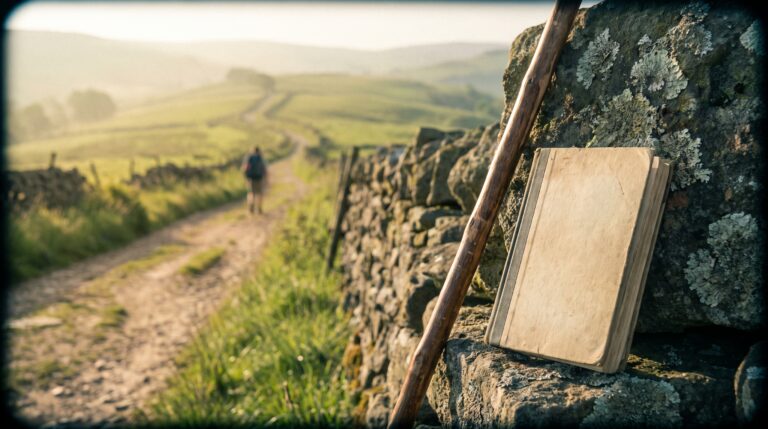

The line the search is named after, and the last message he sent to anyone. It closes a short postcard from Fairbanks, written two days after he arrived and roughly two weeks before he walked up the Stampede Trail. Read whole, the postcard is chattier and more ordinary than the sentence suggests, which is rather the point.