“The Mountains Are Calling and I Must Go”: The Muir Letter Behind the Slogan
Yes, John Muir wrote it, in a letter to his sister in 1873. But the sentence does not stop where the mugs stop, and the half they drop is about work.
The short answer: yes, John Muir wrote “the mountains are calling and I must go”, in a letter from Yosemite Valley to his sister Sarah Muir Galloway, dated 3 September 1873.
So the name on the poster is right. The sentence is not finished. Muir kept writing, and the words that follow change what he was actually saying.
Who said “the mountains are calling and I must go”? The short answer
The mountains are calling and I must go.
If this is the version you know, you are quoting the right person. This is not one of the lines that got pinned on Muir because he sounds like the kind of man who would have said it. There are plenty of those, and we cover a few below. This one is his, in ink, with a date and an address on it.
We checked it against the digitised letter in the John Muir Correspondence at the University of the Pacific’s Holt-Atherton Special Collections, and against the letter as printed in 1923 in William Frederic Badé’s The Life and Letters of John Muir. Primary source first is the rule every verdict on this site follows, as our editorial standards explain.
The letter: what Muir actually wrote
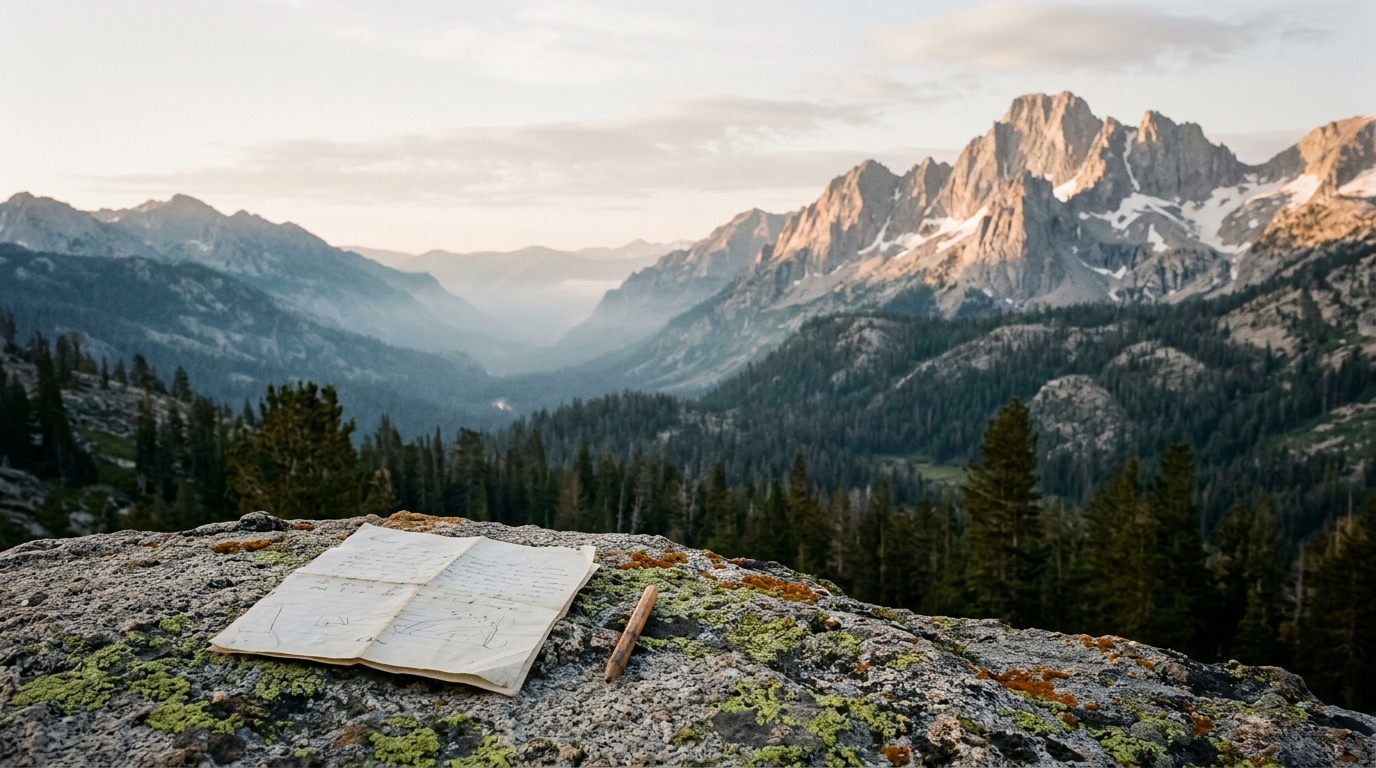
Muir wrote to Sarah from Yosemite Valley on 3 September 1873, just back from what he called “the longest and hardest trip I have ever made in the mountains”: more than five weeks away, two of them exploring glaciers on the summits, sleeping in the snow without blankets. The famous line sits on the second page (Pacific transcription and scan). In his own hand, with his own ampersands:
The mountains are calling & I must go & I will work on while I can, studying incessantly.
When Badé printed the letter in 1923 (Life and Letters, chapter 10), the ampersands became “and” and a comma went in after “go”. That tidied form is the one most books copy. Either is fine to quote. The ampersand version is the one Muir actually wrote.
The rest of the letter matters for reading the line. A few sentences earlier he tells Sarah he will “soon be off again”, spending the season on his research: Kings River next, a hundred miles south, then Lake Tahoe, then a winter in Oakland writing. He says the results of his mountain studies will one day be in a form the family can read, and that the magazine pieces he writes in the meantime are not the real work. Then comes the line. Then he says he will write again when he is back from Kings River.
The letter and the poster, side by side
| Version | Wording | What it is doing |
|---|---|---|
| Muir’s letter, 3 September 1873 | “The mountains are calling & I must go & I will work on while I can, studying incessantly.” | A working naturalist telling his family he is heading back out to finish his research |
| Badé, Life and Letters, 1923 | “The mountains are calling and I must go, and I will work on while I can, studying incessantly.” | The same sentence, punctuation tidied for print |
| The popular version | “The mountains are calling and I must go.” | A mood: the outdoors is calling and I am answering |
The half nobody quotes: “I will work on while I can, studying incessantly”
In 1873 Muir was 35, not yet the national figure he became, and deep in his study of the Sierra’s glaciers. This one letter mentions two weeks on the glaciers, two more trips planned and a winter of writing ahead. “Studying incessantly” is not a figure of speech. It is a description of how he was spending his summers.
That is why the cut matters. The Sierra Club’s John Muir education team lists this line on its John Muir Misquoted page, not because the words are wrong, but because the short form reads “as if going on vacation”. Michael Wurtz makes the same point in an essay first published in The Conversation in 2016: the full sentence shows “a man who saw responsibility and purpose as well as pleasure in the mountains”.
This next part is our interpretation, so treat it as such. In the letter, the mountains are not an escape from his work. They are where his work is. The call is a call back to the job.
How a work note became a holiday slogan
Nobody has pinned down the moment the line lost its second half, and we are not going to invent one. What is clear is where it ended up. Wurtz notes it is printed on mugs, t-shirts, posters and jewelry, and a short line with a famous name on it travels further than a long one. Eight words about mountains fit on a mug. Seventeen words about incessant study do not.
There is a twist the slogan’s critics usually leave out. Muir did put a version of the phrase into print himself, and in that version it really is about running away. In Our National Parks (Houghton Mifflin, 1901), in the chapter “The Forests of the Yosemite Park”, he remembers meeting Ralph Waldo Emerson in Yosemite and urging the older man to skip his travel party and head into the high country with him (full text at Project Gutenberg):
Never mind. The mountains are calling; run away, and let plans and parties and dragging lowland duties all ‘gang tapsal-teerie.’
Emerson did not go. But it means the holiday reading is not pure invention: Muir himself used “the mountains are calling” to mean drop everything and get outside. The fair summary is that he used the phrase both ways. The famous sentence, the one on the mugs, comes from the 1873 letter, and in that letter it means work.
Other lines Muir gets credit for
Muir attracts misquotes the way Twain and Emerson do, so check any Muir line before you print it. Three quick verdicts, all from the Sierra Club’s misquote page:
“And into the forest I go, to lose my mind and find my soul.” Not Muir. The Sierra Club says it appears nowhere in his writing, and reports that a Tumblr user, Mariah Danu, says she wrote it in October 2014.
“Of all the paths you take in life, make sure a few of them are dirt.” Not Muir either, per the same page.
“When one tugs at a single thing in nature, he finds it attached to the rest of the world.” A paraphrase. What Muir published, in My First Summer in the Sierra (1911), is “When we try to pick out anything by itself, we find it hitched to everything else in the Universe.”
For Muir lines that do check out, our national park quotes and wilderness quotes pages credit each one to its book or letter.
How to credit it
Short form: “The mountains are calling and I must go.” John Muir, letter to Sarah Muir Galloway, 3 September 1873. If you have the room, use the whole sentence, ampersands and all, because “I will work on while I can, studying incessantly” is the part that sounds like Muir. If you are quoting the 1901 book instead, credit Our National Parks, and note that the wording there is different.
More travel quotes people get wrong
Most checks in our fact-check hub end with a different name on the line. This one ends like Twain and travel being fatal to prejudice: right author, sentence cut short. For the Emerson line every nature page loves, see whether Emerson said do not follow where the path may lead. And the journey of a thousand miles is a lesson in how a translation drifts.
Questions people ask about this quote
Who said “the mountains are calling and I must go”?
John Muir, in a letter to his sister Sarah Muir Galloway, written in Yosemite Valley and dated 3 September 1873.
What is the full quote?
As Muir wrote it: “The mountains are calling & I must go & I will work on while I can, studying incessantly.”
What did Muir mean by it?
This is interpretation, not quotation. In the letter he has just told his sister he will spend the season on his research, heading next to Kings River and Lake Tahoe. The mountains are calling him back to his studies, not to a holiday. He did use the phrase in the escape sense once, in Our National Parks (1901), urging Emerson to run away into the mountains.
Where is the original letter?
In the John Muir Correspondence at the Holt-Atherton Special Collections, University of the Pacific, which has digitised it with a transcription. It was first printed in William Frederic Badé’s The Life and Letters of John Muir (1923), chapter 10.
So keep the quote and keep the name. Just know that when Muir wrote it, he was packing for another season of fieldwork, not a weekend away. For more nature lines with their sources attached, start with our nature travel quotes or the wider travel quotes library.
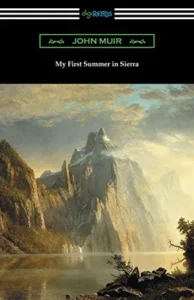
1. My First Summer in the Sierra by John Muir (Digireads)
Best for: Readers who want the 1911 journal behind John Muir's mountain writing.
A 136 page paperback of Muir’s journal of his 1869 summer in the Sierra Nevada, reproducing the illustrations and photographs from the 1911 edition. The best place to read his mountain passages in context.
Pros
- Reproduces the original 1911 illustrations
- Short enough to read in a weekend
- Low priced paperback
Cons
- Fewer reviews than the Dover edition
- Shorter than the Dover edition at 136 pages