
Wilderness quotes: 30 lines with the book and the year, and three that do not check out
Every line below was read out of the text it came from, with the chapter named. Thoreau, Muir, Emerson, Stevenson, Roosevelt, Burroughs and Mary Austin, sourced rather than recycled.
There is one sentence everybody quotes about wilderness, and almost everybody gets a single word wrong. Thoreau wrote “in Wildness is the preservation of the World”. Wildness, not wilderness. The version on the posters swaps a state of being for a place on a map, which is close to the reverse of what he was arguing.
That one vowel is a fair test of a quote page. Page one for this search is a Goodreads tag, two aggregators, an advocacy site, a gear brand’s newsletter, a federal land portal and a Reddit thread. Not one of them names a book and a year. The Thoreau Society’s own quotation archive ranks on that page while serving a broken template.
So this page took the slow route. Thoreau, John Muir, Emerson, Robert Louis Stevenson, Theodore Roosevelt, John Burroughs and Mary Austin are all out of copyright and readable in full, which means there is no honest excuse for a wilderness quote page that cannot tell you the chapter. Thirty lines, each with the book, the year and where inside the book to find it.
The last section is the one worth sending to someone. Three famous wilderness quotes do not survive a search of the books they are supposed to come from, and one of them is the most reproduced Muir sentence in the world.
For the wider view, the nature travel quotes hub gathers the whole outdoor collection, and the nearest neighbours to this page are sunset quotes and ocean and coast quotes. This one owns wildness as an idea: the solitude, the conservation argument, and the places nobody arranged for you.
What are the best wilderness quotes? The short answer
Wilderness quotes from the books
Eight lines with the book, the year and the chapter. Two are Henry David Thoreau, who is the reason the word carries any weight in English and who barely left Concord to earn it. The rest belong to writers who did go: Muir in the Sierra, Roosevelt in the Dakotas, Stevenson walking across the Cevennes behind a donkey.
The West of which I speak is but another name for the Wild; and what I have been preparing to say is, that in Wildness is the preservation of the World.
We need the tonic of wildness,—to wade sometimes in marshes where the bittern and the meadow-hen lurk, and hear the booming of the snipe.
Almost every reprint stops after the first five words, which is a shame, because the rest is the point. Thoreau is not asking for a mountain view. He is asking for a wet, unglamorous marsh with a bird in it making an unpleasant noise.
Thousands of tired, nerve-shaken, over-civilized people are beginning to find out that going to the mountains is going home; that wildness is a necessity; and that mountain parks and reservations are useful not only as fountains of timber and irrigating rivers, but as fountains of life.
The opening page of the book, and the sentence that did more for American public land than any speech. Read it again with the date attached. Muir is describing overwork, nervous exhaustion and the urge to get out, in 1901.
Climb the mountains and get their good tidings. Nature’s peace will flow into you as sunshine flows into trees. The winds will blow their own freshness into you, and the storms their energy, while cares will drop off like autumn leaves.
Usually cropped to the first six words and printed over a stock photo of a summit. The chapter matters here: this is Muir writing about Yellowstone, not the Sierra, and almost nobody who quotes it says so.
When we try to pick out anything by itself, we find it hitched to everything else in the universe.
The most quoted sentence in conservation, and it is a field note, not a slogan. Muir wrote it on a day when he was cataloguing plants and could not get any one of them to stay separate from the rest.
In the wilderness, I find something more dear and connate than in streets or villages.
Connate means born together, sharing an origin. Emerson is not saying the woods are nicer than the town. He is saying they are more closely related to him than his neighbours are, which is a stranger and better claim.
we are all travellers in what John Bunyan calls the wilderness of this world—all, too, travellers with a donkey: and the best that we find in our travels is an honest friend.
This is the single most mangled line in the wilderness canon, and the aggregators print a version with four separate changes in it. The real one credits Bunyan, keeps the donkey, and is funnier. The full comparison is in the last section.
No man save the wilderness dweller knows the strong melancholy fascination of these long rides through lonely lands.
Roosevelt before the presidency, writing about the Dakota badlands, and the word he reaches for is melancholy. Not majesty, not freedom. He is the only writer in this section who admits that empty country can be heavy going.
Short wilderness quotes
Ten lines under fifteen words, every one attributed and every one traced to a page. Short quotes are where quote pages usually give up on sourcing, because a sentence with no context is the easiest thing in the world to invent.
In short, all good things are wild and free.
Eight words, and the closest thing the essay has to a thesis. It follows a long passage about how little he enjoys cultivated gardens.
Nothing truly wild is unclean.
Written after watching sheep and shepherds foul a camp that the surrounding country kept spotless. It is a comment on people, not on hygiene.
The tame is timid; the wild is bold.
Muir is comparing domestic sheep with bighorns, and losing patience with the domestic ones. Out of context it reads as a maxim. In context it is an insult.
Give me the ocean, the desert, or the wilderness!
One of the very few places Thoreau uses wilderness rather than wildness, and he uses it for a landscape, which is exactly the distinction the famous line turns on.
Every tree sends its fibers forth in search of the Wild.
The sentence immediately after the preservation line, and a small proof of what he meant by it. The Wild is something a tree can look for, so it is not a place.
I love the wild not less than the good.
The opening move of the chapter where Thoreau argues himself out of eating meat. He is admitting, before he starts, that the argument will not be tidy.
Life consists with wildness. The most alive is the wildest.
Consists with, not consists of. It is an old construction meaning coexists with, and quote pages that modernise it quietly change the meaning.
Literature does not grow wild in the woods.
Burroughs spent his life writing about birds and is warning you off the obvious conclusion. Being outdoors does not produce sentences. Sitting down afterwards does. He wrote the line in an introduction added to the 1871 book twenty-four years later.
Fears vanish as soon as one is fairly free in the wilderness.
Muir is talking about bears, and he is being practical rather than mystical. The dread is at its worst before you set off.
In the woods, we return to reason and faith.
Two sentences before the transparent eyeball, which is the passage everyone remembers and nobody can quote. This is the readable half.
Wilderness quotes about solitude and getting lost
The register changes here. These six are about being on your own in country that does not know you are there, which is the part of wilderness the inspirational posters leave out.
Not till we are lost, in other words not till we have lost the world, do we begin to find ourselves, and realize where we are and the infinite extent of our relations.
The most useful sentence on this page, and it is almost always quoted with the second half cut off. Thoreau has just described getting lost walking home in the dark, repeatedly, on purpose.
I never found the companion that was so companionable as solitude.
Worth knowing that the chapter it opens is Thoreau’s answer to people who kept asking whether he got lonely. He did not, and he is slightly annoyed about being asked.
For all the toll the desert takes of a man it gives compensations, deep breaths, deep sleep, and the communion of the stars.
Austin lived in the Owens Valley and is the best writer on this page about dry country. She never pretends the desert is kind. She says it charges a toll and then lists what the money buys.
It is this nearness of unimagined help that makes the tragedy of desert deaths.
About people who died of thirst within a short walk of water they could not see. It is the hardest sentence in this collection and it belongs on any page that romanticises empty country, including this one.
The whole wilderness seems to be alive and familiar, full of humanity.
Muir had been alone in the high country for weeks by this point. The line reads as poetry and was almost certainly literal description of what solitude had started doing to his perception.
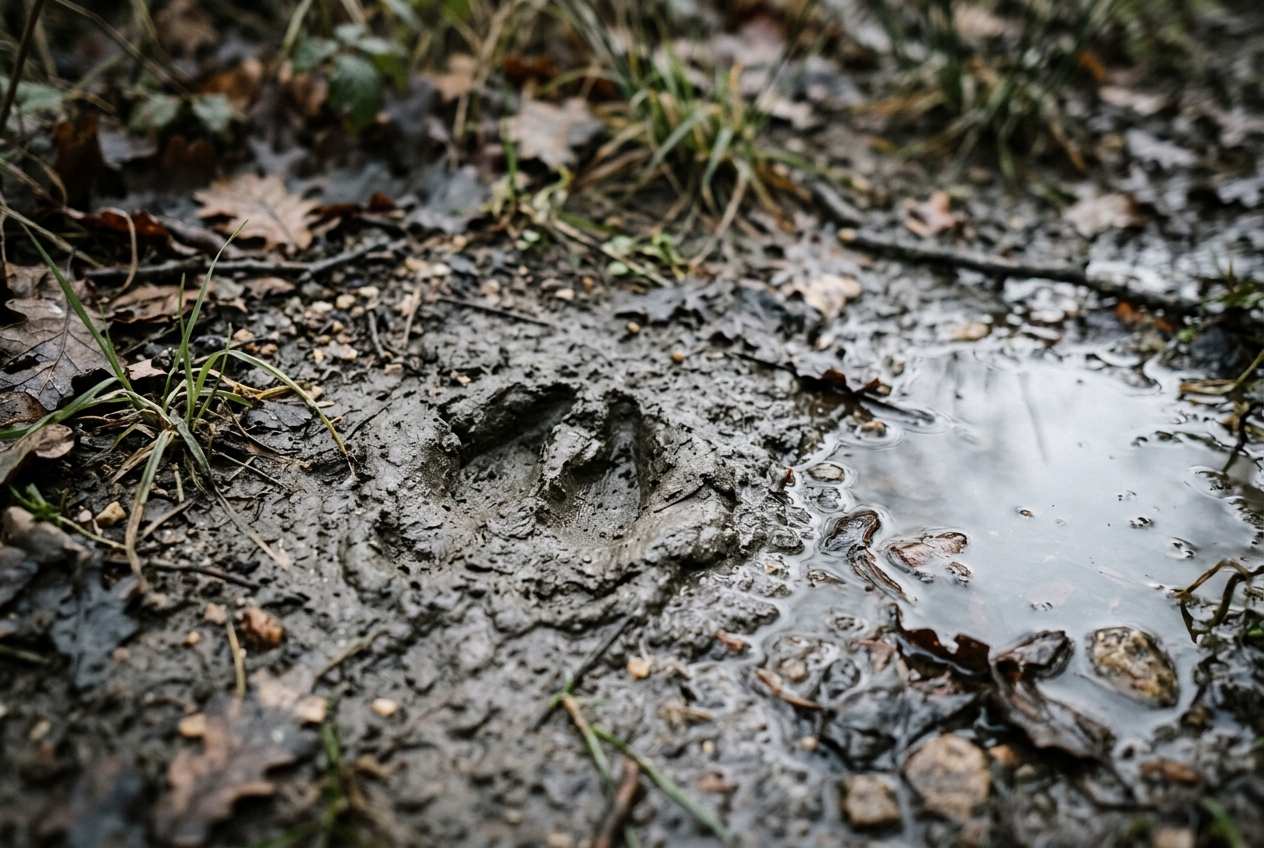
There is as much wildness in the track of an animal as in its voice.
A field naturalist’s observation that doubles as advice. You do not have to see or hear anything for the country to be wild. The evidence is on the ground.
What does “wilderness” actually mean?
Two answers, and they disagree in a useful way. The legal definition is narrow, American and only sixty years old. The literary one is older, broader and much harder to legislate.
A wilderness, in contrast with those areas where man and his works dominate the landscape, is hereby recognized as an area where the earth and its community of life are untrammeled by man, where man himself is a visitor who does not remain.
Untrammeled is the word to notice, and it is not a typo for untrampled. A trammel is a restraint, so untrammeled land is land that is unhindered rather than land that is undamaged. Congress chose a word about freedom, not about tidiness.
I wish to speak a word for Nature, for absolute Freedom and Wildness, as contrasted with a freedom and culture merely civil
The first line of the essay, and the frame for everything after it. Thoreau is setting Wildness against civility, which is why swapping in wilderness flattens him into a landscape writer.
Give me for my friends and neighbors wild men, not tame ones.
The clearest evidence that wildness, for Thoreau, was a property of people as much as of country. You cannot hike to it.
We can never have enough of Nature. We must be refreshed by the sight of inexhaustible vigor, vast and Titanic features, the sea-coast with its wrecks, the wilderness with its living and its decaying trees, the thunder cloud, and the rain which lasts three weeks and produces freshets.
The wrecks and the decaying trees are doing the work. What Thoreau wants from wilderness is proof that something out there is indifferent to him, and three weeks of rain will do it.
From the forest and wilderness come the tonics and barks which brace mankind.
A nineteenth-century medicine-cabinet image, quinine and willow bark, used as an argument for keeping wild country. He is claiming utility, not beauty, which is the argument conservation eventually had to win on.
No other place has ever so overwhelmingly attracted me as this hospitable, Godful wilderness.
Hospitable is the surprising word. The standard nineteenth-century adjective for wild country was hostile, and Muir spent a career arguing the opposite in public.
Three famous wilderness lines that do not check out
Each of the three below was searched for in the complete text of the books it is credited to. None of them is there in the form it circulates. Where the real line exists in a different shape, the real one is printed next to it.
“In wilderness is the preservation of the world.”
Searching the full text of Walking for “wilderness is the preservation” returns nothing. The essay says Wildness, and the substitution is not cosmetic: wildness is a quality that a tree, a person or a sentence can have, and wilderness is a designated area with a boundary on a map. The misquote turns an argument about how to live into a note about where to go on holiday. It appears on federal agency posters, so it is not going anywhere.
“The mountains are calling and I must go.”
The most printed Muir sentence in the world, and it is not in his books. What is in print, in Our National Parks (1901), chapter IV, is better: “Never mind. The mountains are calling; run away, and let plans and parties and dragging lowland duties all ‘gang tapsal-teerie’.” Muir is saying it to Ralph Waldo Emerson in Yosemite, trying to talk a sixty-eight-year-old into abandoning his travelling party for a camping trip, and losing. The familiar half-sentence is traced to a private letter Muir wrote to his sister in 1873, which we could not read in a primary source this run. So it goes here rather than in the numbered set.
“We are all travelers in the wilderness of this world, and the best we can find in our travels is an honest friend.”
The version the aggregators serve for this search term has four changes in it. It drops “what John Bunyan calls”, so Stevenson gets the credit for somebody else’s phrase. It deletes “all, too, travellers with a donkey”, which is the joke and the title of the book. It turns “the best that we find” into “the best we can find”. And it Americanises travellers. The real sentence is card 7 above.
Two of those three have a live profile behind them. The real 1879 dedication is quoted in full on Robert Louis Stevenson’s page, and the man Muir was shouting at in Yosemite was Ralph Waldo Emerson, who politely declined and went back to the hotel.
Notes on the selection
What was read. Project Gutenberg full texts of Walden and Walking (Thoreau), Our National Parks, My First Summer in the Sierra and The Mountains of California (Muir), Nature (Emerson, in the Miscellanies volume), Travels with a Donkey in the Cevennes (Stevenson), The Wilderness Hunter (Roosevelt), Wake-Robin (Burroughs) and The Land of Little Rain (Austin). The Wilderness Act was read from the National Park Service copy of the statute text.
How the lines were pulled. Not by memory and not by transcription. Each candidate was matched against the downloaded text with whitespace and curly punctuation normalised, and only exact matches were kept. Thirty of thirty matched. Anything that did not match went to the last section or was cut.
How the chapters were found. Read off the nearest preceding chapter heading in the same file, never assumed. That is why some cards carry a chapter title rather than a number: Walden, My First Summer in the Sierra and Wake-Robin name their chapters instead of numbering them.
One punctuation note. The Walden card reads “the tonic of wildness,—to wade”. That comma followed by a dash is the 1854 typography and it is reproduced rather than modernised, because a quotation is not our house style to correct.
What was left out, and why. Aldo Leopold, Edward Abbey, Wallace Stegner and Nancy Newhall all belong on a wilderness page and none of them is here. Their key texts are in copyright and could not be searched in full this week, and the rule on this site is that a plausible line and a checked line are not the same thing. They are queued rather than dropped.
Evidence grade. Every numbered card is verified primary: the sentence was matched inside the source text itself, not inside somebody else’s quotation of it. The three cards in the last section are negative findings, which means we can say with confidence that the line is not in the books named, and not that we know where it came from instead.
No affiliate link on this page, and that is a rule rather than an oversight. There is no verified product record in our catalogue for an edition of any of these books yet. A link gets added when the product has been through the checks, not because a books section would look tidier.
One gap worth naming. John Muir carries this search result and has eight cards on this page, and he does not have a profile on this site yet. He is first in the queue. So are Leopold, Abbey and Stegner.
Wilderness quotes: the questions people actually ask
What is the best quote about wilderness?
“In Wildness is the preservation of the World.” Henry David Thoreau, in the essay Walking, published in The Atlantic Monthly in 1862. In the text it sits inside a longer sentence: “The West of which I speak is but another name for the Wild; and what I have been preparing to say is, that in Wildness is the preservation of the World.” The opening clause is almost always cut, and it is the clause that tells you what he meant.
What did John Muir say about wilderness?
Two lines, both sourced. From Our National Parks (1901), chapter I: “Thousands of tired, nerve-shaken, over-civilized people are beginning to find out that going to the mountains is going home; that wildness is a necessity.” And from My First Summer in the Sierra (1911): “Nothing truly wild is unclean.” Muir does not yet have a profile on this site. The nature travel quotes hub is the place to start meanwhile.
Who said “in wildness is the preservation of the world”?
Henry David Thoreau, in Walking (1862). The point worth carrying away is the spelling. He wrote Wildness, and the line is reproduced constantly as wilderness, including on signage in protected areas. Searching the full essay for the wilderness form returns zero matches. Wildness is a quality; wilderness is a place with a boundary. Thoreau was arguing about the first one.
What are some short wilderness quotes for Instagram?
Three that are short, attributed and real. “Nothing truly wild is unclean.” John Muir, My First Summer in the Sierra, 1911. “In short, all good things are wild and free.” Henry David Thoreau, Walking, 1862. “The tame is timid; the wild is bold.” John Muir, The Mountains of California, 1894. Credit the author and the book in the caption and you are already doing more than the accounts you are competing with.



The half nobody quotes is the first half, and it is the half that explains him. By the Wild he means the West, and by the West he means whatever has not been tidied yet. Note the spelling too: Wildness. The poster version says wilderness, which turns a quality into a postcode.