
Best food and travel quotes: sourced lines from Twain, Woolf and the writers who ate their way around
Nineteen food and travel quotes from Twain, Woolf, Brillat-Savarin, Jerome and Bourdain, each labelled with its book, year and chapter, plus the truth about Bourdain’s most shared line.
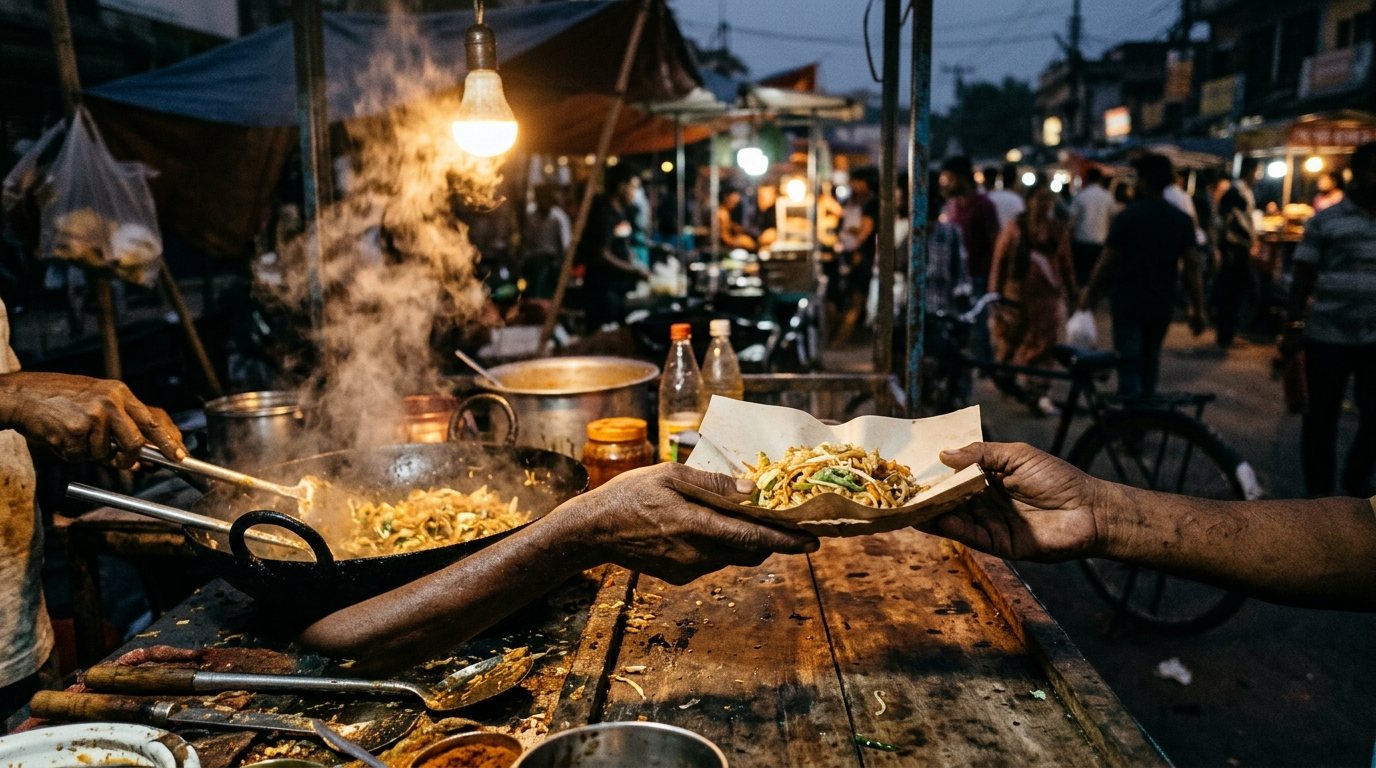
Search food and travel quotes and page one hands you lines over a photo of a market stall, almost never with a book attached. Some of them are real. Plenty are paraphrases of paraphrases, and a few cannot be traced to anything at all.
So every numbered line on this page carries its writer, its book, the year and the chapter it came from, and every public domain line was read word for word out of the original text. That gets you Mark Twain dreaming of hot biscuits in a European hotel, Virginia Woolf on why a bad dinner ruins the conversation, the French lawyer who wrote one of the first great books about eating, and three men in a rowing boat who cannot open a tin of pineapple. The one modern line we could not read in its book is graded honestly, on the card.
This page checks the lines; our food and travel quotes hub collects the wider lane, and travel through food quotes takes the cultural angle. The full collection starts at the 100 best travel quotes.
What are the best food and travel quotes? The 60 second answer
Food and travel quotes from the writers who lived them
Start with the man who made eating a subject. Jean Anthelme Brillat-Savarin was a French lawyer and magistrate who fled the Revolution, spent part of his exile in the United States, and came home to write The Physiology of Taste, published in December 1825, about two months before he died. It opens with twenty aphorisms that people have been quoting, and misquoting, ever since. The English below is Fayette Robinson’s 1854 translation, which is in the public domain and free to read in full. Virginia Woolf comes first, though, because her line is the one people most often share without a source.
…a good dinner is of great importance to good talk. One cannot think well, love well, sleep well, if one has not dined well.
Animals fill themselves; man eats. The man of mind alone knows how to eat.
The second aphorism, and the whole philosophy of the book in a line: feeding is something every creature does, eating is a skill. Worth remembering the next time you are queueing for a famous breakfast in a strange city.
Tell me what kind of food you eat, and I will tell you what kind of man you are.
The famous one, usually shortened to “you are what you eat”. In Robinson’s translation it is food and character, not food and body, which is a far more interesting claim for anyone who has learned a place through its kitchens.
The pleasure of the table belongs to all ages, to all conditions, to all countries, and to all aeras; it mingles with all other pleasures, and remains at last to console us for their departure.
The travel aphorism. Every age, every condition, every country: the table is the one pleasure that crosses borders, and the one that stays when the others have gone. The spelling of aeras is the translator’s, left as printed.
The discovery of a new dish confers more happiness on humanity, than the discovery of a new star.
The version most often shared, “does more for human happiness than the discovery of a new star”, is a looser English rendering of the same aphorism. This is the Robinson wording, word for word, comma and all.
To invite a person to your house is to take charge of his happiness as long as he be beneath your roof.
The host’s side of travel. Anyone who has been fed in a stranger’s home on the road will recognise the weight of this one.
Mark Twain’s homesick menu
Mark Twain spent the late 1870s in Europe and turned the trip into A Tramp Abroad (1880). By chapter XLIX he has had enough of hotel food, and he writes out, in full, the American dinner he wants waiting for him when he gets home: radishes, fried oysters, hot biscuits, soft shell crabs, roast turkey, potatoes done six ways and most of the American South. It runs to well over seventy dishes. The menu itself is too long for a card, so the cards below are the sentences around it. It is free to read in full, and his earlier European trip, The Innocents Abroad (1869), starts out far more forgiving. More of his lines live on the Mark Twain travel quotes profile.
We have learned to go through the lingering routine of the table d’hote with patience, with serenity, with satisfaction.
The young Twain in Marseille, at the start of the trip that made him famous, still charmed by course after course. The same paragraph includes snail patties, and his aside “I prefer grasshoppers”.
But the happiest regulation in French railway government is—thirty minutes to dinner!
Twain on the train to Paris, comparing an unhurried French dinner stop with the rushed American kind. The dash is his.
There is here and there an American who will say he can remember rising from a European table d’hôte perfectly satisfied; but we must not overlook the fact that there is also here and there an American who will lie.
A decade on, the charm has gone. This is the European dinner from the hungry side, and the best joke in the chapter.
It has now been many months, at the present writing, since I have had a nourishing meal, but I shall soon have one—a modest, private affair, all to myself. I have selected a few dishes, and made out a little bill of fare, which will go home in the steamer that precedes me, and be hot when I arrive…
The line that introduces the menu. The card stops where the list begins. Read the list itself in the chapter: it is one of the funniest pieces of homesickness in American travel writing.
Americans intending to spend a year or so in European hotels will do well to copy this bill and carry it along. They will find it an excellent thing to get up an appetite with, in the dispiriting presence of the squalid table d’hôte.
His practical advice, straight after the menu. Squalid is doing a lot of work here.
Foreigners cannot enjoy our food, I suppose, any more than we can enjoy theirs. It is not strange; for tastes are made, not born.
And then, a few lines later, the generous turn. Tastes are made, not born, is the most useful thing on this page for anyone about to eat their way round a new country.
Funny food and travel quotes from Three Men in a Boat
Jerome K. Jerome’s Three Men in a Boat (1889) is a rowing holiday up the Thames that is mostly about lunch. It is still in print, and every food scene in it still works. The chapters below are measured from the full text.
How good one feels when one is full—how satisfied with ourselves and with the world! People who have tried it, tell me that a clear conscience makes you very happy and contented; but a full stomach does the business quite as well, and is cheaper, and more easily obtained.
Supper on the river after a hard day, and the narrator discovering that contentment can be bought cheaply.
It is very strange, this domination of our intellect by our digestive organs. We cannot work, we cannot think, unless our stomach wills so.
The same scene, a paragraph on. What follows is a list of what the stomach says after eggs and bacon, after beefsteak and porter and after tea, measured to the spoonful.
We are but the veriest, sorriest slaves of our stomach. Reach not after morality and righteousness, my friends; watch vigilantly your stomach, and diet it with care and judgment.
The mock sermon that closes the passage. Every traveller who has made a decision while hungry knows it is true.
…when George drew out a tin of pine-apple from the bottom of the hamper, and rolled it into the middle of the boat, we felt that life was worth living after all.
A picnic with no mustard turns grim, and then the tin of pineapple appears. The card picks up mid sentence. What follows is one of the most famous tins in comic writing, because nobody packed a tin opener.
Think of the man who first tried German sausage!
Harris, arguing that the dog’s contribution, a dead water rat, should go in the Irish stew. A fine defence of adventurous eating, and it is about a sausage.
One’s palate gets so tired of the old hackneyed things: here was a dish with a new flavour, with a taste like nothing else on earth.
The verdict on that same stew, made from everything left in the hamper. Every traveller has eaten this meal at least once.

Did Bourdain really say “Travel isn’t always pretty”? And which book?
Yes, it is Bourdain, and the book is No Reservations: Around the World on an Empty Stomach (2007). That is the companion book to his Travel Channel series, not A Cook’s Tour (2001) or Kitchen Confidential (2000), the two books people usually reach for. Every trail we followed, from the quote databases to Variety’s 2018 round-up of his lines, lands on No Reservations, and we found none crediting another book.
Travel isn’t always pretty. It isn’t always comfortable. Sometimes it hurts, it even breaks your heart. But that’s okay. The journey changes you; it should change you.
Graded secondary, and we would rather say so than imply more. The book is in copyright, we could not read the page itself in this pass, so the book is traced and the page is not confirmed. If you own the 2007 book and can point us to the page, we will upgrade the grade.
That is the standard on our travel quotes fact check hub too: say what the evidence supports and no more. The rest of his travel writing, sourced by book, is on the Anthony Bourdain travel quotes profile.
The food writers, in their own books
Three more writers belong on any page like this, and we have not carded them, on purpose. Ruth Reichl (Tender at the Bone, 1998), James Beard (Delights and Prejudices, 1964) and Nigella Lawson (How to Eat, 1998) are all in copyright, and a line we cannot check against the book does not get a number on this page. Their profiles carry what we could source. If you want one of their books for the road, Lawson’s first is the one about how to eat, not just what to cook.
How to Eat (Nigella Lawson)
Best for: Travellers who want to cook the way they eat on the road
Lawson’s first book, from 1998: less a recipe collection than an argument about eating well, at home and away, written by a food journalist rather than a chef. Her profile, linked above, covers her travel writing.
Check price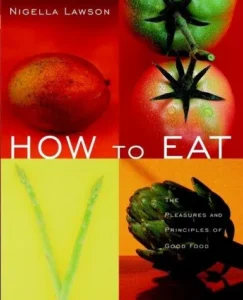
Short food and travel quotes
If you want something short enough for a caption, these are the tightest lines on the page, and each one still carries a name and a book: card 2, card 3, card 5, card 6, card 8 and card 17. The shortest of all is Harris in Three Men in a Boat, at nine words. For an even shorter cut, Twain’s “tastes are made, not born” is the last clause of card 12.
Notes on the selection
How this page was built. Every public domain source was read in full as plain text: A Tramp Abroad, The Innocents Abroad, Three Men in a Boat and Fayette Robinson’s 1854 translation of The Physiology of Taste from Project Gutenberg, and A Room of One’s Own from Project Gutenberg Australia (it entered the US public domain in 2025). Eighteen lines were matched against those texts word for word. The chapter or aphorism number on each card is the nearest heading above the line in that text, so the locator is measured rather than remembered. Page numbers are left out on purpose: they change with every edition. Where a card starts or stops mid sentence, the cut is shown. Brillat-Savarin wrote in French, so his cards are credited to the translation as well as the book. The Bourdain card is the only one we could not read in its source, and it is graded on the card.
What was left out, and why. Ruth Reichl, James Beard and Nigella Lawson are linked rather than quoted, because their books are in copyright and we would not number a line we had not read in the book. Nothing marked Unknown or Anonymous made the page. Woolf’s line also appears on our travel through food page; it is repeated here because it is the question people ask most. Song lyrics are not quoted.
Food and travel quotes: the questions people actually ask
What did Anthony Bourdain say about food and travel?
His most shared line is “Travel isn’t always pretty. It isn’t always comfortable.” It is traced to No Reservations: Around the World on an Empty Stomach (2007), the book of his Travel Channel series, not to A Cook’s Tour. We have not confirmed the page, so treat the book as traced rather than proven.
What is a famous quote about food and culture?
Jean Anthelme Brillat-Savarin’s fourth aphorism in The Physiology of Taste (1825): “Tell me what kind of food you eat, and I will tell you what kind of man you are.” That is Fayette Robinson’s 1854 translation; it is usually given as the source of “you are what you eat”.
Who said “One cannot think well, love well, sleep well, if one has not dined well”?
Virginia Woolf, in the first chapter of A Room of One’s Own, published in 1929. She is describing a dull college dinner of beef and prunes, and the next sentence is “The lamp in the spine does not light on beef and prunes.”
What is a short food and travel caption?
Three options, all real: “Think of the man who first tried German sausage!” (Jerome K. Jerome, Three Men in a Boat, 1889). “Tastes are made, not born” (Mark Twain, A Tramp Abroad, 1880). “Animals fill themselves; man eats.” (Brillat-Savarin, 1825).

Woolf, describing a thin college dinner of beef and prunes in the first chapter of A Room of One’s Own, published in 1929. The card picks up mid sentence. Shared everywhere, sourced almost nowhere, and the sentence after it is better still: the lamp in the spine does not light on beef and prunes.