
New York Quotes: 23 Lines With the Book, the Chapter and the Year
New York quotes with the work and the year attached, from Whitman on the Brooklyn ferry to Steinbeck on why nowhere else will do, and the famous line almost everyone gives to the wrong Wolfe.
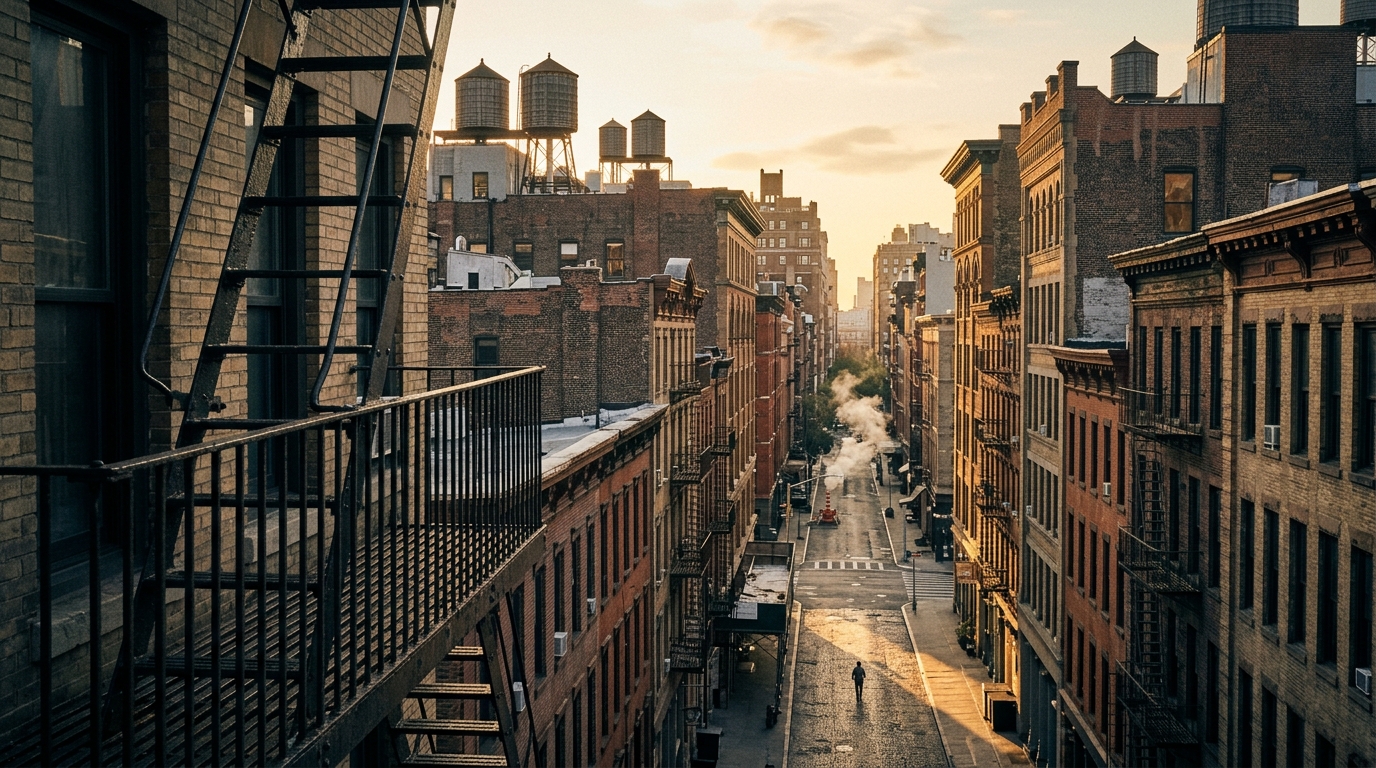
Search for New York quotes and page one hands you captions. Hundreds of them, most with a name attached and almost none with a book, a chapter or a year. Google’s own AI summary gets the single most shared New York line wrong, crediting it to a writer who was eight years old when the real author died.
This page is the other kind of list. Twenty-three lines about New York City, the five boroughs, the harbour and the streets, from Charles Dickens in 1842 to E. B. White in 1949. Twenty of them were matched this week against the complete text they come from, and the other three rest on sources we name on the card. Where a line has a chapter, a section or an essay title, it is printed, so you can check us.
If you want the wider library first, it is at travel quotes. New York is the third city in the series, after Florence and Rome.
What are the best New York quotes? The 60-second answer
If New York is calling
Almost every writer below met New York first from the water: off a liner in the Narrows, from the deck of a ferry, or crossing a bridge into Manhattan. It is still the best way to see it. The tours and tickets below are drawn live from GetYourGuide for New York City. The honest advice this page has earned: take the free Staten Island Ferry once at dusk before you pay for any harbour cruise, then walk back across the Brooklyn Bridge on a different day.
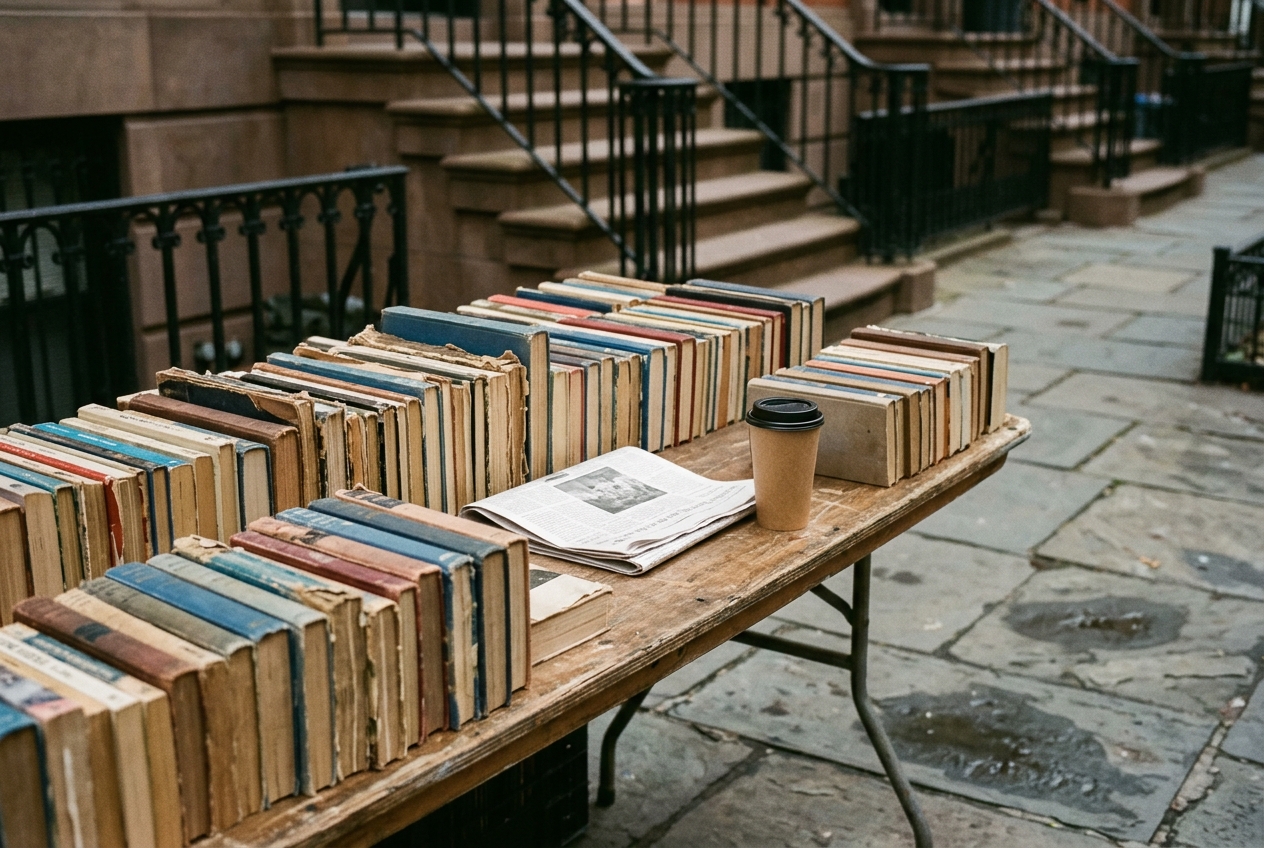
The New York quote everyone gives to the wrong Wolfe
The most shared New York quote on the internet belongs to Thomas Wolfe, who was born in Asheville in 1900, taught English at New York University in the 1920s and died in 1938. Google’s AI summary currently credits it to Tom Wolfe, the journalist and novelist born in 1930, and cites a Pinterest board as its authority. Two different writers, one letter apart, and the line was written when the second one was a small boy in Virginia.
One belongs to New York instantly, one belongs to it as much in five minutes as in five years.
Source for the chapter: the Thomas Wolfe Review’s note on Wolfe in periodical print and online.
Three more New York lines page one gets half right
None of these three is a misattribution. Each one is quoted with the name right and something else missing: a chapter, a second half, or a word. The missing piece changes what the line says every time.
The city seen from the Queensboro Bridge is always the city seen for the first time, in its first wild promise of all the mystery and the beauty in the world.
Nick Carraway, riding into Manhattan with Gatsby over the bridge from Queens, sunlight flickering through the girders. Page one prints this without a chapter, and many copies drop the second “the” to make it “the mystery and beauty”. The original has both articles, and it reads slower for them. The Great Gatsby has been in the US public domain since 2021.
New York is an ugly city, a dirty city. Its climate is a scandal, its politics are used to frighten children, its traffic is madness, its competition is murderous. But there is one thing about it—once you have lived in New York and it has become your home, no place else is good enough.
Time Out runs the opening on its own with no author attached, and it reads as a complaint. It is the opposite. Steinbeck, a Californian, spent the essay explaining how he became a New Yorker, and this is the turn. Quote the last sentence or do not quote it at all.
Give me your tired, your poor, / Your huddled masses yearning to be free, / The wretched refuse of your teeming shore.
The wording you know is “yearning to breathe free”, and it is the wording on the bronze plaque fixed to the pedestal of the Statue of Liberty in 1903. The text of the 1889 collected edition, as transcribed at Project Gutenberg, reads “yearning to be free”. We print what that edition says and flag the difference rather than silently choosing one. Lazarus was a New Yorker, born in the city in 1849, and wrote the poem to raise money for the pedestal.
The free full text of The Great Gatsby is at Project Gutenberg.
The fourth line the AI summary offers, “New York is where the future comes to audition”, is usually credited to Ed Koch. We could not find the speech, interview or year it comes from, so it is not on this page. More on that in the selection notes.
Arriving by water: the harbour, the ferry and the skyline
For most of its history you met New York from a boat. Whitman crossed from Brooklyn by ferry most days of his working life. Stevenson came in as a second-cabin passenger in 1879 and walked into a downpour. Henry James and H. G. Wells each saw the new skyline from the water, two years apart, and reached for opposite images.
Flood-tide below me! I see you face to face!
The opening line of the poem, written on the Fulton Street ferry between Brooklyn and Manhattan. Whitman talks straight to the river and then, a few lines later, to everyone who will cross it after he is dead. Every reader since has been one of them. The ferry is gone; the Brooklyn Bridge now crosses the same stretch of water.
I too lived, Brooklyn of ample hills was mine, / I too walk’d the streets of Manhattan island, and bathed in the waters around it,
The heart of the poem: a man in the 1850s telling you, specifically, that he stood where you stand. The lines still work on the East River ferry today.
It rained miraculously; and from that moment till on the following night I left New York, there was scarce a lull, and no cessation of the downpour.
Stevenson landed in August 1879 on his way to California, broke and in love, and spent his only full day in the city running errands in the rain in a wet mackintosh. It is the least flattering arrival on this page and the most familiar: plenty of people have had exactly one wet day in New York and judged it forever.
the multitudinous sky-scrapers standing up to the view, from the water, like extravagant pins in a cushion already overplanted, and stuck in as in the dark, anywhere and anyhow
James was born in New York, on Washington Place, and came back in 1904 after more than twenty years away to find the skyline had happened while he was gone. The pincushion is not meant kindly. The sentence goes on to admit the towers take the sun and shade handsomely, which is as close to a compliment as he gets.
The sky-scrapers that are the New-Yorker’s perpetual boast and pride rise up to greet one as one comes through the Narrows into the Upper Bay, stand out, in a clustering group of tall irregular crenellations, the strangest crown that ever a city wore.
Wells wrote the chapter, he says, in a room on the ninth floor of a skyscraper hotel. He came in through the Narrows two years after James and saw the same skyline, and turned it into a crown where James saw pins. Read them side by side and you can tell which of the two liked the place.
The beautiful metropolis of America is by no means so clean a city as Boston, but many of its streets have the same characteristics
The first sentence of Dickens’s New York chapter, and the oldest line on this page. He arrived by steamboat from New Haven in February 1842 and spent the chapter walking Broadway, the Tombs prison and the Five Points. The Boston comparison is the kind of remark New Yorkers have been hearing from visitors ever since.
One book is worth carrying on the ferry, and it supplies six lines on this page.
Leaves of Grass: The Complete 1855 and 1891-92 Editions (Library of America)
Best for: Reading Whitman’s New York poems in both the first and the final versions
Both editions in one volume: the slim 1855 first edition and the 1891-92 deathbed edition that the lines on this page were matched against. “Crossing Brooklyn Ferry”, “Mannahatta” and “City of Ships” are all in the later text. An honest note before you buy: the poems are out of copyright and free in full at Project Gutenberg. The case for this edition is having both versions side by side, with the notes, on paper.
Check priceThe free full text of Leaves of Grass is at Project Gutenberg.
The city itself: streets, lights and people
Once the writers got ashore, the lines change. Whitman wants the whole crowd at once. Fitzgerald wants Fifth Avenue at night. O. Henry turned the city into a running joke about Baghdad. Dreiser, who knew its poverty better than anyone on this page, quotes a seamstress in a single rented room who would not have swapped it for anything.
I was asking for something specific and perfect for my city, / Whereupon lo! upsprang the aboriginal name.
The opening of Whitman’s poem to the island, using the Lenape name he preferred to “Manhattan”. The poem goes on to list what the name holds: the tides, the ships, the sixteen-mile island, the “high growths of iron”. He ends it with two lines that are card 22.
City of the world! (for all races are here, / All the lands of the earth make contributions here;)
Written during the Civil War, when New York’s harbour was shipping men and supplies south. The parenthesis is the part that lasts. It was true of the port in 1865, and it is truer now.
Give me such shows—give me the streets of Manhattan!
The poem opens asking for the quiet of the countryside, a sun, an orchard, a place to be alone. Then section 2 takes it all back: keep the silence, give me the crowds. It is the best argument on this page for why people who could live anywhere choose New York.
I began to like New York, the racy, adventurous feel of it at night, and the satisfaction that the constant flicker of men and women and machines gives to the restless eye.
Nick again, walking down Madison Avenue at night after work, past the old Murray Hill Hotel. Where card 2 is the city from a distance, this is the city at street level. Both are the same book and three chapters apart, and page one only ever quotes the first.
What a glorious garden of wonders this would be, to any one who was lucky enough to be unable to read.
Said to his American hosts on seeing Broadway lit up at night for the first time, all colour and fire and advertising. They laughed, and he spent the rest of the chapter explaining that he meant it: the lights are beautiful until you read what they are selling.
“I must go and find out,” I said, “what is the Voice of this City. Other cities have voices.”
The narrator is a writer on an assignment to find what New York is saying, the way other cities are said to say something. He asks a bartender, a policeman, a poet and a newsboy, and every one of them answers with someone they love. The answer he finds at the end is small and domestic and very O. Henry.
Oh, I know what to do when I see victuals coming toward me in little old Bagdad-on-the-Subway.
O. Henry’s running name for New York, a city of millions of strangers each with a story, like the Baghdad of the Arabian Nights, only with a subway. This speaker is a once-fashionable portrait painter, down on his luck, being fed dinner by a rich man who wants a story in return, and he knows exactly how the trade works.
I would rather live in my hall-bedroom in New York than in any fifteen-room house in the country that I ever saw,
Dreiser is quoting someone else: a seamstress he knew, living in a single rented hall-bedroom, cooking on an alcohol stove on top of a bureau. It is reported speech, and we name it as such. It is also the most exact description on this page of what New York does to people who could live more comfortably anywhere else.
New York was a metropolis, and perfectly aware that in metropolises it was “not the thing” to arrive early at the opera
The first chapter of Wharton’s novel of the 1870s, set at the old Academy of Music on 14th Street. Wharton was born into exactly this New York and spent the book dissecting its rules. The joke is that the rule about arriving late is taken as seriously as religion, and she says so in the same sentence.
No one should come to New York to live unless he is willing to be lucky.
The essay was written in a hot hotel room in the summer of 1948 and is still the best short book about the city. It is in copyright, so it gets one line here, the one the Museum of the City of New York chose as the title of an exhibition. The rest of the paragraph is about the city’s gift of loneliness and privacy, and it is worth the few dollars.
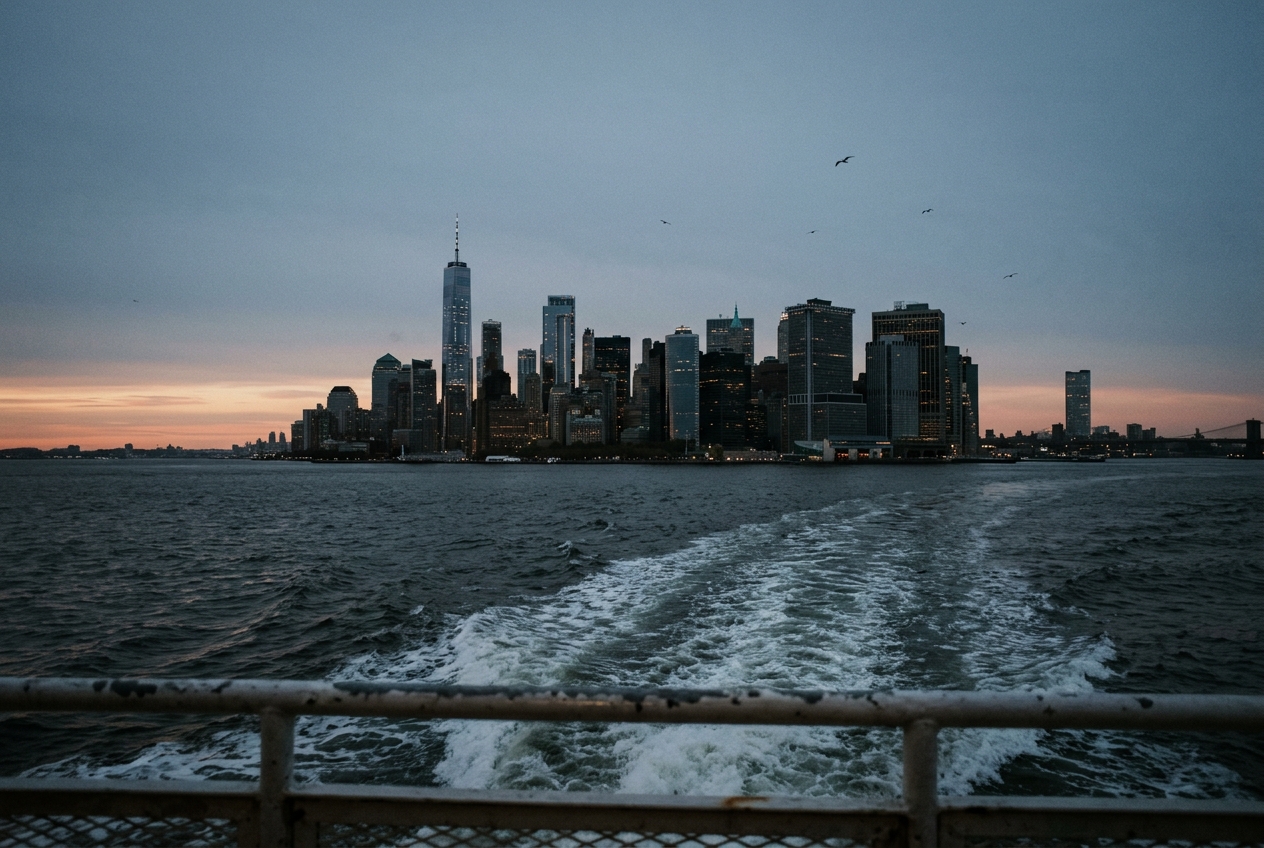
Short New York quotes
Short enough for a caption, with the author and the book attached, because a caption is still a quotation. Add card 5 (Whitman, nine words), card 17 (O. Henry’s Bagdad-on-the-Subway) and card 20 (White) to these three and you have six.
Was there ever such a sunny street as this Broadway!
Dickens at an open window, looking down Broadway on a hot day. Ten words, and one of the few moments in the chapter where he simply enjoys the place.
City of hurried and sparkling waters! city of spires and masts! / City nested in bays! my city!
The last two lines of the poem that opens at card 11. The two words at the end carry it.
New York is lavish of light, it is lavish of everything, it is full of the sense of spending from an inexhaustible supply.
Wells watching the lights come on across Manhattan at dusk. The next sentence admits the belief is catching, and it reads now as a fair description of a Saturday night.
One line you will see on every caption list is not here. “Concrete jungle where dreams are made of” is a song lyric from a 2009 recording with several credited writers, not a quotation from anyone, and we do not reproduce lyrics.
Manhattan, Brooklyn, Queens and the harbour: lines with an address
Most of these lines are tied to a real place you can still stand in. Here is where each one was written about, which doubles as a rough walking list.
Where the New York lines are set
| Borough or place | Writer and year | What the line is about |
|---|---|---|
| Manhattan | Dickens 1842, O. Henry 1907, Wharton 1920, Chesterton 1922, Fitzgerald 1925 | Broadway in the sun and lit up at night, Madison Square, the old Academy of Music on 14th Street, and Madison Avenue after work |
| Brooklyn | Walt Whitman, Leaves of Grass | The ferry crossing to Manhattan and the ample hills he grew up among |
| Queens and the Queensboro Bridge | F. Scott Fitzgerald, 1925 | The drive over the bridge into Manhattan, and the city seen for the first time |
| The harbour and the Narrows | Emma Lazarus 1883, H. G. Wells 1906, Henry James 1907 | The Statue of Liberty, and the first sight of the skyline from the deck of a ship |
The Bronx and Staten Island are missing from the table because none of the lines we could verify are set there. If you know a sourced one, the fact-check hub below is where to send it.
Notes on the selection
How these twenty-three were chosen. Twenty lines were matched this week against the complete text they come from, downloaded from Project Gutenberg or read on Wikisource, rather than copied from another list. Where a work has a chapter, a section or an essay title, it is printed so you can check us. Three lines rest on credible secondary sources instead, and those cards say so: Thomas Wolfe (the Thomas Wolfe Review), Steinbeck (the 1953 New York Times Magazine essay, which is in copyright) and E. B. White (the Museum of the City of New York). Poetry line breaks are shown with a slash.
Cut, and why. The brief for this page asked for twenty-six. It has twenty-three, because that is what checked out. The Ed Koch line about the future coming to audition is cut because we could not find where or when he said it. Georgia O’Keeffe’s line about painting New York as it is felt is cut for the same reason. Herman Melville’s “insular city of the Manhattoes” from the first chapter of Moby-Dick checked out perfectly and is cut anyway, because it already runs on our ocean and coast page and we do not repeat lines across pages. Jack Kerouac, Joan Didion and John Updike are left out because their New York lines are in copyright and we could not fix a page to hang them on.
How we decide what counts as a source is set out at editorial standards, and the corrections live in the travel quote fact-check hub. If the New York you are working towards is the one where you are not counting annual leave, vagabonding is the practical argument and start here is the honest place to begin.
Questions people ask about New York quotes
Who said “One belongs to New York instantly”?
Thomas Wolfe, the North Carolina novelist (1900 to 1938), in The Web and the Rock, published in 1939, chapter 18. It is often credited to Tom Wolfe, the author of The Bonfire of the Vanities, who was born in 1930 and is a different writer entirely. The full line is “One belongs to New York instantly, one belongs to it as much in five minutes as in five years.”
What did F. Scott Fitzgerald say about New York?
The best known line is from The Great Gatsby, 1925, chapter IV: “The city seen from the Queensboro Bridge is always the city seen for the first time, in its first wild promise of all the mystery and the beauty in the world.” Chapter III has a quieter one about liking the racy, adventurous feel of New York at night.
Did John Steinbeck really call New York an ugly city?
Yes, in “The Making of a New Yorker”, published in The New York Times Magazine on 1 February 1953. But the passage turns in the next sentence: once you have lived in New York and it has become your home, he wrote, no place else is good enough. Quoting only the first half reverses what he meant.
What is a good short New York caption?
Three short sourced options: “Flood-tide below me! I see you face to face!” (Walt Whitman, “Crossing Brooklyn Ferry”), “Was there ever such a sunny street as this Broadway!” (Charles Dickens, American Notes, 1842), and “No one should come to New York to live unless he is willing to be lucky.” (E. B. White, Here Is New York, 1949).
The novel was published the year after Wolfe died, assembled by his editor from the manuscript he left, which is why it appears with a 1939 date. The Thomas Wolfe Society’s own journal places the line in chapter 18. It is a secondary source, because the 1939 text is still in copyright and not online in full, and we say so rather than dress it up. The confusion is understandable: Tom Wolfe spent sixty years writing about New York too. He just did not write this.