
Florence Quotes, Verified: 10 Lines Worth Trusting and 2 the City Never Said
Ten lines about Florence, each traced to the book, poem, letter or canto it actually appears in, plus the two famous ones the city's own artists never said.
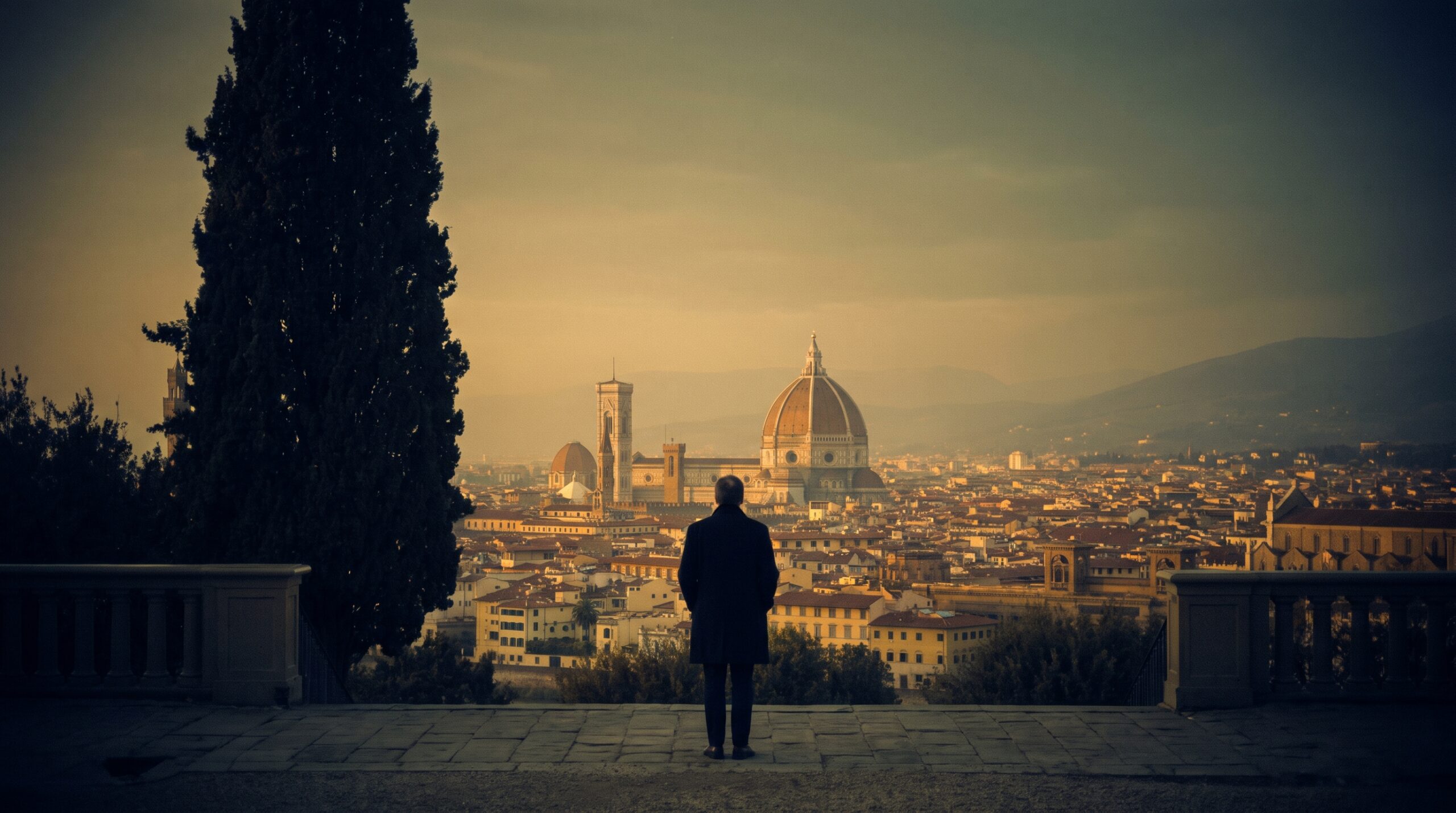
Florence quotes have a particular problem: the city that produced Dante, Michelangelo and Leonardo attracts invented lines the way the Duomo attracts queues. Put a beautiful sentence over a photograph of the Arno at sunset and nobody asks where it came from. This page asks. Every line below is traced to the book, poem, canto or letter it actually appears in, with the year, and the two most famous lines Florence never produced are corrected at the bottom.
I lived five minutes from Dante’s statue in Florence. I read The Divine Comedy because of it. The city quietly rearranges what you think a life is supposed to look like.
We have kept the count honest rather than long: ten lines that survive checking, from the novel that made the city a character, the American who refused to be impressed, the poets who moved here and stayed, and the one visitor the city famously overwhelmed.
Florence quotes worth trusting: the 60-second answer
If Florence is calling
Florence rewards slowness: the city centre walks end to end in half an hour, and almost everything quoted on this page happened within it. If you are planning the trip, the tours and tickets below are drawn live from GetYourGuide for Florence, and the honest advice from everyone quoted here is the same: book the Duomo early, then put the plan down and wander the Oltrarno.
The novel Florence wrote: A Room with a View
No book has sent more readers to Florence than E.M. Forster’s 1908 novel about English tourists at the Pensione Bertolini, armed with Baedekers and slowly disarmed by the city. Its Florence chapters were written from life, and they still read like the city feels.
“It was pleasant to wake up in Florence, to open the eyes upon a bright bare room, with a floor of red tiles which look clean though they are not; with a painted ceiling whereon pink griffins and blue amorini sport in a forest of yellow violins and bassoons.”
“One doesn't come to Italy for niceness,” was the retort; “one comes for life. Buon giorno! Buon giorno!”
Miss Lavish is teasing Lucy about a Florentine smell when she says it, which is exactly why the line has outlived the joke.
“The traveller who has gone to Italy to study the tactile values of Giotto, or the corruption of the Papacy, may return remembering nothing but the blue sky and the men and women who live under it.”
Forster’s gentlest verdict on art tourism, and the truest thing on this page about what Florence actually leaves you with.
A Room with a View (Penguin Classics)
Best for: Reading on the plane to Florence, or on a bench above the Arno
The canonical Penguin Classics paperback of the novel quoted above. If one book earns a place in the bag for a Florence trip, it is this one: short, funny, and set in the exact streets you will be walking.
Check price
The river and the stones
Two views of the same city, seven centuries apart: the American correspondent refusing to be reverent in 1869, and the exiled Florentine whose bitterness still reads at full strength.
“It is popular to admire the Arno. It is a great historical creek with four feet in the channel and some scows floating around. It would be a very plausible river if they would pump some water into it.”
Twain in Florence is Twain at his least impressed, which is its own kind of love letter. The full Florence passages are in The Innocents Abroad, the founding text of irreverent travel writing.
“Rejoice, O Florence, since thou art so great, / That over sea and land thou beatest thy wings, / And throughout Hell thy name is spread abroad!”
Sarcasm, not civic pride. Dante wrote it in exile, and the greatness he salutes is Florence’s talent for producing thieves. The city that later raised his statue outside Santa Croce never let him come home.
The poets who stayed
The English poets did not pass through Florence; they moved in. The Brownings spent fifteen years at Casa Guidi in the Oltrarno, and Shelley wrote his most famous poem in a wood along the Arno just outside the city walls.
“I heard last night a little child go singing / 'Neath Casa Guidi windows, by the church, / O bella libertà, O bella!”
She is listening to Florence from inside it, which no other poem on this page can claim. Casa Guidi still stands, a few steps from the Pitti Palace, and you can visit the apartment.
“Open my heart and you will see / Graved inside of it, 'Italy.'”
The most compact declaration of place-love in English poetry, from a man who had fifteen Florentine years to test it.
“This poem was conceived and chiefly written in a wood that skirts the Arno, near Florence, and on a day when that tempestuous wind, whose temperature is at once mild and animating, was collecting the vapours which pour down the autumnal rains.”
The most famous wind in English poetry is a Florentine wind. Shelley’s note places the Ode in the Cascine woods along the Arno, in October 1819.
The visitor Florence overwhelmed
Florence is the only city with a medical condition named after the experience of visiting it. The account behind the name was written in 1817, on the steps of Santa Croce.
“I had reached that point of emotion where the celestial sensations given by the fine arts meet passionate feeling. As I emerged from Santa Croce, I was seized with a fierce palpitation of the heart; the wellspring of life was dried up within me, and I walked in constant fear of falling to the ground.”
Italian psychiatrist Graziella Magherini coined the term Stendhal syndrome in 1979, after decades of treating visitors who came out of Florence’s churches dizzy. She named it for this exact passage.
“A man who has not been in Italy, is always conscious of an inferiority, from his not having seen what it is expected a man should see.”
Johnson never made the trip himself, which gives the line its sting: it is the grand tour’s guilty conscience, spoken by the man who stayed home.
The lines Florence’s artists never said
The two most shared lines from Florence’s two most famous artists fail verification, and this is the part of the page where we are most careful, because these are the lines you will see on posters in the San Lorenzo market this afternoon.
“I saw the angel in the marble and carved until I set him free.”
The sentiment loosely echoes Michelangelo’s real poetry about the figure waiting inside the stone, but this polished English sentence appears nowhere in his writings; quote researchers trace it to much later retellings. His documented sonnets say it better and stranger. The line as shared is a souvenir, not a source.
“Once you have tasted flight, you will forever walk the earth with your eyes turned skyward, for there you have been, and there you will always long to return.”
Leonardo filled thousands of notebook pages, many on flight, and this sentence is in none of them. It appears in the twentieth century in popular writing about him and spread from there. Beautiful, modern, and not his.
Corrections like these are a standing series here; the full set lives in the travel quote fact-check hub.
For the wider tradition these writers belong to, the 100 best travel quotes is the verified master list, and Mark Twain’s author page collects the rest of his travel lines with sources and years.
Frequently asked questions
Who wrote the most famous quotes about Florence?
E.M. Forster (A Room with a View, 1908), Mark Twain (The Innocents Abroad, 1869), Dante (Inferno), Elizabeth Barrett and Robert Browning, and Stendhal, whose 1817 Santa Croce account gave its name to Stendhal syndrome. Each line on this page is cited to its book and year.
What is Stendhal syndrome?
The dizziness and racing heart some visitors report when overwhelmed by Florence’s art. Italian psychiatrist Graziella Magherini named it in 1979 after Stendhal’s own 1817 description of leaving Santa Croce, quoted on this page.
Did Michelangelo say he saw the angel in the marble?
There is no verified source. The sentence does not appear in Michelangelo’s letters or poems; it echoes his genuine poetry about the figure within the stone, but the quotable English line is a later invention.
What novel is set in Florence?
The classic is E.M. Forster’s A Room with a View (1908), whose Florence chapters are quoted on this page. George Eliot’s Romola (1863) is set in Renaissance Florence, and Mary McCarthy’s The Stones of Florence (1959) is the classic study of the city itself.
The chapter is titled In Santa Croce with No Baedeker, which is the whole novel in five words: put the guidebook down and look.