
Jon Krakauer: Travel Quotes, Into the Wild, and the Reporter Who Follows Risk
Jon Krakauer, born 1954, is the American climber and journalist behind Into the Wild and Into Thin Air. Twelve quotes checked against the books they came from, plus the famous line he reported but never wrote.
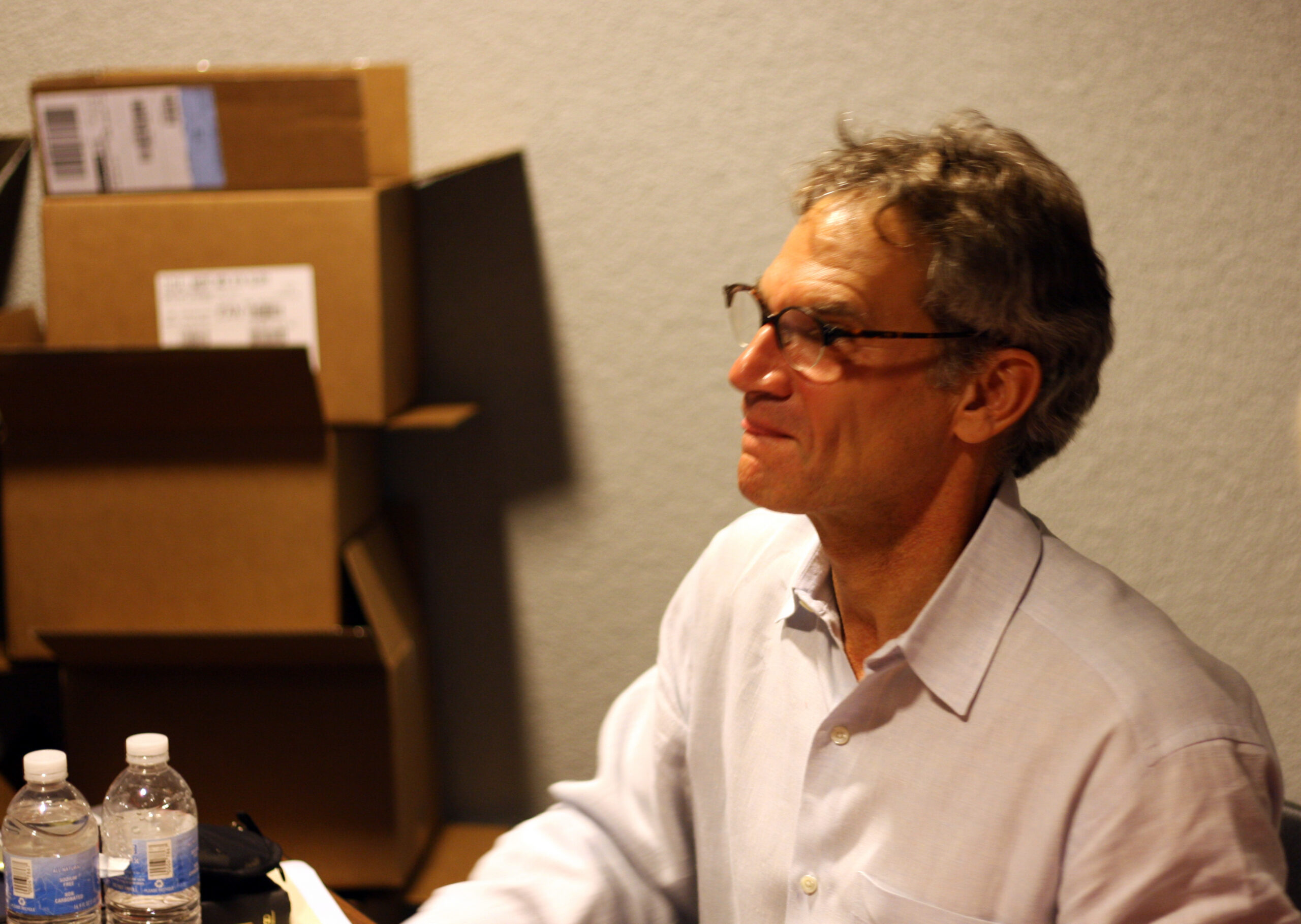
Most people meet Jon Krakauer through a dead man. Chris McCandless walked into the Alaskan bush in April 1992 and did not walk out, and the book Krakauer wrote about him has since sold in the millions. Which is the reason the most-quoted line on the internet carrying Krakauer’s name is not his at all.
Jon Krakauer Travel Quotes: The Answer in 60 Seconds
Jon Krakauer, born 12 April 1954 in Brookline, Massachusetts, is an American journalist, mountaineer and the author of eight books, among them Into the Wild (1996) and Into Thin Air (1997). His father put him on a rope at eight. He took a degree in environmental studies, then paid for his climbing with carpentry and commercial salmon fishing until a magazine cheque made writing viable in the early 1980s. He is still working, at 72, from Boulder, Colorado.
His travel writing is not really about places. It is about why people go, and it is sharpest when going was a bad idea. If you want the one line that carries him, it is not from Everest. It is from a chapter about himself, at twenty-three, leaving a job behind.
I was surprised, as always, by how easy the act of leaving was, and how good it felt. The world was suddenly rich with possibility.
Jon Krakauer Into the Wild (1996), chapter 14 Krakauer had just quit a carpentry job in Boulder to drive north for Alaska. Almost nobody quotes this line, which is a pity, because it is the cleanest thing he ever wrote about the moment before a departure.
The Verified Quotes, Sourced
Every quote below was checked against the running text of the book it comes from, not against a quote site. Each one carries its book, its year and its chapter. Where a line is routinely truncated or reworded online, that is said plainly. Where the words belong to somebody else, they are not in this section at all, they are in the one after it.
From Into the Wild (1996)
Into the Wild is a book about Chris McCandless, except for two chapters where it is not. In chapters 14 and 15 Krakauer stops reporting and turns on himself: a twenty-three-year-old who went alone to a rock spire on the Alaska border called the Devils Thumb, failed twice on the unclimbed face he had come for, and reached the top on 16 May 1977 by an easier line on the other side. Those chapters are the closest he comes to explaining the rest of his work.
The trip was to be an odyssey in the fullest sense of the word, an epic journey that would change everything.
Jon Krakauer Into the Wild (1996), chapter 3 Krakauer on McCandless setting out. Read it twice: the sentence is doing two jobs, describing a young man's intention and quietly marking the distance between an intention and an outcome.
It is easy, when you are young, to believe that what you desire is no less than what you deserve, to assume that if you want something badly enough, it is your God-given right to have it.
Jon Krakauer Into the Wild (1996), chapter 15 First published six years earlier, with slightly different punctuation, in the closing essay of Eiger Dreams (1990). If you cite the sentence on its own, 1990 is the correct first credit.
I was stirred by the dark mystery of mortality. I couldn't resist stealing up to the edge of doom and peering over the brink.
Jon Krakauer Into the Wild (1996), chapter 15 The sentence that follows is the one that matters to him: that this was a very different thing from wanting to die. It is the whole argument of the book compressed into two lines.
It is hardly unusual for a young man to be drawn to a pursuit considered reckless by his elders; engaging in risky behavior is a rite of passage in our culture no less than in most others. Danger has always held a certain allure.
Jon Krakauer Into the Wild (1996), chapter 17 Krakauer refusing the easy verdict on McCandless. He is not defending the decision, he is refusing to treat it as inexplicable.
From Into Thin Air (1997)
Outside magazine sent Krakauer to Everest in 1996 to report on the commercial guiding business, and the original brief was to write from Base Camp. He decided to go for the summit instead. He reached it on 10 May and came down ahead of the storm that killed eight people that day and night, four of them from his own team. The book he wrote about it is not a triumph narrative. It is closer to a deposition.
Straddling the top of the world, one foot in China and the other in Nepal, I cleared the ice from my oxygen mask, hunched a shoulder against the wind, and stared absently down at the vastness of Tibet.
Jon Krakauer Into Thin Air (1997), chapter 1 The book's opening sentence. Note the word absently. He is standing on the summit of Everest and the emotional register is flat, which turns out to be the point.
There were many, many fine reasons not to go, but attempting to climb Everest is an intrinsically irrational act…
Jon Krakauer Into Thin Air (1997), Introduction The sentence continues: a triumph of desire over sensibility. Two sourcing notes. It sits in the Introduction, not in a chapter and not in the epilogue, which is where it is usually mis-cited. And the short form that circulates, starting at attempting, drops the opening clause that gives it its weight.
Everest has always been a magnet for kooks, publicity seekers, hopeless romantics, and others with a shaky hold on reality.
Jon Krakauer Into Thin Air (1997), chapter 7 Written from Camp One at 19,500 feet, about the population of Base Camp below him. He includes himself in the census.
I quickly came to understand that climbing Everest was primarily about enduring pain. And in subjecting ourselves to week after week of toil, tedium, and suffering, it struck me that most of us were probably seeking, above all else, something like a state of grace.
Jon Krakauer Into Thin Air (1997), chapter 10 The most useful thing on this page for anyone weighing a hard change against a comfortable one. The reward he names is not the summit, it is the state the effort puts you in.
In the midst of all the postmortem ratiocination, it is easy to lose sight of the fact that climbing mountains will never be a safe, predictable, rule-bound enterprise. This is an activity that idealizes risk-taking; the sport's most celebrated figures have always been those who stick their necks out the farthest and manage to get away with it.
Jon Krakauer Into Thin Air (1997), chapter 21 Written after the funerals, in the chapter where he stops narrating and starts arguing. The uncomfortable half is the second sentence: the culture rewards the survivors of the same gamble that kills the others.
From Eiger Dreams (1990)
His first book, and the one almost nobody reads. It collects the magazine pieces that taught him how to write, and it closes with the Devils Thumb essay he wrote specially for it. If you want Krakauer before the fame, this is where he is.
Most climbers aren't in fact deranged, they're just infected with a particularly virulent strain of the Human Condition.
Jon Krakauer Eiger Dreams (1990), Author's Note His stated aim for the book was to prune away some of the overgrown mystique around climbing and let a little light in. This is the sentence that does it.
Climbing the Devils Thumb, however, had nudged me a little further away from the obdurate innocence of childhood. It taught me something about what mountains can and can't do, about the limits of dreams. I didn't recognize that at the time, of course, but I'm grateful for it now.
Jon Krakauer Eiger Dreams (1990), closing essay The final paragraph of his first book, written thirteen years after the climb. Nothing about what mountains can do. Everything about what they cannot.
The Line He Never Said
Search for Jon Krakauer quotes and the first result is almost always this one. It is on posters, on tattoos, on the closing slide of conference talks. It is not his.
HAPPINESS ONLY REAL WHEN SHARED
Christopher McCandless handwritten in his copy of Boris Pasternak's Doctor Zhivago, July 1992 Reported by Jon Krakauer in Into the Wild (1996), chapter 18. Four words, block capitals, no verb. The tidy version that circulates online, with an is inserted, is not what Krakauer printed.
The words are Christopher McCandless’s own, written in his hand. Krakauer transcribed them. The object is a paperback copy of Pasternak’s Doctor Zhivago, one of the books recovered from the abandoned bus on the Stampede Trail where McCandless died. The annotation sits in the margin beside a passage he had marked, in which Pasternak writes that an unshared happiness is not happiness. So the thought is prompted by Pasternak, the words are McCandless’s, and the reporting is Krakauer’s. He owns none of it.
The wording matters too. In the book it is four words in capitals with no verb, telegraphic, the way people actually scribble in margins. The grammatical version everyone shares, with an is dropped into the middle, is a later smoothing. It reads better and it is not the text.
There is a third layer, and it is the one worth carrying away. In the book, Krakauer refuses to draw the conclusion. He notes that it is tempting to read the annotation as evidence that the long solitary journey had changed McCandless, and then he says that we will never know, because Doctor Zhivago was the last book Chris McCandless would ever read. The 2007 Sean Penn film moves the moment to the end, after the poisoning, and frames it as a settled realisation. Almost everything written about this quote online takes the film’s reading and credits it to the book. The book is more honest and less comforting: it hands you an ambiguous object and declines to tell you what it means.
The same trap catches a lot of other lines. The passage about the core of a man’s living spirit being his passion for adventure, and the endlessly changing horizon, is McCandless writing a letter to Ronald Franz, quoted in chapter 6. The line about not needing to be strong but to feel strong does not appear in Krakauer’s book at all. Every chapter of Into the Wild opens with an epigraph by somebody else, Thoreau, Tolstoy, Jack London, Wallace Stegner, Pasternak, and scrapers grab the first text under the heading. If a Krakauer quote you have found is soaring and aphoristic, check it. His own prose is drier than that.
Life and Range: The Reporter Who Follows Risk
Krakauer was the third of five children, born in Massachusetts and raised in Corvallis, Oregon. His father was a physician who took him climbing at eight and expected Harvard Medical School. Chapters 14 and 15 of Into the Wild are as much about that as about any mountain: a young man who needed to prove something to someone who was never going to be satisfied. He has written about the later collapse of his father’s health and mind with a directness that is hard to read.
The Devils Thumb, in 1977, is his founding text. He was twenty-three, alone for twenty days, and he did not do what he set out to do. He tried the unclimbed north face twice, was stopped by rime ice on steep slabs and then by spindrift, and wrote in his own report to the American Alpine Journal that he had gone to the limits of his control. He summited by a scouted, easier line on the southeast side. He has told the story four times across fifty years, and the telling gets less heroic each time.
The journalism came out of the climbing. He wrote for Outside through the 1980s and 1990s, and two assignments became the books everyone knows. In January 1993 Outside ran a piece of his called Death of an Innocent, about a young man found dead in a bus in Alaska. That became Into the Wild, published in January 1996. Three months later he was on Everest.
What he has done with the aftermath is the part that deserves attention. He got a detail badly wrong in the immediate reporting, telling Base Camp and then a dead man’s girlfriend that he had seen the guide Andy Harris reach camp safely. Months later, interviewing another climber, he worked out that the man he had seen was somebody else and that Harris’s fate is unknown. He corrected it in print, and the correction is one of the load-bearing passages of the book rather than a footnote. He has said he did not admit for years that he had post-traumatic stress, that group therapy alongside military veterans helped, and that photographs of Doug Hansen and Andy Harris hang above his desk. He directed royalties to a memorial fund, and he now chairs the board of the American Himalayan Foundation.
Since Everest he has mostly written about institutions failing people: Mormon fundamentalism and a double murder, the Pentagon’s cover-up of how Pat Tillman died, a charity that was not what it claimed, and the handling of rape cases in a college town. The through-line is the same as the climbing books. Somebody took a risk, something went wrong, and the official story does not survive contact with the record.
Where to Start With Krakauer’s Books
Eight books, and they are not equally good doorways. This is the order that works if you are coming to him fresh.
1. Into the Wild
Best for: Anyone meeting Krakauer for the first time, and anyone who has only seen the film.
The book that made his name, and still the shortest way in. It is a reported account of Chris McCandless, but chapters 14 and 15 break away into Krakauer’s own solo climb on the Devils Thumb at twenty-three, and those pages are the clearest statement of what he thinks about risk. Anchor Books paperback, 240 pages.
Check Price on Amazon →
2. Into Thin Air
Best for: Readers who want the book that a Pulitzer jury shortlisted, and the honest version of a disaster.
His account of the 1996 Everest storm that killed eight people in a day and a night, four of them from his own team. A 1998 Pulitzer finalist in general nonfiction. It is not a triumph narrative; the load-bearing passage is the one where he corrects his own reporting error about a dead colleague. Vintage paperback, 332 pages.
Check Price on Amazon →
3. Eiger Dreams
Best for: Anyone who liked the two famous books and wants to know where the voice came from.
His first book, and the one almost nobody reads. Twelve essays collected from his magazine years, funnier and looser than anything after, closing with the Devils Thumb piece he wrote specially for it. If you want Krakauer before the fame, this is where he is. Anchor paperback, 186 pages.
Check Price on Amazon →
4. Under the Banner of Heaven
Best for: Readers who want to see the same method applied somewhere with no mountains in it.
Mormon fundamentalism and a 1984 double murder. This is where the method leaves the wilderness and stays the same: somebody took a risk, something went wrong, and the official story does not survive contact with the record. Adapted as an FX series in 2022. Vintage paperback, 432 pages.
Check Price on Amazon →
5. Classic Krakauer
Best for: Anyone who wants the journalism without committing to a whole book.
Ten collected essays on wilderness and risk, drawn from across his magazine career. The lightest possible way to work out whether his voice is for you before you buy one of the long ones. Anchor Books paperback.
Check Price on Amazon →
One warning about the films. Sean Penn wrote and directed the 2007 Into the Wild, and it compresses and rearranges. The 2015 film Everest is not an adaptation of Into Thin Air, and Krakauer has disowned it in unusually blunt terms, saying dialogue attributed to him was invented. If you want the record, read the books.
Legacy: Risk, Honesty, and the Reporting of Doubt
There is a version of Krakauer that the internet likes: the adventure writer who tells you to walk away from the expected life. It is a misreading, built mostly out of McCandless’s words with Krakauer’s name on them. The actual writer is more careful and more useful than that. He is interested in the gap between what a risk promises and what it delivers, and he keeps finding that the gap is where people get hurt.
He holds himself to the same standard. In 2025 a persistent critic published a long series of videos alleging errors in Into Thin Air. Krakauer answered at length, rejected most of it, and then wrote that the critic had identified a number of genuine errors and that he was grateful for them. Speaking to Slate in May 2026, thirty years after the climb, he drew a distinction worth keeping straight: he is glad he wrote the book, and going to Everest was probably the biggest mistake of his life. Those are not the same regret, and he has never confused them.
That is the reason he is worth reading if you are weighing a change that other people think is unreasonable. He will not talk you into it, and he will not talk you out of it. He will show you somebody who went, and what it cost, and what remained afterwards that was worth the cost. Then he will decline to tell you what it means.
Frequently Asked Questions About Jon Krakauer
Did Jon Krakauer write "happiness only real when shared"?
No. Those are Christopher McCandless’s words, written by hand in block capitals in the margin of his copy of Boris Pasternak’s Doctor Zhivago in July 1992. Krakauer reports the annotation in Into the Wild (1996), chapter 18. The version circulating online with an is inserted, happiness is only real when shared, is not the wording Krakauer printed.
What is Jon Krakauer's most famous book?
Into Thin Air (1997), his account of the 1996 Mount Everest disaster, was a number one bestseller and a 1998 Pulitzer Prize finalist in general nonfiction. Into the Wild (1996) is close behind and is the more widely taught of the two.
Is Jon Krakauer still alive?
Yes. He was born on 12 April 1954 and is 72. He lives in Boulder, Colorado, chairs the board of the American Himalayan Foundation, and gave interviews in May 2026 around the thirtieth anniversary of the 1996 Everest disaster.
Did Jon Krakauer climb Mount Everest?
Yes. Outside magazine sent him in 1996 to report on commercial guiding, originally from Base Camp only. He joined Rob Hall’s Adventure Consultants expedition as a client and reached the summit on 10 May 1996, descending before the worst of the storm. Eight people died in that storm, four of them from his own team.
Which Jon Krakauer book should I read first?
Into the Wild (1996). It is the shortest, and chapters 14 and 15 are his own first-person account of a solo climb in Alaska at twenty-three, which is the clearest window onto how he thinks about risk.
More Authors on Risk and the Road
- Jack Kerouac travel quotes, the other writer whose readers keep mistaking a character for the author.
- Ernest Hemingway travel quotes, sourced, including the ones he never wrote.
- Cheryl Strayed travel quotes, for the walk taken alone and written down honestly.
- Adventure quotes, the wider collection this profile sits inside.
- All author profiles.