
Vagabonding: the deliberate way out
An old idea with a modern name, handed down through Rolf Potts: long-term travel is not a purchase. It is a decision about what your time is for.
This page is the whole process, staged: from the first admission to the first slow month on the road. Read it in order, or wander.
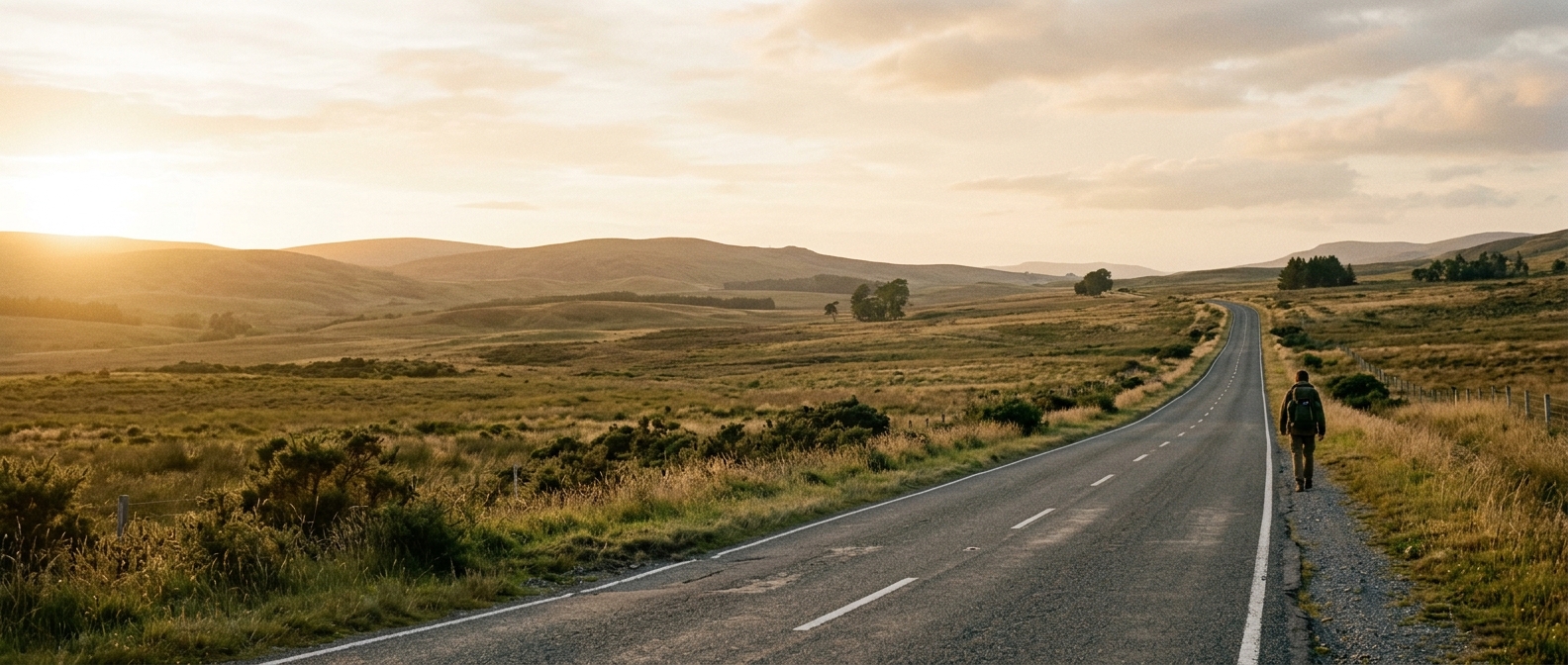
A lineage, not a trend
The practice is old. The name belongs to Rolf Potts, whose 2003 book gave long-term travel a working philosophy, and the argument underneath it is plain: the thing standing between most professionals and a long stretch of travel is rarely money. It is the assumption that time belongs to the career.
“Vagabonding is not a lifestyle, nor is it a trend. It’s just an uncommon way of looking at life.”Rolf Potts · Vagabonding, 2003
Potts goes further in the same chapter: vagabonding, as he frames it, is a value adjustment about time, the one commodity none of us renews. That is why this page belongs on a quotes site read by people who have done everything right and still feel the pull. The idea is not a gap year with better branding. It is deliberate living pointed at the road.
The lineage runs forward too. When Tim Ferriss spent eighteen months travelling the world, the trip that later seeded The 4-Hour Work Week, he carried one suitcase, one backpack and two books. One was Thoreau’s Walden. The other was Vagabonding. A generation of desk-bound achievers met the idea through him.
Ferriss and Potts gave me the words: the trip I wanted was not a holiday, it was a rearrangement of how life is structured. I have lived and worked in Florence and Rome, and run a team from Bali and Phuket. The location-independent life is something I have actually done, not just written about.
What follows is this site’s working version of the process, the one the person behind this site actually ran, stage by stage, without burning anything down.
Five stages, one considered season
Slower than a resignation letter, faster than a someday. Each stage ends where the next begins, and none of them requires an announcement.
Build the runway
The escape that lasts is the one that is funded by subtraction first. Before anything visible changes, the cost of your life comes down for a season: the lease that renews out of habit, the subscriptions, the obligations kept because cancelling them felt like a statement. A cheaper base for a few months is not a step backwards. It is a runway, and a runway is the least romantic and most load-bearing part of any flight.
From the run behind this page: four months in a childhood country town after giving up the city lease. Costs cut, buffer built, nothing announced.
Find where you are on the path →Book the one-way door
A window with edges turns wanting into logistics. The commitment device is simple and old: a flight that only goes one way, and just enough locked in on the other side to land softly. Not a five-city itinerary. Enough certainty to arrive, and enough openness that the trip stays a life rather than a schedule.
From the run behind this page: a one-way flight, booked. Six weeks of accommodation locked in, a hotel and then an Airbnb, and nothing after that. The date stopped being an idea.
Find where you are on the path →Rehearse the absence
Most people try to become remote on the day they leave. The quieter move is to rehearse it months earlier, while everything can still be fixed in person: fewer days in the room, more of the work carried through calls and written handovers, the people around you learning the rhythm of your absence while you are still ten minutes away. By departure day, the distance is already old news.
From the run behind this page: part-time in the office became part-time remote well before the flight. Both sides trained, the team and the traveller, so the leaving changed geography and nothing else.
Find where you are on the path →Bridge the work
The stage everyone asks about first, and the one with the least public detail here, on purpose. The principle is that the work and the income keep moving while you do, arranged before the airport rather than improvised after it. How that arrangement is actually built, step by step, depends on where you are starting from, and that is exactly what the quiz reads. This page will not pretend one paragraph can carry it.
From the run behind this page: the work was renegotiated to travel. The specifics of how are the part that sits behind the quiz, matched to your starting point rather than told as one story.
Find where you are on the path →Leave well, then go slowly
The departure is a day; the arrival is the point. Fewer places, longer stays, mornings that belong to you. Speed is the habit this whole idea exists to break, and it is the last one to go. The travellers who last are the ones who stop performing the trip and start living somewhere for a while.
“For my part, I travel not to go anywhere, but to go. I travel for travel’s sake. The great affair is to move.”Robert Louis Stevenson · Travels with a Donkey in the Cévennes, 1879
From the run behind this page: a deal closed by phone in the check-in line, the handover finished in the Singapore and Dubai lounges, and then Florence, taken slowly, for a season.
Find where you are on the path →What a slow season actually looks like
The texture below is from the Florence chapter behind this page: one real working winter, November to January, lived rather than reviewed. Not a highlight reel. The parts a brochure would leave out are the point.
 Up at half past five to catch the tail of the Melbourne workday, before the city wakes
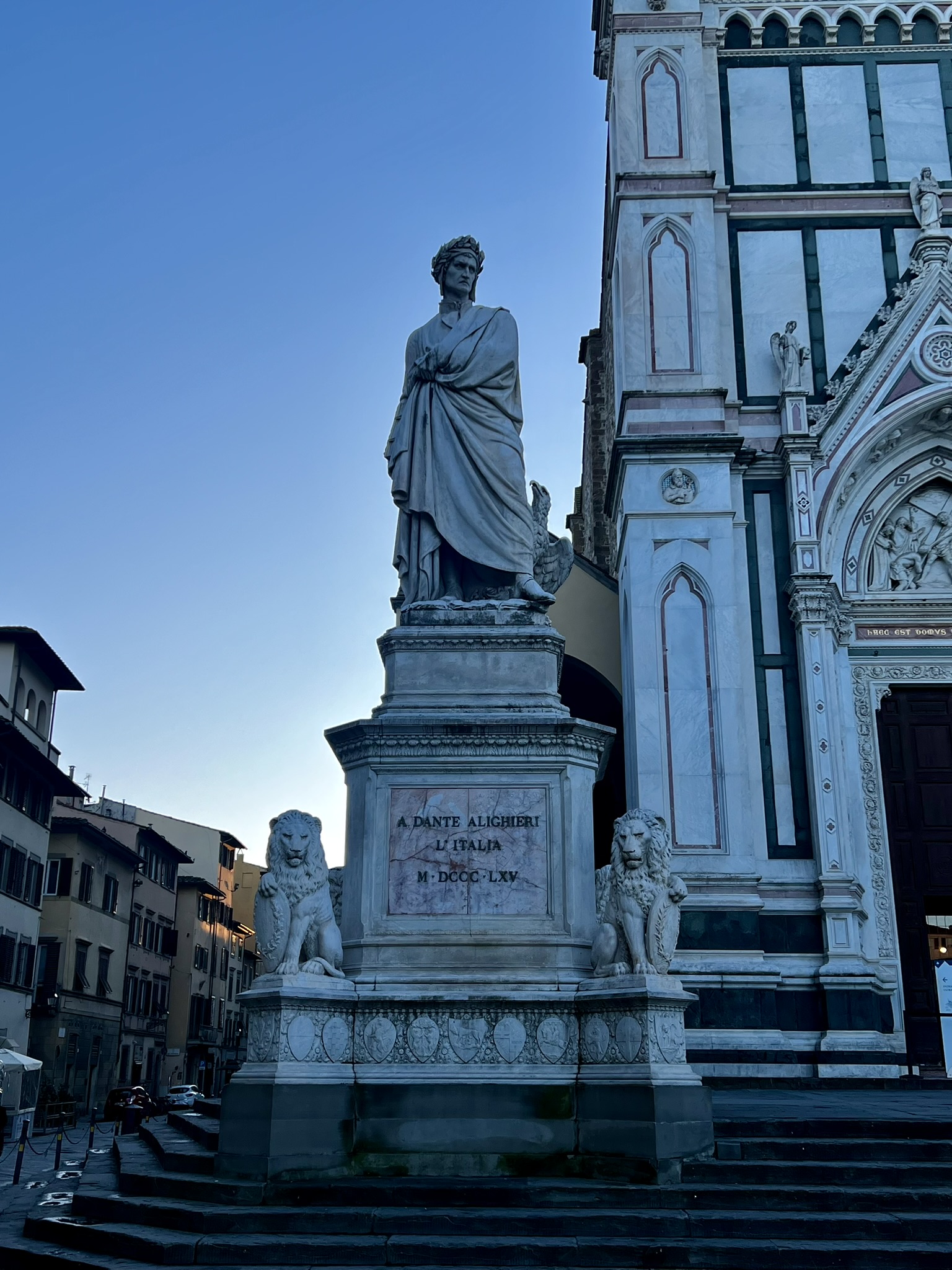 The walk to morning class ran past Dante at Santa Croce. Living somewhere runs on a timetable, and that is the good part
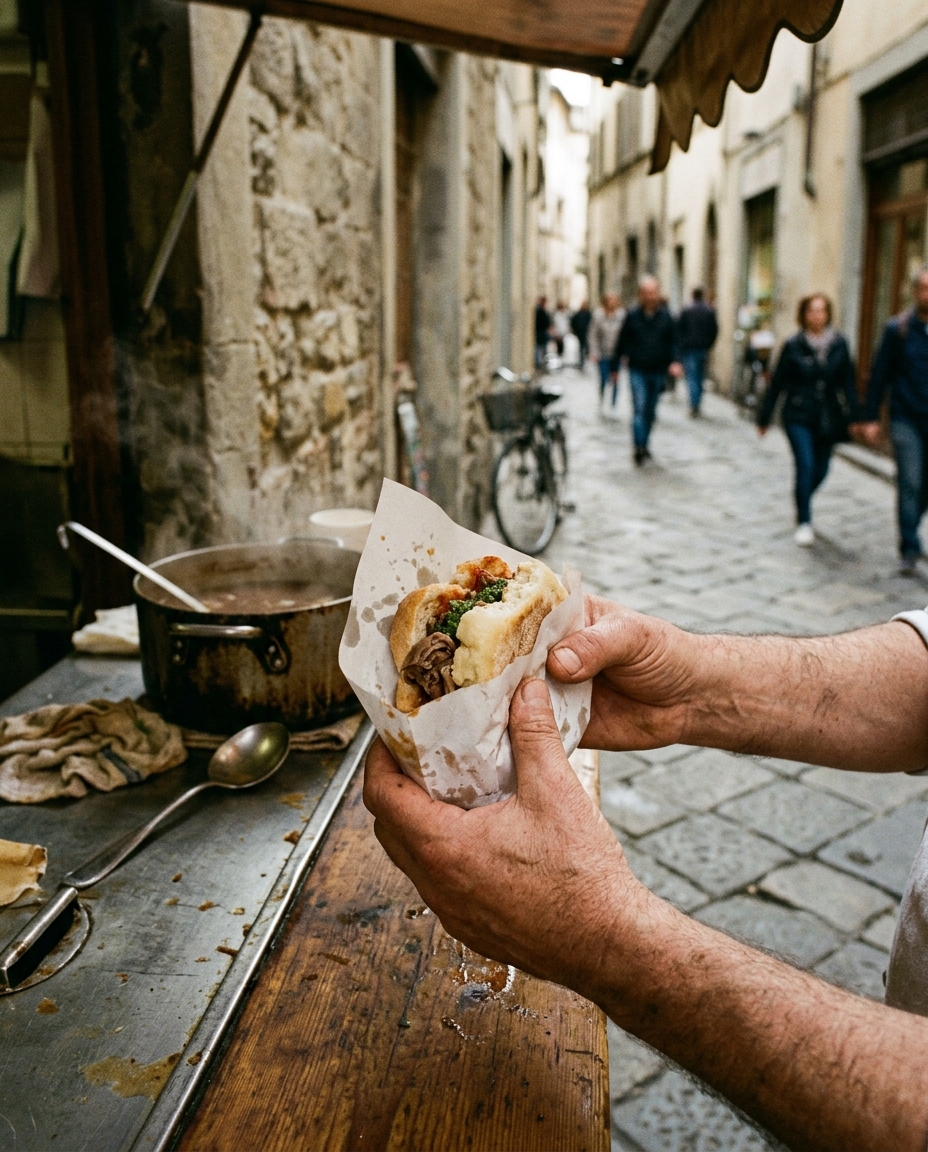 The lampredotto stall around the corner: the kind of place a top-ten list never finds
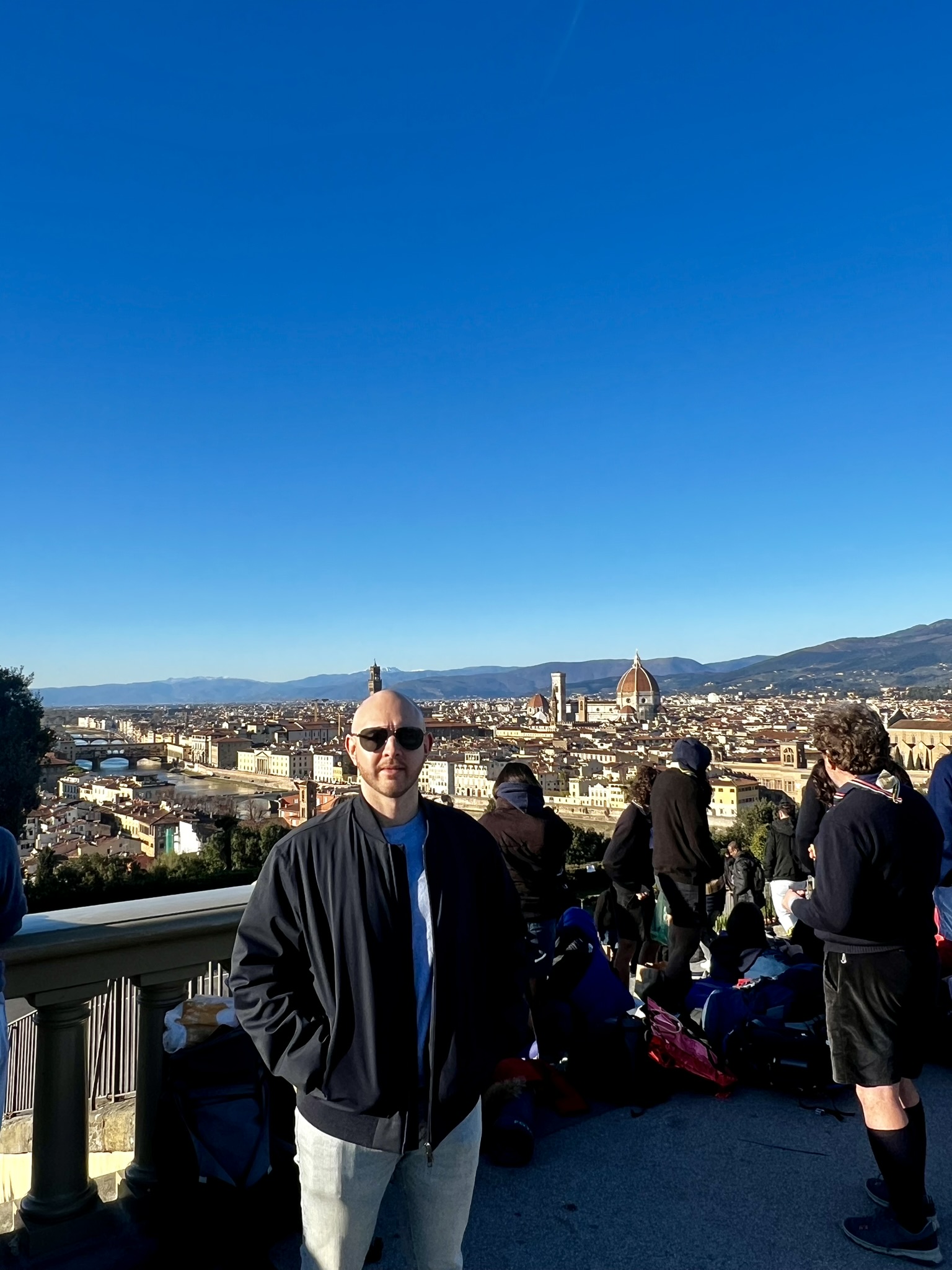 The honest cost: over Christmas and New Year the city empties of the people you have just met, and the early alarms wear thin by month two
The pull is real, and so is the friction. The friction is why the work in stage four exists at all.
An honest fit check
I studied Italian in Florence and worked the tail of the Melbourne day from a co-working space off Libertà. Living somewhere is a different thing to visiting it. And I love my city. Melbourne is home. The pull to explore is real anyway, and that is the whole point.
Find where you are on the path
Twelve questions, about three minutes. It reads which stage you are standing in and opens the next step from there. No right answers.
Show me where I am →The book that carries the idea

Vagabonding
The book this page paraphrases: long-term travel as a decision about time, written before the idea had an industry attached. Read it before you plan anything.
Affiliate link: if you buy through it, Quotes on Travel may earn a small commission at no cost to you. Full disclosure.
See the bookKeep wandering
The idea has been written down for a century and a half. Some places to keep reading: