Jack Kerouac: The Road Voice Behind the Beat Generation
He wrote the book that built the American road-trip myth, then spent twelve years never having stopped running and never having arrived. The travel philosophy, the verified quotes, and the books worth packing.
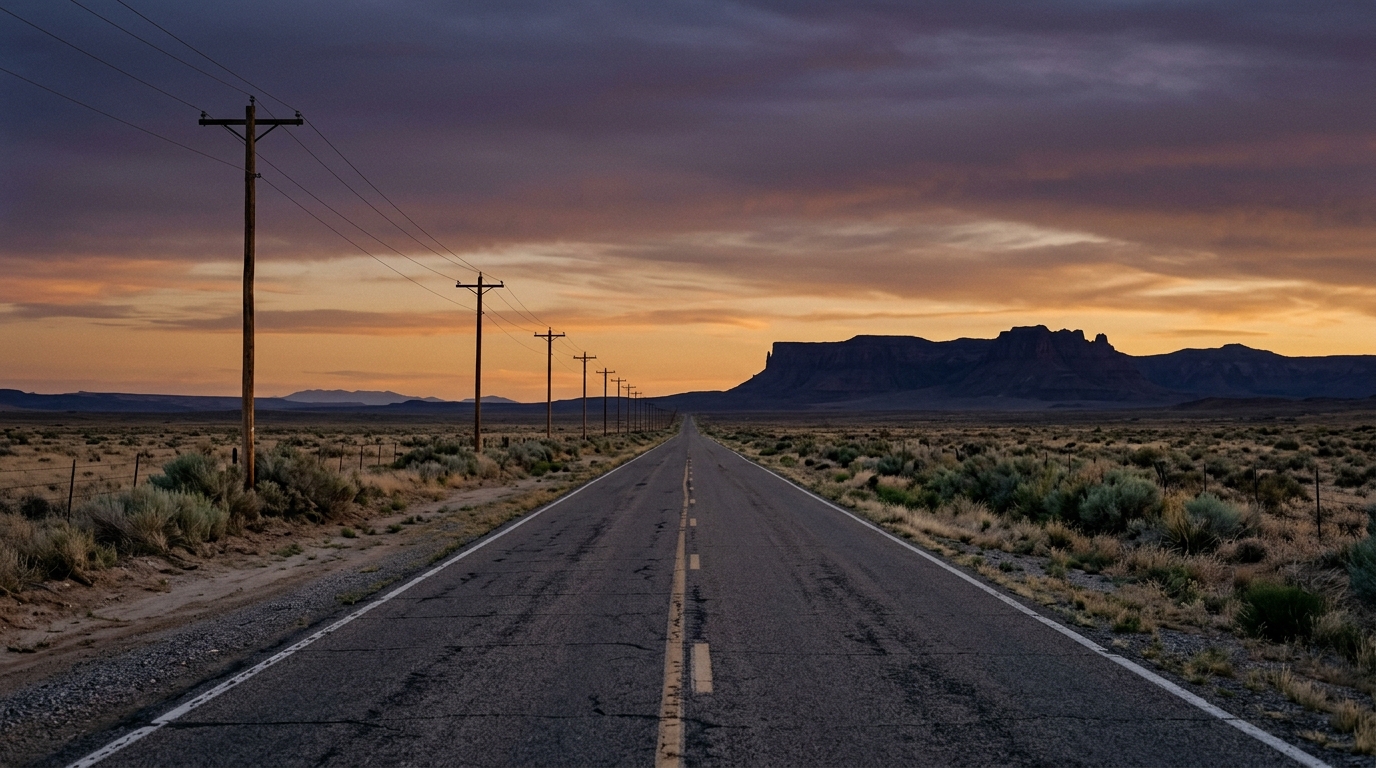
There is a contradiction at the centre of Jack Kerouac. He wrote the book that built the American road-trip myth in 1957, then spent the next twelve years drinking himself to death at his mother’s house in Florida, never having stopped running and never having arrived. The road did not save him. It outran him.
This page is the working bio: who he was, what he actually wrote about travel, the books worth reading before your next trip, and the lines from his work that still hold up. We cite from primary editions. Where attribution is contested, we say so.
Early Life and Roots
Jean-Louis ‘Jack’ Kerouac was born on 12 March 1922 in Lowell, Massachusetts, the youngest of three children in a French-Canadian working-class family. He spoke joual French at home before he spoke English at school. His older brother Gerard died of rheumatic fever when Jack was four, a loss he would write about for the rest of his life. The mill-town childhood, the Catholic devotion, and the bilingual ear all stayed with him.
A football scholarship took him to Columbia University in New York in 1940. A cracked tibia ended the football, but the city held him. He served briefly in the Merchant Marine and the Navy during World War II, then drifted back to Manhattan and into the orbit of Allen Ginsberg, William S. Burroughs, and Lucien Carr. The group the press would later call the Beat Generation was, in the late 1940s, just a handful of broke young writers in Greenwich Village rooming houses.
Career Milestones and Travel Writing
The Kerouac story most travellers care about begins in 1947, when he met Neal Cassady. Cassady was a Denver-born car thief, talker, and live-wire spirit who became the model for Dean Moriarty in On the Road. Between 1947 and 1950, Kerouac and Cassady made four cross-country trips, hitchhiking, bus-riding, and driving through Denver, San Francisco, New Orleans, and Mexico City. Those trips were the raw material.
The famous draft happened in April 1951. Kerouac taped together a 120-foot roll of tracing paper, fed it into his Underwood typewriter, and wrote On the Road in three weeks of continuous typing. The scroll survives, held by the Indianapolis Museum of Art. Viking Press refused the book for six years. When they finally published it in September 1957, the New York Times reviewer Gilbert Millstein called it a major novel overnight, and Kerouac was famous within twenty-four hours. What followed was a decade of dense output: The Dharma Bums (1958), drawn from his summer as a fire lookout on Desolation Peak; The Subterraneans (1958); Lonesome Traveler (1960), his actual travel sketches; and Big Sur (1962), the darkest book, a fictionalised account of his 1960 alcoholic breakdown at Lawrence Ferlinghetti’s coastal cabin. Kerouac died on 21 October 1969 in St. Petersburg, Florida, of cirrhosis. He was 47.
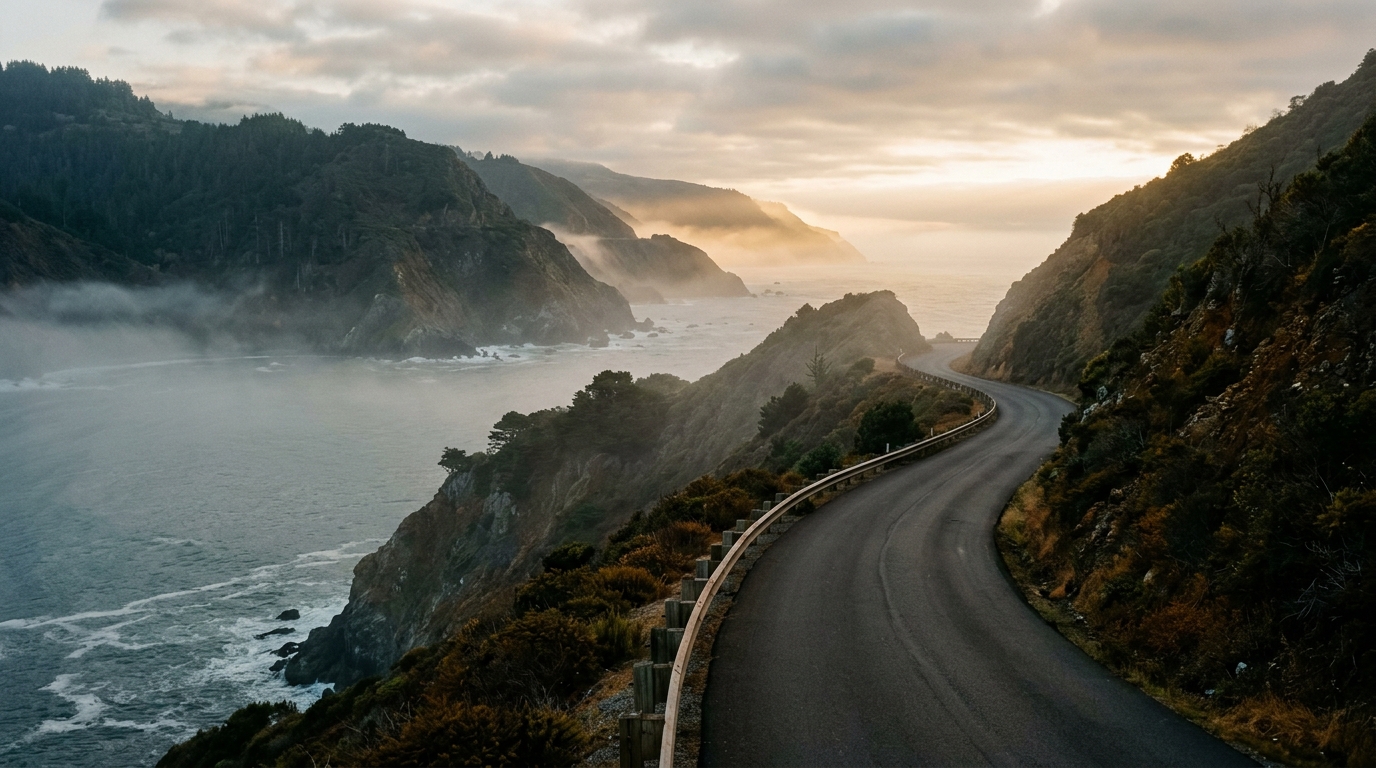
Jack Kerouac’s Best Books for Travellers
1. On the Road
Best for: The road myth: the 1957 novel that built the modern American road-trip story
Sal Paradise and Dean Moriarty’s cross-country runs, the jazz, the all-night driving. The book that made Kerouac famous in twenty-four hours. Start here.
Check price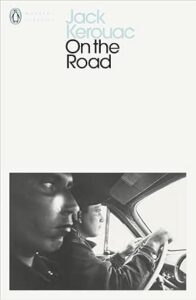
2. The Dharma Bums
Best for: Road trips, Buddhism, and the Sierra Nevada climbing counterweight to On the Road
Road trips with Gary Snyder, a Matterhorn climb, and a summer alone as a fire lookout on Desolation Peak. The Buddhist answer to On the Road.
Check price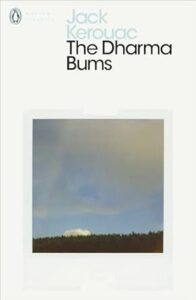
3. Lonesome Traveler
Best for: Sketches from Mexico, Tangier, Paris, London and the Pacific Northwest fire lookout
Kerouac’s actual travel writing, the original source of ‘live, travel, adventure, bless, and don’t be sorry.’ The most QoT-relevant book in the catalogue.
Check price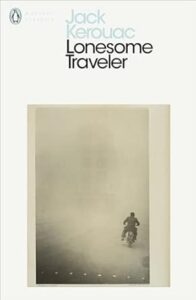
4. Big Sur
Best for: The dark West Coast counterweight: what the road actually costs
Three weeks at Lawrence Ferlinghetti’s cabin south of Monterey. The 1960 alcoholic breakdown that ended the Beat dream. The truth Kerouac would not flinch from.
Check price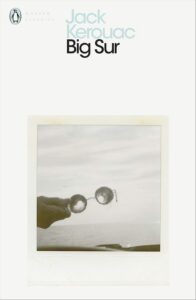
5. The Subterraneans
Best for: San Francisco North Beach in the mid-1950s, written in three nights
The shortest, fastest entry into Kerouac’s bebop sentence rhythm. North Beach jazz clubs and a six-week love affair compressed into a single scroll-style draft.
Check price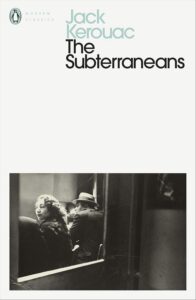
6. Road Novels 1957-1960 (Library of America)
Best for: The whole road-and-travel canon in one Library of America hardcover
On the Road, The Dharma Bums, The Subterraneans, Tristessa, Lonesome Traveler, and journal selections in one volume. The premium long-term reread.
Check price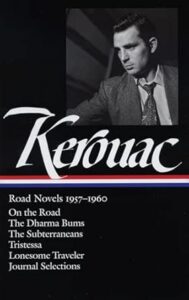
Kerouac’s Travel Philosophy in His Own Words
Kerouac’s travel writing turns on three ideas. First, that movement is the meaning, not the destination. Second, that the road exposes the self rather than escapes it. Third, that perpetual motion has a cost no traveller wants to name. He says the first idea most plainly in On the Road, Part 1, Chapter 1:
Nothing behind me, everything ahead of me, as is ever so on the road.
Jack Kerouac On the Road (1957), Part 1, Chapter 1 Verified primary source: Viking / Penguin editions
Three years later, in Lonesome Traveler (1960), he wrote the imperative line that has outrun every other thing he said about moving. It is usually shared as the shorter ‘Live, travel, adventure, bless, and don’t be sorry.’ The published 1960 text reads:
So shut up, live, travel, adventure, bless, and don't be sorry.
Jack Kerouac Lonesome Traveler (1960) The internet trims the blunt opening; both forms are his. The short form is the coffee-mug edit.
And on the road as endless possibility, the line from Part 4 of On the Road, the most-shared road-trip line on the internet:
There was nowhere to go but everywhere, so just keep on rolling under the stars.
Jack Kerouac On the Road (1957), Part 4 Written on the Mexico leg of Sal Paradise's last cross-country run.
Memorable Jack Kerouac Travel Quotes by Theme
On Living Fully
The only people for me are the mad ones, the ones who are mad to live, mad to talk, mad to be saved, desirous of everything at the same time, the ones who never yawn or say a commonplace thing, but burn, burn, burn like fabulous yellow roman candles.
Jack Kerouac On the Road (1957), Part 1, Chapter 1 Verified primary source: Viking / Penguin editions
- Be in love with your life. Every detail of it. Belief and Technique for Modern Prose (1959), List of Essentials
- What is that feeling when you’re driving away from people and they recede on the plain till you see their specks dispersing? It’s the too-huge world vaulting us, and it’s good-bye. But we lean forward to the next crazy venture beneath the skies. On the Road, Part 1, Chapter 8
On the Mountain and Stillness
The Dharma Bums quotes are where Kerouac’s road meets his Buddhism. The mountain undoes the road as much as it extends it.
- You can’t fall off a mountain. The Dharma Bums (1958), Chapter 10
- Try the meditation of the trail, just walk along looking at the trail at your feet and don’t look about and just fall into a trance as the ground zips by. The Dharma Bums, Chapter 9
- I was halfway across America, at the dividing line between the East of my youth and the West of my future. On the Road, Part 1, Chapter 3
Other Voices in Adventure and Wandering
If Kerouac’s road speaks to you, these adjacent voices belong on the same shelf:
Frequently Asked Questions about Jack Kerouac
Who was Jack Kerouac and what made him famous?
Jack Kerouac (1922-1969) was an American novelist whose 1957 book On the Road defined the Beat Generation and reshaped how Americans wrote about travel, freedom and youth. He coined the term Beat Generation in 1948 and wrote 14 published novels, including The Dharma Bums, Big Sur and The Subterraneans. On the Road has never gone out of print.
What was Jack Kerouac's most famous quote?
Nothing behind me, everything ahead of me, as is ever so on the road, from On the Road (1957). The other line most associated with him is the longer ‘the only people for me are the mad ones, the ones who are mad to live’ passage, also from On the Road, Part 1, Chapter 1.
What did Kerouac say about travel?
His travel rule is the imperative from Lonesome Traveler: So shut up, live, travel, adventure, bless, and don’t be sorry. The internet usually trims the opening and shares the cleaner ‘Live, travel, adventure, bless, and don’t be sorry.’ Both are his; the longer line is the published 1960 text.
What is the best Kerouac road-trip quote?
There was nowhere to go but everywhere, so just keep on rolling under the stars, from Part 4 of On the Road. It is the single most-shared road-trip line on the internet, written on the Mexico leg of Sal Paradise’s last cross-country run.
Which Kerouac book should I read first for travel writing?
On the Road for the road myth. The Lonesome Traveler for the actual travel sketches (Mexico, Tangier, Paris, the Pacific Northwest fire lookout). The Dharma Bums for the Buddhist counterweight and the Sierra Nevada climbing. If you want to know what the road eventually costs, read Big Sur.
Did Kerouac really write On the Road on a single scroll?
Yes. In April 1951 Kerouac taped together a 120-foot roll of tracing paper, fed it into his Underwood typewriter, and wrote a continuous single-paragraph draft over three weeks. The scroll survives and is held by the Indianapolis Museum of Art. The published 1957 version was substantially edited from the scroll, with names changed and structure imposed.
What did Jack Kerouac die of?
Kerouac suffered from chronic alcoholism for most of his adult life. He died on 21 October 1969 in St. Petersburg, Florida, of an internal hemorrhage caused by long-standing cirrhosis of the liver. He was 47.
Kerouac’s Lasting Legacy for Travellers
Kerouac’s gift to travellers is that he never lied about the road. He promised it the freedom and he showed the cost. The Sal Paradise cross-country runs, the Sierra Nevada climbs, the Mexico City month, the cabin breakdown at Big Sur: each is a test, and what Kerouac brought back was not the place but the self the place exposed. Start with On the Road, then read The Lonesome Traveler for the real travel writing.
More Adventure and Road Quote Collections
If you came for Kerouac, you will find the rest of the conversation here:
The short form, ‘Live, travel, adventure, bless, and don’t be sorry,’ is the one you will see on travel-blog headers and quote-card Reels. The full Kerouac line opens with ‘So shut up,’ characteristically blunter and addressed to himself.