
Robert Louis Stevenson Travel Quotes: The Sickly Scot Who Made Travel Literature
The lawyer's son who never practised law, walked the Cevennes with a donkey, chased a divorcee across the Atlantic in steerage, and was buried on a mountain in Samoa. The travel philosophy, the verified quotes, and the editions worth packing.
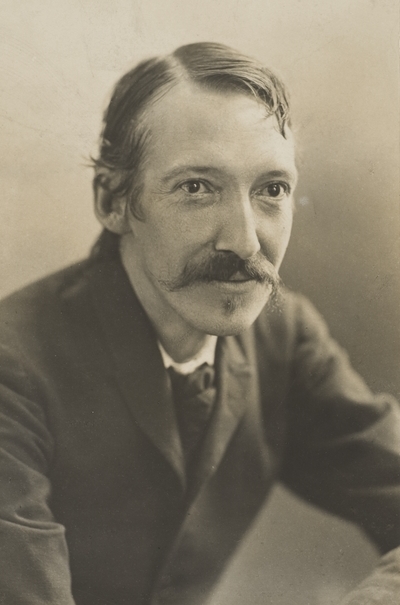
It is the third night of the walk. The donkey, Modestine, has refused to move. Stevenson, twenty-eight years old and already coughing blood, has spent the day beating a stubborn animal across a pine ridge in the south of France, and he is thinking, as every honest traveller eventually thinks, that this was a stupid idea. He sleeps in his sleeping sack on the mountainside, alone. In the morning he writes one of the most quoted lines in travel literature: he is not going anywhere in particular. He just needs to be moving.
That paradox sits at the centre of Robert Louis Stevenson travel quotes. A sickly Scottish lawyer’s son who never practised law. A man who spent his life dying of tuberculosis and yet wrote the greatest adventure novels of his century. A husband who chased an American divorcee across the Atlantic in steerage and ended up buried on a mountain in Samoa. Below is the bio, the travel philosophy, the verified quotes with chapters, and the editions of his work worth packing.
Early Life and Roots
Robert Louis Stevenson was born on 13 November 1850 in Edinburgh, into a family of lighthouse engineers. The Stevensons of the Northern Lighthouse Board had built the rocks-and-rope towers that kept Scottish shipping alive for three generations. Louis was supposed to be the fourth. His lungs decided otherwise. From childhood he was bedbound for long stretches, raised on his Calvinist nurse Alison Cunningham’s tales of the Covenanters and the sea.
He studied engineering, then law, at the University of Edinburgh. He passed the bar in 1875 and never argued a case. By his early twenties his doctors had prescribed travel for his lungs: Switzerland, the south of France, the Cevennes mountains, the Riviera, the sanatorium at Davos. The prescription became the life. In 1876 he met Fanny Osbourne in an artists’ colony at Grez-sur-Loing in France, an American divorcee eleven years his senior with two children. He followed her to California in 1879, in steerage, on a ship full of emigrants. The voyage nearly killed him. He married her in 1880, and she nursed him through the next fourteen years.
Career Milestones and Travel Writing
Stevenson’s early career is travel writing. Before Treasure Island made him solvent, he was a journeyman essayist filing dispatches from canoe trips and mountain hikes. An Inland Voyage (1878) describes paddling through the canals of Belgium and northern France. Travels with a Donkey in the Cevennes (1879) records his twelve-day, hundred-and-twenty-mile solo walk across the mountains of southern France with a small grey donkey named Modestine. That walk is now the GR 70 long-distance trail, signposted as the Chemin de Stevenson, and thousands of walkers retrace it every year.
The fiction came next. Treasure Island (1883) was the book that financially freed him. The Strange Case of Dr Jekyll and Mr Hyde and Kidnapped both appeared in 1886. The Master of Ballantrae in 1889. By 1888 the family had chartered the yacht Casco and was sailing the Pacific: Marquesas, Tahiti, Hawaii, the Gilberts. In 1890 they settled at Vailima, a four-hundred-acre estate on the slopes of Mt Vaea on the Samoan island of Upolu. The Samoans called him Tusitala, the teller of tales.
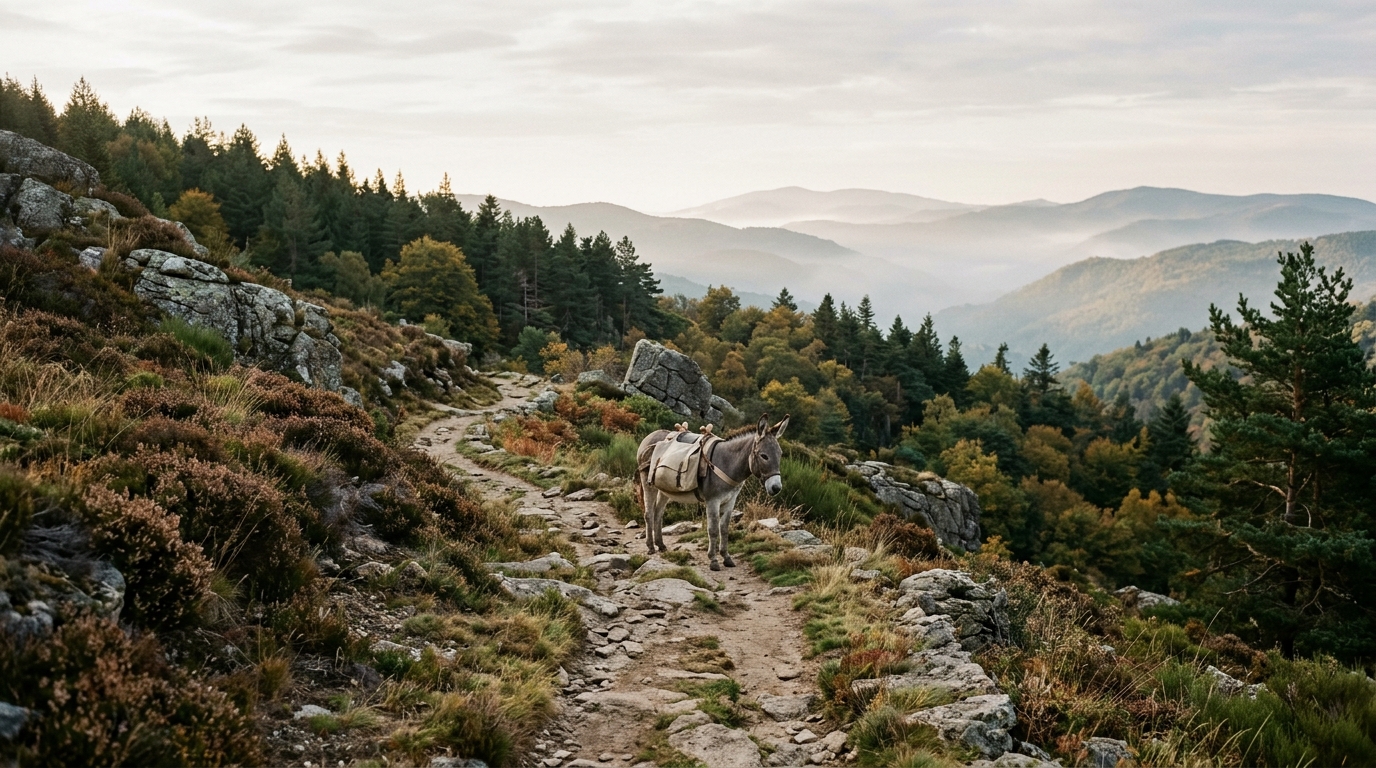
On 3 December 1894, aged forty-four, he collapsed while opening a bottle of wine and died of cerebral haemorrhage. He is buried at the summit of Mt Vaea, looking out over the Pacific that had finally let him stay still.
Robert Louis Stevenson’s Best Books and Travel Writing
1. Travels with a Donkey in the Cevennes & The Amateur Emigrant (Penguin Classics)
Best for: Travellers who want the founding texts of modern travel writing
His two books of actual travel writing in one Penguin Classics paperback. The Cevennes walk is the founding text of modern long-distance hiking literature; The Amateur Emigrant is the unflinching account of the steerage voyage to America. Both still read as if filed yesterday.
Check price
2. Treasure Island (Puffin Clothbound Classics)
Best for: Readers who want the novel that paid Stevenson's rent
A pirate map, a one-legged ship’s cook named Long John Silver, and the sea-shanty every schoolchild has tried to chant. The Puffin Clothbound edition is the giftable hardcover most travellers regret not owning.
Check price
3. The Strange Case of Dr Jekyll and Mr Hyde and Other Tales of Terror (Penguin Classics)
Best for: Readers heading to Edinburgh
Edinburgh in fog. A respectable doctor, a brutal alter ego, the most quietly Scottish horror novel ever written. Worth reading before any trip to Edinburgh, where you can still walk the closes and wynds Stevenson drew on. Includes The Body Snatcher and Olalla.
Check price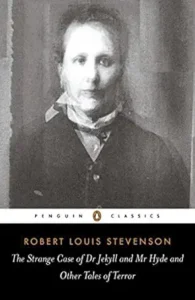
4. Kidnapped (AmazonClassics Kindle edition)
Best for: Readers heading to the Scottish Highlands
Post-Jacobite Scotland through the eyes of young David Balfour. A chase across the Highlands with the fugitive Alan Breck Stewart. Required reading before any Scotland trip, and free with Kindle Unlimited.
Check price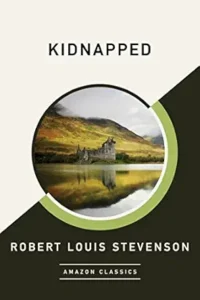
5. Treasure Island & Kidnapped: N.C. Wyeth Two-Volume Boxed Set
Best for: Anyone buying Stevenson as a gift
Both novels in clothbound hardcover with N.C. Wyeth’s century-old illustrations, presented as a slipcased set. The Stevenson gift travellers actually keep.
Check price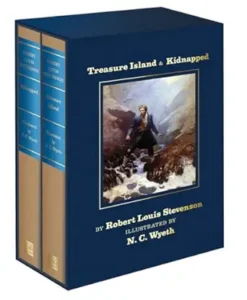
Robert Louis Stevenson’s Travel Philosophy in His Own Words
Most travel writing chases the destination. Stevenson’s chases the movement. He distrusted the package tour fifty years before the package tour was invented. He wrote, in the chapter Cheylard and Luc of Travels with a Donkey in the Cevennes (1879):
For my part, I travel not to go anywhere, but to go. I travel for travel's sake. The great affair is to move; to feel the needs and hitches of our life more nearly; to come down off this feather-bed of civilisation, and find the globe granite underfoot and strewn with cutting flints.
Robert Louis Stevenson Travels with a Donkey in the Cevennes, Cheylard and Luc (1879) Verified primary source: Project Gutenberg #535
The line everyone quotes is the first half. The second half is where the philosophy lives. Travel, for Stevenson, was the act of refusing the soft civilised life, leaving the feather bed and standing on the cold granite of the actual world. Comfort dulls; movement sharpens. Two years later, in his essay collection Virginibus Puerisque (1881), in a piece called El Dorado, he sharpened the idea further:
To travel hopefully is a better thing than to arrive, and the true success is to labour.
Robert Louis Stevenson Virginibus Puerisque, El Dorado (1881) Constantly misattributed to Confucius or Cervantes. It is Stevenson's. Verified: Project Gutenberg #389
This is the quote that gets misattributed every week of the year to Confucius, Cervantes, Buddha, and the airline ad copywriter of the day. It is Stevenson’s. The wanting and the going matter more than the having and the arriving. He also understood the simple geometry of foreignness, from The Silverado Squatters (1883):
There are no foreign lands. It is the traveller only who is foreign.
Robert Louis Stevenson The Silverado Squatters (1883) His account of squatting in an abandoned silver mine on his California honeymoon.
Memorable Stevenson Quotes by Theme
On Solitude on the Road
- We are all travellers in the wilderness of this world, and the best we can find in our travels is an honest friend. Virginibus Puerisque, Truth of Intercourse (1881)
- To awake in the morning, naked as on the day we were born, to see the bright dome of the sky overhead, and to feel the morning sun across one’s face: there is a sweetness in life as keen as a sword. Travels with a Donkey, A Night Among the Pines (1879)
On Foreignness and Belonging
- There are no foreign lands. It is the traveller only who is foreign. The Silverado Squatters (1883)
- The world is so full of a number of things, I’m sure we should all be as happy as kings. A Child’s Garden of Verses (1885)
Other Voices in Classic Travel Literature
If Stevenson’s granite-underfoot ethic speaks to you, these adjacent voices belong on the same shelf:
Frequently Asked Questions about Robert Louis Stevenson
What was Robert Louis Stevenson's most famous travel quote?
I travel not to go anywhere, but to go. I travel for travel’s sake. The great affair is to move. It appears in the chapter Cheylard and Luc of Travels with a Donkey in the Cevennes (1879), available in full on Project Gutenberg.
Did Robert Louis Stevenson really travel with a donkey?
Yes. In September and October 1878 Stevenson walked roughly 120 miles through the Cevennes mountains in southern France with a small grey donkey named Modestine. The route is now the GR 70 long-distance walking trail, signposted as the Chemin de Stevenson, and is one of the most-walked literary pilgrimages in Europe.
What does to travel hopefully is a better thing than to arrive mean?
From his 1881 essay El Dorado in Virginibus Puerisque. Stevenson’s point: the wanting and the pursuing matter more than the having and the arriving. The quote is regularly misattributed to Confucius or Cervantes. It is Stevenson’s, in full: Little do ye know your own blessedness, for to travel hopefully is a better thing than to arrive, and the true success is to labour.
What are Robert Louis Stevenson's best travel books?
Four hold up best for the modern reader: Travels with a Donkey in the Cevennes (1879), The Amateur Emigrant (1895, posthumous), The Silverado Squatters (1883), and In the South Seas (1896, posthumous Pacific dispatches). The Penguin Classics paperback at the top of our books list pairs the first two.
Where is Robert Louis Stevenson buried?
On the summit of Mt Vaea on the Samoan island of Upolu, overlooking his home at Vailima. He died there on 3 December 1894, aged forty-four, of a cerebral haemorrhage. The Samoans, who had known him as Tusitala (teller of tales), carried his coffin up the mountain by hand.
What was the famous line from Treasure Island?
Fifteen men on the dead man’s chest, yo-ho-ho, and a bottle of rum. The pirate sea-shanty that opens Chapter 1 of Treasure Island (1883). Stevenson invented the verse himself, and it has been copied by every pirate story since.
Robert Louis Stevenson’s Lasting Legacy for Travellers
Stevenson made travel a literary genre by treating it as a moral discipline, not a holiday. He distrusted the package tour, the postcard view, the comfortable arrival. He valued the granite underfoot, the cutting flints, the donkey that refused to walk, the steerage berth on the emigrant ship. If you have only ever read his pirate story, start with Travels with a Donkey in the Cevennes. It is a hundred and forty-six years old and still reads like the truest travel book you will pick up this year.
More Classic Travel Quote Collections
If you came for Stevenson, you will find the rest of the conversation here: