
Paul Theroux Travel Quotes – Where the Tourist Stops, the Traveler Begins
Verified quotes, the books that earned them, and 50 years of travel philosophy from the writer who chose the train over the plane.

Paul Theroux made one decision in 1973 that defined the next 50 years of travel writing: he booked a train from London to Tokyo, not a plane. The result, The Great Railway Bazaar (1975), reinvented the travel book at the precise moment everyone else was abandoning it. If Tim Ferriss’s 4-Hour Work Week and Rolf Potts’s Vagabonding are the modern manuals for stepping off the conventional path, Theroux had been writing the literary version since 1975. The Great Railway Bazaar is the seed book under the seed books. What follows is a guide to his most quoted travel lines (all sourced to book and year), the five books that earned them, and the philosophy behind the writer who has always preferred the slow route.
Early Life and the Peace Corps Years
Paul Edward Theroux was born in Medford, Massachusetts, on 10 April 1941, the third of seven children in a French-Canadian and Italian-American Catholic household. He read his way through the local library and a Boston-area Catholic education, then graduated from the University of Massachusetts Amherst in 1963. That same year, he joined the Peace Corps and shipped out to Malawi as an English teacher. The posting ended in 1965 when the Malawian government expelled him over a political misunderstanding involving local opposition figures, a brush with state power he would later draw on in his African fiction. He moved to Uganda, where he lectured at Makerere University from 1965 to 1968. It was at Makerere that he met V.S. Naipaul, then a visiting writer, who became the formative mentor figure of his early career (and, eventually, the subject of Sir Vidia’s Shadow, his 1998 memoir of the friendship and its falling-out). Africa, the Peace Corps, and Naipaul together produced the writer who would later show up in Cairo with a backpack and walk south.
Career Milestones and the Reinvention of Travel Writing
Theroux’s career-long argument is the one the Questioning Achiever is already running in their head: the job, the path, the trip you keep thinking about, all the proof that someone else has already done it, written about it, and left you the books. His commercial breakthrough came in 1975 with The Great Railway Bazaar: By Train Through Asia (Houghton Mifflin), a four-month rail journey from London to Tokyo and back via the Trans-Siberian. The book worked because the form did. Choosing the slowest possible route at the precise moment commercial aviation was killing off the travel book made the journey itself the subject. Reviewers called it the rebirth of the genre. He doubled down: The Old Patagonian Express (1979) ran Boston to Patagonia by train, The Kingdom by the Sea (1983) walked the British coast, Riding the Iron Rooster (1988) crossed China by rail in the year of the Tiananmen build-up. In parallel he kept publishing novels (a James Tait Black Memorial Prize for The Mosquito Coast, 1981, which Peter Weir filmed with Harrison Ford in 1986). The mid-career return to Africa, Dark Star Safari (2002), is the morally insistent overland that visits the Malawi of his Peace Corps years and finds the aid economy more uncomfortable than the bus rides. In 2011, The Tao of Travel arrived as the career-spanning meta-anthology: Theroux quoting and arguing with the entire history of travel writing, a book that doubles as the index to his own influences. Across more than 50 books and five decades, the through-line is consistent: take the slow route, write down what you see, distrust the polished view.
Paul Theroux’s Best Books, Films, and Recommended Works
1. The Great Railway Bazaar: By Train Through Asia
Best for: Travel readers who want the book that reinvented the genre
The 1975 breakthrough. Four months by train from London to Tokyo at the moment everyone else was flying. The book that made his career and rebuilt the travel-writing form for the post-jet age.
Check Price on Amazon →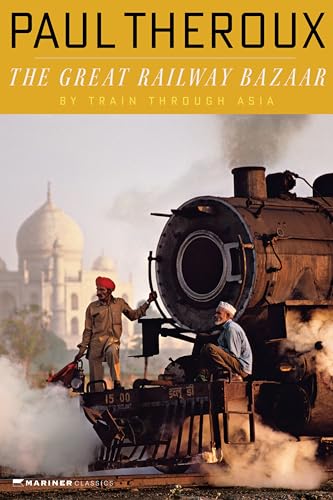
2. The Tao of Travel: Enlightenments from Lives on the Road
Best for: Readers who want a single volume that maps the whole travel-writing canon
Theroux’s career-spanning anthology of travel writing. Quotes, scenes, and arguments collected from centuries of writers on the road. The meta-book on why this genre matters.
Check Price on Amazon →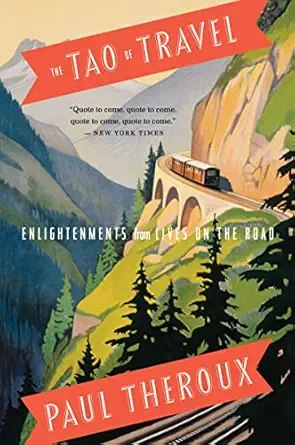
3. Dark Star Safari: Overland from Cairo to Cape Town
Best for: Readers who want the honest, uncomfortable, anti-tourist Africa book
Theroux returns to the Malawi of his Peace Corps years, this time as a 60-year-old overland traveller. The book is hard on aid agencies, hard on safari tourism, and hard on himself. The most direct Theroux on the page.
Check Price on Amazon →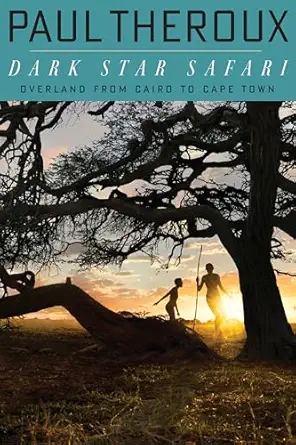
4. The Old Patagonian Express: By Train Through the Americas
Best for: Readers who loved Railway Bazaar and want its formal sequel
Boston to Patagonia by train, four years after Railway Bazaar. Same formal premise (take the slow route, write down what happens), different hemisphere. The other foundational Theroux travel epic.
Check Price on Amazon →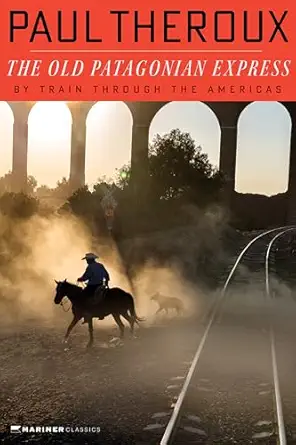
5. The Mosquito Coast (novel)
Best for: Readers who want Theroux's best-known novel and the Harrison Ford film
His best-known novel. Won the James Tait Black Memorial Prize in 1981. Peter Weir filmed it in 1986 with Harrison Ford. The travel-and-disillusionment story that introduced Theroux to readers who wouldn’t pick up a travel book.
Check Price on Amazon →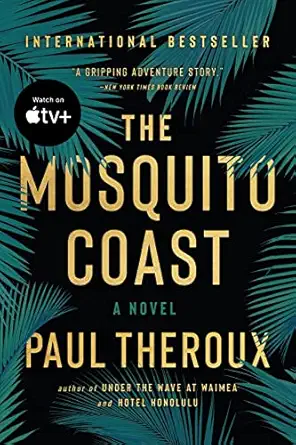
Paul Theroux’s Travel Philosophy in His Own Words
Theroux’s argument is simple and stubborn: there is a meaningful difference between a tourist and a traveler, and the difference is mostly about how willing you are to be uncomfortable. The tourist is processed by a destination. The traveler arrives somewhere they couldn’t have planned for and lets it change them. In The Tao of Travel (2011) he puts it in one line: “Tourists don’t know where they’ve been, travelers don’t know where they’re going.” That single distinction is the spine of 50 years of his work. He keeps coming back to the train, partly because the train enforces the philosophy: you can’t fast-forward through the bits you didn’t want to see. In The Great Railway Bazaar (1975) he writes “I have seldom heard a train go by and not wished I was on it,” a line that is half-joke and half-confession. The travel form for Theroux is also a concentration discipline. In Sunrise with Seamonsters (1985) he flips the standard escape-from-self reading of travel: “Travel, which is nearly always seen as an attempt to escape from the ego, is in my opinion just the opposite. Nothing induces concentration or inspires memory like an alien landscape or a foreign culture.” The honest payoff, he is clear, is rarely felt in the moment. “Travel is glamorous only in retrospect,” he told The Observer in 1979, a sentence every working travel writer has since quoted. And the promise that keeps him going (and keeps readers buying the next book) is the line from the opening pages of The Tao of Travel: “Travel holds the magical possibility of reinvention: that you might find a place you love, to begin a new life and never go home.”
Memorable Paul Theroux Quotes by Theme
Tourists vs Travelers
Tourists don't know where they've been, travelers don't know where they're going.
— Paul Theroux The Tao of Travel (Houghton Mifflin Harcourt, 2011) The line that anchors his career-long distinction.
The tourist/traveler distinction is the spine of every Theroux travel book. He is harder on tourists than most modern travel writers are willing to be, and the discomfort is the point. The traveler, in his framing, has agreed in advance to be changed.
Travel as Reinvention
Travel holds the magical possibility of reinvention: that you might find a place you love, to begin a new life and never go home.
— Paul Theroux The Tao of Travel (Houghton Mifflin Harcourt, 2011), Introduction
The wish to travel seems to me characteristically human: the desire to move, to satisfy your curiosity or ease your fears, to change the circumstances of your life, to be a stranger, to make a friend, to experience an exotic landscape, to risk the unknown.
— Paul Theroux The Tao of Travel (Houghton Mifflin Harcourt, 2011)
For more in this vein, follow our solo travel quotes guide, where Theroux shows up alongside other writers who treated travel as a structural rearrangement of life rather than a holiday.
Trains and Solitude
I have seldom heard a train go by and not wished I was on it.
— Paul Theroux The Great Railway Bazaar (Houghton Mifflin, 1975)
Travel is a vanishing act, a solitary trip down a pinched line of geography to oblivion.
— Paul Theroux The Old Patagonian Express (Houghton Mifflin, 1979), opening pages
For more in this vein, browse our adventure travel quotes guide, where Theroux’s rail lines sit alongside other writers who treated the slow route as the truer one.
Other Voices in Professional Travel Writing
Frequently Asked Questions about Paul Theroux
Who is Paul Theroux and what makes him a great travel writer?
Paul Theroux (born 1941) is an American travel writer and novelist whose 1975 book The Great Railway Bazaar reinvented modern travel writing for the post-jet age by taking the train from London to Tokyo when everyone else was flying. Across more than 50 books over five decades, he has chosen the slow route, the train over the plane, the solo overland over the package tour. His distinction “tourists don’t know where they’ve been, travelers don’t know where they’re going” is the cleanest one-line statement of his entire travel philosophy.
What are Paul Theroux's best travel books?
The Great Railway Bazaar (1975) is the foundational one, the book that made his name. The Old Patagonian Express (1979) is the formal sequel, Boston to Patagonia by rail. Dark Star Safari (2002) is his solo overland from Cairo to Cape Town, returning to the Africa of his Peace Corps years. The Tao of Travel (2011) is his anthology of travel writing across centuries, the meta-book about why the genre matters. For fiction-curious readers, The Mosquito Coast (1981) won the James Tait Black Memorial Prize and was filmed in 1986 with Harrison Ford.
What is Paul Theroux's most famous travel quote?
“Tourists don’t know where they’ve been, travelers don’t know where they’re going.” It appears in The Tao of Travel (2011) and captures his career-long argument: a tourist is processed by a destination, a traveler arrives somewhere they couldn’t have predicted and leaves changed by it.
What's the difference between Paul Theroux and Louis Theroux?
They are father and son. Paul Theroux (born 1941) is the American travel writer and novelist. Louis Theroux (born 1970) is his son, a British-American documentary filmmaker known for the BBC documentary series. Both are public-facing figures, but their work is very different. Paul writes literary travel books and novels, Louis makes long-form interview documentaries about subcultures and difficult subjects.
Where can I read more from Paul Theroux?
Start with The Great Railway Bazaar if you want the foundational travel book that started it all. Dark Star Safari if you want his most morally insistent Africa writing. The Tao of Travel if you want a single volume that maps the whole genre. His own site at paultheroux.com curates excerpts and recent writing. His back catalogue is on Audible for travel listening on long flights.
Paul Theroux’s Lasting Legacy for Travellers
Theroux’s gift to travelers is the line he drew between two ways of being away from home: tourist and traveler. The first is comfortable, processed, predictable. The second is the willingness to arrive somewhere you couldn’t have planned for and let it change you. He held that line across 50 years, 50-plus books, and most of the rail lines on earth. If you read one of his travel books, make it The Great Railway Bazaar. For more in this vein, sit with our adventure travel quotes guide or browse the 100 best travel quotes, where Theroux shows up twice, each line earned across the slow miles.
Theroux’s most-quoted line. It appears in The Tao of Travel (2011) and captures his career-long argument in one sentence: a tourist is processed by a destination, a traveler arrives somewhere they couldn’t have predicted and leaves changed. The earliest documented book appearance is the 2011 anthology, though the formulation may pre-date in interviews. Attribution links to Paul Theroux.