
Mark Twain Travel Quotes: The Patron Saint of Travel as Cure for Provincialism
Verified quotes from Innocents Abroad and Life on the Mississippi, the books worth reading first, and the famous misquote he never wrote.
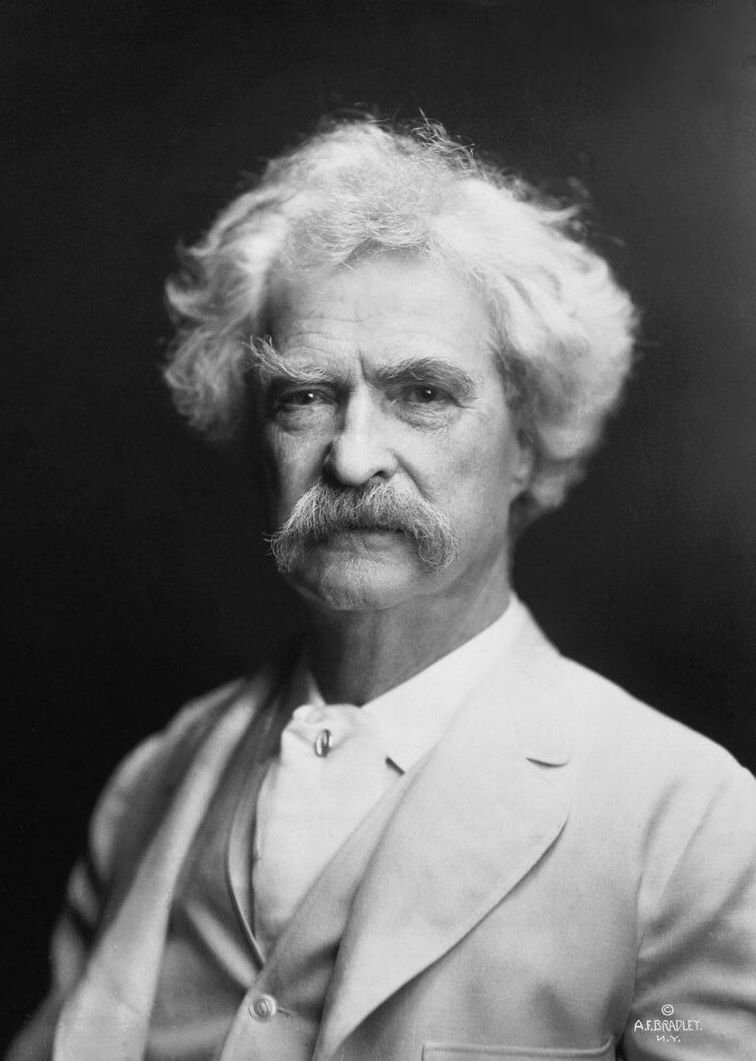
Mark Twain was the first American writer to make travel his subject, not his sideline. The Innocents Abroad (1869), his six-month Mediterranean cruise as the irreverent Quaker City pilgrim, sold 70,000 copies in its first year and outsold every Twain novel that followed. Long before Hemingway, Theroux, or Bourdain, Twain wrote the founding manual for travel as honest reportage. Reverence was for guidebooks. Travel was for noticing.
His Innocents Abroad sat on our shelf for years before we read it properly. When we did, what surprised us wasn’t the wit. It was the loneliness underneath it. The mid-Atlantic ship, the European sites that didn’t deliver, the long letters home. He had named something we hadn’t yet.
This page gathers verified Mark Twain travel quotes, the books worth reading first, and one important correction. The most famous “Twain” travel quote on the internet was not written by him. We sort that out below.
Early Life and Roots
Samuel Langhorne Clemens was born in Florida, Missouri in 1835 and raised in Hannibal, the Mississippi river town that became Tom Sawyer’s St. Petersburg. His father died when Sam was eleven. By thirteen he was a printer’s apprentice. By fifteen he was setting type and writing humorous sketches under pseudonyms.
The formative travel was the Mississippi itself. Clemens trained as a riverboat pilot through the late 1850s, learning every bend, sandbar, and current between St. Louis and New Orleans. He took the pen name Mark Twain from the boatman’s call meaning two fathoms of safe water. The pilot apprenticeship is the subject of the first half of Life on the Mississippi (1883) and the most direct primary source on how Twain learned to see a landscape rather than just pass through it.
The Civil War shut down river traffic in 1861. Clemens drifted west to the Nevada Territory with his brother Orion, mined unsuccessfully for silver, fell into journalism in Virginia City, and eventually crossed to California where his first nationally noticed sketch, The Celebrated Jumping Frog of Calaveras County (1865), appeared in New York. The western years are the subject of Roughing It (1872).
Career Milestones and Travel Writing
In 1867 the Daily Alta California paid Twain to join a six-month Quaker City pilgrimage to Europe and the Holy Land as a correspondent. The dispatches became The Innocents Abroad (1869). It is the most important book in his bibliography for travel writers, and arguably the most influential single travel book in English. The voice, irreverent, observational, more interested in fellow travellers than in monuments, is the voice every subsequent travel writer has either followed or pushed against.
If Tim Ferriss’s 4-Hour Work Week and Rolf Potts’s Vagabonding are the modern manuals for stepping off the conventional path, Twain wrote the first one in 1869. The Innocents Abroad is the proof. The travel book as structural argument against staying still.
The 1870s and 1880s were his commercial peak. Roughing It (1872) covered the American West. A Tramp Abroad (1880) mocked the European walking-tour genre even as it perfected it. Life on the Mississippi (1883) returned him to the river of his apprenticeship, now as a famous middle-aged man revisiting his younger self. Huckleberry Finn arrived in 1884. Twain was famous, wealthy, and in demand on lecture circuits across America and Britain.
A series of bad investments through the 1880s and 1890s bankrupted him. To repay his creditors he undertook a global lecture tour in 1895 and 1896, sailing from Vancouver around the world via Hawaii, Fiji, Australia, New Zealand, India, Ceylon, Mauritius, South Africa, and England. The lecture tour produced Following the Equator (1897), a sadder, sharper book than the earlier travels, more honest about colonialism and the limits of tourism. By the time he wrote it his daughter Susy had died, his finances were ruined, and the lecture tour was less adventure than necessity. The late travel writing carries that weight.
Twain died at his Connecticut home in April 1910, eight days after the appearance of Halley’s Comet, which he had predicted would carry him out as it had brought him in.

Mark Twain’s Best Books, Films, and Recommended Works
The Innocents Abroad
Best for: The founding travel book
Twain’s six-month Mediterranean cruise as the Quaker City pilgrim. The blueprint for modern travel writing. Irreverent, observational, the antidote to reverent guidebooks. Start here.
Check price
Roughing It
Best for: The American West before settlement
Stagecoach, silver mines, Mormons, the Sandwich Islands. The embedded-reporter formula a hundred years before that phrase existed. Twain at his loosest, before the literary reputation hardened around him.
Check price
Life on the Mississippi
Best for: Apprenticeship and return
Twain’s apprenticeship as a steamboat pilot, then his return to the river decades later as a famous man. The original re-travel book. Same river, different man. The ‘wonderful book’ passage in Chapter 9 is the cleanest statement in 19th-century American writing on what attentive travel actually does.
Check price
A Tramp Abroad
Best for: European walking tour
The walking-tour-of-Europe book that mocks the walking-tour-of-Europe genre, even while perfecting it. Includes ‘The Awful German Language,’ the essay every traveller eventually cites.
Check price
Following the Equator
Best for: The forgotten travel book
His round-the-world lecture tour book. Sadder, sharper, more honest about empire and tourism than the earlier travels. Read it after the others. The Twain who has lost a daughter and his fortune writes differently.
Check price
Mark Twain’s Travel Philosophy in His Own Words
Twain’s travel philosophy is best understood as one sustained argument that movement remakes the mind. The single most quoted line he wrote on travel is from the conclusion of The Innocents Abroad: “Travel is fatal to prejudice, bigotry, and narrow-mindedness, and many of our people need it sorely on these accounts.” It is the cleanest statement of his core position. Reverence was for guidebooks. Travel was for noticing.
He was also honest about the cost. By 1891 he wrote to his friend William Dean Howells: “Travel has no longer any charm for me. I have seen all the foreign countries I want to except heaven and hell, and I have only a vague curiosity about one of those.” The line is dry, but the exhaustion underneath it is real. Following the Equator (1897), written after the round-the-world lecture tour, carries that same mood throughout.
The Mississippi return gives us his other defining travel passage. In Chapter 9 of Life on the Mississippi he describes how the river itself became a wonderful book to the trained pilot, “a book that was a dead language to the uneducated passenger, but which told its mind to me without reserve.” It is the cleanest statement in 19th-century American writing of what attentive travel actually does. It teaches you to read a place rather than just pass through it.
And his comic version, from Tom Sawyer Abroad (1894): “I have found out that there ain’t no surer way to find out whether you like people or hate them than to travel with them.” Every traveller who has ever shared a long bus ride knows this is true.
Memorable Mark Twain Quotes by Theme
Adventure and Exploration
Travel is fatal to prejudice, bigotry, and narrow-mindedness, and many of our people need it sorely on these accounts. Broad, wholesome, charitable views of men and things cannot be acquired by vegetating in one little corner of the earth all one's lifetime.
I have found out that there ain't no surer way to find out whether you like people or hate them than to travel with them.
The face of the water, in time, became a wonderful book, a book that was a dead language to the uneducated passenger, but which told its mind to me without reserve.
→ Read more adventure travel quotes.
Travel and Prejudice
Travel has no longer any charm for me. I have seen all the foreign countries I want to except heaven and hell, and I have only a vague curiosity about one of those.
I never had been away from home, and that word 'travel' had a seductive charm for me.
The Quote Twain Didn’t Say
This section earns its place because the most widely shared “Twain” travel quote on the internet is not by Twain. Quote sites have propagated this misattribution for two decades, and the bio’s credibility depends on getting it right.
Twenty years from now you will be more disappointed by the things that you didn't do than by the ones you did do. So throw off the bowlines. Sail away from the safe harbor. Catch the trade winds in your sails. Explore. Dream. Discover.
Other Voices in Classic Travel Literature
Frequently asked questions about Mark Twain
Who was Mark Twain and what made him famous?
Samuel Langhorne Clemens (1835-1910), better known as Mark Twain, was an American writer, humorist, and lecturer. His travel books The Innocents Abroad (1869) and Roughing It (1872) made him commercially famous before his novels Tom Sawyer and Huckleberry Finn cemented his place in American literature. He is considered the founding voice of American travel writing.
What are Mark Twain's best travel books?
The Innocents Abroad (1869) is the most influential. A six-month Mediterranean cruise that invented the irreverent travel-writing voice every modern travel writer borrows. Roughing It (1872) covers the American West before settlement. Life on the Mississippi (1883) is his apprenticeship-and-return on the river. Following the Equator (1897) is his late-career round-the-world tour.
What is Mark Twain's most famous travel quote?
‘Travel is fatal to prejudice, bigotry, and narrow-mindedness,’ from the conclusion of The Innocents Abroad (1869). It is the most cross-referenced Twain travel line and the cleanest statement of his core argument: travel changes who you can be.
Did Mark Twain say 'Twenty years from now you will be more disappointed by the things you didn't do'?
No. This is a wholesale misattribution. The actual source is H. Jackson Brown Jr.’s P.S. I Love You (Rutledge Hill Press, 1990), where Brown attributes the words to his mother. The passage does not appear in any verified Mark Twain text. See our dedicated fact-check page for the full evidence trail.
How can I read more from Mark Twain?
The full Twain library is in the public domain at Project Gutenberg. Start with The Innocents Abroad if you want the founding travel-writing text, Roughing It for the American frontier voice, and Life on the Mississippi for the mid-career return-home arc. The Library of America publishes definitive scholarly editions. The Center for Mark Twain Studies (marktwainstudies.com) is the leading academic authority.
Mark Twain’s Lasting Legacy for Travellers
Twain’s gift to travellers was permission. Permission to find tourists ridiculous, sacred sites overhyped, fellow travellers tiresome, and your own preconceptions the funniest part of the trip. He taught American travel writing how to laugh at itself without abandoning the genuine. If you read one of his books for the journey, make it The Innocents Abroad. For more in this voice, follow the adventure travel quotes guide or browse our 100 best travel quotes. Twain shows up there three times, each line earned the hard way.
More Classic Literature Quote Collections
Curated reading paths where Twain shows up alongside the rest of the canon.
- 100 Best Travel Quotes 2026, organised by theme, Twain appears in three sections.
- Adventure and Exploration Travel Quotes, where the Innocents Abroad conclusion line earns its place.
- Famous Travel Quotes by Iconic Authors (Section 7 of the mega-pillar), Twain alongside Tolkien, Bourdain, RLS.
- Travel Quote Fact-Check Hub, the misattribution corrections series this bio anchors.
- Browse all author bios, the full author hub.
The evidence is clear and well documented. Four canonical authorities have traced this misattribution: Quote Investigator (quoteinvestigator.com), the Center for Mark Twain Studies (marktwainstudies.com), Mental Floss, and WIST (wist.info). The misattribution appears to have spread through 1990s email forwards and never had any Twain provenance. We include the line here only to correct it. For the full evidence trail and timeline of how the misattribution spread, see our dedicated fact-check page.