
Liberty Hyde Bailey Travel Quotes: Wonder from a Globe-Trotting Naturalist
Liberty Hyde Bailey was the botanist the world called the father of modern horticulture, a Cornell dean who kept hunting palms across the Caribbean and Latin America into his 90s. He was not a travel writer, yet travellers keep quoting him, because almost every line is really about wonder and a wide-open contact with the world. The genuinely sourced ones are gathered here, each kept tied to the book it came from.
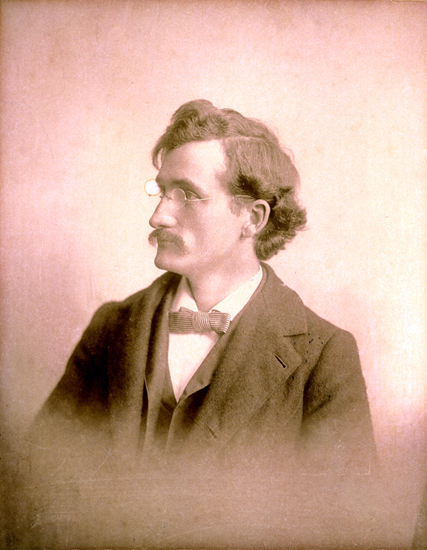
Search for Liberty Hyde Bailey travel quotes and you meet a small puzzle: the man was a horticulturist, not a travel writer. What he wrote about was nature, gardens and the earth, yet his lines travel beautifully, because they are really about paying attention to the world and feeling it fully. This page gathers the sourced ones, keeps each tied to the book it came from, and is honest about who he was. First, a short look at the man, because the lines land harder once you know he wrote them while criss-crossing the globe in search of palms.
Who Liberty Hyde Bailey Was: The Naturalist Who Travelled the World
Liberty Hyde Bailey was born in South Haven, Michigan in 1858, the son of a fruit farmer, and he grew into one of the most important naturalists America has produced. He built the first horticulture department in the country, became a dean at Cornell, founded the nature-study movement that put schoolchildren back in contact with the living world, and chaired Theodore Roosevelt’s Commission on Country Life. People called him the father of modern horticulture, and he wrote sixty-five books that sold more than a million copies.
The travel part is the surprise. After he retired as dean in 1913, Bailey spent the better part of three decades chasing palms around the world. He recalled spending his 79th birthday in Port-au-Prince, his 82nd in Oaxaca, his 88th in Trinidad, his 90th in Grenada, and his 91st at sea on a small sailboat in the Caribbean. He died in 1954, aged 96, a working traveller almost to the end. That is the life behind the quotes: a man who kept going out into the world to look closely at it.
Why Bailey Is Worth Quoting on Travel: Wonder and Contact with the World
Bailey earns a place on a travel quotes page sideways, and honestly. He never set out to write about travel. He wrote about wonder, about contact with the living world, about feeling a place rather than just knowing facts about it. Those are the instincts that send people onto the road in the first place, which is why his lines keep turning up in travel collections.
Read him as a traveller and the appeal is the attention. Bailey noticed the twig, the palm, the small turning of a season, and he believed the happiest life was the one with the most points of contact with the world. Take that to an airport or a back road and it reads as a travel philosophy: go out, touch more of the world, feel it deeply. The sourced lines below all come from his own books, so you can see exactly where each one lives.
The happiest life has the greatest number of points of contact with the world, and it has the deepest feeling and sympathy with everything that is.
— Liberty Hyde Bailey The Nature-Study Idea (1903) The closest thing Bailey wrote to a travel philosophy. Reach for more contact with the world, feel it deeply, and you have the whole case for going.
Sourced Liberty Hyde Bailey Quotes, Tied to His Books
Notes on sourcing: every line below is tied to one of Bailey’s own books, with the title and year named. His quotes circulate widely on social media and quote sites, often with no source attached, so we have kept only the ones traceable to a documented work.
One's happiness depends less on what he knows than on what he feels.
— Liberty Hyde Bailey The Nature-Study Idea (1903) A quiet rebuke to the box-ticking traveller. The trip is in what you feel on the ground, not the list of sights you can recite afterwards.
Yesterday the twig was brown and bare; To-day the glint of green is there; Tomorrow will be leaflets spare; I know no thing so wondrous fair, No miracle so strangely rare. I wonder what will next be there!
— Liberty Hyde Bailey Wind and Weather (1916) Bailey the poet, catching the wonder of a thing changing in front of you. It is the same itch that makes you want to see what is around the next bend.
To farm well; to provide well; to produce it oneself; to be independent of trade, so far as this is possible in the furnishing of the table, these are good elements in living.
— Liberty Hyde Bailey The Holy Earth (1915) The other side of Bailey, and of travel: the deep pull of being rooted, self-reliant and at home in a place. Worth carrying for when the road ends.
Starter path: pick the one line that matched the trip you keep meaning to take, write it where you will see it before you leave, and let it nudge you toward more contact with the world and a little less hurry.
A Word on Sourcing His Quotes
There is a catch worth naming. Bailey’s lines spread through quote sites and social media far more than through careful citation, so it is easy to find them floating free of any book, sometimes lightly reworded.
Everything on this page is tied back to one of his own documented works, named with its year. If you come across a line attributed to Liberty Hyde Bailey with no book named, treat it with the same caution you would give any unsourced quote. The lines gathered here are the ones that can be traced home.
Frequently Asked Questions About Liberty Hyde Bailey
Was Liberty Hyde Bailey a travel writer?
No, not in the usual sense. He was a horticulturist and botanist, often called the father of modern horticulture. His lines appear on travel pages because they are really about wonder and contact with the world, and because he himself travelled the globe for decades hunting palms.
What books do his quotes come from?
The sourced lines on this page come from his own works, including The Nature-Study Idea (1903), Wind and Weather (1916) and The Holy Earth (1915). He wrote sixty-five books in all.
Did Liberty Hyde Bailey really travel a lot?
Yes. After retiring as a Cornell dean in 1913 he spent close to thirty years collecting palms around the world, and recalled birthdays spent in Haiti, Mexico, Trinidad, Grenada and at sea in the Caribbean, the last of them at age 91.
What is his most quoted line for travellers?
The happiest life has the greatest number of points of contact with the world, from The Nature-Study Idea (1903).
Are these Liberty Hyde Bailey quotes reliably sourced?
The quotes on this page are each tied to a named book and year. Lines circulating under his name with no book attached should be treated with caution.
Why Liberty Hyde Bailey Belongs on a Travel Quotes Page
Liberty Hyde Bailey earns his place on a travel quotes page the honest way: not as a travel writer, but as a man who spent his life paying close attention to the living world and who kept circling the globe to do it. His best lines are about wonder, feeling and contact with the world, which is the traveller’s instinct stated plainly. Start with The Nature-Study Idea, keep the sourced lines, leave the unsourced ones where they belong, and you have a quiet, rooted companion for the next time you go out looking at the world. For more in this spirit, browse our full library of travel quotes.
More Quote Collections Worth Your Time
- 100 Best Travel Quotes: the full library, organised by theme.
- Solo Travel Quotes: courage and independence for the open road, a natural next read after Bailey.
- All Author Bios: every writer and thinker whose travel lines we have sourced and checked.