
Muriel Rukeyser: Travel Quotes, The Speed of Darkness, and the Poet Who Travelled Toward Conscience
Muriel Rukeyser (1913 to 1980) was an American poet of witness who travelled toward the hard places of her century rather than away from them: the Scottsboro trial, the Spanish Civil War, the poisoned mining town of Gauley Bridge, a condemned poet in South Korea. She did not write tidy travel one-liners, yet her lines about stories, experience and the journey are carried into trail journals everywhere. The genuinely sourced ones are gathered here, with the famous journey line flagged honestly.

Search for Muriel Rukeyser travel quotes and you meet a poet rather than a travel writer, and that is the honest place to start. Rukeyser (1913 to 1980) was one of the great American poets of witness, a writer who kept moving toward the trouble of the twentieth century instead of away from it. She reported the Scottsboro trial in Alabama, was in Barcelona when the Spanish Civil War broke out, went down to Gauley Bridge in West Virginia to document a mining disaster, and flew to Seoul in 1975 to stand outside a prison for a poet under sentence of death. This page does not pretend she wrote about packing or planes. It gathers her real, sourced words about stories, experience and the inner journey, walks through who she was, and is honest about which famous line travels under her name without a home.
Who Muriel Rukeyser Was: A Poet Who Went Toward the Trouble
Muriel Rukeyser was born on 15 December 1913 in New York City and studied at Vassar College (Wikipedia, Muriel Rukeyser). From the start she refused the line between poetry and the world. In 1933, still in her teens, she went south to report the Scottsboro trial and was arrested in Alabama. Her first book, Theory of Flight, appeared in 1935 in the Yale Series of Younger Poets, and announced a poet who treated engineering, flight and political conscience as fit subjects for verse.
Her life was a series of journeys toward difficulty. She was in Barcelona in 1936 when the Spanish Civil War began, and never forgot it. She travelled to Gauley Bridge, West Virginia, to investigate the silicosis deaths of tunnel workers, and turned the documents into The Book of the Dead (1938), one of the first great documentary poems in English. In 1975 she flew to South Korea on behalf of the imprisoned poet Kim Chi-ha. She wrote across poetry, biography and a classic study of why poetry matters, and died in New York in 1980 (University of Pittsburgh Press, The Collected Poems of Muriel Rukeyser).
Her Defining Books: Theory of Flight, The Life of Poetry, The Speed of Darkness
Rukeyser’s reputation rests on a handful of defining works. Theory of Flight (1935) opened her career; The Life of Poetry (1949) is her prose argument that poetry is not a luxury but a way of meeting reality; and The Speed of Darkness (1968) holds her single most quoted line. Read together they show a writer who believed, as her editors put it, in the human capacity to create social change through language.
Read her as a traveller and a clear thread appears. Rukeyser keeps returning to the idea that we are made of the stories we carry, that experience is something you breathe in and answer for, and that the real distance worth covering is toward the truth of a place rather than its postcard. That is why her lines, written for witness rather than for the road, have been adopted so widely by people who travel to understand something rather than to escape it.
Her Best Book and Where to Start
Rukeyser is best met in her own voice, and the cleanest single way in is the volume that gathers her whole life’s work in poetry. One confidently chosen edition is the honest recommendation here rather than a scatter of out-of-print slims.
1. The Collected Poems of Muriel Rukeyser
Best for: Readers who want her complete lifework in poetry in one authoritative volume.
The 2006 University of Pittsburgh Press edition that gathers all twelve of her published books plus uncollected poems and her translations. It is the authoritative source for every sourced line on this page, and the single best place to start with Rukeyser.
Check Price on Amazon →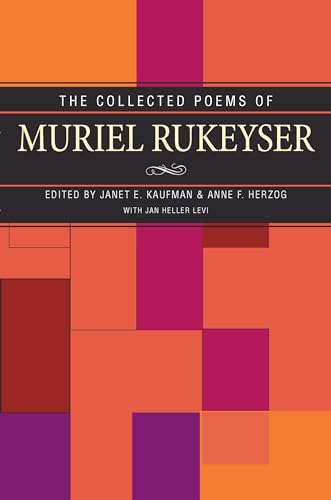
Rukeyser’s Philosophy of the Journey: Go Toward, Not Away
Rukeyser’s philosophy of the journey is plain to state and hard to live: go toward, not away. She argued that poetry, like travel, is a way of refusing the safe distance, of standing close enough to a place or a wrong to be changed by it. The universe, for her, is not a set of facts to be filed but a body of stories we are inside of and answerable to. For the traveller the lesson is direct enough: let the road take you toward the thing you would rather not see, and let what you breathe in come back out as something made.
Memorable Muriel Rukeyser Quotes, Sourced and Flagged Honestly
Notes on sourcing: the lines below come in two kinds. The lines tied to a specific book are quoted from her work and carry schema. The much shared journey line is widely credited to Rukeyser and suits her restless life, but we could not tie it to a particular poem or page, so we flag it honestly rather than pretend to a source.
The universe is made of stories, not of atoms.
— Muriel Rukeyser The Speed of Darkness (1968) Her most quoted line, and the reason travellers adopt her: we go out to gather stories, not facts.
The journey is my home.
— Muriel Rukeyser Widely attributed to Muriel Rukeyser The line most travellers know. It fits her restless life, but we could not tie it to a specific poem or book, so we flag it honestly.
Breathe-in experience, breathe-out poetry.
— Muriel Rukeyser Theory of Flight (1935) The opening line of Poem out of Childhood in her first book, and a working creed for any traveller: take the world in, give something made back.
The universe of poetry is the universe of emotional truth.
— Muriel Rukeyser The Life of Poetry (1949) Her case that a poem, like a journey, is measured by the truth of what it makes you feel rather than the facts it lists.
What would happen if one woman told the truth about her life? The world would split open.
— Muriel Rukeyser The Speed of Darkness (1968), Kathe Kollwitz Her most famous lines after the stories one, and the heart of her poetry of witness: the courage to tell a place or a life as it really is.
Starter path: sit with the first line for a minute before you scroll on. The universe is made of stories, not of atoms is the whole of Rukeyser in nine words, and it reads differently the next time you are deciding whether a trip is worth the telling.
Other Voices on the Journey That Changes You
If Rukeyser is your way in, these writers carry the same thread, where the journey is measured by what it makes you see rather than how far you go.
- Wallace Stevens: the poet who conjured whole journeys from a desk in Hartford, and who, like Rukeyser, treated imagination as a way of travelling.
- Maya Angelou: the poet of belonging everywhere, whose travel lines were earned across continents and a hard life.
- Audre Lorde: the political poet whose lines about survival and self-definition run on the same nerve as Rukeyser’s poetry of witness.
Frequently Asked Questions About Muriel Rukeyser
Who was Muriel Rukeyser?
An American poet (1913 to 1980), known for her poetry of witness. Her defining books are Theory of Flight (1935), The Life of Poetry (1949) and The Speed of Darkness (1968), and she reported on the Scottsboro trial, the Spanish Civil War and the Gauley Bridge mining disaster.
Did Muriel Rukeyser write travel quotes?
Not directly. She wrote about witness and the inner journey rather than literal travel. The sourced lines on this page come from her poems and prose, and we flag the famous journey line honestly because we could not tie it to a specific work.
Did Muriel Rukeyser really say the journey is my home?
It is widely credited to her and it suits her restless life, but the attribution is hard to pin to a specific poem or book. We treat it as widely attributed rather than confirmed.
What is Muriel Rukeyser best known for?
The line the universe is made of stories, not of atoms, from The Speed of Darkness (1968); her documentary poem The Book of the Dead (1938); and her prose study The Life of Poetry (1949).
What is the best Muriel Rukeyser book to start with?
The Collected Poems of Muriel Rukeyser (2006), which gathers her complete work in one volume, or the slimmer The Life of Poetry if you want her prose first. Both are the source of the sourced lines on this page.
Why Muriel Rukeyser Belongs on a Travel Quotes Page
Rukeyser earns a place on a travel quotes page not because she wrote about travel, but because she wrote about why we move toward things. Her gift is permission to treat a journey as witness rather than escape, to count yourself answerable to the places you pass through, and to notice that you are made of the stories you gather. If you read only one of her books, make it The Collected Poems, where the lines on this page live in their true home. For more wisdom in this voice, browse our full library of travel quotes.
More Quote Collections Worth Your Time
- 100 Best Travel Quotes: the full library, organised by theme.
- All Author Bios: every writer whose travel lines we have sourced and checked.