
Matsuo Basho: Travel Quotes, The Narrow Road to the Deep North, and the Haiku Poet Who Walked Into Eternity
Search for Matsuo Basho travel quotes and you find the rare case where the famous lines are real. Basho (1644 to 1694) was the master of the Japanese haiku, and his greatest work, The Narrow Road to the Deep North, is a travel journal. The lines here are quoted from Nobuyuki Yuasa's Penguin translation, with the most-shared rendering flagged honestly so you know exactly what you are sharing.
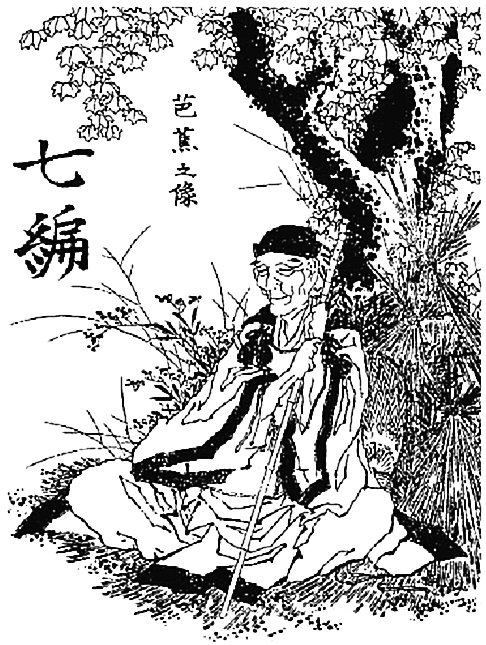
Who Matsuo Basho Was, From a Banana Tree Hut to the Roads of the Deep North
Matsuo Basho was born near Kyoto in 1644, in the town of Iga-ueno, and spent his youth as companion to the son of a local lord. He moved to Edo (now Tokyo) in his twenties, took the pen name Basho after a banana tree a student planted by his hut, and became a devoted student of Zen Buddhism. He is widely regarded as the finest writer of haiku, the seventeen-syllable form he raised from a parlour game to serious art.
What makes him a travel writer is not a side hobby. Basho was a compulsive walker who set off again and again with almost nothing, relying on the hospitality of temples and fellow poets, and he wrote his journeys down. The walking and the writing were the same act: a way to strip off the comforts of the settled world and look hard at what was passing in front of him.
His Travel Sketches, and the One Book to Start With
Basho wrote several travel sketches in the haibun style, which braids short prose with haiku: The Records of a Weather-Exposed Skeleton, A Visit to the Kashima Shrine, The Records of a Travel-Worn Satchel, and A Visit to the Sarashina Village. His last and greatest is The Narrow Road to the Deep North (Oku no Hosomichi), the record of a journey he began in the spring of 1689 into the northern provinces, a walk of more than two years.
1. The Narrow Road to the Deep North and Other Travel Sketches (Penguin Classics)
Best for: Readers who want all of Basho's major travel diaries in one slim, readable volume.
Nobuyuki Yuasa’s translation collects Basho’s five travel diaries, including The Narrow Road to the Deep North, with a long introduction on the haibun form. It is the edition the verbatim lines on this page are quoted from, which makes it the honest place to begin.
Check Price on Amazon →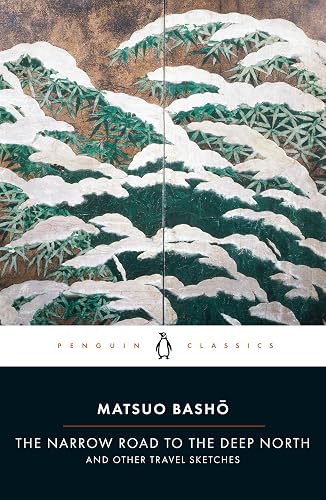
If you only read one, read the title piece. It is short, it carries the famous opening lines, and it is the clearest window into why a man would walk himself to exhaustion for the sake of a few true poems.
Basho’s Travel Philosophy: Go Toward the Unknown, and Become What You See
Basho did not travel to collect places. He travelled to lose the self that gets in the way of seeing. His most quoted instruction on craft is also his clearest instruction on travel: go to the pine if you want to learn about the pine, and leave your own preoccupations behind, because you only learn a thing once you stop standing between yourself and it.
That is why his journeys read as pilgrimages. He walked toward the eternal and the timeless, mindful the whole way of what the Japanese call mono no aware, the gentle ache of how briefly anything lasts. The road was not a means to a view. The road was the practice.
Memorable Matsuo Basho Quotes, Sourced and Flagged
Every line below is quoted from The Narrow Road to the Deep North in Nobuyuki Yuasa’s Penguin translation, except where noted. One honest flag first: the hugely popular line “Every day is a journey, and the journey itself is home” is real, but it is Sam Hamill’s translation of the same opening passage Yuasa renders below as the travellers of eternity. It is the opening of the book, not a separate saying.
Days and months are the travellers of eternity. So are the years that pass by.
— Matsuo Basho The Narrow Road to the Deep North, trans. Nobuyuki Yuasa The opening lines of the 1689 journey. Verified primary source.
Those who steer a boat across the sea, or drive a horse over the earth till they succumb to the weight of years, spend every minute of their lives travelling.
— Matsuo Basho The Narrow Road to the Deep North, trans. Nobuyuki Yuasa Verified primary source.
I myself have been tempted for a long time by the cloud-moving wind, filled with a strong desire to wander.
— Matsuo Basho The Narrow Road to the Deep North, trans. Nobuyuki Yuasa Verified primary source.
In the utter silence of a temple, a cicada's voice alone penetrates the rocks.
— Matsuo Basho The Narrow Road to the Deep North, trans. Nobuyuki Yuasa The haiku written at Ryushakuji temple, Yamagata. Verified primary source.
Every day is a journey, and the journey itself is home.
— Matsuo Basho The Narrow Road to the Interior, trans. Sam Hamill Flagged: Hamill's rendering of the same opening passage. Widely shared as a standalone line.
Frequently Asked Questions
Did Matsuo Basho really write travel quotes?
Yes. His masterwork, The Narrow Road to the Deep North (Oku no Hosomichi), is a travel journal from a walk he began in 1689, mixing prose and haiku. The lines on this page are quoted from Nobuyuki Yuasa’s Penguin translation.
Is "Every day is a journey, and the journey itself is home" really a Basho quote?
It is a real translation, by Sam Hamill, of the opening of The Narrow Road. Yuasa translates the same passage as “Days and months are the travellers of eternity.” It is the opening of the book, not a separate saying.
What is the best Matsuo Basho book to start with?
The Narrow Road to the Deep North and Other Travel Sketches (Penguin Classics, translated by Nobuyuki Yuasa) collects his major travel diaries in one slim, readable volume.
When did Basho live?
He was born near Kyoto in 1644 and died in 1694, writing during Japan’s early Edo period.
Other Writers Who Wandered the Contemplative Road
Basho sits in a long line of writers who treated the journey as an inner practice rather than a holiday. If his quiet road appeals to you, read Pico Iyer on the art of stillness, Lao Tzu on the way that cannot be hurried, and Henry David Thoreau, who found the whole world in a walk near home.
Why Matsuo Basho Belongs on a Travel Quotes Page
Most travel quotes you meet online are misattributed, paraphrased, or floating free of any real source. Basho is the opposite problem solved: a writer whose travel lines are genuinely his, set down in a book you can hold, in a journey you can trace on a map. The only honest work left is to name the translator and pin each line to the page, which is what this page does.
More Quote Collections
Browse the full set of sourced author profiles on the authors page, or start with our 100 best travel quotes, each one checked against a real source.