
Homaro Cantu: Travel Quotes, His $300 Journey, and the Chef Who Reinvented Food
Homaro Cantu was a Chicago chef and inventor, not a travel writer. Here are his real, sourced quotes about food, risk and the journey of reinvention, the floating lines flagged honestly, and the one cookbook he left behind.
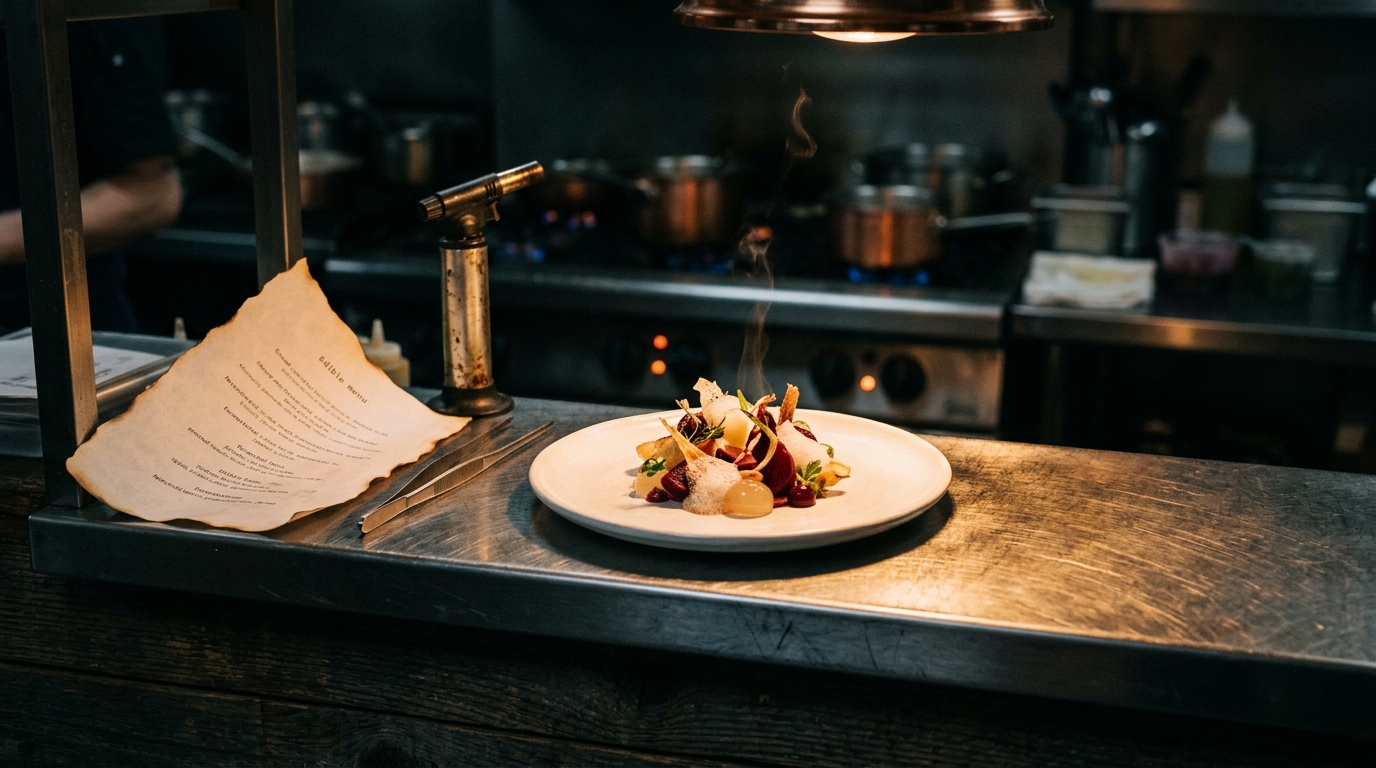
Search for Homaro Cantu travel quotes and you quickly hit the truth that shapes this page: Cantu was not a travel writer at all. He was one of the most inventive chefs America has produced, the mind behind Chicago’s Moto restaurant, its edible menus, its laser-cooked fish and its Michelin star. So rather than invent postcard lines he never said, we have done the honest thing. We tell the one part of his life that really was a journey, we collect the genuine quotes he left about food and risk and reinvention, and we flag the lines that float around under his name without a clear source. Homaro Cantu Jr. was born in Tacoma, Washington in 1976 and built a career on the belief that cooking and science were the same act of curiosity. The verified Cantu is stranger, and far more useful, than any inspirational poster.
Who Homaro Cantu Was: The Inventor Who Became a Chef
Homaro Cantu grew up in Portland, Oregon, a self-described problem child who took the family lawn mower apart three times just to see how it worked. From the ages of six to nine he was homeless, and he later credited that experience for his drive to make food cheap, useful and widely available. He worked in a fast food restaurant as a boy, watched the owner install a tandoori oven, and decided that cooking was where his fascination with science and engineering could finally go to work. (per Fast Company, ‘Weird Science’, 2006)
That is the key to everything he is quoted on. Cantu did not think of himself as a cook who dabbled in gadgets. He thought of himself as an inventor who happened to express his ideas through food. He would go on to file more than a hundred patent applications and sign deals with NASA and Whirlpool, all while running a restaurant kitchen. To read his quotes as travel wisdom, you first have to understand that the journey he cared about was the one from an idea to the plate.
From a $300 Flight to a Michelin Star
Here is the genuinely travel-shaped story in Cantu’s life, and it is a good one. After culinary school in Portland and roughly fifty short unpaid internships up and down the West Coast, he set his sights on the chef he admired most, Charlie Trotter. In February 1999 he simply flew to Chicago with three hundred dollars and nowhere to live, talked his way into an interview, and got the job. He worked his way up to sous chef in Trotter’s kitchen, and on his days off he started inventing the techniques that would make him famous. (per Fast Company, ‘Weird Science’, 2006)
In 2003 he became the first chef at a new restaurant called Moto, which he later bought outright. Through Moto he served carbonated fruit, menus printed on edible paper, and fish cooked from the inside out with a class IV laser. The food was sometimes dismissed as cleverness over flavour, but in 2012 Moto earned a Michelin star, and fellow chefs from Grant Achatz to Ferran Adria came to treat Cantu as a serious explorer of what cooking could even be. (per The New York Times) His later projects, the restaurant iNG and the coffee house Berrista, were built around the miracle berry, a fruit that briefly makes sour food taste sweet, which he believed could help feed people cheaply.

The One Book Homaro Cantu Left Behind
Cantu was a restaurant and ideas man more than an author, so unlike most names on this site he left behind a single book rather than a shelf. We list it honestly, with its real rating, because it is the one work he actually wrote and the clearest written window into how his mind worked.
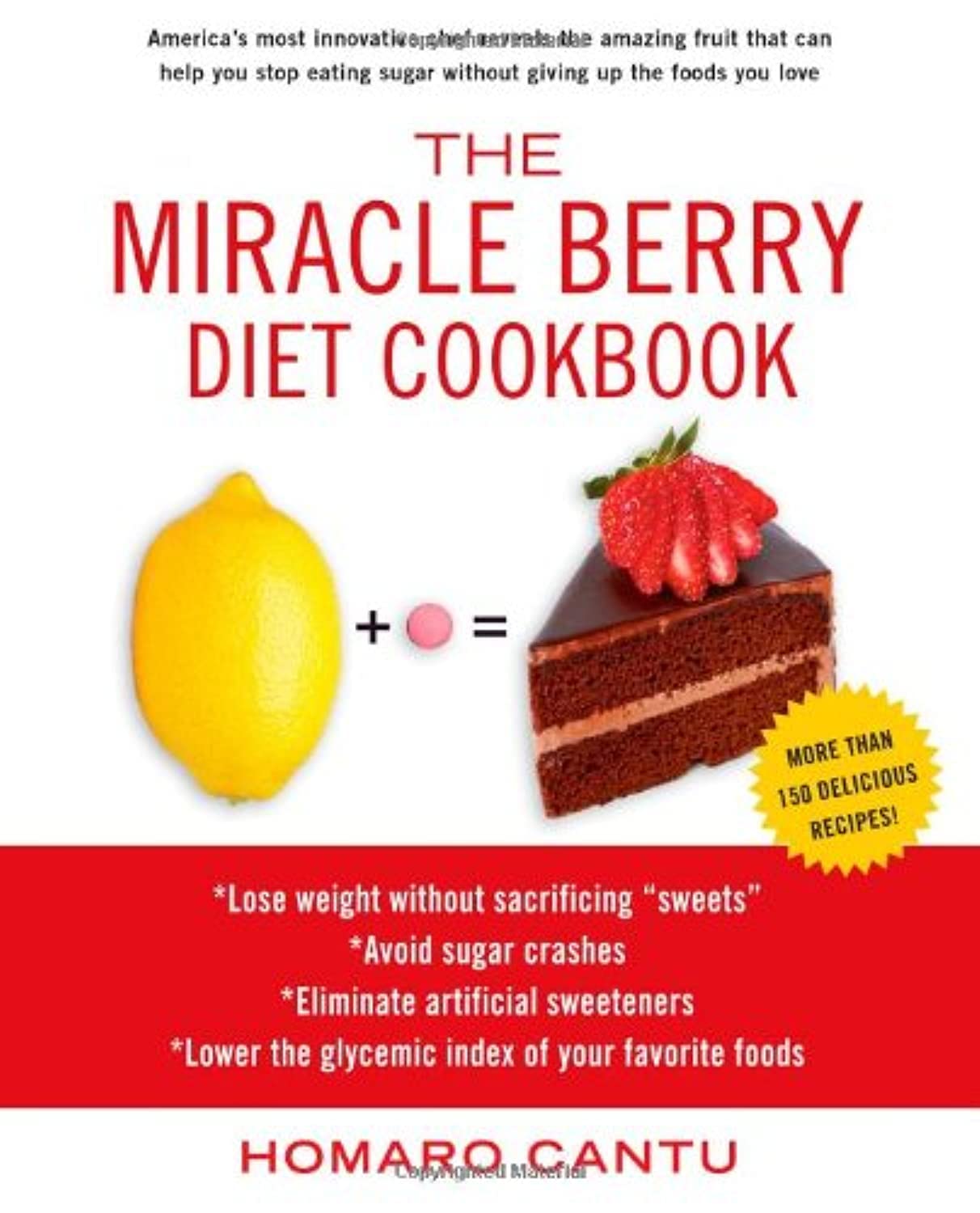
1. The Miracle Berry Diet Cookbook
Best for: Readers who want the one book Homaro Cantu actually wrote
Cantu’s only authored cookbook, built around the miracle berry and his idea of flavor-tripping, turning sour and bitter food sweet without sugar. It is a polarizing book, and its rating reflects that, because many recipes assume the specialist mindset of his kitchen. We include it because it is the single book he wrote and the most direct record of the thinking that ran through everything he made.
Pros
- The only cookbook Cantu authored, and a direct window into his flavor-tripping idea
- Explains the miracle berry concept he believed could help feed people cheaply
- A genuine artifact of one of the most inventive kitchens of its era
Cons
- Polarizing reviews, with an average rating around 3.4 stars
- Several recipes assume specialist equipment or miracle berry tablets most home cooks will not have
There is also a feature documentary, Insatiable: The Homaro Cantu Story (2016), which premiered at SXSW and is the fullest screen account of his life and work. It gets a name here rather than a product card because it is a film about him, not a book by him.
Cantu’s Travel Philosophy, Which Was Really About Reinvention
Cantu never wrote about destinations, so the honest way to read him as a travel figure is through reinvention. The man who flew to Chicago with three hundred dollars believed that you reach a new place by being willing to arrive with nothing and build. His clearest statement of that came in an interview for Roadtrip Nation, a documentary project that sends young people across the country to ask people how they found their work. As long as you are passionate and can find your creative niche, he said, there is nothing you cannot achieve. (per Roadtrip Nation)

The other thread in his quotes is food as common ground, the thing that lets very different people sit at the same table. He framed his most ambitious work, the edible paper and the miracle berry, as a way to carry good food to people who had none, on long journeys, in refugee camps, anywhere the usual supply chains failed. That is the closest Cantu comes to a travel philosophy: not the romance of the road, but the conviction that a shared meal can travel anywhere, and should.
Memorable Homaro Cantu Quotes by Theme
The Journey: Three Hundred Dollars and a One-Way Flight
I made it my life's goal to become a sous chef for Charlie Trotter. I literally just flew out [to Chicago] one day with $300 in my pocket and no place to stay.
— Homaro Cantu Recounted in Fast Company, 'Weird Science' (2006), and his 2015 obituaries The most genuinely travel-shaped line of his life. Not a quote about sightseeing, but about the nerve it takes to arrive somewhere new with almost nothing and build a career from it.
Reinvention and Finding Your Niche
As long as you're passionate and can find your creative niche, there's nothing that you can't achieve.
— Homaro Cantu Roadtrip Nation interview Said for Roadtrip Nation, a documentary that drives young people across the country to ask how people found their work. A fitting place for the one Cantu line that is genuinely about the journey.
Food as Common Ground
My goal with this is to deliver food to the masses that are starving. We give them something that's healthy, that has an indefinite shelf life and that is super cheap to produce.
— Homaro Cantu The New York Times Cantu on his edible paper, which he saw less as a restaurant trick than as a way to carry food to people the usual supply chains never reach.
Changing the way humans perceive food.
— Homaro Cantu Fast Company, 'Weird Science' (2006) How Cantu described his own mission. Four words that explain why a chef spent his life filing patents.
Lines We Flag, Because the Source Is Not Clear
Sitting down and sharing a meal together combines two of my favorite loves: eating great food and talking about great food.
— Attributed to Homaro Cantu, source unconfirmed Widely shared on quote aggregators (QuoteFancy, A-Z Quotes) A lovely line that fits everything Cantu believed about food as common ground, but it circulates only on quote aggregators with no original interview or book behind it, so we flag it rather than present it as gospel.
The only difference between a madman and me is that I am not mad.
— Salvador Dali, printed by Homaro Cantu at Moto Originally Salvador Dali; printed on an edible menu at Moto This line turns up attributed to Cantu because he famously printed it on an edible menu at Moto, but the words are Salvador Dali's. We flag it so you credit it correctly.
A note on how we rank these. The verified lines above are tied to a named interview or publication, checked against reliable references including Fast Company, The New York Times and Roadtrip Nation. The two flagged cards are exactly that, flagged: one is an aggregator-only line with no original source, and one is a Salvador Dali quote that attached itself to Cantu through a menu. When a quote site hands you a Cantu line with no source, treat it as decoration until a real one turns up. More on how we verify attributions sits on our editorial standards page, linked at https://quotesontravel.net/editorial-standards/ , and on our about us page at https://quotesontravel.net/about-us/ .
Other Voices Who Made Food a Way to See the World
Frequently Asked Questions about Homaro Cantu
Who was Homaro Cantu?
Homaro Cantu (1976 to 2015) was an American chef and inventor, best known for Chicago’s Moto restaurant, where he served edible menus, carbonated fruit and laser-cooked food. He earned a Michelin star in 2012 and filed more than a hundred patents, many aimed at using food to address hunger.
What is Homaro Cantu's most famous quote?
His most repeated story is the one about chasing his idol Charlie Trotter: he flew to Chicago with three hundred dollars in his pocket and no place to stay. His clearest stated mission was simpler still, to change the way humans perceive food.
Did Homaro Cantu write any books?
One. The Miracle Berry Diet Cookbook, built around the miracle berry he believed could make healthy food taste sweet without sugar. It is his only authored book, and its mixed reviews reflect how specialist his cooking was.
Was Homaro Cantu a travel writer?
No. Cantu was a chef and inventor, not a travel writer, and the search for Homaro Cantu travel quotes turns up almost nothing genuine. We include him because his real lines about reinvention and food as common ground belong in any honest collection about why people cross the world to eat.
What happened to Homaro Cantu?
Cantu died in 2015 at the age of 38. He is remembered for his inventive cooking, his Michelin-starred restaurant Moto, and his belief that food science could help feed people who had none.
Why Homaro Cantu Belongs on a Travel Quotes Page
Cantu earns his place here not as a travel writer but as proof of a quieter travel idea: that the most important journey is often the one you take with nothing in your pocket toward the work you were meant to do. He flew to a strange city with three hundred dollars and built a Michelin-starred kitchen out of curiosity and nerve, and he spent the rest of his short life trying to make a good meal something that could reach anyone, anywhere. If you read one thing of his, make it the story of that first flight, and if you want to hold the object he left behind, his one cookbook is linked above. For more sourced voices on food and place, browse our author bio library at https://quotesontravel.net/authors/ .