Tim Cahill: The Writer Behind the Internet's Favourite Friendship Travel Quote
Verified Tim Cahill travel quotes with real sources: the Yellowstone confessions of Lost in My Own Backyard, the famous friendship line that circulates in three wordings with no page number, the record-breaking drive behind Road Fever, and the books worth owning.
First, the housekeeping: this page is about Tim Cahill the American adventure-travel writer, not the Australian footballer who shares his name. The writer Tim Cahill co-founded Outside magazine, set a world record driving the length of the Americas, and wrote essay collections with titles like Jaguars Ripped My Flesh. He is also credited, on practically every travel quote site on the internet, with the most shared friendship travel quote ever printed on a mug: “A journey is best measured in friends rather than miles.” Here is the strange part. That line appears in at least three different wordings, and not one of the sites quoting it supplies a book, an essay, or a page number. For a man who has published hundreds of thousands of carefully edited words, his most famous sentence floats completely free of his actual work. This page sorts it out: the verified Cahill lines with real sources, the famous quote handled honestly, the record drive, and the books that earn him the reputation the poster version only borrows.
Early Life: From a Wisconsin Pool to the San Francisco Newsrooms
Tim Cahill was born in 1943 in Nashville, Tennessee, and grew up in Waukesha, Wisconsin, a setting about as far from jaguars and headhunters as American geography allows. He swam his way out: a swimming scholarship took him to the University of Wisconsin-Madison, where he earned a degree in European intellectual history, the kind of qualification that prepares you for almost nothing except noticing things. (en.wikipedia.org)
He then headed west for a master’s in creative writing at San Francisco State, completed in 1970, and landed in the city at exactly the right moment to catch the New Journalism wave. He wrote for Rolling Stone in its hungry years, where the rule was that the writer went out, got into trouble, and reported the trouble honestly. It turned out to be perfect training for a career spent being frightened in remote places. (archive.org, Drew, 100 Most Popular Nonfiction Authors)
Career Milestones: Outside Magazine and the Art of Misadventure
In 1977 Cahill became a founding editor of Outside magazine, the publication that more or less invented modern adventure journalism, and he stayed on as editor-at-large while writing for National Geographic Adventure and others. His running joke was the gap between the heroic adventure story and the actual experience of having one, which usually involves discomfort, bad decisions and a truck that will not start. Even his book titles are part of the bit: Jaguars Ripped My Flesh and A Wolverine Is Eating My Leg parody the lurid men’s-magazine headlines of the 1950s. No jaguar ripped his flesh. That is the point. (en.wikipedia.org)
The biggest single adventure came in 1987, when Cahill and professional long-distance driver Garry Sowerby drove the entire length of the Americas, from Ushuaia at the bottom of Tierra del Fuego to Prudhoe Bay, Alaska, in 23 days, 22 hours and 43 minutes, a world record at the time. Cahill described his own role in the truck as the comedy relief. The trip became Road Fever (1991), his only full-length road book and the closest thing the famous friendship quote has to a natural habitat: one very long journey, two people, measured mostly in companionship and gas-station coffee. He has lived for decades in Livingston, Montana, fifty miles from Yellowstone, which gave him his most quotable book of all. (en.wikipedia.org)
Tim Cahill’s Best Books for Travellers, with Receipts
1. Road Fever (Vintage Departures)
Best for: Anyone who wants the journey behind the friendship quote
The 1991 account of the record-setting drive from Tierra del Fuego to Prudhoe Bay with Garry Sowerby: 23 and a half days of border crossings, breakdowns, paperwork and sleep deprivation, told with self-deprecating precision. If the famous line about journeys and friends has a spiritual home anywhere in his work, it is this book about two people surviving a truck cab together. The natural first Cahill.
Check Price on Amazon →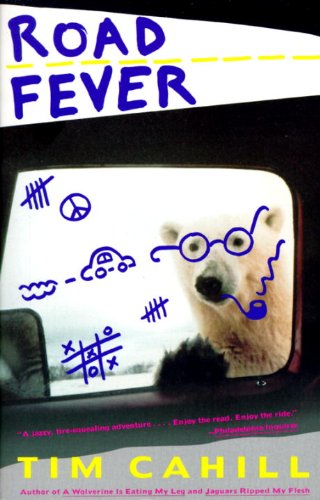
2. Jaguars Ripped My Flesh (Vintage Departures)
Best for: Readers who want the essays that built his reputation
The 1987 collection that announced what a Cahill story is: a quest, a remote place, a series of indignities, and a punchline that turns out to carry real feeling. The title parodies pulp adventure headlines, and the writing spends the whole book both honouring and puncturing them. Diving, caving, gorillas in Rwanda, and the signature mix of fear and comedy.
Check Price on Amazon →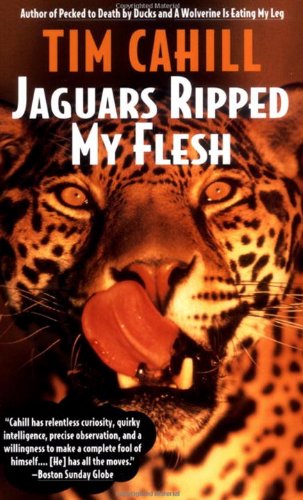
3. Pass the Butterworms: Remote Journeys Oddly Rendered
Best for: Travellers who like their journeys remote and their narrators honest
The 1997 collection, and for many readers the best of the bunch: weeks on horseback in Mongolia mastering what he calls the Mongolian death trot, a polar dip at the North Pole, a companionable evening with former headhunters in Irian Jaya, and the title delicacy of sauteed sago beetle. Remote journeys, oddly rendered, exactly as the subtitle promises.
Check Price on Amazon →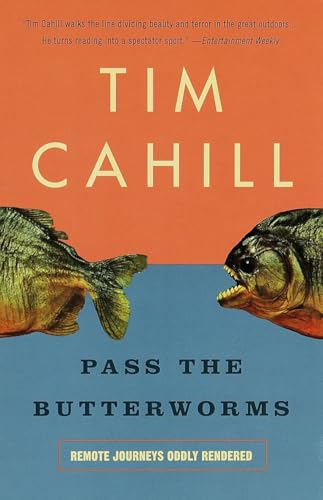
4. Hold the Enlightenment (Vintage Departures)
Best for: Readers who want the wisdom without the sermon
Thirty essays from 2002: an active volcano in Ecuador, Saharan salt mines, a hunt for the possibly extinct Caspian tiger, and a yoga retreat he attends under protest. The Wall Street Journal called him someone who did adventure for real long before it became television, and this is the collection where the wisecracks carry the most wisdom. The title is his entire travel philosophy in three words.
Check Price on Amazon →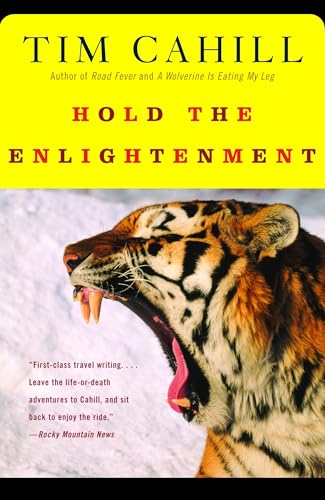
5. Lost in My Own Backyard: A Walk in Yellowstone National Park
Best for: Anyone who suspects the best journeys can be close to home
A short 2004 walk through the world’s first national park by a man who has lived fifty miles from it for a quarter of a century and still gets lost in it, cheerfully. This is the book that supplies his most verifiable quotes, including the confession that proximity does not guarantee competence. Small, funny, and the easiest way into his voice for the price of a coffee.
Check Price on Amazon →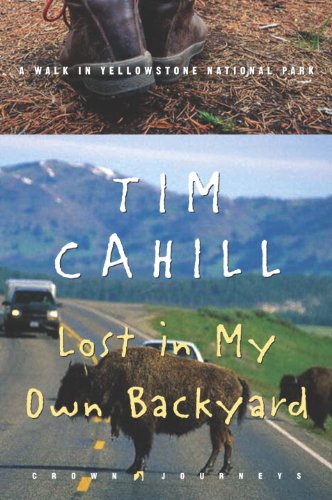
An honest note from our editors: these are decades-old essay collections from a working journalist, so the review counts are modest rather than blockbuster. Every edition above is the standard, detail-verified printing from his actual publishers, and Road Fever is the right first purchase.
Tim Cahill’s Travel Philosophy in His Own Words
Cahill’s travel philosophy is misadventure as method. The trip that goes wrong is not the failed version of the trip; it is the story, and often the friendship. His essays keep returning to the same honest observation: adventure feels terrible while it is happening and only becomes adventure later, in the retelling. The line most often quoted for this idea, about discomfort recollected in tranquility, is itself a deliberate rework of how the poet William Wordsworth defined poetry, as emotion recollected in tranquillity, in his preface to Lyrical Ballads (1800). Cahill swapped the emotion for discomfort, which is the whole joke and the whole truth. (gutenberg.org)
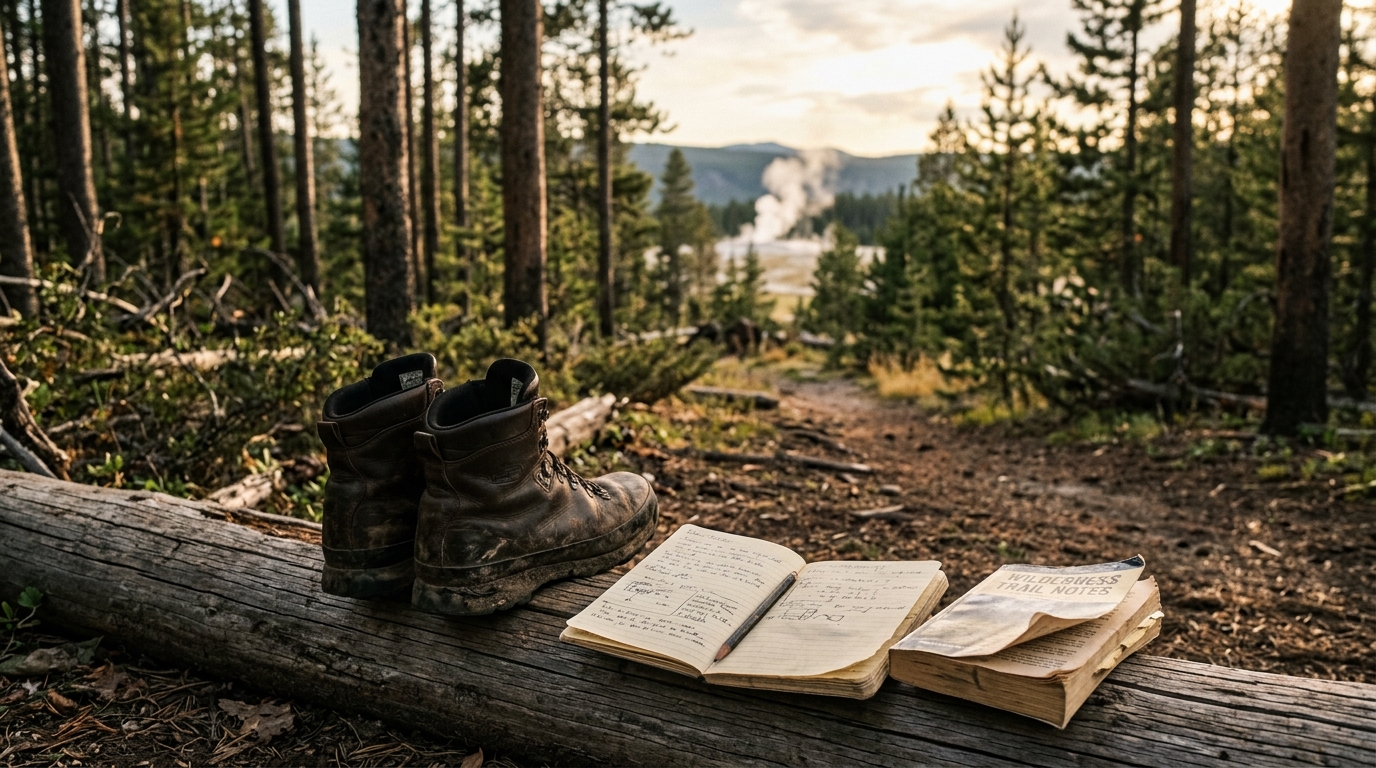
The other thread is friendship. Road Fever is, on its surface, a book about a speed record. It is actually a book about two friends in a truck for 23 days, and how shared trouble binds people in a way shared sightseeing never quite does. Fellow travel writers like Paul Theroux built their reputations on the solitary journey; Cahill’s best work argues, without ever preaching it, that the journey is the people you survive it with. Which is, of course, exactly what the famous quote says. The quote may float free of his books, but it does not float free of his life.
Memorable Tim Cahill Quotes by Theme
The Famous Friendship Line, Handled Honestly
A journey is best measured in friends rather than miles.
— Attributed to Tim Cahill No book or page citation documented; circulates in at least three wordings This is the line on the mugs, and it genuinely is attributed to Cahill across the major quote aggregators. The catch: Goodreads renders it as 'in friends, not in miles,' other sites as 'in friends, rather than in miles,' and the version above is the most shared of all. Nobody supplies a source from his published work, and we could not document one either. It sounds like him, it matches how he writes about Road Fever, and until someone produces a page number, the honest label is attributed rather than verified.
Getting Lost on Purpose
Let's get lost together.
— Tim Cahill Lost in My Own Backyard (Crown Journeys, 2004), opening invitation The invitation that opens his Yellowstone book, quoted in the publisher's own description. Four words that hold his whole approach: getting lost is not the failure state of a journey, it is the point, and it is better with company.
Proximity Does Not Guarantee Competence
I live fifty miles from the park, but proximity does not guarantee competence. I've spent entire afternoons not knowing exactly where I was, which is to say, I was lost in my own backyard.
— Tim Cahill Lost in My Own Backyard (Crown Journeys, 2004) Quoted in the publisher's description of the book. A quarter century of living next to Yellowstone, and he still loses himself in it cheerfully. It is the most honest sentence about local travel we have on this site.
Philosophy, Resisted
I have resisted the urge to commit philosophy. This is difficult to do when you're alone, twenty miles from the nearest road, and you've just found a grizzly bear track the size of a pizza.
— Tim Cahill Lost in My Own Backyard (Crown Journeys, 2004) Also preserved in the publisher's description. The joke lands because it is true: wilderness makes philosophers of everyone, and Cahill's discipline was to report the bear track first and the meaning second, if at all.
Adventure, Recollected Later
An adventure is never an adventure when it happens. An adventure is simply physical and emotional discomfort recollected in tranquility.
— Attributed to Tim Cahill Aggregator-attributed; no book citation located. The phrasing reworks Wordsworth's preface to Lyrical Ballads (1800) Widely attributed to Cahill on Goodreads and the quote aggregators, sometimes in a longer wording about experiences needing time to ferment, but we could not trace it to a specific book or essay. The literary joke is verifiable even if the citation is not: Wordsworth defined poetry as 'emotion recollected in tranquillity,' and this line swaps in discomfort. That is a working travel writer's joke if ever there was one.
How It All Started
Adventure travel existed before I started, I just didn't know it.
— Attributed to Tim Cahill Interview-attributed; no primary transcript located A line from his interview circuit that the aggregators repeat without a source. It rings true for a founding editor of Outside magazine, but absent a documented interview we file it as attributed, not verified.
A sourcing note, because this page exists to be the accurate one and our editorial standards ask for receipts: the three verified quotes above are preserved verbatim in Crown’s published description of Lost in My Own Backyard, and the biographical facts are cited to Wikipedia and its referenced sources. The famous friendship line is the unusual case of a quote that is consistently attributed to one living, easily checkable author and still circulates without a citation in three competing wordings. We would rather tell you that plainly than invent a page number. More on how we verify lives on our about us page.
For the famous line in context with 99 better-sourced companions, browse the 100 best travel quotes mega-pillar, where the friendship end of the collection owes Cahill a quiet debt.
Other Voices in Adventure and Misadventure
Frequently Asked Questions about Tim Cahill
What was Tim Cahill's famous quote?
The line he is best known for is ‘A journey is best measured in friends rather than miles.’ It is attributed to him on virtually every quote site, in at least three slightly different wordings, but none of them comes with a book or page citation from his published work. His verifiable quotes come from books like Lost in My Own Backyard (2004).
Who is Tim Cahill the travel writer?
Tim Cahill (born 1943 in Nashville, raised in Waukesha, Wisconsin) is an American adventure-travel writer, a founding editor of Outside magazine in 1977, and the author of comic adventure classics including Jaguars Ripped My Flesh, Road Fever and Pass the Butterworms. He lives in Livingston, Montana. He is not the Australian footballer of the same name.
Did Tim Cahill really say 'a journey is best measured in friends rather than miles'?
Probably, but nobody can show you where. The line is consistently attributed to him and matches the spirit of Road Fever, his book about a 23-day drive with his friend Garry Sowerby. It circulates as ‘rather than miles,’ ‘rather than in miles’ and ‘not in miles,’ and no version carries a documented source. We label it attributed rather than verified.
What are Tim Cahill's best travel books?
Start with Road Fever (1991), the record-breaking Pan-American drive. Then the essay collections: Jaguars Ripped My Flesh (1987), Pass the Butterworms (1997) and Hold the Enlightenment (2002). Lost in My Own Backyard (2004) is the short, charming Yellowstone walk and the source of his most verifiable lines.
What magazine did Tim Cahill help found?
Outside magazine, in 1977, where he was a founding editor and later editor-at-large. The magazine more or less invented modern adventure journalism, and Cahill’s comic, self-deprecating misadventure story became one of its signature forms.
Tim Cahill’s Lasting Legacy for Travellers
Cahill’s gift to travellers is permission to be unheroic. The trip where everything goes wrong, the afternoon spent lost within sight of home, the truck cab shared with a friend for 23 sleepless days: in his telling these are not the outtakes of travel, they are the substance of it. Whether or not he ever wrote the exact words, he spent five decades proving that a journey is measured in the people beside you, and he was funny about it the whole way. If you read one of his books, make it Road Fever, then sit with the question his work keeps asking: who would you want in the passenger seat? More sourced voices are waiting in our author bio library.