
Wallace Stevens: Travel Quotes, the Imagined Journeys, and the Poet Who Barely Left Hartford
Verified Wallace Stevens lines about journeys of the mind, sourced to the poems they come from, from the man who ran an insurance company by day and conjured the whole world from his desk.

Ask the internet for Wallace Stevens travel quotes and you get a strange and lovely problem. Stevens is one of the greatest American poets of the twentieth century, and his work is full of palms, tropics, jars in Tennessee and orders made at Key West. Yet the man himself barely travelled at all. He spent his working life as an insurance executive in Hartford, Connecticut, rose to vice president of the Hartford Accident and Indemnity Company, and never once set foot in Europe. His journeys were imaginative, conjured at a desk between actuarial reports, and that is exactly what makes him so useful to a traveller. Where most travel writers tell you to go somewhere, Stevens shows you that the real voyage happens in how you see. So this page does something a little different from the usual quote roundup. It gathers the genuine Stevens lines that speak to travel and the imagination, cites every one to the poem and collection it actually comes from, and tells the honest story of a homebody who became the supreme poet of elsewhere.
Early Life: a Reading Boy in Pennsylvania
He was born in Reading, Pennsylvania, in October 1879, the son of a prosperous lawyer who filled the house with books and expected his children to work. Stevens read voraciously as a boy, won school prizes for his writing, and carried a lifelong habit of long solitary walks that fed straight into his poems. He went to Harvard as a special student from 1897, edited and wrote for the literary magazines, and met the philosopher George Santayana, whose talk about imagination and belief left a permanent mark. Money, or the lack of it, pulled him out of the purely literary world. He left Harvard without a degree, tried journalism in New York for a year, found it thin work, and on his father’s advice enrolled at New York Law School instead. (britannica.com)
He was admitted to the bar in 1904 and spent a decade finding his footing in the law and in love. He courted Elsie Kachel back in Reading for years before they married in 1909, and he wrote her poems by the dozen while he built a career. By 1916 he had joined the Hartford Accident and Indemnity Company in Connecticut, the firm he would serve for the rest of his life. It is one of the great double lives in literature: the grey-suited surety-bond specialist who walked to the office composing poems in his head, then wrote them down at his desk and mailed them to the little magazines.
Career Milestones: an Insurance Desk and a Pulitzer
His first book, Harmonium, appeared in 1923 when he was forty-three, an unusually late debut for so assured a voice. It contained the poems that still anchor anthologies: The Emperor of Ice-Cream, Sunday Morning, Thirteen Ways of Looking at a Blackbird, Anecdote of the Jar and Tea at the Palaz of Hoon. It sold poorly. Stevens did not despair or quit his job; he kept selling surety bonds, was promoted to vice president of the Hartford in 1934, and let the poems accumulate slowly across decades. Ideas of Order followed in 1936, with the magnificent The Idea of Order at Key West, and the long, philosophical Notes Toward a Supreme Fiction came in 1942. (poetryfoundation.org)
The travelling he did do was modest and almost all of it pointed south. He made winter trips to Florida through the 1920s and 1930s, loved the heat and colour of Key West, and sailed to Havana in 1923. That warm, imagined tropics, set against the cold Connecticut light he actually lived in, became the engine of his imagination. Recognition arrived late and all at once. His Collected Poems came out in 1954 for his seventy-fifth birthday and won both the National Book Award and, in 1955, the Pulitzer Prize for Poetry. He died of cancer in Hartford in August 1955, only months later, the most celebrated poet in America and a man who had spent almost his whole life within a few square miles of one New England city.
Wallace Stevens’s Best Books for the Imaginative Traveller, with Receipts
1. The Collected Poems of Wallace Stevens
Best for: Readers who want the whole imagined world in one Pulitzer-winning volume
The book that won the Pulitzer Prize in 1955, now in a corrected edition, and the single best home for nearly every line on this page. Harmonium and Ideas of Order are here in full, which means the jar in Tennessee, the order at Key West and the palms are all a page-flip apart. If you buy one Stevens book, buy this one.
Check Price on Amazon →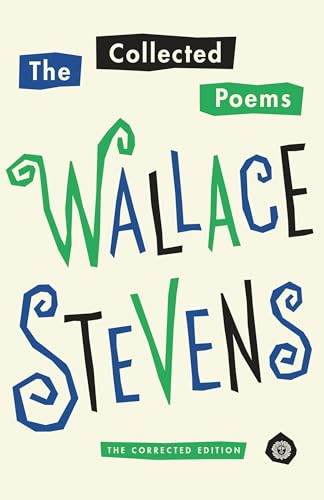
2. The Palm at the End of the Mind: Selected Poems and a Play
Best for: Newcomers who want the essential Stevens without the full collected weight
Edited by his daughter Holly Stevens and named for one of his last and strangest poems, this is the friendliest way into a difficult poet. It carries the famous palms, the Key West order and the late visionary lyrics in a single, readable selection. The book to start with if the Collected feels like a mountain.
Check Price on Amazon →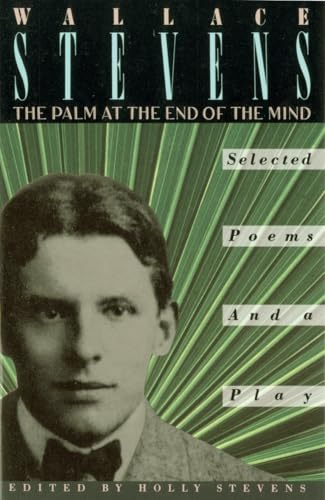
3. Wallace Stevens: Collected Poetry and Prose (Library of America)
Best for: Building the definitive Stevens in one durable hardcover
The poems, the plays, the essays and a generous selection of letters in one Library of America volume. The best single book if you want not just the verse but the mind behind it, including the prose where Stevens argues for the imagination as the thing that makes a world worth living in.
Check Price on Amazon →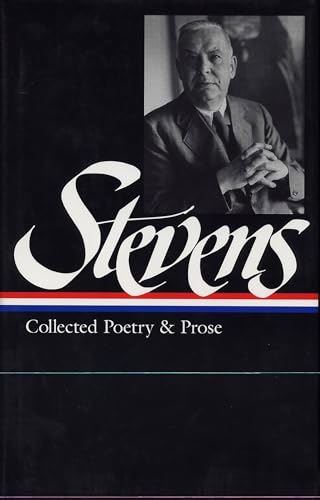
4. The Necessary Angel: Essays on Reality and the Imagination
Best for: Readers who want the theory of imagined travel in his own prose
Stevens’s only book of essays, and the clearest statement of why a man who stayed home could write the poetry of everywhere. His argument that imagination presses back against reality and helps us live is, in the end, a philosophy of how to see a place. Short, dense and quietly thrilling.
Check Price on Amazon →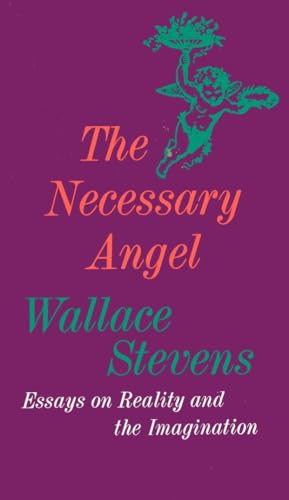
5. The Whole Harmonium: The Life of Wallace Stevens
Best for: Anyone curious about the insurance man behind the poems
Paul Mariani’s full biography of the double life: the surety-bond executive who walked to work composing lines in his head and became one of the century’s great poets. The book to read if the contradiction at the centre of this page, a homebody who wrote the poetry of elsewhere, is the thing that fascinates you.
Check Price on Amazon →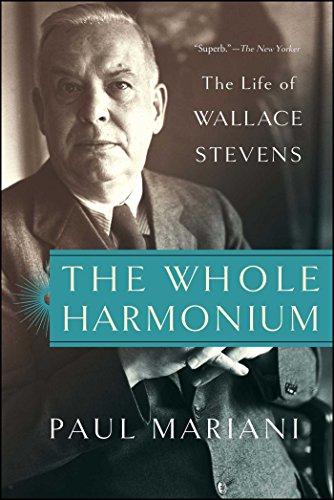
A note for the curious: his 1923 debut Harmonium is where several of the lines below first appeared, including Anecdote of the Jar and Tea at the Palaz of Hoon. You do not need to hunt down a first edition. Every poem in it sits inside the Collected Poems above, which is the simplest and best way to own the work entire.
Wallace Stevens’s Travel Philosophy in His Own Words
Stevens never wrote a travel guide, and he would have distrusted the genre. His subject was the imagination, the way the mind half-discovers and half-creates the world it moves through, and that turns out to be the deepest travel idea of all. In Notes Toward a Supreme Fiction he suggests that the truth itself might depend on something as small and ordinary as a walk around a lake, a slow circuit of attention rather than a grand expedition. In Tea at the Palaz of Hoon he goes further and claims the walker and the world are one, that what you see and hear and feel on a journey comes partly out of yourself. For Stevens the traveller is never a neutral camera. You compose the place as you cross it.

This is why his poems are full of tropics he mostly imagined. The palm at the end of the mind, the jar set down on a Tennessee hill that suddenly organises the whole wild landscape around it, the singer at Key West who makes the sea into an order by singing it: each is a small parable about how perception shapes a place. You do not have to cross an ocean to use any of it. Walk around your own lake, Stevens implies, and pay the kind of attention that composes a world. That, from the poet who stayed home and saw further than almost anyone, is a strangely practical gift for the road.
Memorable Wallace Stevens Quotes by Theme
The Journey as Attention
Perhaps the truth depends on a walk around a lake.
— Wallace Stevens Notes Toward a Supreme Fiction (1942), 'It Must Change' The most quotable line in all of Stevens, and a whole travel philosophy in eleven words. Truth, he suggests, is not delivered by distance or spectacle but composed slowly on foot, by a body that tires and a mind that watches. The case for the small, attentive journey over the grand tour.
I was the world in which I walked, and what I saw Or heard or felt came not but from myself.
— Wallace Stevens Tea at the Palaz of Hoon, in Harmonium (1923) His clearest statement that the traveller and the travelled-through are not separate. What you find on a journey, he claims, comes partly out of you. A startling idea in 1923 and a useful corrective now: the place you visit is also the place you make.
The Imagined Elsewhere
The palm at the end of the mind, Beyond the last thought, rises In the bronze decor.
— Wallace Stevens Of Mere Being (1954); collected in Opus Posthumous One of the last things Stevens wrote, and the purest image of his imagined tropics. The palm stands at the very edge of thought, an exotic elsewhere conjured by a man who almost never left Connecticut. The destination that exists only in the mind, and is no less real for it.
I placed a jar in Tennessee, And round it was, upon a hill.
— Wallace Stevens Anecdote of the Jar, in Harmonium (1923) A tiny parable about how a single object can organise a whole landscape. Set the jar down and the wild Tennessee hill arranges itself around it. For the traveller it reads as a lesson in framing: where you stand and what you bring change the place you are looking at.
Making Order of a Place
She was the single artificer of the world In which she sang.
— Wallace Stevens The Idea of Order at Key West, in Ideas of Order (1936) Written out of his real winters in Florida, this is Stevens watching a woman sing beside the sea and deciding that her song makes an order the ocean did not have on its own. The deepest version of his travel idea: we do not just witness the places we go, we compose them.
A sourcing note, because this page exists to be the accurate one and our editorial standards ask for receipts: every line above is genuine Stevens, traceable to a named poem and collection. Stevens is rarely the victim of the usual fake-quote problem, partly because his lines are too strange to invent and too specific to drift. The trap with him is subtler. His images get lifted out of their poems and flattened into wall art, so the palm becomes a beach cushion and the jar becomes a slogan. Read them where they live, in the poems, and they turn back into what they are: small, exact arguments about how seeing makes a world. More on how we verify lives is on our about us page.
For the full canon in context, browse the 100 best travel quotes mega-pillar, where the walk around a lake holds down the quiet, philosophical end of the collection.
Other Voices Who Found the World Without Leaving Home
Frequently Asked Questions about Wallace Stevens
What is Wallace Stevens's most famous travel quote?
The line most often shared as a Stevens travel quote is “Perhaps the truth depends on a walk around a lake.” It is genuinely his, from the long poem Notes Toward a Supreme Fiction (1942), in the section titled It Must Change.
Did Wallace Stevens travel much?
Very little. He never visited Europe and spent almost his whole life in Hartford, Connecticut, working as an insurance executive. His main travel was a series of winter trips to Florida and Key West and a 1923 voyage to Havana, and most of the exotic geography in his poems was imagined rather than visited.
Was Wallace Stevens really an insurance executive?
Yes. He joined the Hartford Accident and Indemnity Company in 1916, specialised in surety bonds, and was made a vice president in 1934. He kept the job for the rest of his life, writing poems on his walk to the office and at his desk, and never became a full-time writer.
What are Wallace Stevens's best books to start with?
Start with The Palm at the End of the Mind, a selected edition that is the friendliest way in. Then move to The Collected Poems, which won the Pulitzer Prize in 1955 and contains Harmonium and Ideas of Order in full. The Necessary Angel collects his essays on imagination.
Why is Wallace Stevens associated with travel if he stayed home?
Because his poems are the great modern argument for imagined journeys. Stevens wrote palms, tropics and far places from a desk in Connecticut, and his real subject was how the imagination shapes any place we perceive. For travellers his work is a reminder that the journey is partly something you compose, not only somewhere you go.
Wallace Stevens’s Lasting Legacy for Travellers
Stevens’s gift to travellers is permission to find the world without circling it. He proved that the most exotic geography can be built at a desk, that a walk around a lake can hold as much truth as a passage across an ocean, and that the places we visit are partly the places we make by paying attention. He is the patron saint of the imaginative journey, the homebody who out-travelled almost everyone by going inward and looking harder. If you read one of his books for the journey in it, make it The Collected Poems and find the palm at the end of the mind. More sourced voices are waiting in our author bio library.