
Lao Tzu: Travel Quotes, the 'Thousand Miles' Line, and the One Journey He Actually Took
The genuine Lao Tzu travel quotes from the Tao Te Ching, cited by chapter, with the famous paraphrases flagged honestly, and the one story we have of the man: that he was last seen riding west out of China, leaving his book at the border.

Search for Lao Tzu travel quotes and the first line back is almost always the same: ‘a journey of a thousand miles begins with a single step.’ Here is the good news, and part of the reason this page exists. That one is real. It comes from the Tao Te Ching, chapter 64, and it is among the most quoted sentences ever written. The catch is small but telling: the literal Chinese says the journey begins beneath your feet, not with a tidy single step, and the difference is the whole point. The second most shared line, ‘a good traveler has no fixed plans and is not intent on arriving,’ is not Lao Tzu’s literal text at all. It is a beautiful but very free modern translation. Lao Tzu, or Laozi, the ‘Old Master,’ is the semi-legendary Chinese sage traditionally credited with the Tao Te Ching around the sixth century BCE. We know almost nothing certain about his life. What survives is one story, and it is a travel story: an old archivist who grew tired of a corrupt court, climbed onto an ox, and rode west out of the known world, pausing only to write his book at a mountain gate. This page sorts the real lines from the paraphrases, cites every genuine quote to its chapter, and tells that one journey properly.
Early Life: an Archivist at the Zhou Court
Almost everything we say about Lao Tzu’s life comes from a single short account written centuries after he supposedly lived, in the Records of the Grand Historian by Sima Qian, around 100 BCE. By that tradition his given name was Li Er, and he worked as the keeper of the archives at the royal court of the Zhou dynasty, a librarian and record-holder rather than a general or a prince. It is a quiet origin for a man whose words would travel further than any conqueror’s. Even Sima Qian hedged, listing more than one candidate for who Lao Tzu really was, and modern scholars are divided on whether he was a single historical person at all, or a name attached to a body of wisdom that grew over generations.
The tradition also gives him a famous meeting. Confucius, the story goes, sought out the older Lao Tzu to ask about ritual and the rites, and came away baffled and impressed, comparing him to a dragon that rides the wind and clouds beyond ordinary understanding. Whether or not the meeting happened, it captures the contrast that still defines the two thinkers. Confucius taught order, duty and the careful structure of society. Lao Tzu taught yielding, stillness and the wisdom of water that flows around obstacles rather than forcing them. For a traveller, the difference matters: one voice plans the itinerary, the other tells you to put the map down and follow the river.
The One Journey: Riding West Through the Gate
If Lao Tzu wrote about journeys, the legend gives him exactly one of his own, and it is unforgettable. Grown old and tired of the moral decay of the Zhou court, he resigned his post, climbed onto a water buffalo or ox, and set out west toward the wild frontier, intending to leave Chinese civilisation behind for good. At the mountain pass that marked the edge of the known world, traditionally the Hangu Pass, the gatekeeper, a man remembered as Yin Xi, recognised the sage and refused to let him through until he had written down his teaching. So, the story says, Lao Tzu sat at the gate and composed the roughly five thousand characters of the Tao Te Ching, handed them over, rode on through the pass, and was never seen again.
It is almost certainly a legend, and the Tao Te Ching was very likely shaped by many hands over a long period rather than written in one sitting at a border post. But as an image it is hard to better. The founding text of Taoism, a book obsessed with letting go and moving on, is framed as the parting gift of a man on his way out the door. Lao Tzu is the original one-way traveller: no return ticket, no forwarding address, just a book left at the frontier and a road heading into the mist. Every genuine travel line below carries that flavour of departure, of going lightly and not clinging to the destination.
The Best Tao Te Ching Translations for Travellers, with Receipts
1. Tao Te Ching, translated by Stephen Mitchell
Best for: First-time readers who want the most readable modern English version
Stephen Mitchell’s 1988 version is the one most people meet first, and for good reason. It is spare, lyrical and easy to carry, turning the ancient verses into clean modern English without footnote clutter. It is not the most literal translation on this list, but it is the one most likely to make you fall for the book, which is exactly what a first Tao Te Ching should do. Start here, then go deeper if it grabs you.
Check Price on Amazon →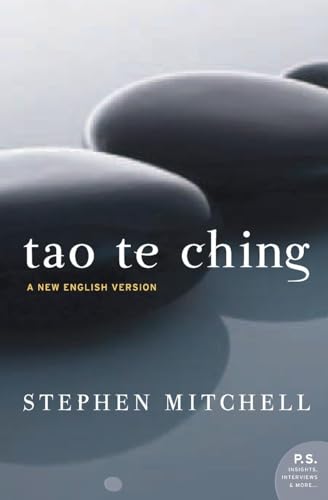
2. Tao Te Ching, translated by Gia-Fu Feng and Jane English
Best for: Readers who want the beautiful photographic edition behind the famous good traveler line
This is the 1972 edition set against Jane English’s black and white photographs, and it is the source of the much loved rendering a good traveler has no fixed plans and is not intent upon arriving. It is a free, poetic reading of chapter 27 rather than a literal one, which is exactly why this page flags that quote below, but the book itself is a gorgeous object and a genuine classic of the Taoist shelf. Worth owning for the images alone.
Check Price on Amazon →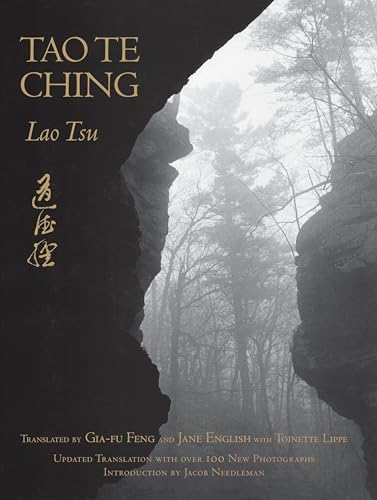
3. Lao-tzu's Taoteching, translated by Red Pine
Best for: Anyone who wants the verses alongside two thousand years of commentary
Red Pine, the pen name of translator Bill Porter, sets each verse beside selected commentaries drawn from across two millennia of Chinese readers. It is the edition for the traveller who wants to know not just what the line says but how generations of monks, poets and scholars have argued about it. Deeper and more demanding than Mitchell, and the best way to understand why a single chapter can support a dozen translations.
Check Price on Amazon →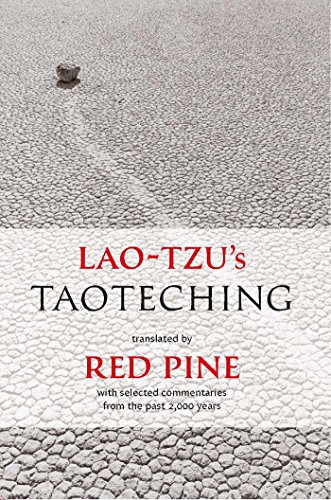
4. Tao Te Ching, translated by Stephen Addiss and Stanley Lombardo
Best for: Readers who want a spare, accurate translation close to the original
This Hackett Classics edition is prized for restraint. Addiss and Lombardo keep the language lean and let the verses breathe, with brush paintings between the chapters, and it stays closer to the literal sense than the more poetic versions. If you want to check what Lao Tzu actually wrote, rather than what a translator wished he had written, this is the reliable reference copy.
Check Price on Amazon →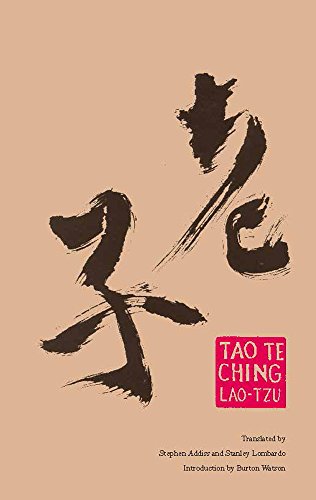
5. Tao Te Ching: Annotated and Explained
Best for: Readers who want facing-page notes that unpack each verse
Part of the SkyLight Illuminations series, this edition prints the translation on one side and plain explanation on the other, decoding the imagery, the paradoxes and the Taoist context as you read. It is the most hand-held of the lot for a newcomer who wants help, and a good companion to a sparer translation once the book has its hooks in you.
Check Price on Amazon →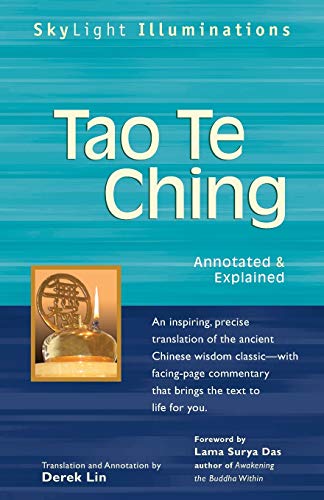
An honest note from our editors: because the Tao Te Ching is one short text with hundreds of translations, the choice is less about which book and more about which voice. There is no single authorised version, and that is the point. For the scholarly history of the text and the debate over who Lao Tzu was, A.C. Graham’s Disputers of the Tao is the standard reference, named here rather than carded because it sits outside our verified product slate this round.
Lao Tzu’s Travel Philosophy in His Own Words
Lao Tzu does not write about travel the way a guidebook does. He writes about it the way water moves: by going low, going around, and not forcing the way. The famous thousand-mile line is the clearest example, and it is worth slowing down on. The popular wording, a journey of a thousand miles begins with a single step, sounds like a motivational poster about taking action. The literal Chinese is quieter and stranger. It says the journey of a thousand miles begins beneath your feet. The starting point is not a heroic first stride into the distance. It is the ground you are already standing on. For a traveller that is a different instruction entirely: stop planning the whole route, and simply notice where you are.
The other genuine lines carry the same flavour. In chapter 27 he praises the traveller who leaves no trace, the one who passes through without grasping or marking the ground, which is the real verse hiding behind the famous good traveler paraphrase. In chapter 47 he turns tourism on its head, suggesting that the further you go the less you may actually know, a warning against mistaking distance for understanding. And in chapter 26 he sets stillness above restlessness, the calm centre that lets all the moving happen. Read together, they are less a travel itinerary than a way of moving through the world: lightly, without clinging, paying attention to the road under your feet rather than the flag at the far end.
Memorable Lao Tzu Quotes by Theme
The Line Everyone Knows (and What the Original Says)
The journey of a thousand miles begins with a single step.
— Lao Tzu Tao Te Ching, ch. 64 The genuine source of the most shared travel quote in the world. The popular English wording smooths the literal Chinese, which reads that the journey of a thousand miles begins beneath one's feet. Either way it is real, and chapter 64 is where to find it.

The Traveller Who Leaves No Trace
The skilful traveller leaves no traces of his wheels or footsteps.
— Lao Tzu Tao Te Ching, ch. 27 (James Legge translation) The real chapter 27 line, and the genuine root of the famous good traveler paraphrase. Lao Tzu praises the traveller who passes through lightly, without grasping or marking the ground, rather than the one fixed on a plan.
The Paradox of Going Far
Without going out of doors, one may know the whole world. The further one goes, the less one knows.
— Lao Tzu Tao Te Ching, ch. 47 (James Legge translation) Lao Tzu's challenge to the idea that distance equals understanding. It is a strange, useful line for any traveller who has collected stamps without collecting much else, and a reminder that the inward journey counts too.
Stillness, and Knowing the Self
He who knows others is wise; he who knows himself is enlightened.
— Lao Tzu Tao Te Ching, ch. 33 The most quoted of Lao Tzu's lines on self-knowledge, often rendered as knowing others is wisdom, knowing yourself is enlightenment. The destination he cares about most is inward.
The heavy is the root of the light; stillness is the lord of the restless.
— Lao Tzu Tao Te Ching, ch. 26 (James Legge translation) Lao Tzu sets a calm centre above constant motion. For the restless traveller it reads as quiet advice: the stillness you carry is what steadies all the moving.
Lines Lao Tzu Is Credited With but Did Not Write This Way
A good traveler has no fixed plans and is not intent upon arriving.
— A free translation, not Lao Tzu's literal words A loose rendering of Tao Te Ching ch. 27 (Gia-Fu Feng and Jane English, 1972) The second most shared Lao Tzu travel quote, and a genuine published translation rather than an invention, but a very free one. Lao Tzu's literal chapter 27 line is the skilful traveller leaves no traces, quoted above. Lovely words, just not quite his.
When I let go of what I am, I become what I might be.
— Misattributed to Lao Tzu No primary source in the Tao Te Ching Spread widely under Lao Tzu's name, but absent from the text in this form. It is a modern paraphrase in the Taoist spirit, popularised by later self-help writers. Treat it as inspired by Lao Tzu rather than written by him until a chapter turns up, which it has not.
A sourcing note, because this page exists to be the accurate one and our editorial standards ask for receipts: the Tao Te Ching is public domain, and every verified line above is tied to a numbered chapter and checked against the standard English texts, including the James Legge translation on Project Gutenberg and the Chinese Text Project. Translations vary line by line, which is why we cite the chapter rather than claim one perfect wording. The trap with Lao Tzu is that the paraphrases are so quotable they pass for scripture. When a quote site hands you a Lao Tzu line with no chapter, treat it as decoration until a verse turns up. More on how we verify lives is on our about us page.
For the full canon in context, browse the 100 best travel quotes mega-pillar, where Lao Tzu’s thousand-mile line anchors the reflective, philosophical end of the collection.
Other Voices in Stillness and the Open Road

Frequently Asked Questions about Lao Tzu
What is the most famous Lao Tzu travel quote?
A journey of a thousand miles begins with a single step, from the Tao Te Ching, chapter 64. It is genuine and one of the most quoted lines in the world. The literal Chinese reads that the journey begins beneath one’s feet, which is quieter and arguably better than the popular wording.
Did Lao Tzu say a good traveler has no fixed plans and is not intent on arriving?
Not in those literal words. That line is a free 1972 translation of chapter 27 by Gia-Fu Feng and Jane English, much loved but very loose. Lao Tzu’s literal chapter 27 line is that the skilful traveller leaves no traces, which carries the same idea more plainly.
Was Lao Tzu a real person?
It is genuinely uncertain. The traditional account in Sima Qian’s Records of the Grand Historian describes an archivist named Li Er at the Zhou court, but even that early source hedged. Many modern scholars treat Lao Tzu as legendary or as a name attached to a text that grew over time.
What is the Tao Te Ching and did Lao Tzu write it?
The Tao Te Ching is the founding text of Taoism, about five thousand characters of verse on the Tao, the Way. Tradition says Lao Tzu wrote it at a frontier gate before riding west into the mountains. Most scholars think it was shaped by several hands over a long period rather than written in one sitting.
What is the best translation of the Tao Te Ching to start with?
For readability, Stephen Mitchell’s version is the usual first choice. For accuracy, the Addiss and Lombardo Hackett edition stays close to the literal text, and Red Pine’s edition adds centuries of commentary. Because there is no single authorised version, comparing two translations is the best way to read it.
Lao Tzu’s Lasting Legacy for Travellers
Lao Tzu’s gift to travellers is the idea that the journey is something to move through lightly, not to conquer. A court archivist who left exactly one story behind, and that story a departure, he wrote the truest short guide we have to going well: start from the ground beneath your feet, leave no trace, do not mistake distance for understanding, and carry a stillness that steadies all the moving. The internet keeps handing his name slogans he never quite wrote. The real lines, tied to a numbered chapter, are quieter and far more useful. If you read one version of his book for the road in it, start with Stephen Mitchell, then sit with the verses about water and the Way. More sourced voices are waiting in our author bio library.