
George Bernard Shaw: Travel Quotes, the Contrarian on Country and Change, and the Lines He Never Wrote
Verified George Bernard Shaw travel quotes labelled as what they really are: lines from Man and Superman, Pygmalion and Caesar and Cleopatra with real sources, the viral fakes flagged honestly, and the books worth owning.

Search for George Bernard Shaw travel quotes turns up wearing two lines he never actually wrote. The Pinterest favourite, “Life isn’t about finding yourself, life is about creating yourself,” has no source in his sixty-odd plays, and the witticism about England and America being two countries separated by a common language was pinned to him decades after the joke first belonged to Oscar Wilde. What Shaw genuinely said about nations, foreignness and change is sharper than any poster. “All progress depends on the unreasonable man,” he wrote in Man and Superman in 1903, and he spent a lifetime proving it: the self-taught Dublin clerk who walked out on Ireland at twenty, conquered the London stage, won the Nobel Prize in 1925, and in his late seventies finally sailed around the world to see whether the customs of his own tribe really were the laws of nature. This page sources every quote properly. Each line below is either a verified Shaw line with a real play and year or flagged honestly as a fake, and the books worth owning are here with their receipts.
Early Life: From Dublin Clerk to London Provocateur
Shaw was born in Dublin on 26 July 1856 into a shabby-genteel Protestant family: a drink-prone father whose corn business was failing and a musical mother who eventually left for London to teach singing. His formal schooling was thin and he hated every minute of it, later insisting that his real education came from the National Gallery of Ireland and the public library rather than any classroom. At fifteen he was a junior clerk in a Dublin land agency, counting other people’s rents. In 1876, aged twenty, he followed his mother to London and effectively quit Ireland for good. The first decade there was a long apprenticeship in failure: five unpublished novels, a thin income propped up by his mother, and years spent in the British Museum Reading Room teaching himself economics, music and the art of argument. He found his feet as a critic, writing some of the sharpest music and theatre criticism in London, and as a Fabian socialist who could hold a street corner. The playwright came last. By the time Shaw wrote a line of dialogue worth keeping, he had already remade himself twice over, which is exactly the self-creation his most misquoted line only pretends to describe.
The Contrarian Who Finally Travelled
Shaw’s breakthrough came in his forties and never really stopped. Arms and the Man (1894) mocked military glory; Mrs Warren’s Profession (1893) was banned for years for naming the economics behind Victorian respectability; Caesar and Cleopatra (1898), Man and Superman (1903) and Major Barbara (1905) turned the West End stage into a debating chamber that happened to be funny. Pygmalion (1913) became his most popular play and, decades later, the musical My Fair Lady. In 1925 he won the Nobel Prize in Literature, and in 1938 he added an Academy Award for adapting Pygmalion to the screen, a double almost nobody else holds.
For most of his life Shaw was a homebody who distrusted the whole apparatus of tourism. Then, in his mid-seventies, he became a serious traveller almost overnight. He visited the Soviet Union in 1931 and met Stalin. In 1932 he and his wife Charlotte boarded the Empress of Britain for a round-the-world cruise that took in South Africa, India, Hong Kong, China, Japan, Hawaii and the United States, where he sparred with William Randolph Hearst at San Simeon. He sailed to New Zealand in 1934 and pronounced on its affairs with his usual cheerful certainty. The man who had spent decades arguing that you carry your own country’s prejudices wherever you go finally went, and reported back that most travellers simply confirm what they already believe. The warning, by then, was field-tested.
George Bernard Shaw’s Best Books and Editions
1. Pygmalion (Shaw)
Best for: First-time readers who want the play behind My Fair Lady
Shaw’s most popular comedy and the source of his real line about Englishmen and their accents. The Preface alone earns the cover price for its argument about class and speech. The standard first Shaw for good reason.
Check Price on Amazon →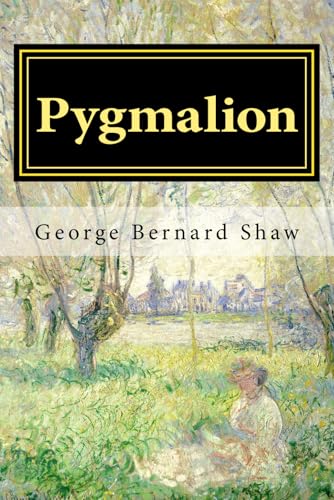
2. Man and Superman (Shaw)
Best for: Readers who came for the unreasonable-man maxim in full context
The play plus the appended Maxims for Revolutionists, where the verified progress quote actually lives. Shaw’s philosophy of the Life Force delivered as a comedy about a man fleeing marriage. Pocket-money price for the primary source.
Check Price on Amazon →
3. Saint Joan (Shaw)
Best for: Anyone who wants the play that sealed the Nobel Prize
Written two years before the 1925 Nobel and widely held to be his finest work: a clear-eyed Joan of Arc with no haloes and a famously brilliant Epilogue. The argument-play at full power.
Check Price on Amazon →
4. The Collected Works of George Bernard Shaw
Best for: Readers ready to own the plays, prefaces and essays in one file
Plays, novels, articles, letters and essays in a single inexpensive ebook. The prefaces are where Shaw does his real travelling, arguing his way around the world’s institutions without leaving his desk.
Check Price on Amazon →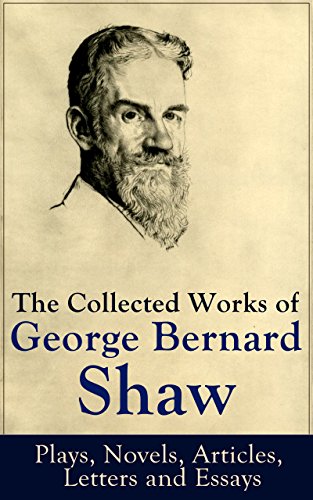
If you want the life rather than the plays, Michael Holroyd’s Bernard Shaw, available as a one-volume definitive edition, is the standard biography and the place to follow the Dublin clerk all the way to the round-the-world cruise.
His Travel Philosophy: The Unreasonable Man Abroad
Shaw’s travel philosophy starts from a refusal to be impressed by his own passport. “Patriotism,” he wrote in The World in 1893, “is, fundamentally, a conviction that a particular country is the best in the world because you were born in it.” For Shaw that conviction was the first thing a thinking traveller leaves at home. The customs you grew up with feel like nature only until you meet someone who grew up differently, which is the whole education of going abroad.
He put the sharpest version of it in Caesar and Cleopatra, where Caesar checks a courtier sneering at a foreigner: the man “is a barbarian, and thinks that the customs of his tribe and island are the laws of nature.” It is one of the oldest travel lessons there is, written for the stage in 1898 and aimed squarely at his own English audience, who knew exactly which island he meant.
Underneath the needling sat a serious idea about change. “Progress is impossible without change,” he wrote late in life, “and those who cannot change their minds cannot change anything.” Travel, for Shaw, was worth nothing if you came home with your mind exactly as you packed it. This is the same conclusion the better travel writers keep reaching from the other direction. Mark Twain built a career on puncturing the traveller who never updates his prejudices, Oscar Wilde turned the gap between cultures into epigrams, and Ralph Waldo Emerson warned that the giant of the self boards every ship you do. Shaw simply said it with more mischief. He did not promise that travel would improve you. He promised only that staying certain would not.
Memorable George Bernard Shaw Quotes by Theme
On Progress and Refusing to Conform
The reasonable man adapts himself to the world: the unreasonable one persists in trying to adapt the world to himself. Therefore all progress depends on the unreasonable man.
— George Bernard Shaw Man and Superman, Maxims for Revolutionists (1903) The line every motivational poster amputates to its last nine words. In full it is an argument for the awkward, the contrarian, and the traveller who refuses to settle for the world as handed to them.

Progress is impossible without change; and those who cannot change their minds cannot change anything.
— George Bernard Shaw Everybody's Political What's What? (1944) Written when Shaw was eighty-eight. The standing case for travel that actually rearranges you rather than confirming what you already thought.
On Foreignness and the Customs of Your Tribe
He is a barbarian, and thinks that the customs of his tribe and island are the laws of nature.
— George Bernard Shaw Caesar and Cleopatra, Act II (1898) Caesar correcting a courtier who sneers at a foreigner. The cleanest statement of cultural relativism in Shaw, usually shortened on travel pages to the idea that the customs of your tribe are not laws of nature.
Patriotism is, fundamentally, a conviction that a particular country is the best in the world because you were born in it.
— George Bernard Shaw The World (15 November 1893) The prejudice Shaw wanted every traveller to check at the departure gate.
On England and the English
It is impossible for an Englishman to open his mouth without making some other Englishman hate or despise him.
— George Bernard Shaw Pygmalion, Preface (1913) Shaw's real line about England and language, from the play that became My Fair Lady. Sharper, and verifiable, where the common-language quip pinned to him is neither.
The Lines He Never Wrote
Life isn't about finding yourself. Life is about creating yourself.
— Attributed to George Bernard Shaw (no source exists) Appears in none of his plays, prefaces or letters; Quote Investigator traces the idea to twentieth-century writers including Thomas Szasz and the journalist Sydney J. Harris The most shared "Shaw" line on the internet, and the one with the least evidence. A fine sentiment that several other people have a better claim to than Shaw, who never wrote it.
England and America are two countries separated by a common language.
— Attributed to George Bernard Shaw (not in his writings) The Oxford Dictionary of Quotations notes it does not appear in Shaw's work; the joke descends from Oscar Wilde's The Canterville Ghost (1887) Endlessly credited to Shaw, occasionally to Wilde or Churchill. Wilde wrote the original first: we have really everything in common with America nowadays, except, of course, language.
A note on sourcing, because this page exists to be the accurate one and our editorial standards demand receipts. The two lines above are the stickiest Shaw fakes, but they are not the only ones. The play quotes here are checked against the texts of Man and Superman, Pygmalion and Caesar and Cleopatra, and the misattributions against Quote Investigator and the Oxford Dictionary of Quotations. The pattern is the one we document for the famous misattributed Mark Twain sailing quote: the wittier the supposed author, the more orphan epigrams drift to their name. Shaw attracts them precisely because the real lines are good enough to be mistaken for the fakes.
For the full canon in context, browse the 100 best travel quotes mega-pillar, where Shaw keeps company with the wits and the wanderers.
Other Voices in Travel Wisdom
Frequently Asked Questions about George Bernard Shaw
What did George Bernard Shaw say about travel and other countries?
His sharpest verified line is from Caesar and Cleopatra (1898): a man “is a barbarian, and thinks that the customs of his tribe and island are the laws of nature.” He paired it with a dim view of patriotism, which he called the conviction that your country is best because you happened to be born in it (The World, 1893).
Did George Bernard Shaw say "life isn't about finding yourself, life is about creating yourself"?
No. The line appears in none of his plays, prefaces or letters, and quote researchers trace the idea to other twentieth-century writers rather than Shaw. It became a “Shaw quote” through repetition, not through anything he wrote.
Did Shaw say England and America are two countries separated by a common language?
Almost certainly not. The Oxford Dictionary of Quotations notes the line does not appear in his writings, and the joke descends from Oscar Wilde’s 1887 story The Canterville Ghost. It is one of the most confidently misattributed quotations in English.
Did George Bernard Shaw travel?
Late, and then enthusiastically. After decades as a London homebody he visited the Soviet Union in 1931, took a round-the-world cruise from 1932 that included South Africa, India, China, Japan and the United States, and sailed to New Zealand in 1934, mostly in his seventies.
What is the best George Bernard Shaw play to start with?
Start with Pygmalion, the comedy behind My Fair Lady and his most accessible work. If you came for the verified progress quote, read Man and Superman, whose appended Maxims for Revolutionists contains the line about the unreasonable man.
Shaw’s Lasting Legacy for Travellers
Shaw’s gift to travellers was permission to stay sceptical, including of themselves. He never sold the romance of the open road. He offered something more durable: the reminder that a journey only earns its cost if you let it change your mind, and that the customs you grew up calling normal are just one island’s habits seen from the inside. Read the verified lines, retire the posters, and treat every confident certainty you pack as the first thing worth questioning. If you read only one Shaw, make it Pygmalion. For more sourced voices, browse our author bio library, and our editorial team explains how every line earns its place.