Lewis Carroll: Travel Quotes, the 'Any Road' Line He Never Wrote, and What Alice Actually Says
Verified Lewis Carroll travel quotes labelled as what they really are: the genuine Cheshire Cat and Red Queen lines from the Alice books with chapter sources, the viral paraphrase flagged honestly, and the editions worth owning.
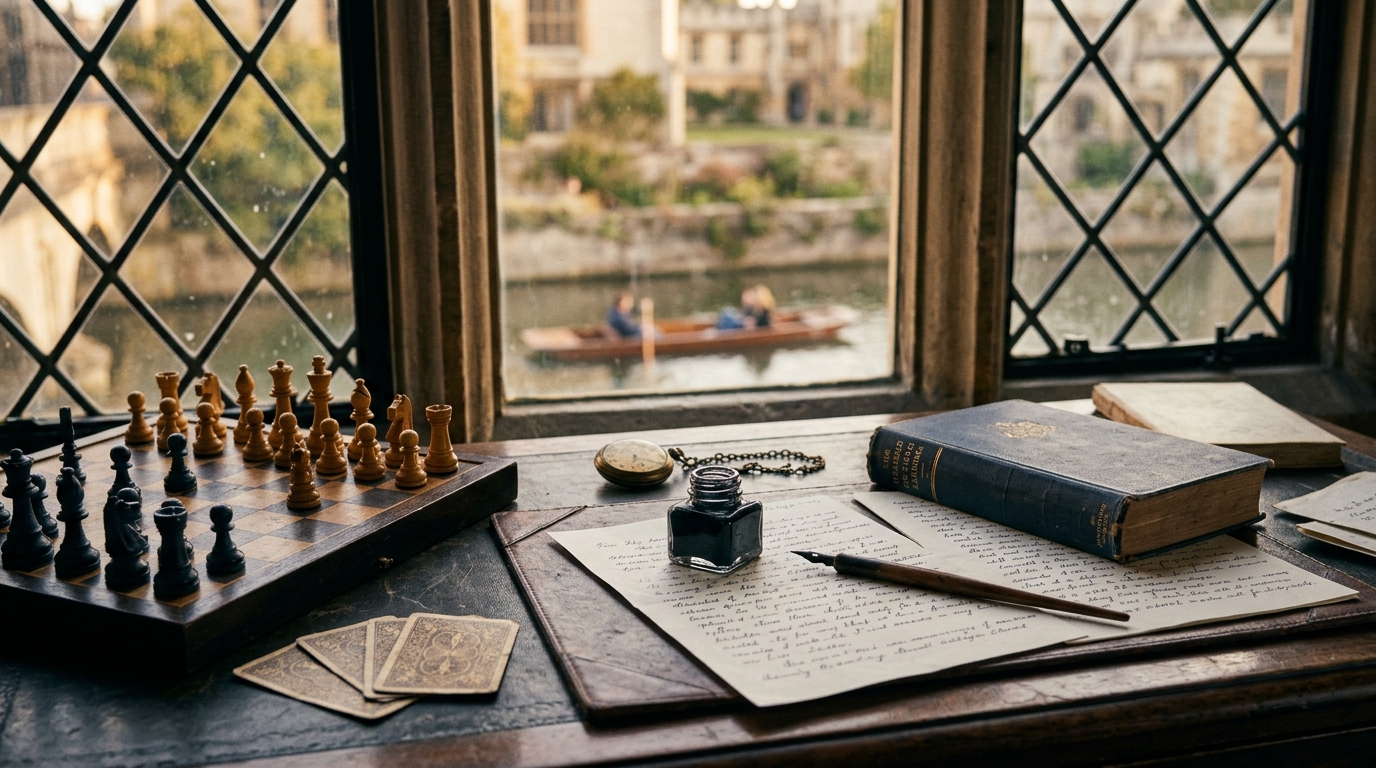
Search for Lewis Carroll travel quotes and the first line back is almost always the same: ‘If you don’t know where you are going, any road will get you there.’ It is pinned to his name on Facebook, Pinterest and a thousand inspirational walls. Here is the catch, and part of the reason this page exists. Carroll never wrote that sentence. It is a tidy paraphrase of something he genuinely did write, a strange and funny exchange between Alice and the Cheshire Cat, and the real version is better than the poster. Charles Lutwidge Dodgson, who published Alice’s Adventures in Wonderland in 1865 under the pen name Lewis Carroll, was an Oxford mathematics don who barely left England. Yet he wrote the most quoted journey in children’s literature: a girl who falls down a hole, walks through a mirror, and comes back a different person. This page sorts the real Carroll lines from the inventions. The verified quotes are cited to book and chapter, the famous fakes are flagged honestly, and the editions worth owning are listed with their receipts.
Early Life: a Stammering Don and a Boat on the Isis
Charles Lutwidge Dodgson was born in 1832 in the village of Daresbury, Cheshire, the eldest son of a clergyman and one of eleven children. He was brilliant at mathematics from the start, and that gift carried him to Christ Church, Oxford, where he then spent almost his entire adult life as a lecturer in mathematics. He took deacon’s orders, never married, and lived the quiet, ordered routine of a Victorian academic. He also stammered badly, which made adult company an effort and the company of children a relief, and he became one of the most accomplished portrait photographers of his age. (britannica.com)
The most famous fictional journey in the English language began on a real one. On a July afternoon in 1862, Dodgson took a rowing boat up the Isis, the stretch of the Thames that runs through Oxford, with a friend and the three young Liddell sisters. To pass the miles he invented a nonsense story about a girl named Alice who falls down a rabbit hole, and the real Alice, Alice Liddell, asked him to write it down. Three years later it became a book. The man who would teach a century of readers what a journey feels like had set his greatest one in motion over a few slow miles of river.
Career Milestones: Two Alice Books, a Snark, and a Double Life
Alice’s Adventures in Wonderland appeared in 1865 with John Tenniel’s now inseparable illustrations, and it was a success almost at once. Through the Looking-Glass, and What Alice Found There followed in 1871, building its whole journey on the moves of a chess game, with the Red Queen, Humpty Dumpty and the looking-glass world Alice steps into. The nonsense poem The Hunting of the Snark, an absurd sea voyage in search of an impossible creature, came in 1876, and the later novels Sylvie and Bruno arrived in his final years. (Wikipedia)
All the while he kept his day job. As Charles Dodgson he lectured in mathematics and published serious work on geometry and logic, and he guarded the line between that life and his Lewis Carroll fame carefully. The irony is hard to miss: the writer of literature’s best loved journeys was a homebody academic who left the country only once, on an 1867 trip across Europe to Russia. His travel writing is not a guidebook. It is a body of nonsense logic about what it means to move, to lose your way, to ask which road to take, and to arrive somewhere changed.
Lewis Carroll’s Best Books for Travellers, with Receipts
1. The Annotated Alice: 150th Anniversary Deluxe Edition
Best for: Readers who want both Alice books with every joke, pun and logic puzzle explained
Martin Gardner’s legendary annotations sit beside the full text of both Alice’s Adventures in Wonderland and Through the Looking-Glass, decoding the Victorian in-jokes, the chess problem, the mathematics and the wordplay that casual editions leave silent. If you read one Carroll book to understand why the journeys work the way they do, read this one. The deluxe hardcover is the definitive shelf copy.
Check Price on Amazon →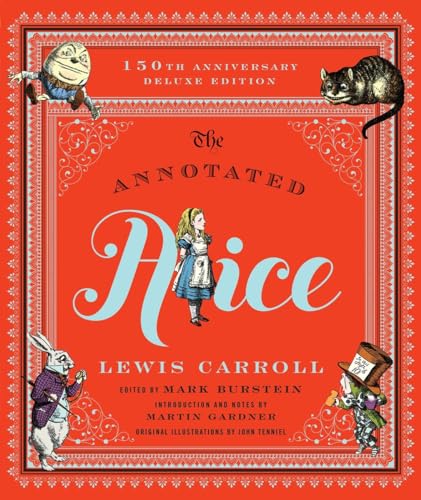
2. The Annotated Alice: The Definitive Edition
Best for: Anyone who wants the annotated experience in an affordable paperback
The same Gardner annotations and both novels in a Penguin paperback you can carry without guarding it. The best value way to read Alice properly, with the sources and the explanations that turn a children’s book into the strangest logic puzzle in English literature.
Check Price on Amazon →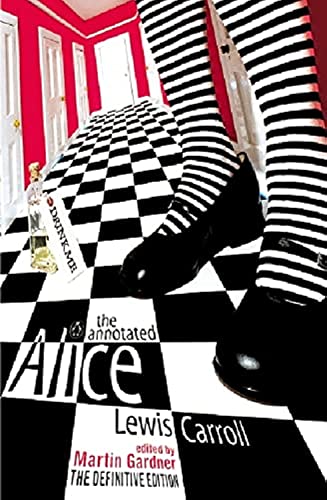
3. Alice's Adventures in Wonderland & Through the Looking-Glass
Best for: Travellers who just want the two complete stories on their phone
Both novels in one inexpensive volume with the original Tenniel illustrations, the cleanest way to have the Cheshire Cat exchange and the Red Queen’s race in your pocket. A reliable reading copy when you want the words, not the footnotes.
Check Price on Amazon →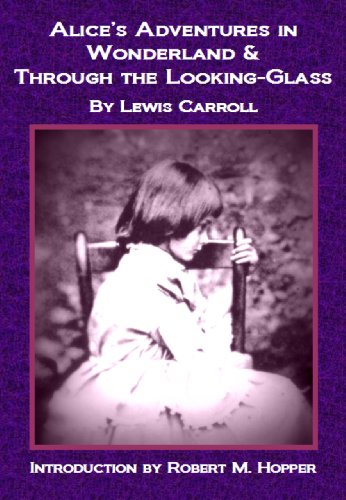
4. Best of Lewis Carroll (Deluxe Hardbound Edition)
Best for: Gift buyers who want a beautiful hardback of the three Alice titles
A cloth-bound collector’s edition gathering Alice’s Adventures in Wonderland, Through the Looking-Glass and What Alice Found There with the classic illustrations. A handsome object for a shelf, and the kind of book a young reader keeps for life.
Check Price on Amazon →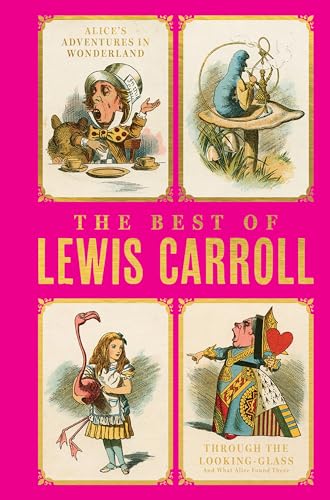
5. The Complete Works of Lewis Carroll
Best for: Readers ready for the Snark, the poems and the stranger late work
Everything in one place: both Alice books, The Hunting of the Snark, the Sylvie and Bruno novels, the poems and the nonsense verse, with the original illustrations and a life and letters appendix. The volume for the reader who finished Alice and wants the whole peculiar map of Carroll’s imagination.
Check Price on Amazon →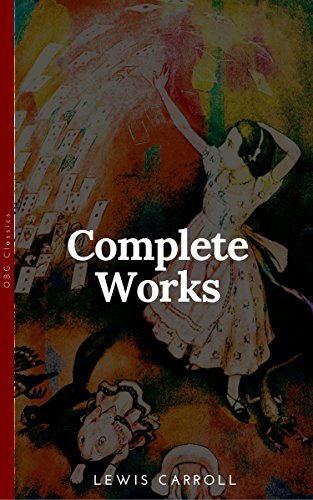
An honest note from our editors: the standard scholarly biography of Dodgson sits outside our verified product slate this round, so it gets a name rather than a card. Morton N. Cohen’s Lewis Carroll: A Biography is the fullest single account of the man behind the pen name if you want the life in detail.
Lewis Carroll’s Travel Philosophy in His Own Words
Carroll never wrote about travel the way a travel writer does. He wrote about it the way a logician does, by turning a journey into a puzzle and watching what happens to the traveller inside it. The clearest example is the exchange everyone half remembers. Alice, lost at a fork in the path, asks the Cheshire Cat which way she ought to go, and the Cat answers that it depends a good deal on where she wants to get to. When she says she does not much care, the Cat tells her that then it does not matter which way she walks. That is the joke the internet flattened into ‘any road will get you there,’ and the flattening loses the point. Carroll’s real line is not a shrug. It is a quiet argument that a journey only has a direction once you know what you are travelling toward.
The other genuine lines work the same way. The Red Queen, in Through the Looking-Glass, drags Alice along at a sprint and explains that in her country it takes all the running you can do just to stay in the same place, a sentence that has outlived its chessboard to describe every treadmill since. And at the end of Wonderland, when Alice tries to recount her adventures, she stops, because it is no use going back to yesterday: she was a different person then. That is Carroll’s deepest travel idea, hidden inside a children’s book. The journey is not the scenery. It is the way it leaves you unable to return as the person who set out. You do not have to fall down a rabbit hole to use it.
Memorable Lewis Carroll Quotes by Theme
The Line Everyone Paraphrases (Here Is the Real One)
Would you tell me, please, which way I ought to go from here? That depends a good deal on where you want to get to, said the Cat.
— Lewis Carroll Alice's Adventures in Wonderland (1865), ch. 6, 'Pig and Pepper' The genuine source of the famous fake. The viral version, 'if you don't know where you are going, any road will get you there,' never appears in Carroll. This is the real exchange between Alice and the Cheshire Cat, and it is the one worth quoting.
Movement and the Red Queen’s Race
It takes all the running you can do, to keep in the same place. If you want to get somewhere else, you must run at least twice as fast as that.
— Lewis Carroll Through the Looking-Glass (1871), ch. 2, 'The Garden of Live Flowers' The Red Queen, hauling Alice across the chessboard country. The line escaped the book long ago and now names everything from economics to evolution, but its first home is a nonsense race that goes nowhere very fast.
The Journey That Changes You
It's no use going back to yesterday, because I was a different person then.
— Lewis Carroll Alice's Adventures in Wonderland (1865), ch. 10, 'The Lobster Quadrille' Alice, trying to tell her adventures and finding she cannot start at the beginning. Carroll's quietest and best travel idea: a real journey leaves you unable to return as the person who set out.
Wonder, and Six Impossible Things
Why, sometimes I've believed as many as six impossible things before breakfast.
— Lewis Carroll Through the Looking-Glass (1871), ch. 5, 'Wool and Water' The White Queen's advice for keeping the imagination in training. For the traveller it reads as a small manifesto: the road rewards the person willing to believe the unlikely before the day has properly begun.
Begin at the beginning and go on till you come to the end: then stop.
— Lewis Carroll Alice's Adventures in Wonderland (1865), ch. 12, 'Alice's Evidence' The King of Hearts, giving the only travel directions that never fail. A straight line through a story, offered with total seriousness inside a book that refuses to walk one.
Lines Carroll Is Credited With but Did Not Write
If you don't know where you are going, any road will get you there.
— Misattributed to Lewis Carroll Not found in any work by Lewis Carroll The single most shared Carroll travel quote, and he never wrote it. It is a paraphrase of the Cheshire Cat exchange in Wonderland, chapter 6, smoothed into a slogan. Quote researchers trace the modern wording to twentieth-century retellings, not to Carroll's text. When you see it credited to Alice in Wonderland, reach for the real dialogue above.
Imagination is the only weapon in the war against reality.
— Misattributed to Lewis Carroll No primary source in any Carroll text Spread across quote sites under Carroll's name, but absent from his published work, his letters and his diaries. Treat it as decoration until a printed page turns up, which after many years of searching it has not.
A sourcing note, because this page exists to be the accurate one and our editorial standards ask for receipts: every verified line above is tied to a specific Alice book and chapter, checked against the public-domain texts on Project Gutenberg and the wording held in reference collections such as Britannica. The trap with Carroll is that his actual sentences are so quotable that paraphrases pass for the real thing. When a quote site hands you a Carroll line with no book and no chapter, treat the attribution as decoration until a page turns up. More on how we verify lives is on our about us page.
For the full canon in context, browse the 100 best travel quotes mega-pillar, where Carroll’s Cheshire Cat line holds down the playful, philosophical end of the collection.
Other Voices in Wonder and Wandering
Frequently Asked Questions about Lewis Carroll
What is the most famous Lewis Carroll quote?
The most quoted is the exchange between Alice and the Cheshire Cat about which way to go, from Alice’s Adventures in Wonderland (1865), chapter 6. It is usually paraphrased online as ‘if you don’t know where you are going, any road will get you there,’ but the real dialogue is sharper and is the version worth using.
Did Lewis Carroll say 'If you don't know where you are going, any road will get you there'?
No, not in those words. The sentence appears in none of his books. It is a modern paraphrase of the Cheshire Cat exchange in Wonderland, chapter 6, where the Cat tells Alice that the way she should go depends on where she wants to get to. Carroll wrote the idea, but not the slogan.
What is the Cheshire Cat's most iconic line?
The Cat’s exchange with Alice at the fork in the path: she asks which way she ought to go, and it answers that this depends a good deal on where she wants to get to. It is one of the most quoted passages in children’s literature and the genuine source of the famous travel paraphrase.
What are Lewis Carroll's best books?
Alice’s Adventures in Wonderland (1865) and Through the Looking-Glass (1871) are the essentials, followed by the nonsense poem The Hunting of the Snark (1876). For the full experience, The Annotated Alice pairs both novels with notes that decode the jokes, the chess game and the logic.
Did Lewis Carroll travel much?
Hardly at all. Charles Dodgson spent almost his whole life at Christ Church, Oxford, as a mathematics lecturer, and he left Britain only once, on an 1867 journey across Europe to Russia. The man who wrote literature’s most famous journeys was, in life, a settled academic homebody.
Lewis Carroll’s Lasting Legacy for Travellers
Carroll’s gift to travellers is the idea that a journey is something that happens to you, not just something you look at. A homebody don who barely crossed the Channel wrote the truest map we have of getting lost on purpose: ask where you want to get to before you choose a road, expect to run hard just to stay still, and accept that you cannot go back to yesterday because the trip has already made you someone else. The internet keeps handing his name a slogan he never wrote. The real lines, tied to a chapter and a page, are stranger and far more useful. If you read one of his books for the journey in it, make it Through the Looking-Glass, and watch a chess game become a life. More sourced voices are waiting in our author bio library.