Alain de Botton: Travel Quotes, the Lines He Gets Handed, and What He Actually Wrote
Verified Alain de Botton travel quotes cited to The Art of Travel by chapter, the two famous lines that belong to other writers flagged honestly, and the books worth owning.
Alain de Botton has the strangest quote problem in travel writing. Dead authors get fake lines invented for them; de Botton, very much alive and one of the most genuinely quotable travel philosophers working, gets other people’s lines pinned to his name. Pinterest’s favourite quote from The Art of Travel, the one about travel leaving you speechless and turning you into a storyteller, appears nowhere in the book. It is the line the internet usually hands to Ibn Battuta, and it is missing from his Rihla too. BrainyQuote’s top de Botton travel entry belongs to Pico Iyer. Meanwhile the man himself wrote an entire book about why we travel and why it disappoints us, then moved into Heathrow Terminal 5 for a week to test it. We built this page the way we wished quote pages worked when we first went looking: every line below is either verified and cited to The Art of Travel by chapter, or flagged as a swap with the real author credited. If you are sitting with the same questions his readers sit with, about whether the path you are on actually fits, his shelf was practically written for you.
Notes on ranking: we organised these by source and theme rather than popularity. A line earns its place here through chapter-level attribution to the published text, which is also why the two most viral candidates sit in the flagged section instead of the verified one.
Early Life: Zurich, Harrow, and the Education That Did Not Take
Alain de Botton was born in Zurich on 20 December 1969, the son of Gilbert de Botton, an Alexandria-born financier who co-founded Global Asset Management and was one of the more formidable money men of his generation (per alaindebotton.com and Wikipedia). The family wealth bought him the classic uprooting: shipped to boarding school in England at eight, then Harrow, then Gonville and Caius College, Cambridge, where he read history and found the syllabus less interesting than the library. He took a masters in philosophy at King’s College London, started a PhD at Harvard, and abandoned it when he realised the academy wanted papers and he wanted readers.
The first book arrived almost immediately. Essays in Love, published in 1993 when he was 23, narrated a single relationship with footnotes, diagrams and Roland Barthes jokes, and sold in numbers philosophy graduates are not supposed to see. The pattern of the whole career is visible in that debut: take the grand apparatus of European thought and aim it at the ordinary problems of an actual life. It took one more swerve for travel to enter the frame.
Career Milestones: From Proust to a Desk in Terminal 5
How Proust Can Change Your Life (1997) made him famous and invented his genre: the self-help book built from serious literature, written with a straight face and a raised eyebrow at the same time. The Consolations of Philosophy (2000) gave Socrates and Seneca the same treatment, and The Art of Travel (2002) turned the method on airports, hotel rooms and the gap between the holiday we imagine and the one we get. Status Anxiety (2004) and The Architecture of Happiness (2006) followed, and then de Botton did something almost no writer does: he built institutions to outlast the books. In 2008 he co-founded The School of Life in London, a global project teaching emotional education (per theschooloflife.com). In 2009 he founded Living Architecture, commissioning serious architects to build rentable holiday houses around Britain, which is his travel philosophy poured in concrete.
That same year came the most travel-credentialed stunt in modern letters: Heathrow Airport appointed him its first writer-in-residence, gave him a desk in the middle of Terminal 5 for a week, and got A Week at the Airport (2009) in return. The later books, The Course of Love (2016), The School of Life: An Emotional Education (2019) and A Therapeutic Journey (2023), round out a catalogue that reads like a syllabus for the examined life. He lives in London and works openly from his influences: Socrates, Seneca, Montaigne, Nietzsche and, above all, Proust.
Alain de Botton’s Best Books and Editions
1. The Art of Travel (Vintage International)
Best for: Anyone who wants the source text behind every verified quote on this page
The category-defining book on why we travel and why it disappoints us. Anticipation, the exotic, curiosity and receptivity, each chapter pairs a journey with a thinker. Every verified line below lives in here.
Check Price on Amazon →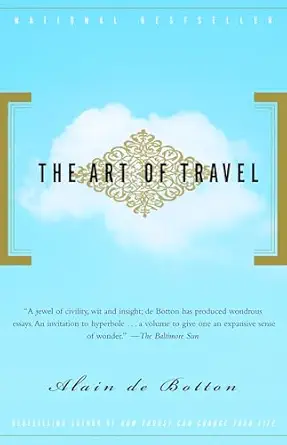
2. How Proust Can Change Your Life
Best for: Readers coming from our Marcel Proust bio, or heading there next
The 1997 breakthrough that invented his genre: Proust read as practical advice on noticing your own life. The natural companion to the new-eyes idea travellers keep reaching for.
Check Price on Amazon →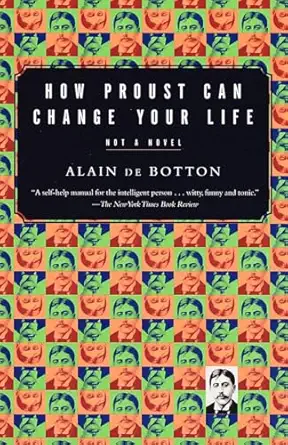
3. The School of Life: An Emotional Education
Best for: The full synthesis of the project he built after the travel book
Twenty years of the de Botton method in one volume, from self-knowledge to calm. The highest-rated book on his shelf and the clearest statement of what all the journeys were for.
Check Price on Amazon →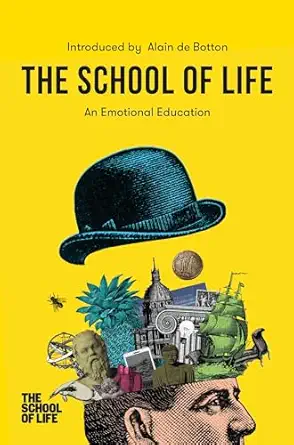
4. The Consolations of Philosophy (Vintage International)
Best for: Meeting the thinkers he travels with, from Socrates to Nietzsche
Six philosophers applied to six ordinary forms of unhappiness. The book to read if you want to know whose shoulders The Art of Travel stands on.
Check Price on Amazon →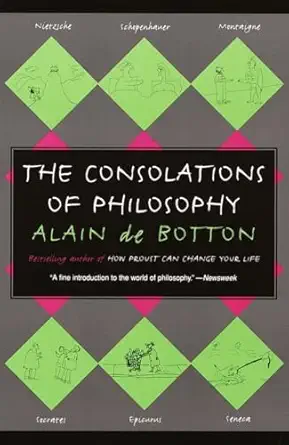
5. The Course of Love: A Novel
Best for: Long flights, and anyone who liked Essays in Love
His return to fiction after two decades: a marriage examined the way his essays examine a journey. The most read book on this list and the easiest to finish in one trip.
Check Price on Amazon →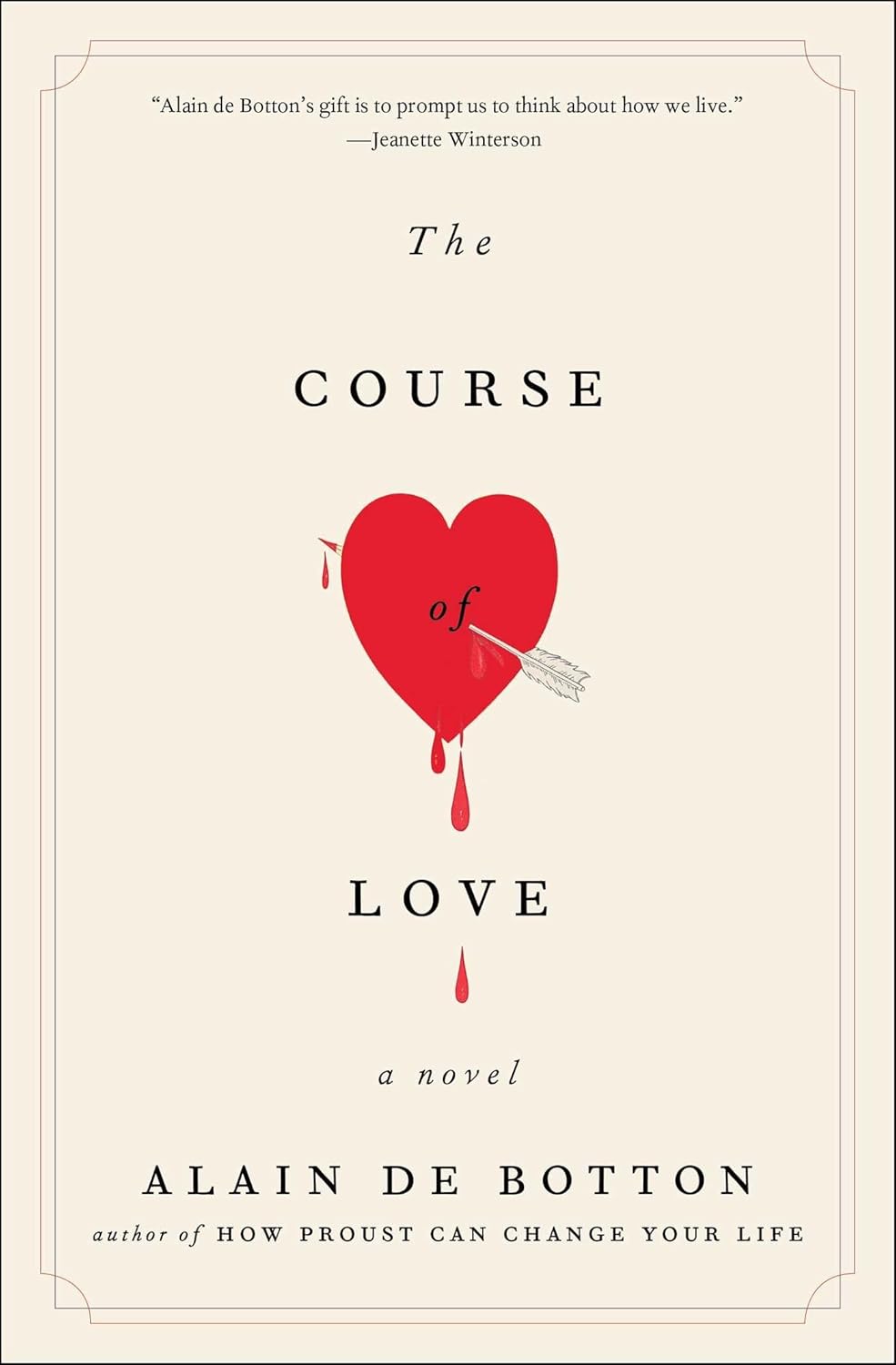
An honest stocking note from our editors: three more titles earned their reputations without making our verified product slate this round, so they get names instead of cards. Status Anxiety is the one for the reader questioning the conventional path, The Architecture of Happiness is the book that built Living Architecture, and A Week at the Airport is the slim Heathrow residency diary that doubles as the best airport reading ever written about airport reading.
His Travel Philosophy: Mindset Over Destination
The Art of Travel opens with the argument the whole book hangs on: the journeys we imagine are edited, and the journeys we take are not. In Chapter 1, On Anticipation, de Botton follows a winter daydream of Barbados into the actual trip, where the weather is perfect and the mind that came along is the same anxious one that booked the tickets. The pleasure of a journey, he argues there, depends more on the mindset we travel with than on the destination itself. It is the most useful sentence in modern travel writing and it costs nothing to apply.
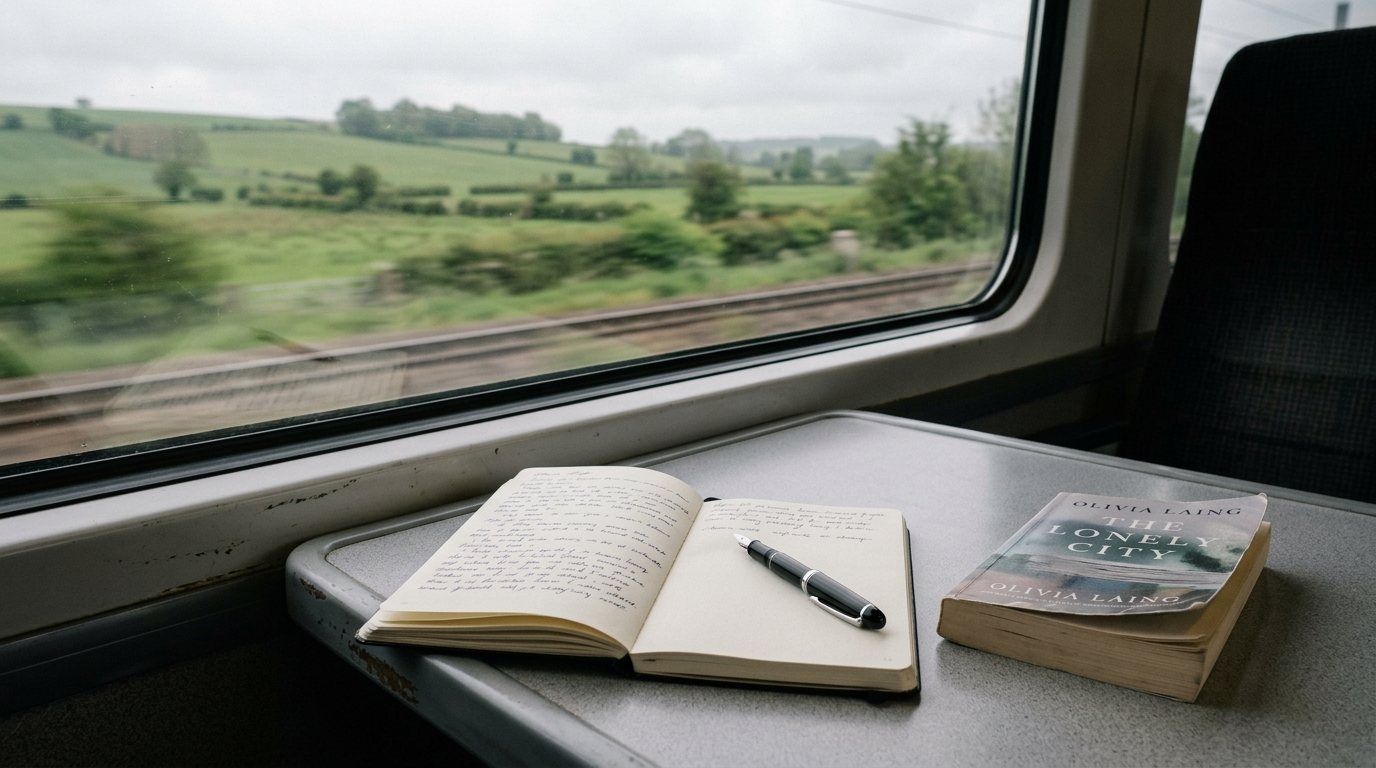
Journeys are the midwives of thought. Few places are more conducive to internal conversations than a moving plane, ship or train.Alain de Botton, The Art of Travel (2002), Chapter 2, On Travelling Places
That passage from Chapter 2, On Travelling Places, is the signature de Botton line, and it explains why his best writing happens in the in-between zones travellers usually resent: departure lounges, service stations, window seats. Two of the books that first sent us down this road, Tim Ferriss’s The 4-Hour Work Week and Rolf Potts’s Vagabonding, argue that travel can restructure a life; de Botton supplies the quieter prior step, that a moving train can restructure a thought. Where Marcel Proust gave travellers the idea of seeking new eyes rather than new landscapes, de Botton wrote the book on what those eyes are for, and he spent a week at a Terminal 5 desk checking the theory against delayed flights and reunions at arrivals. Even his scepticism has better credentials than most influencers’ enthusiasm, which puts him in a long tradition of travel doubters that runs back through Mark Twain.
Memorable Alain de Botton Quotes by Theme
From The Art of Travel
Journeys are the midwives of thought. Few places are more conducive to internal conversations than a moving plane, ship or train.
— Alain de Botton The Art of Travel (2002), Chapter 2, On Travelling Places The verified signature line. Goodreads carries it correctly but without the chapter; the sourcing matters because so much else under his name is borrowed.
What we find exotic abroad may be what we hunger for in vain at home.
— Alain de Botton The Art of Travel (2002), Chapter 3, On the Exotic From the Flaubert chapter, written about Amsterdam doorways rather than anywhere tropical. The most quietly devastating line in the book.
The pleasure we derive from journeys is perhaps dependent more on the mindset with which we travel than on the destination we travel to.
— Alain de Botton The Art of Travel (2002), Chapter 1, On Anticipation The thesis of the whole book, stated in its opening movement. The travelling mindset he describes is receptivity, humility and curiosity about the unglamorous.
On Mindset and the Self
A danger of travel is that we see things at the wrong time, before we have had an opportunity to build up the necessary receptivity.
— Alain de Botton The Art of Travel (2002), from the chapters on art and seeing His argument that new information slides off an unprepared traveller. We cite this one to the book rather than a single chapter because editions paginate the art chapters differently.
It is not necessarily at home that we best encounter our true selves.
— Alain de Botton The Art of Travel (2002), Chapter 2, On Travelling Places The thought that finishes the midwives passage: the furniture of home insists we are the person who lives there, and the anonymous hotel room makes no such claim.
The Lines He Never Wrote
Travelling, it leaves you speechless, then it turns you into a storyteller.
— Commonly pinned to Alain de Botton's The Art of Travel Appears nowhere in The Art of Travel. Usually credited to Ibn Battuta, and it is absent from his Rihla as well Pinterest's top de Botton board leads with this line. It is the same orphan quote our Ibn Battuta page corrects from the other direction: a modern line that picked up two famous names on its travels.
Travel is a lot like love, mostly because it is a heightened state of awareness, in which we are mindful, receptive, undimmed by familiarity and ready to be transformed.
— Pico Iyer, mis-credited to Alain de Botton Why We Travel by Pico Iyer (Salon, 18 March 2000). Not a de Botton line BrainyQuote's top-ranking de Botton travel entry. We verified the wording against Iyer's essay in the Salon archive, where the thought ends: that is why the best trips, like the best love affairs, never really end.
A sourcing note, because this page exists to be the accurate one and our editorial standards demand receipts: both swaps above follow the pattern that attribution checkers at Quote Investigator and WIST document across famous names, where a line that sounds vaguely like an author’s themes gets pasted onto their face and inherits the credibility. De Botton’s case is unusual only in direction: a living writer with verifiable books absorbing other people’s lines, the same poster economy that hands Oscar Wilde jokes he never made and Ibn Battuta a quote from no century he lived in. Aggregators like BrainyQuote, Pinterest and Goodreads are where the lines spread; they are never the source. When a quote carries no book, chapter or essay underneath it, treat the attribution as decoration.
For the verified canon in one place, browse the 100 best travel quotes mega-pillar, where the midwives line holds down the philosophy end of the list.
Other Voices in Philosophy and Wisdom
Frequently Asked Questions about Alain de Botton
What is Alain de Botton's most famous travel quote?
The verified signature line is from The Art of Travel (2002), Chapter 2: ‘Journeys are the midwives of thought. Few places are more conducive to internal conversations than a moving plane, ship or train.’ The two lines more commonly shared under his name, about travel making you a storyteller and travel being like love, belong to other writers.
Did Alain de Botton write the quote about travel leaving you speechless?
No. The storyteller line appears nowhere in The Art of Travel or any of his books. It is usually attributed to the 14th-century traveller Ibn Battuta, and it does not appear in his Rihla either. It is a modern orphan quote that has collected two famous names.
What is The Art of Travel about?
It is a book of philosophy about why we travel and why the trip rarely matches the brochure in our heads. Each chapter pairs a place with a guide, from Flaubert on the exotic to Van Gogh on seeing, and argues that the travelling mindset of receptivity and curiosity matters more than the destination.
What does Alain de Botton do now?
He runs the projects he built after the books made him famous. He co-founded The School of Life in London in 2008, which teaches emotional education worldwide, and founded Living Architecture in 2009, which commissions architect-designed holiday houses around Britain. He continues to publish, most recently A Therapeutic Journey (2023), and lives in London.
Where do I start reading Alain de Botton?
Start with The Art of Travel (2002) if you came here for the journeys. How Proust Can Change Your Life (1997) is the breakthrough book and the funniest, and The School of Life: An Emotional Education (2019) is the mature summary of the whole project. The Course of Love (2016) is the one to pack for a long flight.
De Botton’s Lasting Lesson for Travellers
De Botton’s gift to travellers is permission to lower the stakes. The trip does not have to change your life; it has to change your noticing, and that can happen on a delayed train as easily as in Barbados. He is the rare quotable philosopher who built his credentials in the places travel snobs skip, the departure lounge and the motorway service station, and his receptivity argument doubles as a quiet warning to anyone racing through a bucket list: seeing things before you are ready to see them is a way of not seeing them at all. The internet keeps handing him other people’s travel lines, which is its own backhanded compliment, because the lines he actually wrote are better. Sit with the one that names something you have felt at a departure gate, then follow it back to its chapter. More sourced voices are waiting in our author bio library, and you can read how we verify every attribution at our about us page.

More Quote Collections Worth Your Time
{"@context":"https://schema.org”,”@type”:”Person”,”name”:”Alain de Botton","birthDate":"1969-12-20","birthPlace":{"@type":"Place","name":"Zurich, Switzerland"},"nationality":"Swiss-British","jobTitle":["Author","Philosopher"],"knowsAbout":["The Art of Travel","The School of Life","How Proust Can Change Your Life","Status Anxiety","Living Architecture"],"sameAs":["https://en.wikipedia.org/wiki/Alain_de_Botton”,”https://www.alaindebotton.com/”,”https://www.theschooloflife.com/"]}
{"@context":"https://schema.org”,”@type”:”ItemList”,”name”:”Verified Alain de Botton Travel Quotes","numberOfItems":5,"itemListElement":[{"@type":"ListItem","position":1,"item":{"@type":"Quotation","text":"Journeys are the midwives of thought. Few places are more conducive to internal conversations than a moving plane, ship or train.","creator":{"@type":"Person","name":"Alain de Botton"},"citation":"The Art of Travel (2002), Chapter 2, On Travelling Places"}},{"@type":"ListItem","position":2,"item":{"@type":"Quotation","text":"What we find exotic abroad may be what we hunger for in vain at home.","creator":{"@type":"Person","name":"Alain de Botton"},"citation":"The Art of Travel (2002), Chapter 3, On the Exotic"}},{"@type":"ListItem","position":3,"item":{"@type":"Quotation","text":"The pleasure we derive from journeys is perhaps dependent more on the mindset with which we travel than on the destination we travel to.","creator":{"@type":"Person","name":"Alain de Botton"},"citation":"The Art of Travel (2002), Chapter 1, On Anticipation"}},{"@type":"ListItem","position":4,"item":{"@type":"Quotation","text":"A danger of travel is that we see things at the wrong time, before we have had an opportunity to build up the necessary receptivity.","creator":{"@type":"Person","name":"Alain de Botton"},"citation":"The Art of Travel (2002)"}},{"@type":"ListItem","position":5,"item":{"@type":"Quotation","text":"It is not necessarily at home that we best encounter our true selves.","creator":{"@type":"Person","name":"Alain de Botton"},"citation":"The Art of Travel (2002), Chapter 2, On Travelling Places"}}]}