Eleanor Roosevelt: Travel Quotes, the Life-as-an-Adventure Creed, and the Lines She Never Said
Verified Eleanor Roosevelt travel quotes labelled as what they actually are: real lines from You Learn by Living and her autobiography with sources, the viral fakes flagged honestly, and the five books worth owning.
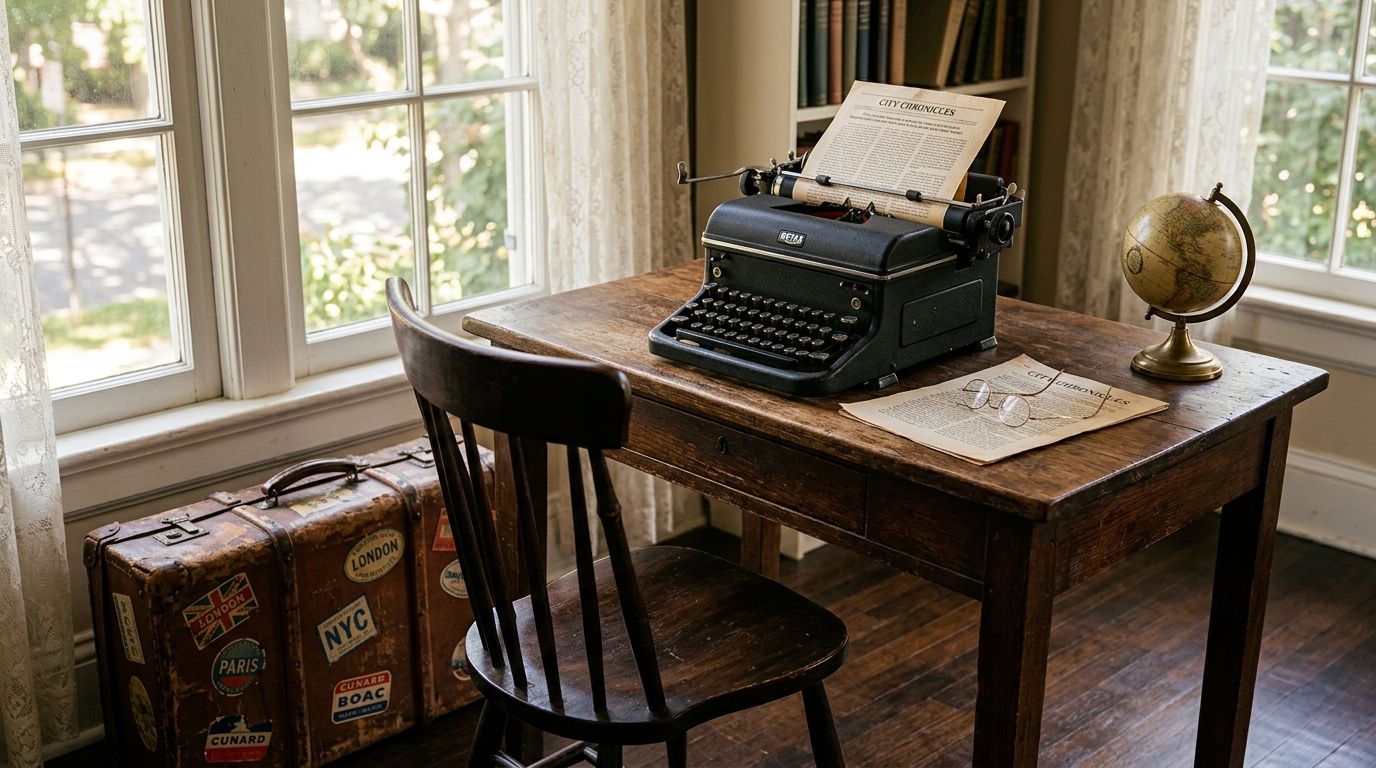
Search for travel quotes and Eleanor Roosevelt is everywhere: “The future belongs to those who believe in the beauty of their dreams.” “Do one thing every day that scares you.” Here is the thing, and the reason this page exists: there is no evidence she said either of them. Quote researchers have combed her books, columns and speeches; the dreams line has no citation anywhere, and the scares line traces to a 1997 newspaper column written 35 years after her death. What makes the fakes so unnecessary is that the real Eleanor Roosevelt out-travelled almost everyone who quotes her. The shy New York orphan who married her cousin Franklin became the most travelled First Lady in American history, logging roughly 40,000 miles a year while her husband governed from a wheelchair, flying 23,000 miles across the wartime Pacific in 1943, and then spending her widowhood circling the planet for the United Nations. She also wrote the real versions of every fake attached to her name, with receipts. So this page does the sourcing properly: every quote below is a verified line with a real source or flagged honestly as a fabrication, and the five books worth owning are here with their receipts.
Early Life and the Headmistress Who Taught Her to Travel
Anna Eleanor Roosevelt was born in New York City on 11 October 1884 into the Oyster Bay branch of the Roosevelt clan, niece of Theodore, and orphaned by ten. The timid, serious girl was shipped to Allenswood, a boarding school outside London, in 1899, and that is where the traveller was built. The headmistress, Marie Souvestre, took the teenager across Europe in the school holidays and ran the trips like a masterclass in independence: Eleanor booked the trains, carried the tickets, and learned to arrive in a strange city without a script. She later counted Souvestre among the most important influences of her life, and you can draw a straight line from those journeys to the woman who would one day land unannounced on Pacific airstrips. She returned to New York at 18, married her distant cousin Franklin Delano Roosevelt in 1905, and spent the next two decades raising five children while his career climbed toward the White House.
The Travelling First Lady: 40,000 Miles a Year
When polio took Franklin’s legs in 1921, Eleanor became his eyes and ears, and after 1933 she turned the role of First Lady into a travel job. She averaged roughly 40,000 miles a year inspecting coal mines, relief projects and military bases, so relentlessly that the press corps nicknamed her Eleanor Everywhere and the Secret Service code-named her Rover. She wrote it all down in My Day, a syndicated column she filed six days a week from 1936 until 1962, often from a train seat or an airfield. The boldest trip came in 1943: a five-week, 23,000-mile tour of the wartime Pacific as a Red Cross representative, visiting 17 islands including Guadalcanal and hundreds of thousands of wounded servicemen, with a travel diary in hand the whole way (the Eleanor Roosevelt Papers Project at George Washington University publishes the excerpts). After Franklin’s death she kept going: US delegate to the new United Nations, chair of the committee that drafted the Universal Declaration of Human Rights in 1948, and a global circuit rider for the rest of her life. The FDR Presidential Library calls her one of the most widely admired and powerful women of her century. She earned the title First Lady of the World partly by air miles.
Eleanor Roosevelt’s Best Books and Editions
1. You Learn by Living: Eleven Keys for a More Fulfilling Life
Best for: Readers who came for the real versions of the famous quotes
Her 1960 distillation of a lifetime, and the primary source for the fear passage and the purpose-of-life line on this page. Eleven short chapters of plain, bracing advice from a woman who field-tested all of it.
Check Price on Amazon →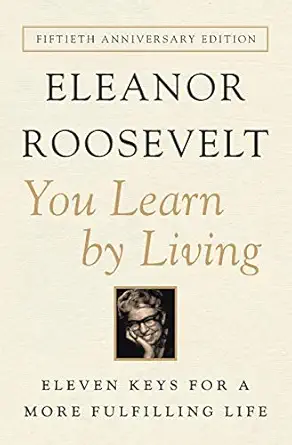
2. The First Lady of World War II (Shannon McKenna Schmidt)
Best for: The 1943 Pacific tour as a full narrative adventure
The book-length account of her daring 23,000-mile wartime journey to the Pacific frontlines: the disguised itinerary, the Guadalcanal landing, the wards of wounded men she refused to skip. Reads like the travel epic it was.
Check Price on Amazon →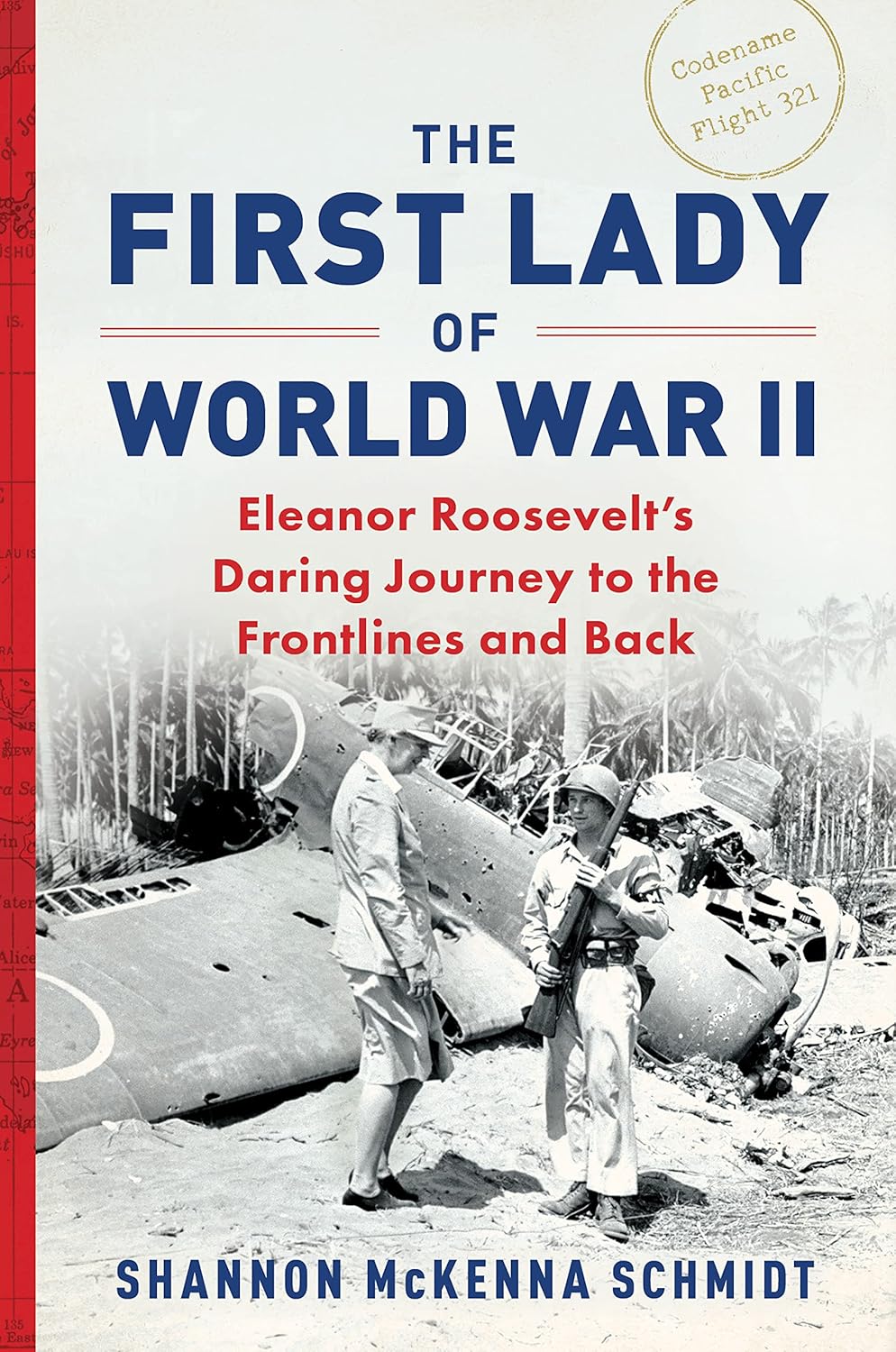
3. Eleanor: A Life (David Michaelis)
Best for: The whole life in one definitive modern volume
Michaelis’s acclaimed single-volume biography: the lonely childhood, the Souvestre years, the marriage, the miles, the UN. The standard modern account of how the shy orphan became the century’s most consequential First Lady.
Check Price on Amazon →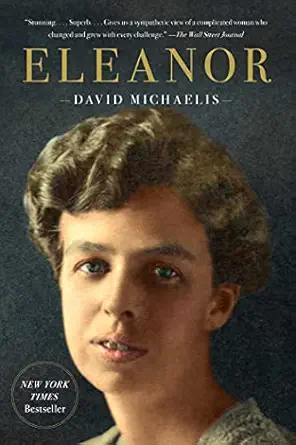
4. If You Ask Me: Essential Advice from Eleanor Roosevelt
Best for: Her unfiltered voice, one question at a time
Selections from the advice column she ran for over two decades, answering everything from marriage to McCarthyism. The closest thing in print to sitting across a table from her, and a goldmine of correctly sourced lines.
Check Price on Amazon →
5. Who Was Eleanor Roosevelt? (Gare Thompson)
Best for: Kids, classrooms and the gift shelf
The illustrated young-readers biography that follows her from lonely childhood to the United Nations. The painless way to hand an eight-year-old one of history’s great examples of courage in motion.
Check Price on Amazon →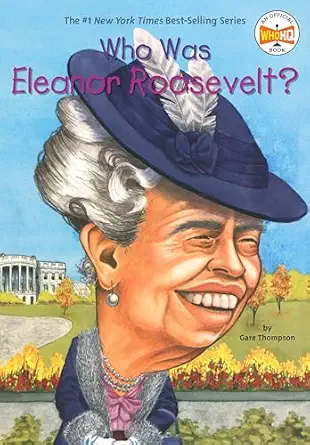
Her Travel Philosophy: Courage Over Competence
Eleanor Roosevelt’s travel philosophy is really a courage philosophy with a boarding pass. The core of it sits in You Learn by Living, the advice book she published at 76: growth comes from doing the thing you think you cannot do, and experience is for tasting to the utmost, not rationing. Her autobiography sharpens the same idea into the best one-line travel creed in this library: do not stop thinking of life as an adventure, because security is not the point, the challenge is. She did not write those lines from an armchair. The woman who was terrified of public speaking, of the water, of flying, methodically did each scary thing until it stopped being scary, then flew with Amelia Earhart in an evening gown for fun.
What separates her from the poster-quote version of herself is that the real philosophy has teeth. The full passage in You Learn by Living is about looking fear in the face, not about collecting passport stamps, and she applied it to coal mines and war zones rather than beaches. Her travel was purposive: go where the need is, look closely, write it down, report back. Every modern argument that travel should change you rather than merely entertain you, the case made by Rick Steves in every guidebook, is her doctrine with better luggage. And her insistence on facing what frightens you on the road puts her shoulder to shoulder with Robert Louis Stevenson, who travelled for the affair of moving, even though she would have asked him what useful thing he noticed along the way.
There is also a quieter thread for the solo travellers. Eleanor travelled without Franklin for most of her public life, frequently against the advice of nearly everyone, and her brand of unaccompanied competence made her the patron saint of every woman who has boarded a long-haul flight alone with a notebook and a plan. If that is your lane, our solo travel quotes collection keeps her in good company.
Memorable Eleanor Roosevelt Quotes by Theme
Fear and the Thing You Cannot Do
You gain strength, courage and confidence by every experience in which you really stop to look fear in the face. You are able to say to yourself, 'I have lived through this horror. I can take the next thing that comes along.' You must do the thing you think you cannot do.
— Eleanor Roosevelt You Learn by Living (1960) The real version of every courage meme attached to her name, from the book she published at 76. The FDR Presidential Library leads its own biography of her with this passage.

The purpose of life is to live it, to taste experience to the utmost, to reach out eagerly and without fear for newer and richer experience.
— Eleanor Roosevelt You Learn by Living (1960) Verified to the same 1960 book. Provenance note: some editions render the opening as "The purpose of life, after all, is to live it," so wording varies slightly between printings. The thought does not.
Life as an Adventure
Do not stop thinking of life as an adventure. You have no security unless you can live bravely, excitingly, imaginatively; unless you can choose a challenge instead of competence.
— Eleanor Roosevelt The Autobiography of Eleanor Roosevelt (1961) The closest thing she wrote to a travel creed, from the single-volume autobiography she assembled the year before she died. Challenge over competence is the whole itinerary in five words.
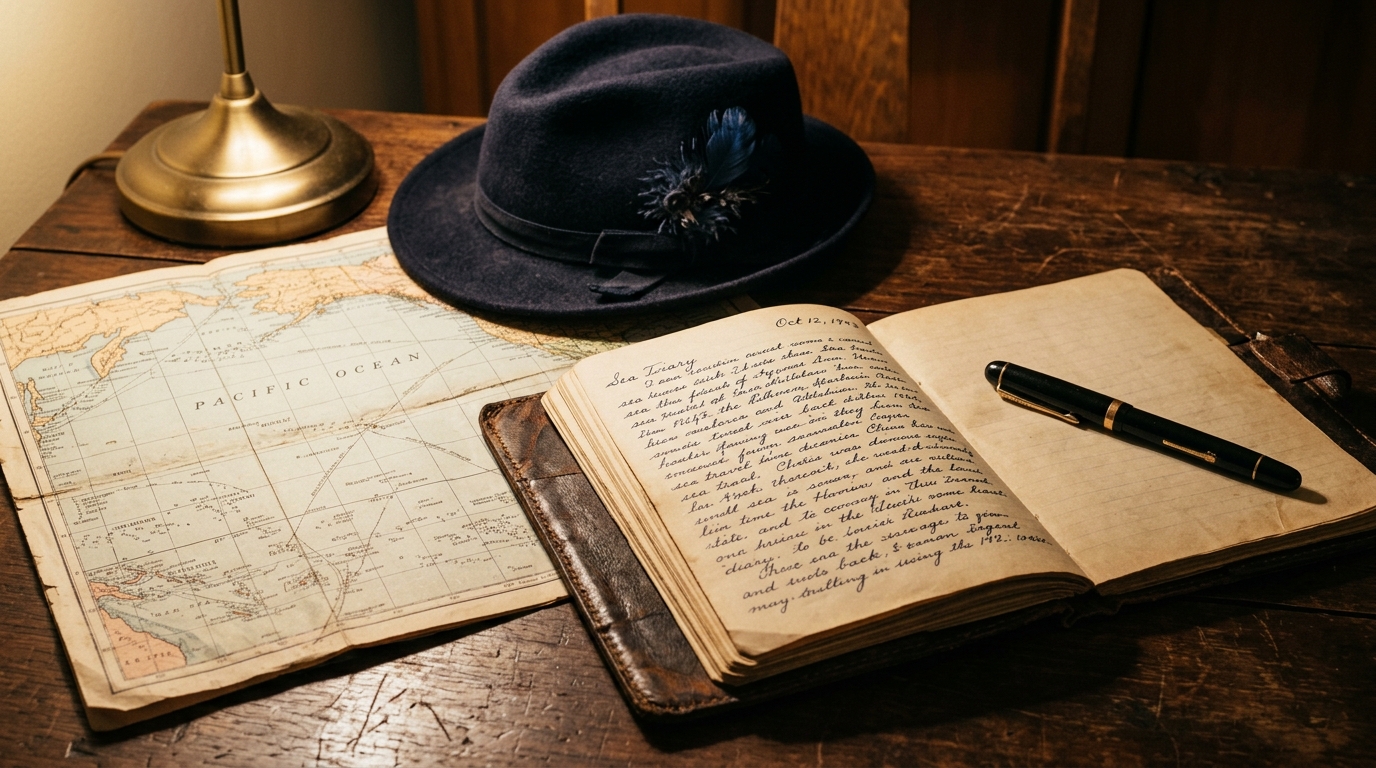
I was obliged to go without any rubbers or rain coat and obliged to wear my feathered hat. I must make the inspection oblivious of weather.
— Eleanor Roosevelt Travel diary, 1943 Pacific tour (Eleanor Roosevelt Papers Project, George Washington University) A field note from the 23,000-mile wartime Pacific tour, preserved in her own travel diary. Every traveller who has done the big day in the wrong shoes knows this sentence from the inside.
The Lines She Never Said
The future belongs to those who believe in the beauty of their dreams.
— Attributed to Eleanor Roosevelt (no source exists) Appears nowhere in her books, columns or speeches The most famous "Eleanor Roosevelt quote" on the internet, and it is untraceable: Quote Investigator searched her works and reported it could not find a solid citation. Even Goodreads files it under misattributed. A lovely sentiment; not her sentence on any evidence anyone has produced.
Do one thing every day that scares you.
— Attributed to Eleanor Roosevelt (no source exists) Closest traced origin is Mary Schmich's 1997 Chicago Tribune column, 35 years after Roosevelt's death Quote researchers trace this one to the famous 1997 "Wear Sunscreen" column, yet it tops Google listicles under Roosevelt's name. Her actual version is better and verified: "You must do the thing you think you cannot do."
A sourcing note, because this page exists to be the accurate one and our editorial standards demand receipts: one more famous line deserves an honest asterisk. “No one can make you feel inferior without your consent” expresses an idea she did hold and wrote around, and it grew out of a 1935 incident she described, but the polished wording cannot be found verbatim in her published writings; it was popularised by a Reader’s Digest attribution in 1940. We quote it as attributed, not verified, which is the same standard we apply to the famous misattributed Mark Twain sailing quote. The pattern never changes: the bigger the legend, the stickier the fake. The difference here is that Roosevelt’s verifiable lines, checkable against You Learn by Living and the GWU Eleanor Roosevelt Papers Project, beat the fabrications on their own merits.
For the full canon in context, browse the 100 best travel quotes mega-pillar, where the life-as-an-adventure line holds down the courage end.
Other Voices in Travel Wisdom
Frequently Asked Questions about Eleanor Roosevelt
What is Eleanor Roosevelt's most famous travel quote?
Her most quotable verified travel line is from her 1961 autobiography: “Do not stop thinking of life as an adventure. You have no security unless you can live bravely, excitingly, imaginatively.” The courage passage from You Learn by Living (1960), ending “You must do the thing you think you cannot do,” runs it close and is the source most often mangled into memes.
Did Eleanor Roosevelt say "the future belongs to those who believe in the beauty of their dreams"?
There is no evidence she did. Quote Investigator searched her books, columns and speeches and reported it was unable to find a solid citation, and Goodreads tags the line as misattributed. It circulates under her name because it sounds like her, which is exactly how misattribution works.
Did Eleanor Roosevelt say "do one thing every day that scares you"?
No primary source exists. The closest traced origin is Mary Schmich’s famous 1997 “Wear Sunscreen” column in the Chicago Tribune, written 35 years after Roosevelt died. Her verified equivalent, from You Learn by Living, is “You must do the thing you think you cannot do.”
How much did Eleanor Roosevelt actually travel?
More than any First Lady before her: roughly 40,000 miles a year during the White House period, earning the press nickname Eleanor Everywhere. Her 1943 wartime Pacific tour alone covered about 23,000 miles and 17 islands including Guadalcanal, and her post-war United Nations work kept her circling the globe until her death in 1962.
What is the best Eleanor Roosevelt book to start with?
Start with You Learn by Living (1960), the short advice book that contains her most famous verified lines. For her travels specifically, The First Lady of World War II tells the 1943 Pacific story in full, and David Michaelis’s Eleanor: A Life is the standard single-volume biography. Her 1961 Autobiography of Eleanor Roosevelt, assembled from her four memoirs, is the deep cut worth hunting down in print.
Eleanor Roosevelt’s Lasting Legacy for Travellers
Eleanor Roosevelt left travellers a working method, not a mood board: go where the need is, face the thing that frightens you, look closely, write it down. The shy girl whose headmistress taught her to cross Europe without a script became the woman whose miles helped write the Universal Declaration of Human Rights, and the through-line is the same sentence she gave the rest of us: do the thing you think you cannot do. Skip the posters, read the verified lines, and let the challenge-over-competence creed pick your next trip. The team behind this site keeps her receipts in order on our about page, and more sourced voices are waiting in our author bio library.