
Marcel Proust: Travel Quotes, the 'New Eyes' Line Everyone Rewrites, and What He Actually Wrote
Verified Marcel Proust travel quotes labelled as what they actually are: the real passage from The Captive with its source, the viral rewrites flagged honestly, and the five books worth owning.
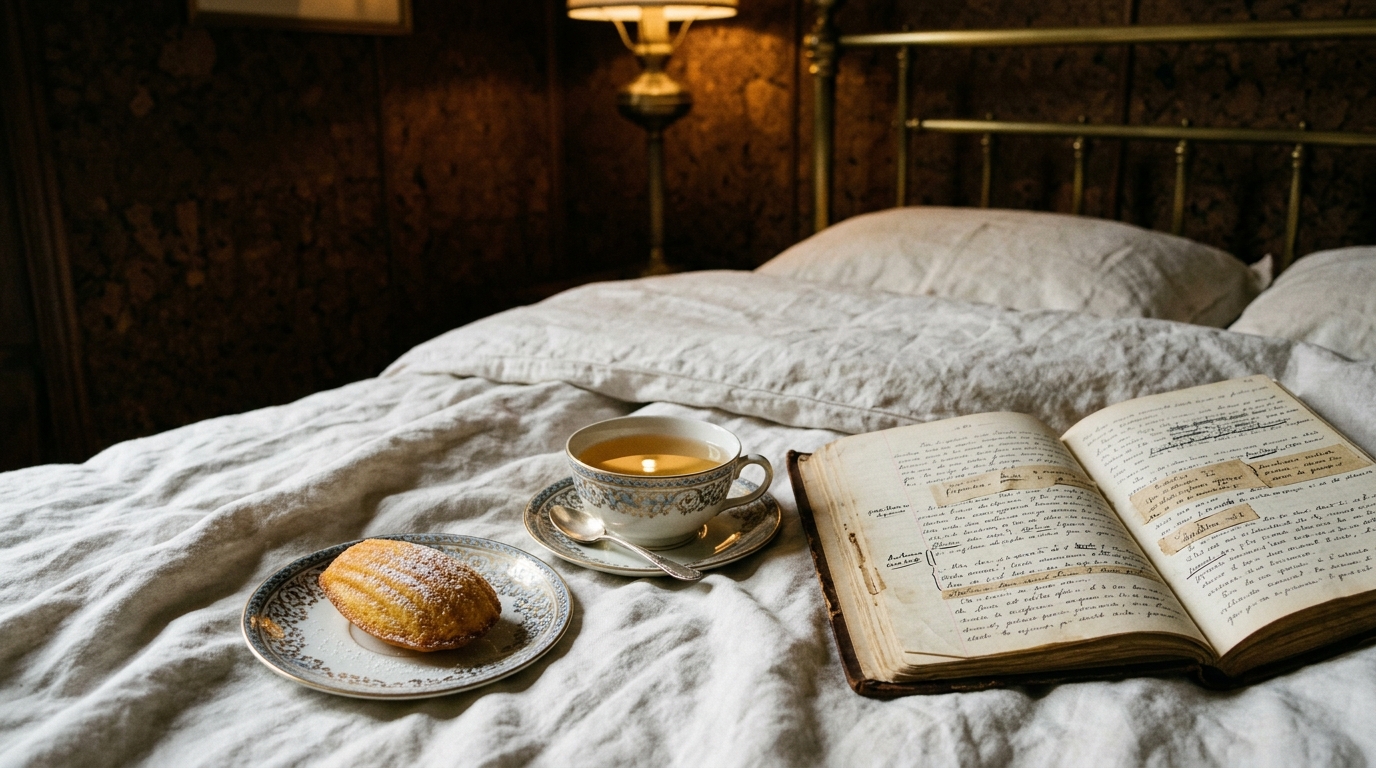
Ask the internet for Marcel Proust travel quotes and you will get the same sentence everywhere: “The real voyage of discovery consists not in seeking new landscapes, but in having new eyes.” It is printed on posters, recited in commencement speeches, and sits as the epigraph of at least one paper in the medical literature. Here is the uncomfortable bit, and the reason this page exists: Proust never wrote that sentence. It is a paraphrase, a smoothed-down pocket version of a longer and much stranger passage from The Captive, the fifth volume of In Search of Lost Time, published in 1923, the year after he died. The verified passage, checked against the Scott Moncrieff translation for this page, says the only true voyage would be “not to visit strange lands but to possess other eyes.” And the man who wrote it barely travelled at all. Proust was a severe asthmatic who spent his last decade mostly in bed, in a Paris bedroom lined with cork against noise and pollen, writing through the night. His whole travel CV amounts to childhood holidays in Illiers, summer seasons at a Normandy beach hotel, and two trips to Venice in 1900. That tension is not a contradiction; it is the entire point of the quote. So this page does the sourcing properly. Every line below is labelled as what it actually is, verified against the primary texts or flagged as a rewrite, and the five books worth owning are here with their receipts.
Early Life: Asthma, Illiers, and a Famous Travelling Father
Valentin Louis Georges Eugene Marcel Proust was born in the Paris suburb of Auteuil on 10 July 1871, into a household built on an irony he would spend his life perfecting. His father, Dr Adrien Proust, was one of the most travelled men in French medicine, an epidemiologist who crossed Europe and the Near East championing the cordon sanitaire against cholera. The father journeyed so the world could stay healthy; the son stayed home and made world literature out of it. At nine, Marcel suffered his first violent asthma attack, and the condition governed everything after: school attendance at the Lycee Condorcet, the social seasons, and eventually geography itself. The family’s Easter holidays in Illiers, his father’s hometown near Chartres, gave him the village he would rebuild on the page as Combray, complete with the hawthorn lanes and the two walks. The town found the trade fair: in 1971 it legally renamed itself Illiers-Combray, the only town in France to have rebranded itself after a novel. Summers meant the Normandy coast and, in the great years, the Grand Hotel at Cabourg, which readers know as Balbec. Salon society polished him, the Dreyfus Affair politicised him (he was an early petition signer), and John Ruskin gave him a reason to make the only true voyages of his life.
Two Voyages to Venice and the Retreat to the Cork-Lined Room
Proust’s travel masterpiece, as an actual traveller, is brief: Venice, twice, in the year 1900. He went in Ruskin’s footsteps, having spent years translating the English critic’s The Bible of Amiens and Sesame and Lilies despite shaky English, working from cribs prepared by his mother, who came with him to Venice the first time. He stood in front of the stones Ruskin had described and checked the prose against the building, which is, when you think about it, exactly what this website does to quote posters. The Venice chapters of In Search of Lost Time were paid for with those weeks. Beyond that: Cabourg seasons, Evian, a handful of French excursions. The pattern was already narrowing.
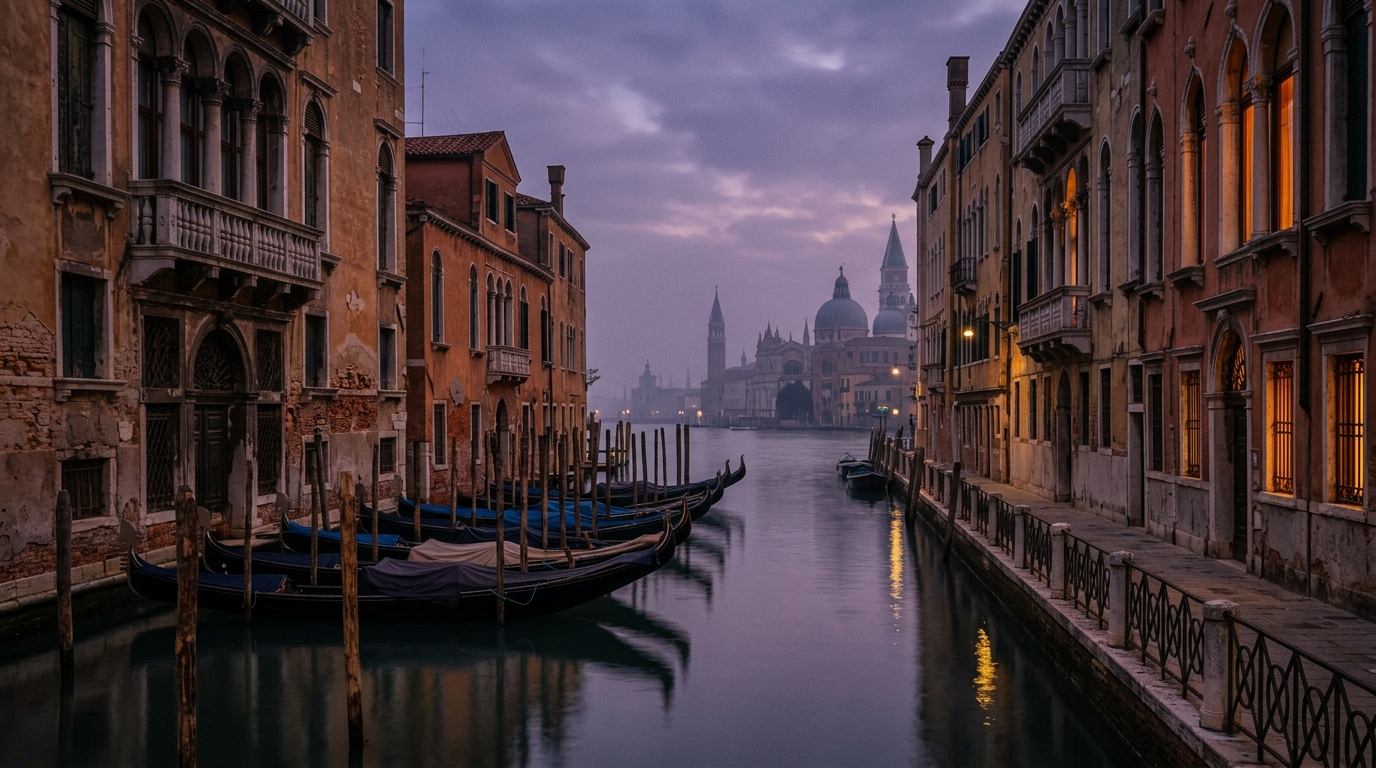
After his mother died in 1905, the asthma worsened and the withdrawal began in earnest. From 1910 he had his bedroom at 102 Boulevard Haussmann lined with cork, sealing out the pollen, the noise and eventually most of the twentieth century, and there, mostly in bed, mostly at night, he wrote the longest great novel in existence. Swann’s Way was turned down by the Nouvelle Revue Francaise on the advice of Andre Gide, who later called the rejection one of the great regrets of his life, so Proust published it with Grasset in 1913, partly at his own expense. Within a Budding Grove took the Prix Goncourt in 1919, and fame arrived at the door of a man too unwell to go out and meet it. He died of pneumonia on 18 November 1922, aged 51, still dictating corrections, and the final three volumes, including The Captive, the home of the most famous travel quote on earth, were published after his death. The world’s great apostle of seeing with new eyes did most of his looking at cork panels, and saw more than anyone.
Marcel Proust’s Best Books and Editions
1. Swann's Way: In Search of Lost Time, Vol. 1 (Penguin Classics Deluxe)
Best for: First-time readers, in the acclaimed modern Lydia Davis translation
The opening volume, the madeleine, Combray and the two ways. Lydia Davis’s translation is the modern standard for starting out: precise, unfussy and closer to the French than the older versions. If you own one Proust, own this.
Check Price on Amazon →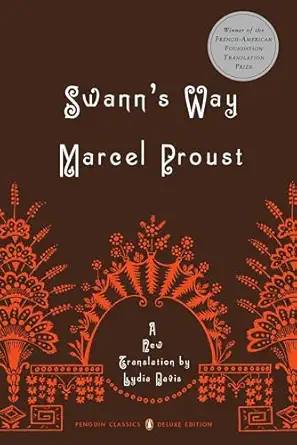
2. The Captive & The Fugitive: In Search of Lost Time, Vol. V (Modern Library)
Best for: Readers who want the actual source of the famous travel passage
Volume five is where the only true voyage of discovery passage actually lives, in its full hundred-universes glory rather than the poster version. The Modern Library edition carries the revised Moncrieff translation. The receipts, in one volume.
Check Price on Amazon →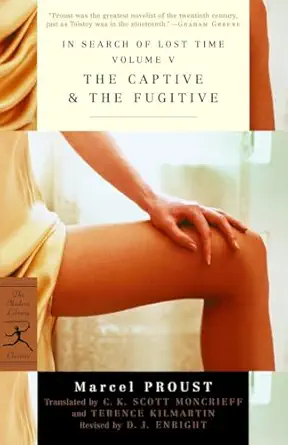
3. How Proust Can Change Your Life (Alain de Botton)
Best for: Anyone intimidated by seven volumes and three thousand pages
The famous short book that turns Proust into a practical philosophy of noticing, travel included. A few hours of reading that makes the big novel feel like an invitation rather than an exam.
Check Price on Amazon →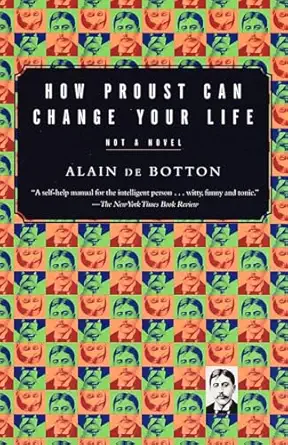
4. Marcel Proust: A Life (William C. Carter)
Best for: The full life, from Illiers to the cork-lined room
Carter’s Yale biography is the standard life in English: the asthma, the salons, the Venice journeys, the Dreyfus years and the long final decade in bed, all properly sourced. The book to read when the novel makes you want the man.
Check Price on Amazon →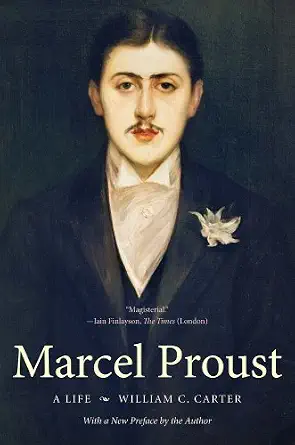
5. In Search of Lost Time Vol. 1: Swann's Way and Within a Budding Grove, Part 1 (hardcover)
Best for: A handsome hardcover that reaches the verified wisdom quote
This edition carries the novel through into Within a Budding Grove, the Prix Goncourt volume where the real version of the we-must-discover-wisdom-for-ourselves passage lives. Shelf-worthy and giftable.
Check Price on Amazon →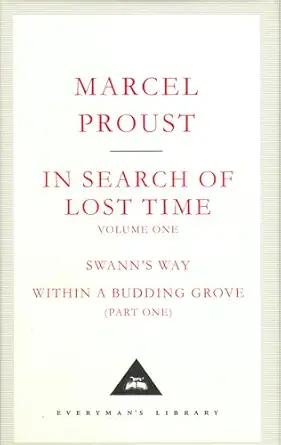
Two editions deserve naming even though they sit outside our verification gate for product cards. The Oxford World’s Classics translation of The Swann Way by Brian Nelson currently carries 36 reviews and the New York Review Books edition of Swann’s Way carries 30, both under our 50-review floor and both excellent. And Letters to the Lady Upstairs, Proust’s notes to his noisy neighbour, is the most charming small Proust there is, 34 reviews and counting. All three belong on the shelf of anyone who gets serious about the man behind the paraphrase.
His Travel Philosophy: The Voyage Happens in the Eyes
Here is what the poster version flattens out. In The Captive, the narrator is daydreaming about Venice while effectively keeping his lover Albertine prisoner in his Paris flat, and the passage everyone quotes is about the futility of treating geography as a cure. The real instrument of discovery, Proust says, is borrowed vision: to see the universe through the eyes of another, of a hundred others, to behold the hundred universes that each of them beholds. It is a stranger, more social and more demanding idea than getting new eyes of your own. The paraphrase turns a sentence about other people into a sentence about self-improvement, which is roughly the opposite of what it says.
His verified wisdom line makes the same argument from the other side: “We are not provided with wisdom, we must discover it for ourselves, after a journey through the wilderness which no one else can take for us, an effort which no one can spare us,” from Within a Budding Grove (1919). The journey there is not a Eurail itinerary; it is the unavoidable interior one. Quote sites usually run the smoothed version that begins “We don’t receive wisdom,” which keeps the meaning but loses the text. In that insistence that experience cannot be outsourced, Proust stands closer than you would expect to the road-hardened names this site catalogues: Mark Twain, another writer buried under quotes he never said, and Ernest Hemingway, who made Proust’s own Paris the most mythologised city in travel writing.
The instructive contrast is Robert Louis Stevenson. Both men were lifelong invalids; Stevenson answered his lungs by sailing to Samoa, Proust answered his by lining the bedroom with cork. Same constraint, opposite itineraries, and literature won both times. For travellers building a reading list around that idea, our guide to solo travel quotes is full of lines about the journey no one can take for you. Proust simply took his without leaving the bed.
Memorable Marcel Proust Quotes by Theme
On Seeing and Discovery
The only true voyage of discovery, the only fountain of Eternal Youth, would be not to visit strange lands but to possess other eyes, to behold the universe through the eyes of another, of a hundred others, to behold the hundred universes that each of them beholds, that each of them is.
— Marcel Proust The Captive (La Prisonniere, 1923), In Search of Lost Time Vol. V, C.K. Scott Moncrieff translation The real sentence behind the most shared travel quote on the internet, verified against the Moncrieff translation via Project Gutenberg Australia for this page. Note what the poster version deletes: the other people. The new eyes Proust wanted were someone else's.
Le seul veritable voyage, le seul bain de Jouvence, ce ne serait pas d'aller vers de nouveaux paysages, mais d'avoir d'autres yeux, de voir l'univers avec les yeux d'un autre, de cent autres, de voir les cent univers que chacun d'eux voit, que chacun d'eux est.
— Marcel Proust La Prisonniere (1923), the original French The sentence as Proust actually wrote it. We run the French because the accuracy promise of this site extends to the source language, and because no commercial page on the topic bothers to. Bain de Jouvence is a bath in the Fountain of Youth, which the standard translation renders more politely.
On Memory and Place
We are not provided with wisdom, we must discover it for ourselves, after a journey through the wilderness which no one else can take for us, an effort which no one can spare us.
— Marcel Proust Within a Budding Grove (A l'ombre des jeunes filles en fleurs, 1919), C.K. Scott Moncrieff translation From the volume that won the 1919 Prix Goncourt. Goodreads and most quote sites run a smoothed version beginning "We don't receive wisdom," which keeps the sense and loses the sentence. This is the Moncrieff text.
And once again I had recognized the taste of the crumb of madeleine soaked in her decoction of lime-flowers which my aunt used to give me… immediately the old gray house upon the street, where her room was, rose up like the scenery of a theater.
— Marcel Proust Swann's Way (Du cote de chez Swann, 1913), C.K. Scott Moncrieff translation The most famous mouthful in literature: one sponge cake dipped in lime-blossom tea resurrects an entire town. Every traveller who has been ambushed by a smell that teleported them somewhere they once stood already understands the madeleine.
The real paradises are the paradises that we have lost.
— Marcel Proust Time Regained (Le Temps retrouve, 1927), In Search of Lost Time Vol. VII From the posthumous final volume, the line the whole novel exists to earn. The French is "Les vrais paradis sont les paradis qu'on a perdus." Any traveller who has tried to go back to a beach from childhood has run the experiment.
The Lines He Never Wrote
The real voyage of discovery consists not in seeking new landscapes, but in having new eyes.
— Attributed to Marcel Proust (paraphrase) A condensed rewording of the passage in The Captive (1923); not Proust's text in any translation The poster version. It compresses Moncrieff's 47-word sentence into 16, swaps possessing other eyes for having new eyes, and deletes the hundred other people who were the entire point. BrainyQuote and AZ Quotes run it as gospel, a 2012 PubMed paper uses it as an epigraph, and the British Holistic Medical Association has published a whole provenance note tracing it back to La Prisonniere. Good slogan; not the sentence.
My destination is no longer a place, rather a new way of seeing things.
— Attributed to Marcel Proust (no source) Appears in no Proust work or translation A rewrite of the rewrite. This one circulates across Pinterest and Instagram with Proust's name attached and exists in no text he wrote, in French or in English. It is what happens when a paraphrase gets paraphrased: third-generation wisdom wearing a first-rate name.
A sourcing note on the version Goodreads ranks first, because our editorial standards demand receipts: “The only true voyage would be not to travel through a hundred different lands with the same pair of eyes, but to see the same land through a hundred different pairs of eyes” is a third rendering of the same Captive passage, looser than Moncrieff and without provenance attached. It reads like a later translation polished for shareability, so we file it as a variant rather than a fake. The pattern is the one we document for the famous misattributed Mark Twain sailing quote: the better a line works on a poster, the further it drifts from the page. Proust’s case is unusual because the genuine sentence, with its hundred universes, is better than every one of its rewrites.
For the full canon in context, browse the 100 best travel quotes mega-pillar, where the Captive passage holds down the seeing-with-new-eyes end, properly sourced.
Other Voices in Travel Wisdom
Frequently Asked Questions about Marcel Proust
What is Marcel Proust's most famous travel quote?
Online, it is “The real voyage of discovery consists not in seeking new landscapes, but in having new eyes,” which is a paraphrase. The verified passage, from The Captive (1923) in the Scott Moncrieff translation, reads: “The only true voyage of discovery, the only fountain of Eternal Youth, would be not to visit strange lands but to possess other eyes, to behold the universe through the eyes of another, of a hundred others.”
Did Proust really say "the real voyage of discovery consists in having new eyes"?
Not in those words. The sentence is a condensed rewording of a longer passage in The Captive, the fifth volume of In Search of Lost Time. No Proust translation contains the poster version, and the original French differs further still. The idea is his; the wording is the internet’s.
Did Marcel Proust actually travel?
Barely. He was a severe asthmatic from age nine. His travels amounted to childhood holidays in Illiers (the Combray of the novel), summer seasons at the Grand Hotel in Cabourg (Balbec), a stay at Evian, and two trips to Venice in 1900 in the footsteps of John Ruskin. From about 1910 he lived mostly in his cork-lined Paris bedroom, where he wrote In Search of Lost Time largely in bed.
What is the madeleine moment?
The most famous scene in Swann’s Way (1913): the narrator dips a madeleine, a small sponge cake, into lime-blossom tea, and the taste involuntarily resurrects his entire childhood town of Combray. It gave psychology the term Proustian memory, the experience of a sense impression unlocking a vivid past, which every traveller knows from the first smell of a place they once loved.
What is the best Marcel Proust book to start with?
Start with Swann’s Way in the Penguin Classics Deluxe edition translated by Lydia Davis. If three thousand pages feels like a cliff, read Alain de Botton’s How Proust Can Change Your Life first as a warm-up. The Captive and The Fugitive, volume five in the Modern Library edition, is the home of the famous voyage-of-discovery passage.
Proust’s Lasting Legacy for Travellers
A century after his death, Proust is a destination. Illiers-Combray runs madeleine pilgrimages, Cabourg’s Grand Hotel trades carefully on Balbec, and his grave at Pere Lachaise sits a short walk from Oscar Wilde’s sphinx, two of the most misquoted men in literature sharing one cemetery. The deeper legacy is the standard his real sentence sets. He never promised that movement would transform you; he argued that attention would, and that the rarest itinerary is through someone else’s way of seeing. The team behind this site keeps his receipts in order on our about page. If you buy one book, make it Swann’s Way. If you are building a shelf for the road, start with our guide to the best books for solo travelers, then browse the rest of our author bio library for travel wisdom with its sources intact.