
Oscar Wilde: Travel Quotes, the Poster Lines He Never Wrote, and What He Actually Said
Verified Oscar Wilde travel quotes labelled as what they actually are: lines from the plays, tales and essays with real sources, the viral fakes flagged honestly, and the five books worth owning.

Ask Google for Oscar Wilde travel quotes and the AI Overview will hand you “Live life with no excuses, travel with no regret,” on the authority of a Facebook fan page and a Pinterest pin. Here is the uncomfortable bit, and the reason this page exists: that line appears nowhere in Wilde’s plays, essays, stories, letters or recorded conversation. It is a modern poster caption wearing a famous name. The stranger truth sits one layer down. Wilde’s two genuine travel quotes, the ones that survive checking against the primary texts, are spoken by fireworks. Both come from The Remarkable Rocket, a children’s story in The Happy Prince and Other Tales (1888), where a Squib announces that travel improves the mind and a pensive Catherine Wheel sighs that any place you love is the world to you. And the man himself owned one of the great travel CVs of the nineteenth century: Italy at 20, Greece at 22 (the trip made him late for term at Oxford, which fined him for it), a year-long lecture tour of America and Canada at 27 that included a whiskey session at the bottom of a Colorado silver mine, Paris in every chapter of his life, and a final three-year exile that ended in a cheap Left Bank hotel room. So this page does the sourcing properly. Every quote below is labelled as what it actually is, verified against the primary texts or flagged as legend, and the five books worth owning are here with their receipts.
Early Life: Dublin, Oxford, and a Fine for Travelling
Oscar Fingal O’Flahertie Wills Wilde was born in Dublin on 16 October 1854, the second son of Sir William Wilde, Ireland’s leading eye and ear surgeon, and Jane Wilde, who published fierce nationalist poetry as Speranza. The house ran on talk, and he never stopped. He took a first at Trinity College Dublin, then a double first at Magdalen College, Oxford, where he won the Newdigate Prize in 1878 for Ravenna, a poem about an Italian city he had actually seen: his first journey abroad, to Italy in 1875, was already feeding the work. The defining early trip came in 1877, when his old Trinity professor J. P. Mahaffy carried him off to Greece. Wilde came back weeks late for the Oxford term and was fined for the privilege, which may be the most honest travel review he ever filed: the journey was worth the penalty. By the early 1880s he was the public face of the Aesthetic movement, famous in London largely for being famous, and in want of a stage big enough. America obliged.
The 1882 American Tour and a Life on the Move
Wilde landed in New York on 2 January 1882 for what was planned as a short lecture series and became a near year-long haul: roughly 140 lectures across the United States and Canada, from Boston lecture halls to mining camps, delivered in velvet breeches to audiences who had often paid to laugh at him and left having listened. The tour’s best chapter happened in Leadville, Colorado, where he descended a silver mine in a bucket, drank whiskey with the miners, and lectured them on the Renaissance goldsmith Benvenuto Cellini. In a saloon there he spotted the notice that became his favourite piece of found criticism. As he told it in his lecture Impressions of America: “Over the piano was printed a notice: Please do not shoot the pianist. He is doing his best. I was struck with this recognition of the fact that bad art merits the penalty of death, and I felt that in this remark the absolute stupidity of the British public had been touched.” The line about the pianist is real, sourced to his own published lecture, which is more than can be said for most quotes on his poster.
The decade that followed was the work: The Happy Prince and Other Tales in 1888, The Picture of Dorian Gray in 1890, The Soul of Man under Socialism in 1891, and the four society comedies that ended with The Importance of Being Earnest in February 1895, the wittiest play in the language opening at the exact peak of its author’s life. Within months came the three trials, and two years’ hard labour, most of it in Reading Gaol. Released in May 1897, he took the night boat to Dieppe under the borrowed name Sebastian Melmoth and never set foot in Britain again. The final itinerary reads like a travel diary written in a minor key: Berneval, Naples, Switzerland, Rome, and at last Paris, where he died in the Hotel d’Alsace on 30 November 1900, aged 46, still producing better lines about his wallpaper than most writers manage about the Alps.
Oscar Wilde’s Best Books and Editions
1. The Picture of Dorian Gray (Penguin Classics)
Best for: First-time readers who want the one essential Wilde novel
The only novel, with the preface that doubles as the Aesthetic movement’s manifesto. The Penguin Classics edition carries the fuller 1891 text plus notes. If you own one Wilde, own this.
Check Price on Amazon →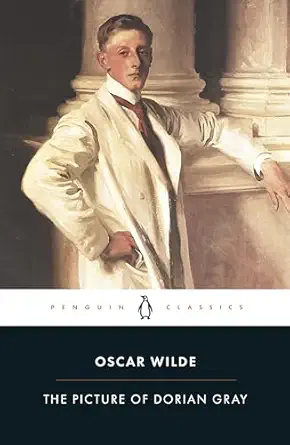
2. Complete Short Fiction (Penguin Classics)
Best for: Readers who want the actual source of the famous travel lines
Contains The Happy Prince and Other Tales, including The Remarkable Rocket, the children’s story where the Squib and the Catherine Wheel deliver the two travel quotes the internet attributes to Wilde himself. The receipts, in one paperback.
Check Price on Amazon →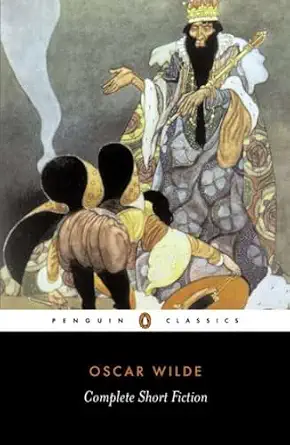
3. The Importance of Being Earnest and Other Plays (Penguin Classics)
Best for: The plays, including the best train-reading joke ever written
Gwendolen’s “I never travel without my diary” lives in Act Two of Earnest, surrounded by the rest of the funniest play in English. This edition packs the major comedies and Salome into one volume.
Check Price on Amazon →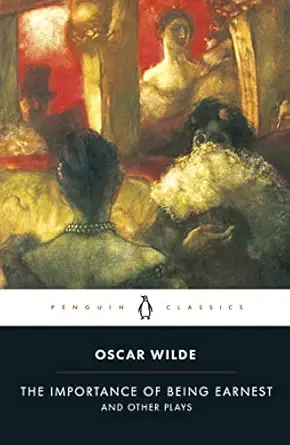
4. De Profundis and Other Prison Writings (Penguin Classics)
Best for: The deepest Wilde, written when the travelling stopped
The long letter from Reading Gaol, plus the Ballad. The wit is still there, turned inward. Read it after the comedies and the whole life rearranges itself.
Check Price on Amazon →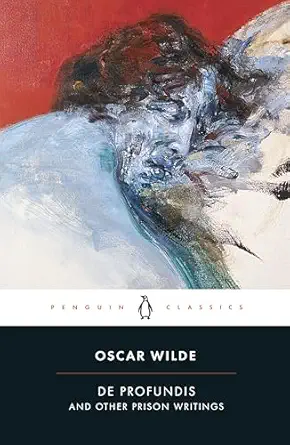
5. Oscar Wilde's Wit and Wisdom: A Book of Quotations (Dover Thrift)
Best for: A pocket quote collection drawn from the actual works
A few dollars for hundreds of epigrams sourced from the plays and essays rather than from Pinterest. Keep it in the bag for train delays, exactly as Gwendolen would advise.
Check Price on Amazon →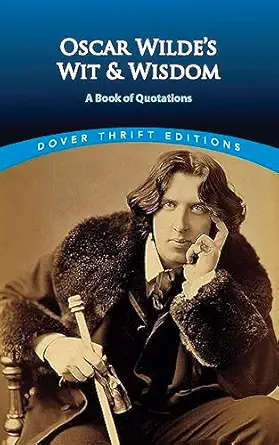
Two books deserve naming even though they sit outside our verification gate for product cards. After Oscar: The Legacy of a Scandal, by Wilde’s grandson Merlin Holland, published in 2025, currently carries 41 reviews, just under our 50-review floor. And Richard Ellmann’s 1987 biography Oscar Wilde remains the standard life. Both belong on the shelf of anyone who gets serious about the man behind the misquotes.
His Travel Philosophy: Glad to Have Travelled, Wherever It Happened
Here is the joke almost every quote site misses. When Wilde wrote his most-quoted travel wisdom, he gave it to a firework. In The Remarkable Rocket, the fireworks are waiting in the King’s garden to be set off for a royal wedding, and a little Squib, whose entire travel history is having arrived in the garden, announces: “Travel improves the mind wonderfully, and does away with all one’s prejudices.” Wilde was satirising exactly the kind of person who dispenses travel wisdom at parties. The internet has repaid him by printing the line on posters with his portrait and no trace of the joke. The Catherine Wheel’s reply quote, “Any place you love is the world to you,” is gentler and survives the trip out of context better, but it too belongs to a firework with a broken heart, not to a philosopher at a lectern.
His own credo, the verified one, is bigger than travel and explains why he kept moving anyway: “To live is the rarest thing in the world. Most people exist, that is all,” from The Soul of Man under Socialism (1891). Wilde treated experience as the whole point and geography as one of its instruments. In that he stands with the other great performers of the road this site catalogues: Mark Twain, who ground out the same brutal lecture circuits and attracts the same flood of fake quotes, and Ernest Hemingway, who would later make Wilde’s Paris the most mythologised expat city on earth.
And he travelled as a performance. Every railway carriage was a stage, every customs desk an opening night, every audience of Colorado miners a first-night crowd to be won. His exact contemporary Robert Louis Stevenson travelled to disappear into the world; Wilde travelled so the world could find him. Anyone building a reading list for the road, solo or otherwise, should start with our guide to solo travel quotes and note how many of its best lines were earned the hard way. His were.
Memorable Oscar Wilde Quotes by Theme
From the Tales and Plays
Travel improves the mind wonderfully, and does away with all one's prejudices.
— Oscar Wilde The Remarkable Rocket, in The Happy Prince and Other Tales (1888) Fully verified, with an asterisk the posters omit: in the story it is spoken by a little Squib, a firework in the King's garden, whose only journey has been arriving there. Wilde wrote it as satire of armchair travel wisdom. Checked against the primary text via Project Gutenberg.

Any place you love is the world to you.
— Oscar Wilde The Remarkable Rocket, in The Happy Prince and Other Tales (1888) Spoken by a pensive Catherine Wheel, another firework, who follows it with the best deflation in the story: "But love is not fashionable any more, the poets have killed it." Verified against the primary text.
I never travel without my diary. One should always have something sensational to read in the train.
— Oscar Wilde The Importance of Being Earnest, Act II (1895) Spoken by Gwendolen Fairfax, mid-duel over cucumber sandwiches and a fiance. The most reliable train-travel joke ever written, and one of the few famous Wilde travel quotes that is exactly what it appears to be.
On Living, Not Existing
To live is the rarest thing in the world. Most people exist, that is all.
— Oscar Wilde The Soul of Man under Socialism (1891) The closest thing he wrote to a credo, and the engine under every journey he took. Verified verbatim against the 1891 essay via Project Gutenberg, which matters, because this one circulates with a dozen mangled wordings.
We have really everything in common with America nowadays, except, of course, language.
— Oscar Wilde The Canterville Ghost (1887) Written five years after the American tour that made him famous, and verified against the primary text. The transatlantic traveller's joke that every visitor to the States has re-earned since.
The Lines He Never Said
Live life with no excuses, travel with no regret.
— Attributed to Oscar Wilde (no source) Appears in none of Wilde's published works or letters The most shared "Wilde travel quote" on the internet, and it is untraceable: not in the plays, the essays, the tales or the collected letters. No quote site that carries it cites a work. Google's AI Overview currently hands it to him on the strength of a Facebook fan post and a Pinterest pin, and Etsy will sell it to you as a print for 14 dollars. A serviceable gym-wall slogan; just not Wilde on any evidence that exists.
Be yourself; everyone else is already taken.
— Attributed to Oscar Wilde (unverified) No Wilde source has ever been produced Quoted everywhere, including by his own publishers, yet nobody has ever produced a citation. The authentic kernel is in The Soul of Man under Socialism (1891), verified against the primary text: "Know thyself was written over the portal of the antique world. Over the portal of the new world, Be thyself shall be written." The pocket version is modern paraphrase that attached itself to the most quotable name available.
A sourcing note on the most famous Wilde travel story of all, because our editorial standards demand receipts: “I have nothing to declare except my genius,” supposedly delivered at the New York customs desk on 2 January 1882, appears in no contemporary newspaper, customs record or diary. It first surfaces in print years after his death, in Arthur Ransome’s 1912 study and Frank Harris’s 1916 biography. Possibly true, probably polished, definitely unverifiable, so we file it as legend. The pattern is the same one we document for the famous misattributed Mark Twain sailing quote: the bigger the legend, the stickier the line. The difference with Wilde is that his verified material, checkable against the primary texts, is funnier than the fakes.
For the full canon in context, browse the 100 best travel quotes mega-pillar, where the Squib holds down the satirical end.
Other Voices in Travel Wisdom
Frequently Asked Questions about Oscar Wilde
What was Oscar Wilde's most famous travel quote?
Online, it is “Live life with no excuses, travel with no regret,” which he never wrote. His most famous genuine travel line is “Travel improves the mind wonderfully, and does away with all one’s prejudices,” from The Remarkable Rocket in The Happy Prince and Other Tales (1888), where it is spoken, deliberately, by a firework that has never been anywhere.
Did Oscar Wilde say "Live life with no excuses, travel with no regret"?
There is no evidence he did. The line appears in none of his plays, essays, stories or collected letters, and no source that carries it ever cites a work. It spread through posters, Pinterest boards and Facebook pages, and Google’s AI Overview currently repeats the attribution without a primary source.
Did Oscar Wilde really say "I have nothing to declare except my genius"?
Maybe, but nobody can prove it. The remark is tied to his arrival at New York customs on 2 January 1882, yet no contemporary account records it. It first appears in print years after his death, in Arthur Ransome’s 1912 study and Frank Harris’s 1916 biography, so historians treat it as legend.
How much did Oscar Wilde travel?
Constantly. Italy in 1875, Greece with J. P. Mahaffy in 1877, then the 1882 American tour: roughly 140 lectures across the United States and Canada in under a year, including Leadville, Colorado, where he lectured silver miners on Cellini. He lived in Paris for long stretches, honeymooned there in 1884, and spent his final exile (1897 to 1900) moving between France, Italy and Switzerland before dying in Paris at 46.
What is the best Oscar Wilde book to start with?
Start with The Picture of Dorian Gray in the Penguin Classics edition. Pick up the Penguin Complete Short Fiction for The Happy Prince and Other Tales, the actual source of the famous travel quotes, and The Importance of Being Earnest for the diary line in its full glory. De Profundis is the one to read last, when you want the life behind the wit.
Wilde’s Lasting Legacy for Travellers
A century and a quarter on, Wilde is still travelling. His grave at Pere Lachaise, crowned with Jacob Epstein’s stone sphinx, became so encrusted with lipstick kisses that Paris put a glass barrier around it in 2011, and visitors kiss the glass instead. Pilgrims queue at the Hotel d’Alsace, now simply L’Hotel, to sleep near the room where he died. The deeper legacy is the lesson his fake quotes keep missing: he never preached regret-free wandering, he practised expensive, attentive, consequence-laden travel and turned every mile of it into material. The team behind this site keeps his receipts in order on our about page, and the rule his story leaves a traveller is simple: pack the diary, because something sensational should always be read on the train. If you buy one book, make it The Picture of Dorian Gray. If you are building a shelf for the road, start with our guide to the best books for solo travelers, then browse the rest of our author bio library for travel wisdom with its sources intact.