Hans Christian Andersen: Travel Quotes, the Poem He Never Wrote, and the Fairy Tale Life That Was Real
Verified Hans Christian Andersen travel quotes labelled as what they actually are: the one real line from The Fairy Tale of My Life, the lines from the tales with sources, the famous four-line poem flagged honestly, and the editions worth owning.
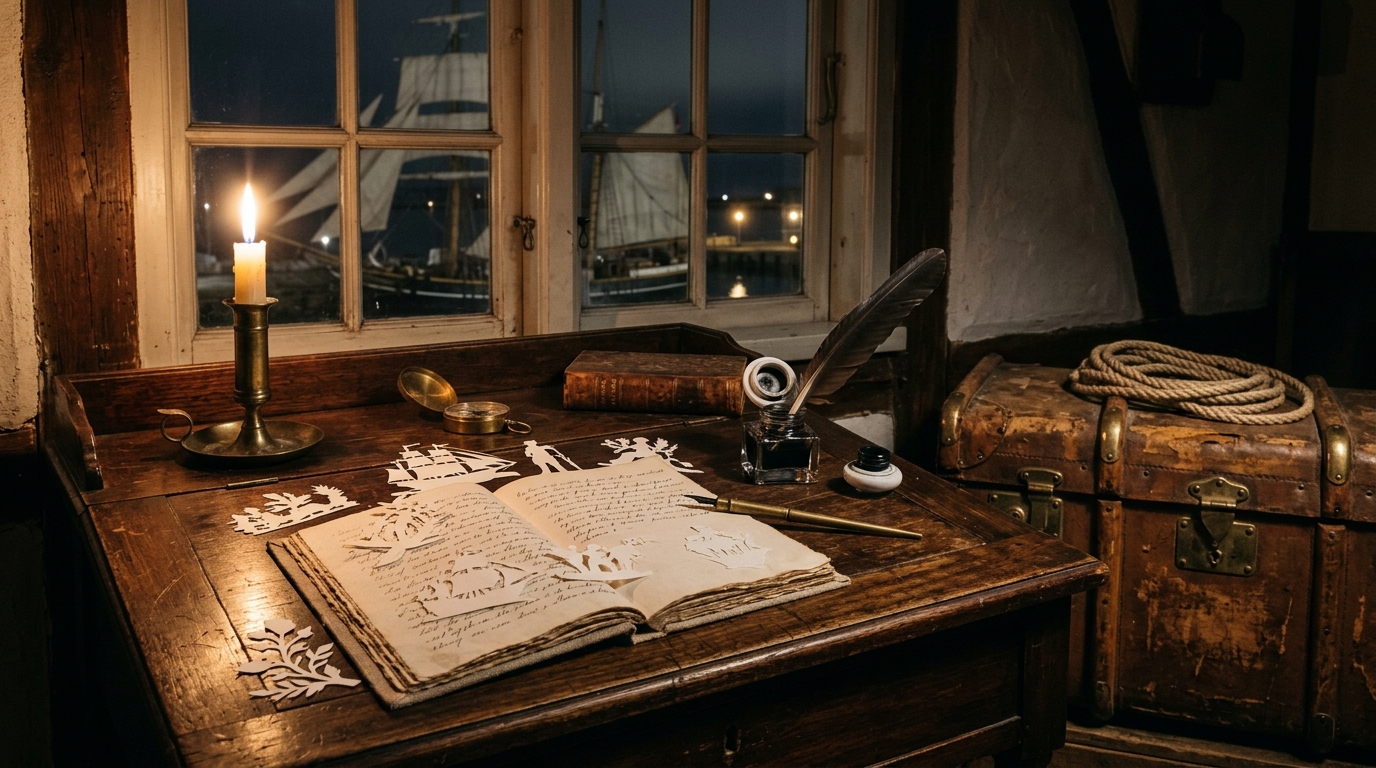
Search for travel quotes and one name owns the genre: “To move, to breathe, to fly, to float, to gain all while you give, to roam the roads of lands remote, to travel is to live.” Hans Christian Andersen, says every poster, mug and Etsy print. Here is the thing, and the reason this page exists: he wrote four of those words. The verse is a modern expansion that no scholar has ever located in his poems or his autobiography; even Google’s AI summary now admits that only the final line is his. The real sentence, “To travel is to live,” sits in his 1855 memoir The Fairy Tale of My Life, and unlike most people quoted on luggage tags, Andersen earned it: roughly thirty journeys abroad, about nine years of his life outside Denmark, four travel books, a steamer run to Constantinople, and a five-week stay at Charles Dickens’s house that the Dickens family never quite recovered from. He packed a coil of rope in his trunk in case a hotel caught fire, and went anyway. So this page does the sourcing properly: every quote below is either a verified line with a real source or flagged honestly as a later invention, and the editions worth owning are here with their receipts.
Early Life: the Shoemaker’s Son Who Left at Fourteen
Andersen was born in Odense, Denmark, on 2 April 1805, the only child of a poor shoemaker who read him The Arabian Nights and a washerwoman who could not read at all. The father died when the boy was eleven; at fourteen, Andersen put himself on a coach to Copenhagen to become famous at the Royal Theatre. He failed as an actor, failed as a singer when his voice broke, and was rescued by the theatre’s director Jonas Collin, who became his lifelong patron and persuaded King Frederik VI to pay for the gangly teenager’s schooling. The opening line of his memoir tells you exactly how he chose to read all of this: “My life is a lovely story, happy and full of incident,” he wrote in The True Story of My Life in 1847, in Mary Howitt’s translation. It was a startling claim from a man whose childhood was poverty and whose school years were misery, and that is rather the point. Andersen decided early that his life was a fairy tale in progress, then spent fifty years making the plot come true.
Thirty Journeys and Four Travel Books
The travelling started in 1831 with a nerve-settling trip to Germany’s Harz Mountains, which became his first travel book, Shadow Pictures, published the same year. The 1833 to 1834 grand tour to Paris, Rome and Naples produced the novel The Improvisatore, his first real success. Then came the journey that separates him from every other quotable author of his century: in 1840 and 1841 he went by steamer and post-coach to Athens and on to Constantinople, returning up the Danube through a region most Danes could not have placed on a map, and turned it into A Poet’s Bazaar in 1842. The same book contains his giddy account of his first railway ride, from Magdeburg to Leipzig in 1840, written like a man watching the planet shrink in real time. Later came In Spain in 1863 and A Visit to Portugal in 1866. He met his heroes too, with mixed results: invited to Charles Dickens’s home at Gads Hill in 1857 for a fortnight, he stayed five weeks, wept on the lawn over a bad review, and inspired Dickens to post a card in the guest room afterwards noting that Andersen had slept there for five weeks, “which seemed to the family AGES.” The correspondence quietly died. The trunk, the rope and the passport kept moving until he did not: he died at Rolighed, near Copenhagen, on 4 August 1875, a national treasure with roughly thirty foreign journeys behind him.
Hans Christian Andersen’s Best Books and Editions
1. The Complete Fairy Tales and Stories (Anchor, trans. Erik Christian Haugaard)
Best for: Readers who want the real Andersen, all 156 tales in a serious translation
Haugaard’s translation from the Danish is the standard adult edition: complete, faithful, and free of the Victorian sugar later editions poured over the dark originals. If you buy one Andersen, this is the one.
Check Price on Amazon →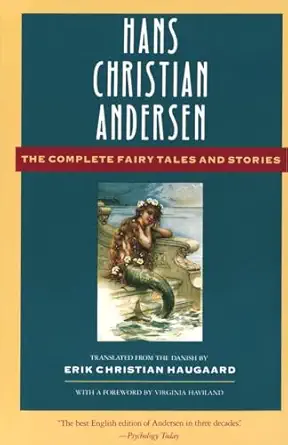
2. Fairy Tales (Deluxe Hardbound Edition)
Best for: Shelf-worthy hardback for giving, keeping, or both
A handsome clothbound collection of the essential tales. Nearly a thousand reviewers agree it looks better in person than the listing photo, which is rare praise for a deluxe edition.
Check Price on Amazon →
3. An Illustrated Treasury of Hans Christian Andersen's Fairy Tales
Best for: Families who want The Little Mermaid and Thumbelina with proper artwork
The Floris treasury pairs the best-loved tales with rich full-page illustrations. The edition most likely to make a child ask where Denmark is, which is how all of this starts.
Check Price on Amazon →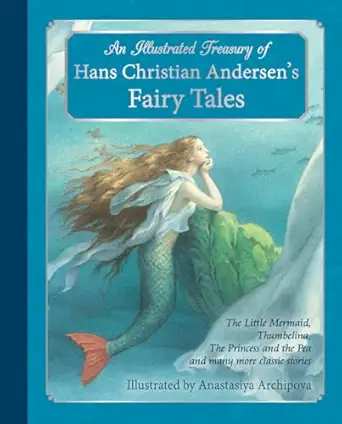
4. Hans Christian Andersen's Complete Fairy Tales (paperback)
Best for: The complete tales at a backpack-friendly price and weight
The budget route to the whole catalogue, and one of the best-reviewed Andersen editions on Amazon. Ten dollars for a lifetime of bedtime material is the rare deal Andersen himself would have approved of.
Check Price on Amazon →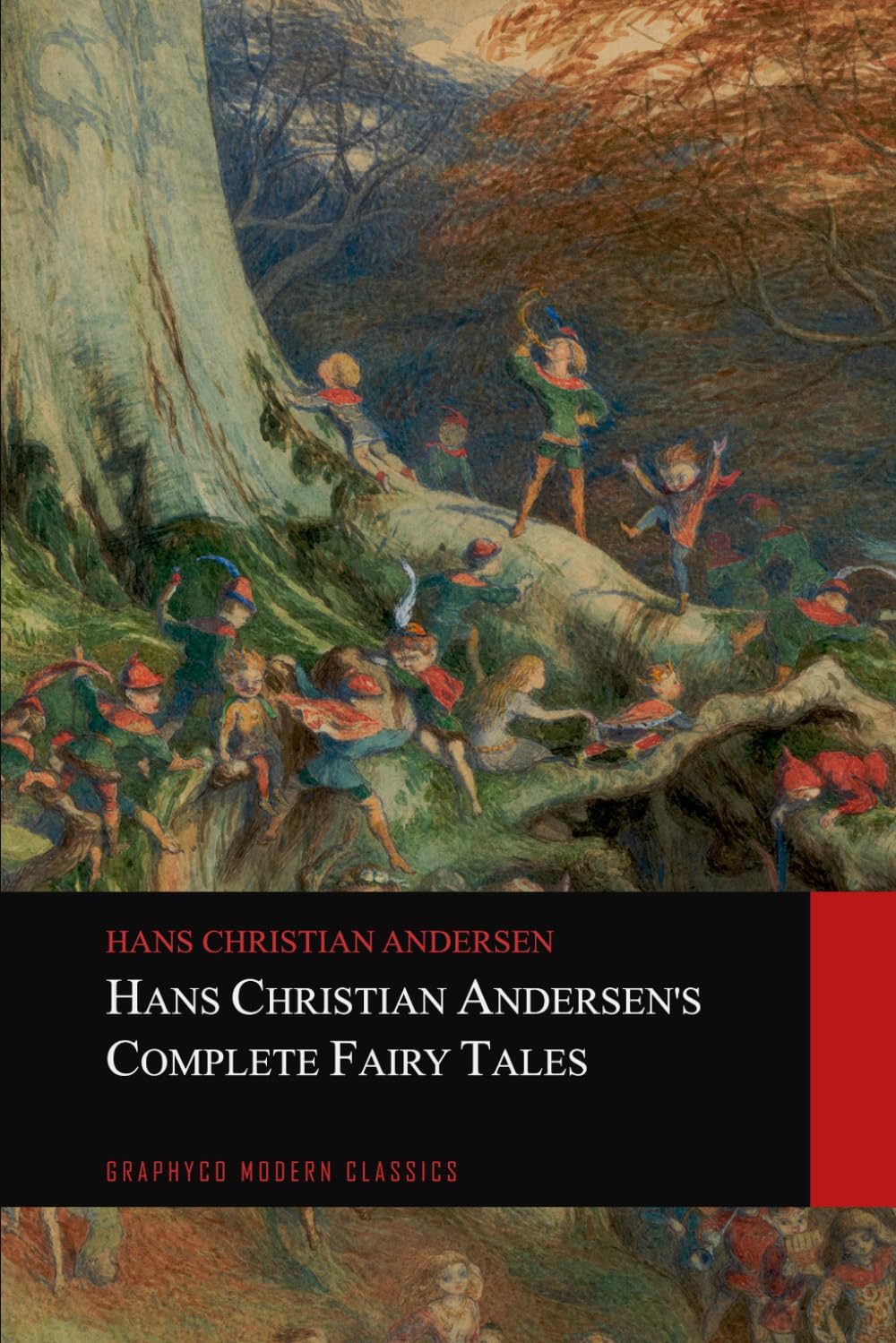
5. The Complete Fairy Tales and Stories: 168 Tales in Chronological Order (Kindle)
Best for: Reading the tales in the order he wrote them, on the device already in your bag
All 168 tales arranged chronologically, which quietly doubles as a biography: you can watch the young crowd-pleaser turn into the older, stranger, sadder master. Costs less than the coffee you would read it over.
Check Price on Amazon →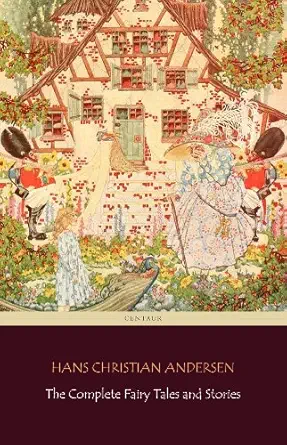
An honest stocking note from our editors: two books belong on this shelf that we have not carded above because they currently sit under our review-count threshold for recommendations. The Fairy Tale of My Life, his 1855 autobiography, is the primary source for the travel line itself, and Jackie Wullschlager’s Hans Christian Andersen: The Life of a Storyteller remains the standard modern biography. Both are worth seeking out by title if you want to go deeper than the tales.
His Travel Philosophy: To Travel Is to Live, Earned
“At rejse er at leve,” he wrote in Danish: to travel is to live. In the autobiography the sentence is not a caption, it is a conclusion. Travel was where Andersen stopped being the awkward, anxious, over-tall guest at Copenhagen dinner parties and became simply a pair of eyes. Abroad, nobody knew which reviews had wounded him. Abroad, the shoemaker’s son and the king’s pensioner were the same person in the same coach seat. His journals from Italy and the Bosphorus read like a man taking his first full breaths, and the tales that followed each journey are measurably stranger and better than the ones before.
What makes his version of wanderlust worth quoting accurately is that it was never fearless. This is the man who packed rope against hotel fires, fretted over passports, dreaded dogs and worried about being buried alive, and still logged thirty journeys in an era when a Dane visiting Constantinople was front-page exotic. Modern travel writing keeps rediscovering his formula from both directions: Robert Louis Stevenson made the romantic case that the great affair is to move, while Helen Keller proved, even more starkly than Andersen, that the daring life is a decision rather than a luxury. Andersen sits between them: scared, meticulous, and always at the dock on time.
He also belongs to a very small club of writers whose travel record outruns their legend. Only Ibn Battuta, fourteenth-century veteran of some 120,000 kilometres, makes Andersen’s thirty journeys look modest, and the Moroccan did not also have to invent The Snow Queen between border crossings. When Andersen said travel was living, it was not a poster sentiment. It was an expense report.
Memorable Hans Christian Andersen Quotes by Theme
The Line That Is Real
To travel is to live.
— Hans Christian Andersen Mit Livs Eventyr (The Fairy Tale of My Life), 1855 The four authentic words under the famous poster verse. In Danish: At rejse er at leve. Written by a man with roughly thirty foreign journeys and four travel books behind the sentence.

My life is a lovely story, happy and full of incident.
— Hans Christian Andersen The True Story of My Life (1847), trans. Mary Howitt, opening line The opening sentence of his memoir, and the source the internet keeps polishing into smoother fakes. The original is better: a man who grew up in one room deciding, in print, that the story had been wonderful all along.
From the Tales
Just living is not enough… one must have sunshine, freedom, and a little flower.
— Hans Christian Andersen The Butterfly (1861) Spoken by the butterfly, and quietly the best packing list in literature. One of the rare mug-friendly Andersen lines that is exactly where the mugs say it is.
It matters not to have been born in a duckyard, if only you are hatched from a swan's egg.
— Hans Christian Andersen The Ugly Duckling (1843); wording varies slightly by translation The most autobiographical sentence he ever hid in a children's story, written by the Odense boy two decades after leaving the duckyard. Every emigrant and gap-year kid since has been quoting it without knowing.
But a mermaid has no tears, and therefore she suffers so much more.
— Hans Christian Andersen The Little Mermaid (1837) The original price-of-another-world line. Before it was a Disney franchise it was a story about wanting a different world so badly you trade your voice for the ticket, which is the dark twin of every wanderlust quote on this site.
The Poem He Never Wrote
To move, to breathe, to fly, to float, to gain all while you give, to roam the roads of lands remote, to travel is to live.
— Attributed to Hans Christian Andersen (only the final line is his) The four-line verse appears nowhere in his autobiography or collected poems; the closing sentence alone is from The Fairy Tale of My Life (1855) The most printed travel poem on the internet is modern poster-craft wrapped around one authentic sentence. Literary historians have never located the verse in his work, and even Google's AI summary now concedes only the last line is Andersen's. Lovely rhyme; not his rhyme.
A sourcing note, because this page exists to be the accurate one and our editorial standards demand receipts: two more lines circulate under his name with no primary source in that form. “Where words fail, music speaks” tops the related searches for his quotes, yet no scholar has produced it from his works; the sentiment is genuinely Andersen-ish, the sentence is not documented. “Life itself is the most wonderful fairy tale” is best read as a polished paraphrase of his verified 1847 memoir opening rather than a quotation. The pattern is the one we document for the famous misattributed Mark Twain sailing quote: the bigger the legend, the stickier the edit, and Andersen’s legend is the biggest in the genre.
For the full canon in context, browse the 100 best travel quotes mega-pillar, where the real four words hold down the wisdom end.
Other Voices in Travel Wisdom
Frequently Asked Questions about Hans Christian Andersen
What did Hans Christian Andersen say about travel?
His verified travel line is “To travel is to live” (in Danish, At rejse er at leve), from his 1855 autobiography Mit Livs Eventyr, The Fairy Tale of My Life. He backed it with roughly thirty journeys abroad and four travel books, including A Poet’s Bazaar (1842) about his steamer journey to Athens and Constantinople.
Did Hans Christian Andersen say "to travel is to live"?
Yes. The sentence appears in his autobiography The Fairy Tale of My Life (1855), and it is the one part of the famous poster verse that is genuinely his. The surrounding three lines about moving, breathing, flying and floating are a later expansion that no scholar has found in his work.
Did Andersen write "to move, to breathe, to fly, to float"?
No. The four-line poem circulates on posters and prints under his name, but it appears nowhere in his collected poems or his autobiography. Literary historians note that only the final line, “To travel is to live,” is authentic Andersen. The rest is modern poster-craft built around it.
How much did Hans Christian Andersen actually travel?
A great deal for his era: roughly thirty journeys abroad over his lifetime, adding up to about nine years outside Denmark. Highlights include the 1833-34 grand tour to Rome and Naples, the 1840-41 journey to Athens and Constantinople with the Danube return, later trips to Spain and Portugal, and the famous five-week overstay at Charles Dickens’s house in 1857. He packed a rope in his trunk in case of hotel fires.
What is the best Hans Christian Andersen book to start with?
Start with the Anchor Complete Fairy Tales and Stories translated by Erik Christian Haugaard, the standard adult edition of all the tales. If you want the travel writing behind the famous quote, seek out his autobiography The Fairy Tale of My Life and the 1842 travel book A Poet’s Bazaar by title.
Andersen’s Lasting Legacy for Travellers
Andersen gave travellers two gifts. The obvious one is the four-word permission slip the whole industry still runs on. The better one is the example: he was frightened of fire, dogs, deep water and bad reviews, and he still spent nine years of his life out in the world, because the alternative was staying home and wondering. Pack the rope if you must; go anyway. The fairy tale, as he kept insisting, was not the escape from his real life. It was the accurate description of it. More sourced voices are waiting in our author bio library, and our editorial team explains how every line on this site earns its place.