Ralph Waldo Emerson: Travel Quotes, the Fool's Paradise Warning, and the Lines He Never Wrote
Verified Ralph Waldo Emerson travel quotes labelled as what they actually are: lines from Self-Reliance, Art and Nature with real sources, the viral fakes flagged honestly, and the five books worth owning.

Search for travel quotes and Ralph Waldo Emerson is everywhere: “Life is a journey, not a destination.” “Do not go where the path may lead, go instead where there is no path and leave a trail.” Here is the thing, and the reason this page exists: he wrote neither of them. Quote researchers have combed his essays, lectures and journals; the journey line surfaces decades after his death in other people’s sermon writing, and the trail line has no primary source at all. What Emerson actually wrote about travel is far spicier than the posters. “Travelling is a fool’s paradise,” he announced in Self-Reliance in 1841, and he meant it: wherever you run, you wake up next to the same self you fled. He also earned the right to say it. The Boston minister who quit his pulpit crossed the Atlantic three times, met Coleridge, Wordsworth and Carlyle on the first trip, wrote an entire travel book about England, and had his life redirected by a Paris botanical garden. So this page does the sourcing properly: every quote below is either a verified line with a real source or flagged honestly as a fake, and the five books worth owning are here with their receipts.
Early Life and the Resignation That Made Him
Emerson was born in Boston on 25 May 1803, the son of a minister who died when the boy was eight, leaving the family genteel and broke. He entered Harvard at fourteen, taught school to pay the bills, and followed the family trade into the Unitarian ministry at Boston’s Second Church. Then his young wife Ellen died of tuberculosis in 1831, and within a year the promising minister had resigned his pulpit, sold most of what he owned, and bought passage on a brig bound for Malta. He was 29, grieving, and unemployed by choice. The 1832 sailing was not a gap year; it was a man dismantling his life to find out what remained. “The soul is no traveller; the wise man stays at home,” he would write later in Self-Reliance, before adding the clause everyone forgets: when necessity does call him abroad, he “visits cities and men like a sovereign, and not like an interloper or a valet.” Emerson left as neither interloper nor valet. He left as a man with one question and no script, and the answer he found shaped American thought for a century.
Three Atlantic Crossings and an Actual Travel Book
The first crossing, 1832 to 1833, gave him Naples, Rome and Florence, then Paris, where a visit to the Jardin des Plantes rearranged him. Standing before the botanical cabinets he felt, he wrote in his journal, an urge to become “a naturalist,” and the seed of his first book, Nature (1836), was planted in a French garden rather than a New England wood. From Paris he went to England and did the thing every young writer dreams about: he knocked on the doors of his heroes. He found Coleridge in London, Wordsworth in the Lake District, and a then-obscure Thomas Carlyle on a Scottish farm; the Carlyle friendship became a 38-year correspondence. The second crossing, 1847 to 1848, was a working trip, a punishing English lecture tour that he distilled into English Traits (1856), an actual travel book and one of the sharpest things ever written about the English by an outsider. The third crossing came in 1872, after his Concord house burned: friends raised the money and sent the ageing philosopher up the Nile to recover. The man who called travelling a fool’s paradise kept buying tickets. The warning, it turns out, was field-tested.

Ralph Waldo Emerson’s Best Books and Editions
1. Nature and Selected Essays (Penguin Classics)
Best for: First-time readers who want the essentials in one annotated paperback
Larzer Ziff’s Penguin Classics selection pairs Nature with the major essays, including Self-Reliance, with introductions that actually help. The standard first Emerson for good reason.
Check Price on Amazon →
2. Self-Reliance and Other Essays: Emerson's Essays, First Series
Best for: Readers who came for the fool's paradise passage in its full context
The complete First Series of 1841, which means both of the verified travel passages live here: the fool’s paradise warning in Self-Reliance and the carry-beauty-with-you line in Art. Ten dollars for the primary source.
Check Price on Amazon →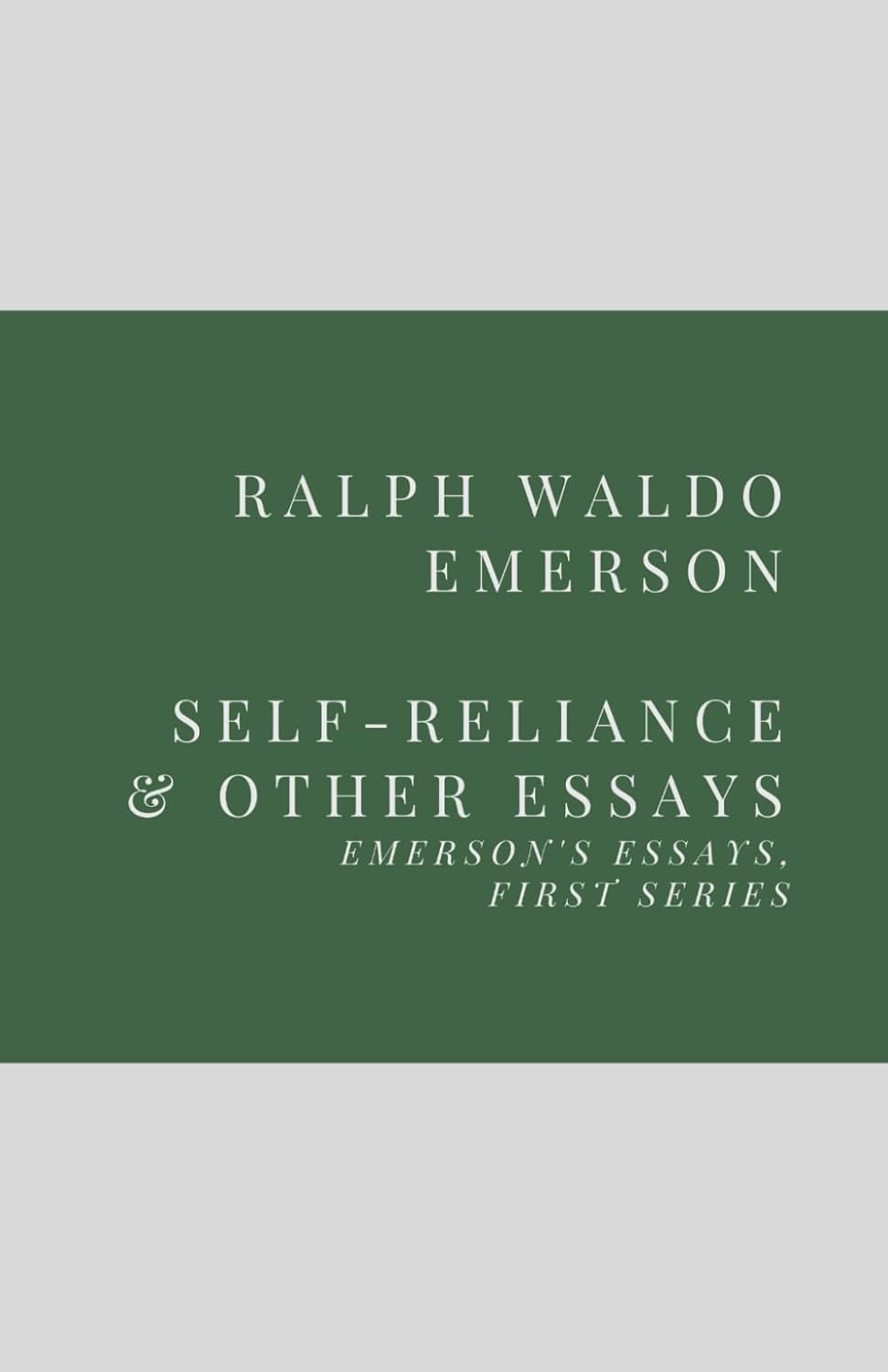
3. Emerson: Essays and Lectures (Library of America)
Best for: Anyone ready to own the whole argument in one volume
Nature, both essay series, Representative Men, The Conduct of Life, and crucially English Traits, his 1856 travel book about the English. A lifetime of reading in one Library of America hardcover that outlasts its owner.
Check Price on Amazon →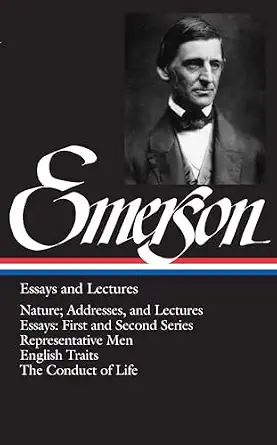
4. Emerson: The Mind on Fire by Robert D. Richardson
Best for: Readers who want the life behind the lines, crossings and all
Richardson’s intellectual biography is the standard account: the pulpit resignation, the Jardin des Plantes epiphany, the Carlyle friendship, the house fire and the Nile. Widely considered one of the great American literary biographies.
Check Price on Amazon →
5. Emerson: Poems (Everyman's Library Pocket Poets)
Best for: Proof that the sunshine quote is real, in a pocket-sized hardback
The mug favourite “Live in the sunshine, swim the sea, drink the wild air” is genuine Emerson, from the poem Merlin’s Song, and this pocket Everyman edition is where it lives. The rare case where the internet quotes him correctly.
Check Price on Amazon →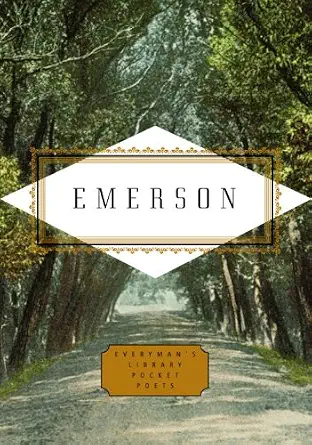
His Travel Philosophy: The Giant Goes With You
Emerson’s travel philosophy fits in one image from Self-Reliance: “My giant goes with me wherever I go.” The giant is yourself, the moods, debts, grievances and restlessness you hoped to leave at home. You can fly it to Naples; it boards anyway. This is not an argument against travel. It is an argument against travel as anaesthetic, the trip booked to escape a life rather than to meet a place. He aimed the warning at people “whose education has been more than the wants of their nature,” travellers collecting cathedrals the way others collect grievances, hoping the next city would supply what they had not built at home.
Read the fool’s paradise passage to the end and the point sharpens. He does not say Naples is worthless; he says that at Naples “there beside me is the stern fact, the sad self, unrelenting, identical, that I fled from.” The failure is not the destination, it is the expectation that geography can do the work of character. His own crossings prove the positive case: he went to Europe with questions rather than wounds, and came back with Nature, English Traits and a 38-year friendship with Carlyle. Travel amplified what he brought to it. That is the whole doctrine.
It is the same conclusion the best travel writers keep arriving at from the other direction. Pico Iyer built a modern career on the art of going nowhere, and even Rick Steves, the great evangelist for getting on the plane, preaches travel as transformation rather than escape. The dissent is worth hearing too: Robert Louis Stevenson declared he travelled “not to go anywhere, but to go,” the affair-of-movement argument Emerson would have eyed with suspicion across the dinner table. Somewhere between the two positions is your next trip, honestly booked.
Memorable Ralph Waldo Emerson Quotes by Theme
The Fool’s Paradise Warning
Travelling is a fool's paradise. Our first journeys discover to us the indifference of places. At home I dream that at Naples, at Rome, I can be intoxicated with beauty, and lose my sadness. I pack my trunk, embrace my friends, embark on the sea, and at last wake up in Naples, and there beside me is the stern fact, the sad self, unrelenting, identical, that I fled from.
— Ralph Waldo Emerson Self-Reliance, Essays: First Series (1841) The full passage the coffee mugs amputate to three words. Written nine years after he packed an actual trunk for an actual Naples, which is what gives the sentence its teeth.
He who travels to be amused, or to get somewhat which he does not carry, travels away from himself, and grows old even in youth among old things.
— Ralph Waldo Emerson Self-Reliance, Essays: First Series (1841) The sentence that separates tourism from travel a full century before the travel writers got hold of the distinction.
Carrying Beauty With You
Though we travel the world over to find the beautiful, we must carry it with us, or we find it not.
— Ralph Waldo Emerson Art, Essays: First Series (1841) The constructive half of the fool's paradise argument, and the best packing advice in the canon. Provenance note: quote sites disagree on which 1841 essay holds the line, with the Walden Woods Project filing it under Circles; the volume is the same either way, so we cite the standard placement and say so.
Live in the sunshine, swim the sea, drink the wild air.
— Ralph Waldo Emerson Merlin's Song, in May-Day and Other Pieces (1867) The plot twist on this page: the line that looks most like a fridge magnet is genuine Emerson, from a late poem. Sometimes the internet gets one right.
Nature always wears the colors of the spirit.
— Ralph Waldo Emerson Nature (1836), Chapter I Same mountain, different mood, different mountain. The 1836 sentence that explains why two travellers on one itinerary come home with two different trips.
The Lines He Never Wrote
Life is a journey, not a destination.
— Attributed to Ralph Waldo Emerson (no source exists) Appears nowhere in his published works or journals; closest traced variants are early-1900s sermon writing, decades after his death The most shared "Emerson" line on the internet, and Google's own People Also Ask carries the question. No scholar has ever produced a citation. Lovely sentiment; not his sentence. The same goes for "Do not go where the path may lead… leave a trail," which also has no primary source.
A sourcing note, because this page exists to be the accurate one and our editorial standards demand receipts: alongside the journey-not-a-destination and leave-a-trail fakes flagged above, the popular “The world makes way for the man who knows where he is going” is also attribution-only, with no primary source in the essays, lectures or journals, and it currently sits on page one of Google for this exact search. The pattern is the one we document for the famous misattributed Mark Twain sailing quote: the bigger the legend, the stickier the edit. The difference is that Emerson’s verifiable passages, checkable against Essays: First Series and the Walden Woods Project’s sourced collection, are better writing than the posters they compete with.
For the full canon in context, browse the 100 best travel quotes mega-pillar, where the carry-it-with-us line holds down the wisdom end.
Other Voices in Travel Wisdom
Frequently Asked Questions about Ralph Waldo Emerson
What did Ralph Waldo Emerson say about travel?
His verified position comes from Self-Reliance (1841): “Travelling is a fool’s paradise,” because wherever you go, “the sad self” travels with you. The constructive half is in the essay Art from the same volume: “Though we travel the world over to find the beautiful, we must carry it with us, or we find it not.” Both full passages, with sources, are quoted above.
Did Ralph Waldo Emerson say "life is a journey, not a destination"?
No. The line appears nowhere in his published works or journals, and no scholar has produced a citation. Quote researchers trace the closest variants to early-twentieth-century sermon writing, decades after his death in 1882. It became an “Emerson quote” through repetition, not through anything he wrote.
Did Emerson write "do not go where the path may lead, go instead where there is no path and leave a trail"?
There is no primary source for it in his essays, lectures, poems or journals. Like the journey-not-a-destination line, it circulates on his name because it sounds like him, which is exactly how misattribution works. The verified Emerson lines on this page are sourced to book and year.
Was Emerson against travel?
No, and his passport proves it: he crossed the Atlantic three times (1832-33, 1847-48 and 1872-73), met Coleridge, Wordsworth and Carlyle, recovered from a house fire by sailing up the Nile, and wrote a whole travel book about England, English Traits (1856). His warning was aimed at travel as escape, not travel as encounter.
What is the best Ralph Waldo Emerson book to start with?
Start with Nature and Selected Essays in the Penguin Classics edition, which includes Self-Reliance and the key essays with helpful notes. If you mainly came for the travel passages, the inexpensive Essays: First Series paperback contains both Self-Reliance and Art, the two essays every verified travel quote on this page comes from.
Emerson’s Lasting Legacy for Travellers
Emerson gave travellers the one test no influencer will sell you: ask what you are packing on the inside. A century and a half later his fingerprints are on every honest travel essay, from the slow-travel movement to the carry-on minimalists, all restating his point that the trip can only amplify what you bring to it. Read the verified lines, skip the posters, and if the giant insists on boarding with you anyway, at least give it a window seat. More sourced voices are waiting in our author bio library, and our editorial team explains how every line earns its place.