Helen Keller: Travel Quotes, 39 Countries Without Sight or Sound, and the Lines She Actually Wrote
Verified Helen Keller travel quotes labelled as what they actually are: lines from her books and letters with real sources, or internet edits flagged as exactly that. Plus the 39-country road she travelled without sight or sound, and the five books worth owning.
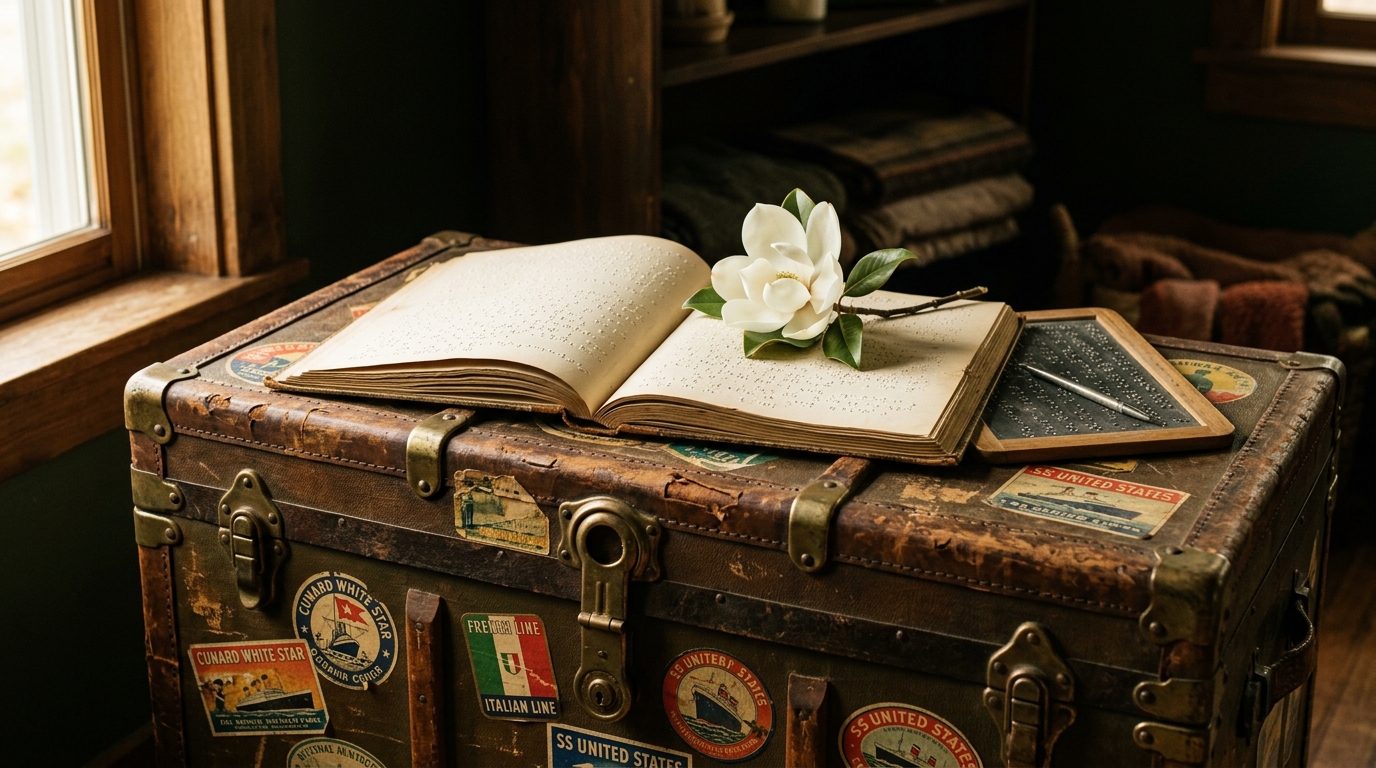
Walk into any gift shop on earth and you will meet her on a wall print: “Life is either a daring adventure or nothing at all,” attributed to Helen Keller. Here is the thing, and the reason this page exists: she never wrote those last two words. The real passage, published in The Open Door in 1957, ends at “or nothing,” and it opens with a line nobody prints: “Security is mostly a superstition.” What makes the internet’s edit doubly unnecessary is that Keller’s actual travel record needs no decoration. Deaf and blind from 19 months old, she became the first deafblind person to earn a Bachelor of Arts, wrote 14 books, and between 1946 and 1957 visited 39 countries on five continents as ambassador for the American Foundation for the Blind. She was received like royalty in Japan in 1937, returned to stand in Hiroshima in 1948, and met every US president from Grover Cleveland to Lyndon Johnson. The person with the best excuse in history to stay home became one of the most travelled women of her century. So this page does the sourcing properly: every quote below is either a verified line with a real source or flagged honestly as the internet’s edit, and the five books worth owning are here with their receipts.
Early Life and the Word That Opened the World
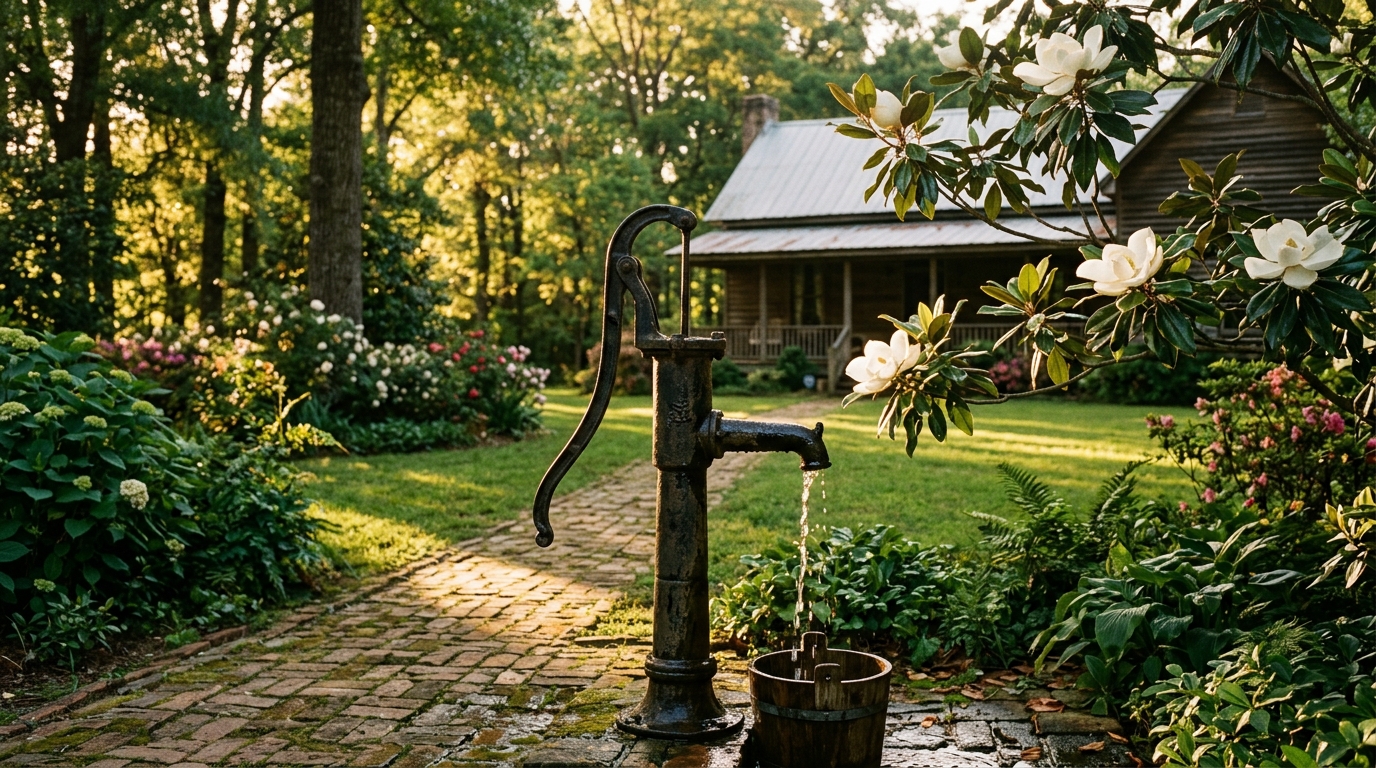
Helen Adams Keller was born on 27 June 1880 in Tuscumbia, Alabama, at a family homestead called Ivy Green. At 19 months, an illness her doctors called acute congestion of the stomach and brain, retrospectively diagnosed as probably scarlet fever or meningitis, took her sight and hearing. What happened next is one of the most famous stories in American history: Anne Sullivan, a 20-year-old graduate of the Perkins School for the Blind, arrived in March 1887 and within a month had spelled W-A-T-E-R into Helen’s hand at the garden pump while water ran over it. Language arrived like a key turning in a lock. Four years later, aged ten, Helen wrote to Reverend Phillips Brooks that “the best and most beautiful things in the world cannot be seen nor even touched but just felt in the heart” (letter of 8 June 1891, reprinted in The Story of My Life, 1903). You have seen that line on a thousand prints, usually polished into “must be felt with the heart.” The original is better, and it was written by a child who had just discovered that words could carry her to places her body had not yet been. In 1904 she graduated cum laude from Radcliffe College, the first deafblind person anywhere to earn a Bachelor of Arts (afb.org).
Thirty-Nine Countries Without Sight or Sound
The travelling started as work and never stopped. Keller joined the American Foundation for the Blind in 1924 and spent more than 40 years as its public face, which turned out to mean its passport. The mid-1930s brought lecture tours of Britain and Europe. In 1937 she toured Japan, where crowds filled the streets and she was received with honours normally reserved for visiting heads of state. Through the Second World War she toured American military hospitals, meeting soldiers who had just lost their sight and showing them, by existing, that the loss was survivable. Then came the big ones: between 1946 and 1957, travelling for the Foundation’s overseas arm, she visited 39 countries on five continents, from Australia to South Africa, India to the Middle East, lobbying governments and visiting schools for blind children on every stop. In 1948 she returned to Japan and met survivors in Hiroshima and Nagasaki, one of the first international public figures to do so. How does a deafblind woman read a foreign city? Through her feet, her fingers and her nose: companions spelled the scenery into her hand letter by letter while she took in the vibration of trains, the smell of harbours and spice markets, and the textures of everything she was permitted to touch. Her 1908 essay collection The World I Live In is the definitive account of that sensory world, and by any sensible count she remains the most travelled deafblind person in history (afb.org).
Helen Keller’s Best Books and Editions
1. The Story of My Life (Dover Thrift Editions)
Best for: First-time readers who want the famous story in her own words
Her 1903 autobiography, written while she was still a Radcliffe undergraduate: the illness, the water pump, and the education that built the century’s most famous deafblind woman. The five-dollar Dover edition is the easy way in.
Check Price on Amazon →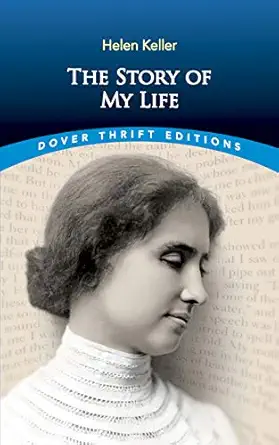
2. The World I Live In and Optimism (Dover)
Best for: Readers who want to know what travel feels like without sight or sound
Her 1908 essays on experiencing the world through touch, scent and vibration. The closest thing in the travel canon to a sensory theory of place, and the book this page leans on hardest.
Check Price on Amazon →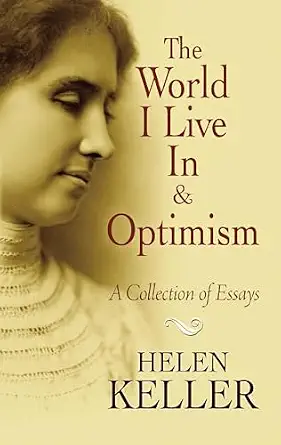
3. The Story of My Life: with Her Letters (1887-1901)
Best for: Quote hunters who want the primary sources in one volume
The restored full edition with her early letters, including the 1891 letter to Phillips Brooks where the “best and most beautiful things” line actually lives, plus Anne Sullivan’s own account of the water-pump breakthrough.
Check Price on Amazon →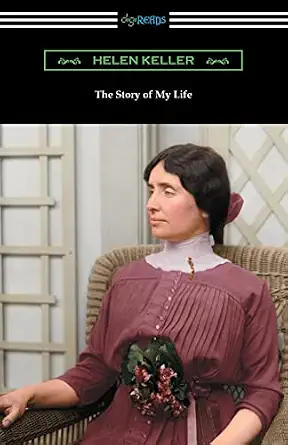
4. Helen Keller: A Life (Dorothy Herrmann)
Best for: Context the autobiographies leave out
Herrmann’s clear-eyed modern biography: the radical politics, the vaudeville years, the world tours and the complicated lifelong partnership with Anne Sullivan. The adult companion to the legend.
Check Price on Amazon →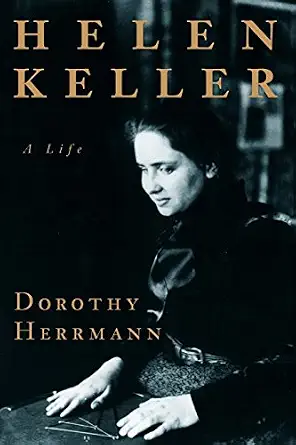
5. I am Helen Keller (Brad Meltzer)
Best for: Kids, classrooms and the gift shelf
Brad Meltzer’s illustrated biography from the Ordinary People Change the World series. The painless way to hand a seven-year-old the real story before they meet the wall print.
Check Price on Amazon →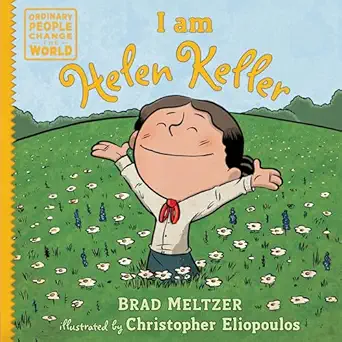
Her Travel Philosophy: Security Is Mostly a Superstition
Keller’s travel philosophy sits in a single paragraph of The Open Door, published in 1957 when she was 77 and had just finished her final world tours. “Security is mostly a superstition,” it begins. “It does not exist in nature, nor do the children of men as a whole experience it. Avoiding danger is no safer in the long run than outright exposure. Life is either a daring adventure, or nothing” (The Open Door, 1957). Read whole, it is not a poster about wanderlust. It is a risk argument: the safety you protect by staying home is imaginary, so the real question is not whether you will be exposed to the world but whether the exposure buys you anything worth having.
And what did travel buy a woman who could neither see the Alps nor hear a market? Everything except the postcard. She assembled cities from vibration, scent and touch, and wrote about the result with a precision that reads closer to Pico Iyer’s inner journeys than to any guidebook. Rick Steves tells nervous travellers that fear is mostly a failure of exposure; Keller had been making the same argument since 1940, from considerably further behind the starting line, when she wrote in Let Us Have Faith that “the fearful are caught as often as the bold.”
She also travelled with a job to do. Every one of those 39 countries was an advocacy stop: schools for blind children visited, ministers lobbied, funds raised. She catalogued what a place felt like with the same compulsive specificity Bill Bryson brings to what it looks like, then used the notes to argue for people nobody else was counting. For a site full of solo travel quotes, she is the necessary correction: she almost never travelled alone, and made no apology for it. The hands she travelled with were the point.
Memorable Helen Keller Quotes by Theme
Daring and Adventure
Security is mostly a superstition. It does not exist in nature, nor do the children of men as a whole experience it. Avoiding danger is no safer in the long run than outright exposure. Life is either a daring adventure, or nothing.
— Helen Keller The Open Door (1957) The full passage the wall prints amputate. Note the ending: "or nothing," with no "at all." Written at 77, after the final world tours, by someone who had tested the argument on five continents.
Avoiding danger is no safer in the long run than outright exposure. The fearful are caught as often as the bold.
— Helen Keller Let Us Have Faith (1940) The earlier wartime rendering of the same idea, 17 years before The Open Door. Published while she was touring military hospitals meeting newly blinded soldiers.
Seeing Without Sight
The best and most beautiful things in the world cannot be seen nor even touched but just felt in the heart.
— Helen Keller Letter to Rev. Phillips Brooks, 8 June 1891 (reprinted in The Story of My Life, 1903) Written at age ten. The version on the prints, "they must be felt with the heart," is a later polish. This is the original wording, and the traveller's best case for experience over sightseeing.
Never bend your head. Always hold it high. Look the world straight in the face.
— Helen Keller Letter to a five-year-old blind child, reported 31 May 1955 (AFB archive) Advice sent near the end of her life, with a provenance chain the American Foundation for the Blind documents: a letter, a news report, a date. Honest sourcing looks like this.
The Company of Others
Alone we can do so little; together we can do so much.
— Helen Keller Documented in Joseph P. Lash, Helen and Teacher (1980) Usually quoted as generic teamwork advice. From the woman who crossed 39 countries through other people's hands, it is a travel philosophy. Provenance note: documented in Lash's biography rather than her own books, so we say so.
Life is either a daring adventure or nothing at all.
— Attributed to Helen Keller (edited) The "at all" appears in no edition of The Open Door (1957) or Let Us Have Faith (1940) The internet's version, and today's search results lead with it: social graphics, reels, job-board inspiration pages. The two added words soften the meter of a sentence that was built to end hard. A lovely poster; just not what she wrote.
A sourcing note, because this page exists to be the accurate one and our editorial standards demand receipts: alongside the “at all” edit flagged above, the popular “Keep your face to the sunshine and you cannot see a shadow” stands on shakier ground than its fame suggests. Even the American Foundation for the Blind’s own archive can source it only to an undated magazine interview, not to any of her 14 books, so we keep it off the verified list. The pattern is the one we document for the famous misattributed Mark Twain sailing quote: the bigger the legend, the stickier the edit. The difference is that Keller’s verifiable passages, checkable against The Open Door and the AFB’s Helen Keller Archive, are better writing than the wall prints they compete with.
For the full canon in context, browse the 100 best travel quotes mega-pillar, where the real Open Door passage holds down the courage end.
Other Voices in Modern Travel Wisdom
Frequently Asked Questions about Helen Keller
What was Helen Keller's most famous travel quote?
Online, it is “Life is either a daring adventure or nothing at all.” The verified version, published in The Open Door (1957), ends at “or nothing” and opens with “Security is mostly a superstition.” The full passage, with its source, is quoted above.
Did Helen Keller really say "life is either a daring adventure or nothing at all"?
Not with those last two words. No edition of The Open Door (1957) or Let Us Have Faith (1940) includes “at all.” The appendage spread through social media graphics and quote aggregators. The line she actually wrote is “Life is either a daring adventure, or nothing.”
How many countries did Helen Keller visit?
Thirty-nine countries on five continents between 1946 and 1957 alone, touring for the American Foundation for the Blind, on top of earlier travels including Japan in 1937 and a return to Hiroshima and Nagasaki in 1948. She remains the most travelled deafblind person in history.
How did Helen Keller experience travel if she could not see or hear?
Through touch, scent, vibration and language. Companions spelled descriptions into her hand letter by letter while she read places through train vibrations, sea air, crowds and the textures under her fingers. Her 1908 essay collection The World I Live In is the definitive account.
What is the best Helen Keller book to start with?
Start with The Story of My Life for the famous story in her own words, then The World I Live In for her account of sensing the world without sight or sound. Dorothy Herrmann’s Helen Keller: A Life fills in everything the autobiographies leave out.
Helen Keller’s Lasting Legacy for Travellers
Her name is on schools, streets, hospital wings and a US Navy ship, but the legacy that matters to a traveller is simpler: she moved the bar for what counts as an excuse. Every argument for staying home, no money, wrong season, too risky, too hard, has to survive contact with a deafblind woman who crossed 39 countries before the jet age and called security a superstition while doing it. The team behind this site keeps her receipts in order on our about page, and the rule she left us packs flat: take the trip whole, or it is nothing. If you buy one book, make it The Story of My Life. If you are building a shelf for the road, start with our guide to the best books for solo travelers, then browse the rest of our author bio library for travel wisdom with its sources intact.