Ibn Battuta: Travel Quotes, the 73,000-Mile Rihla, and the Lines He Actually Wrote
Verified Ibn Battuta travel quotes labelled as what they actually are: lines from the Rihla with real sources, or modern internet coinages flagged as exactly that. Plus the 29-year road that made him, and the five books worth owning.
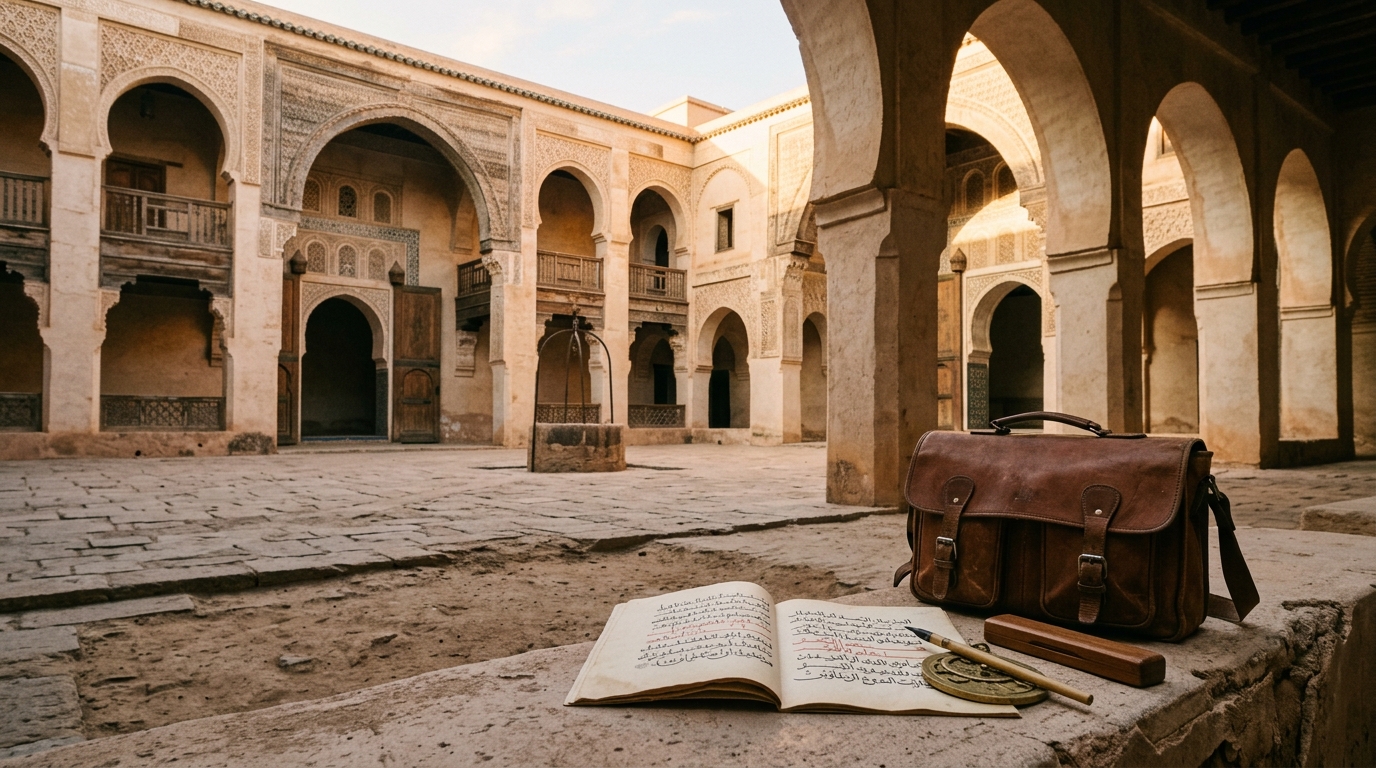
Open any list of travel quotes and you will meet him within the first three entries: “Travelling, it leaves you speechless, then turns you into a storyteller,” attributed to Ibn Battuta. Here is the uncomfortable bit, and the reason this page exists: that line appears in no published translation of his book. Not in H.A.R. Gibb’s classic 1929 rendering, not in Tim Mackintosh-Smith’s 2002 edition. What makes this genuinely odd is that Ibn Battuta is the one author who never needed an invented quote. Born in Tangier in 1304 and trained as an Islamic judge, he left home at 21 for a pilgrimage to Mecca that was meant to take about a year and a half. He came back 29 years later, having logged roughly 117,000 kilometres, about 73,000 miles, through more than 40 modern countries. That is around three times the distance Marco Polo managed. The book he dictated on his return, known as the Rihla, is full of lines that earn their place on any wall. So this page does the sourcing properly. Every quote below is labelled as what it actually is, a verified line from the Rihla or a modern coinage flagged honestly, and the five books worth owning are here with their receipts.
Early Life and the Road Out of Tangier
Abu Abdallah Muhammad ibn Battuta was born in Tangier, Morocco, on 25 February 1304, into a family of legal scholars in the Marinid sultanate. He trained as a qadi, an Islamic judge, the family trade, and at 21 he did what devout young scholars with means were expected to do once: he set out on the pilgrimage to Mecca. The departure passage in the Rihla is the most quietly devastating thing he ever dictated. He left Tangier on 14 June 1325, as he records it, “with the intention of making the Pilgrimage to the Holy House and the Tomb of the Prophet,” alone, with no caravan and no companions, “swayed by an overmastering impulse within me and a desire long-cherished in my bosom to visit these illustrious sanctuaries” (H.A.R. Gibb translation, Travels in Asia and Africa 1325-1354, Routledge, 1929). His parents were still alive; he never saw his father again. “I braced my resolution to quit all my dear ones,” he says, “and forsook my home as birds forsake their nests.” Anyone who has boarded a one-way flight with a lump in their throat has lived a small version of that sentence (orias.berkeley.edu).
Twenty-Nine Years on the Road
The pilgrimage took a detour that lasted three decades. He crossed North Africa to Cairo, reached Mecca, and instead of turning home joined the caravans onward: Iraq and Persia, then down the East African coast to Mogadishu and Kilwa, then Anatolia, the Black Sea steppe of the Golden Horde, and on to Delhi, where the sultan Muhammad bin Tughluq employed him as a qadi for about eight years, a post that paid magnificently and nearly cost him his head more than once. He served as a judge in the Maldives, reached Sri Lanka and Sumatra, and by his own account got as far as China. Home by 1349, he still was not finished: a campaign across the strait to Granada, then a final Saharan crossing to the Mali Empire and Timbuktu. Modern historians such as Ross E. Dunn estimate the full route at roughly 117,000 kilometres, unmatched by any traveller before the age of steam (history.com). When he finally settled, the Sultan of Morocco insisted the story be written down. Ibn Battuta dictated; the Granadan scholar Ibn Juzayy shaped the prose; the book was finished in 1355. Near its close sits the line that reads like a career summary, rendered by the UC Berkeley ORIAS project: “I have indeed, praise be to God, attained my desire in this world, which was to travel through the earth, and I have attained in this respect what no other person has attained to my knowledge” (orias.berkeley.edu).
Ibn Battuta’s Best Books and Editions
1. The Travels of Ibn Battutah (Macmillan Collector's Library)
Best for: First-time readers who want the journey in one volume
Tim Mackintosh-Smith’s abridgement of the Rihla in a pocket-sized clothbound edition. The travel writer who spent years retracing Ibn Battuta’s route selects and introduces the best of the journey. The copy to actually carry.
Check Price on Amazon →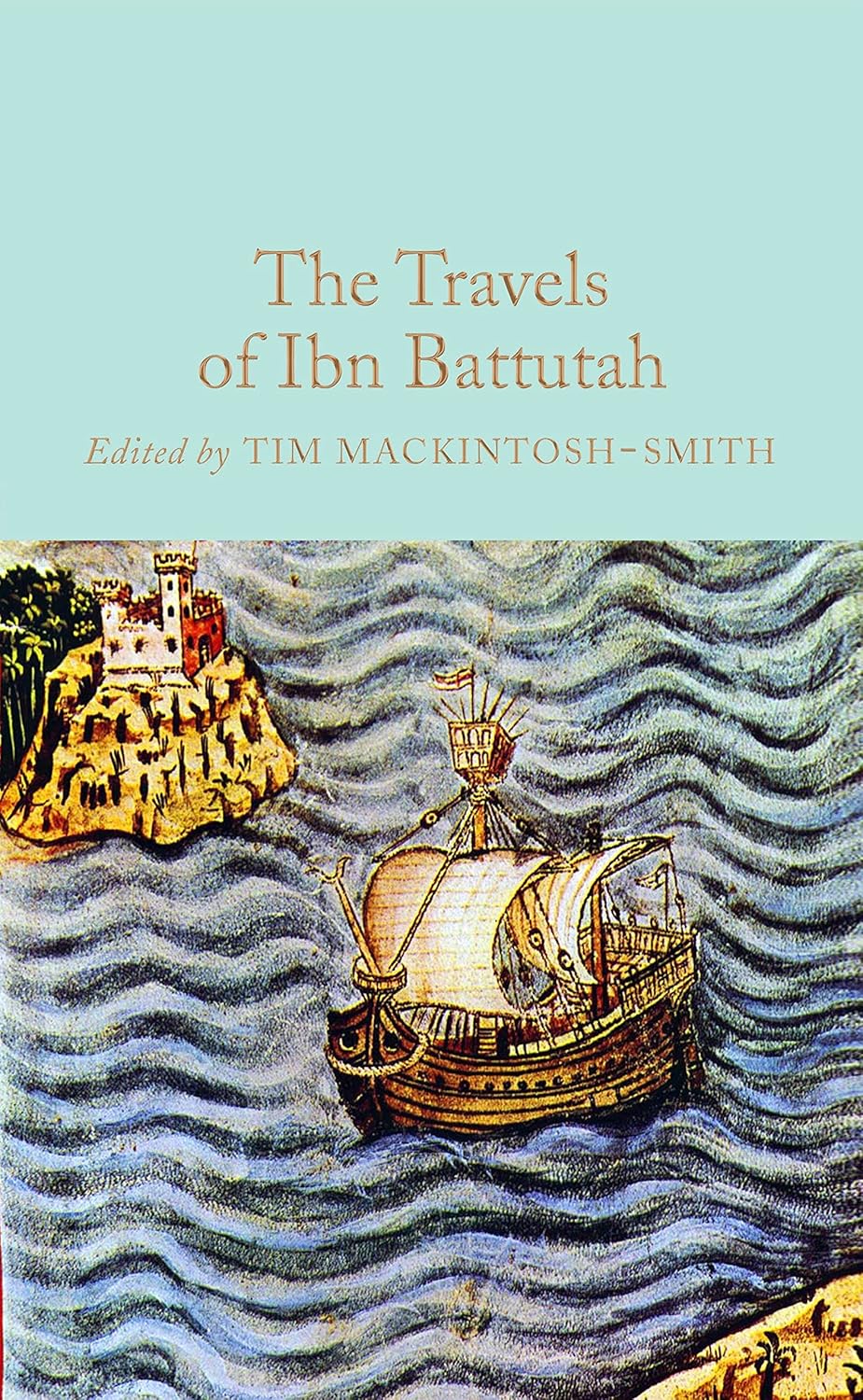
2. The Travels of Ibn Battuta: 1325-1354 (Dover, Gibb translation)
Best for: Readers who want the source the verified quotes come from
H.A.R. Gibb’s 1929 translation is where the real lines on this page live, the setting-out-alone passage included. An inexpensive Dover paperback of the rendering scholars have cited for nearly a century.
Check Price on Amazon →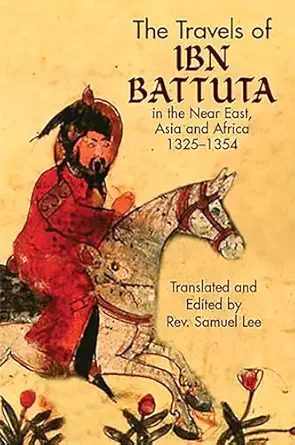
3. The Adventures of Ibn Battuta (Ross E. Dunn)
Best for: Context: what the Rihla leaves out and what it embellishes
The standard modern account of the man and his world, from a historian who treats the Rihla with affection and a fact-checker’s eye. Reads the journey against the 14th-century Islamic world it crossed.
Check Price on Amazon →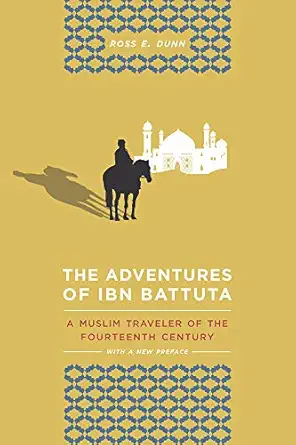
4. Ibn Battuta in Black Africa (Hamdun and King)
Best for: The East Africa and Mali journeys in close-up
The African legs of the route, translated with commentary. His Saharan crossing to Mali and Timbuktu is one of the only eyewitness accounts of the empire at its height, and it is all here.
Check Price on Amazon →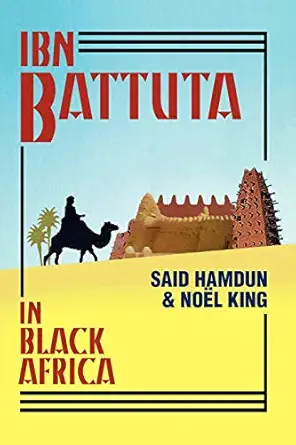
5. The Amazing Travels of Ibn Battuta (Fatima Sharafeddine)
Best for: Kids, classrooms and the gift shelf
An illustrated retelling that follows the route map-first, drawn in the style of Moroccan tilework. The painless way to hand a nine-year-old the greatest road trip in history.
Check Price on Amazon →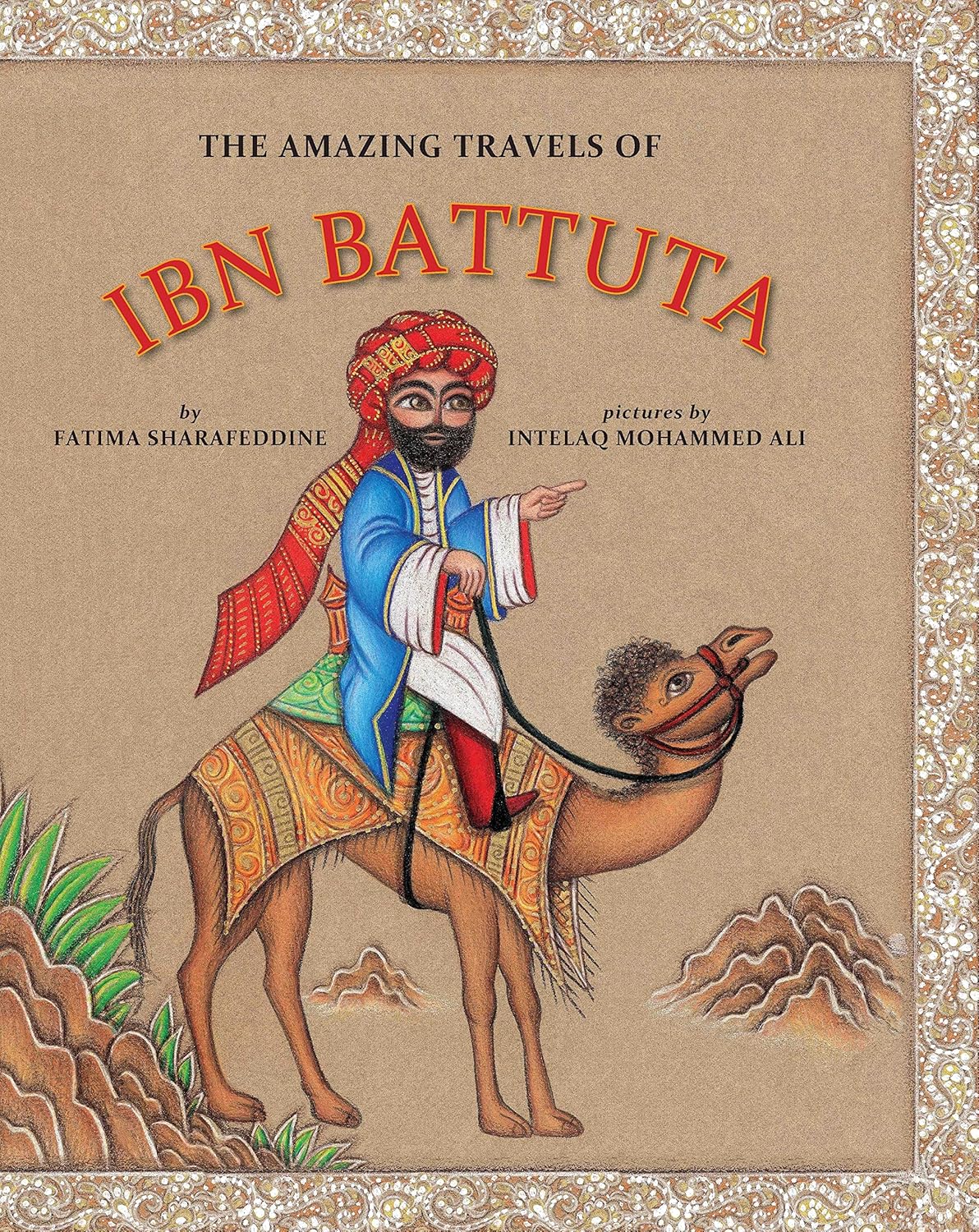
His Travel Philosophy in the Rihla’s Own Words
Ibn Battuta never wrote a theory of travel; he recorded one practice at a time. The closest thing to a stated rule appears early in the Rihla and governs the whole route: never, so far as possible, take the same road twice. Ross E. Dunn calls it his guiding habit, and it explains the journey’s strange shape, the loops through Anatolia, the zigzags across Persia, the refusal of every sensible shortcut home. The rule has quietly become the spine of modern long-haul travel advice: the way back is its own journey, so make it new.
The deeper thread in the Rihla is that travel costs something real and is worth it anyway. He buries his mother’s death in a subordinate clause and admits homesickness perhaps twice in a thousand pages, yet the opening passage, forsaking home as birds forsake their nests, tells you he felt every mile of it. That unsentimental honesty puts him upstream of the whole professional travel-writing tradition this site catalogues, from Paul Theroux, whose railway books run on the same dry-eyed observation, to Bill Bryson, who shares his eye for the absurd detail in a foreign market, to Rick Steves, whose travel-as-education creed is the Rihla’s scholarly instinct with a guidebook attached.
And the part of his philosophy nobody quotes is the part he would have led with: he travelled as a scholar, not a sightseer. Every city is judged by its judges, its teachers, its hospitality to strangers. The Rihla’s real subject is how a connected world treats a traveller of good faith, which is why the book still reads as the founding document of every solo traveller’s quiet belief that the road will mostly meet you halfway.
Memorable Ibn Battuta Quotes by Theme
Setting Out Alone
I set out alone, having neither fellow-traveller in whose companionship I might find cheer, nor caravan whose party I might join, but swayed by an overmastering impulse within me and a desire long-cherished in my bosom to visit these illustrious sanctuaries.
— Ibn Battuta The Rihla, opening passage (H.A.R. Gibb translation, 1929) The departure from Tangier, June 1325. Arguably the greatest solo-travel sentence ever recorded, and it is fully verified: this is the Rihla's own opening movement in Gibb's classic translation.
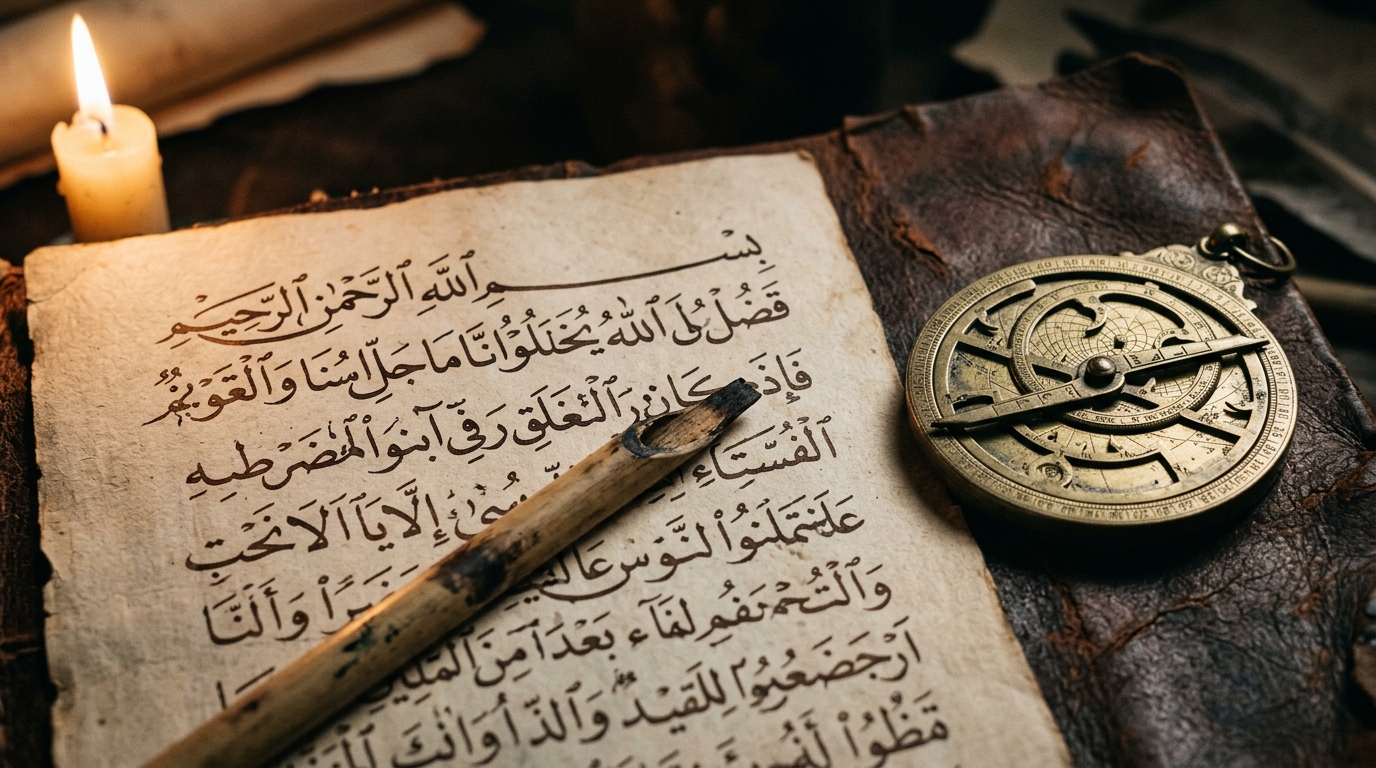
I braced my resolution to quit all my dear ones, female and male, and forsook my home as birds forsake their nests.
— Ibn Battuta The Rihla, opening passage (H.A.R. Gibb translation, 1929) The cost of the impulse, in the same opening pages. His parents were alive when he left; his father died before he returned. Every long-term traveller recognises this sentence.
The Long Road
A Gift to Those Who Contemplate the Wonders of Cities and the Marvels of Travelling.
— Ibn Battuta The Rihla's full title (Tuhfat an-Nuzzar, completed 1355) The book's actual name, and quietly the oldest travel-content mission statement on record. "The Rihla" simply means "the journey"; the full title is the better quote.
I have indeed, praise be to God, attained my desire in this world, which was to travel through the earth, and I have attained in this respect what no other person has attained to my knowledge.
— Ibn Battuta The Rihla, closing pages (rendering per UC Berkeley ORIAS) The career summary, dictated near the end of the book. No false modesty, and no exaggeration either: nobody on record had travelled further. Translation wording varies slightly between editions.
What Travel Leaves Behind
Never, so far as possible, to cover a second time any road.
— Ibn Battuta His stated travel rule in the Rihla (paraphrase per Ross E. Dunn, The Adventures of Ibn Battuta) The habit that shaped the whole 117,000 km route. Quoted here as the scholars paraphrase it rather than as a verbatim line, because that is what honest sourcing looks like.
Travelling, it leaves you speechless, then turns you into a storyteller.
— Attributed to Ibn Battuta (unverified) Appears in no published translation of the Rihla The most famous "Ibn Battuta quote" on the internet, and it is untraceable: not in Gibb (1929), not in Mackintosh-Smith (2002). Goodreads, Pinterest and even Google's AI Overview hand it to him without a source. A lovely line; just not his on any evidence we can find.
A sourcing note, because this page exists to be the accurate one and our editorial standards demand receipts: alongside the storyteller line above, the popular quote about travel giving you “home in a thousand strange places, then leaves you a stranger in your own land” is also untraceable in any published translation of the Rihla, despite appearing on thousands of prints. Both lines are modern coinages that attached themselves to the most-travelled name available. The pattern is the same one we document for the famous misattributed Mark Twain sailing quote: the bigger the legend, the stickier the fake. The difference here is that the verified Rihla passages, checkable against the Gibb translation and the UC Berkeley ORIAS resource, are better writing than the coinages.
For the full canon in context, browse the 100 best travel quotes mega-pillar, where the setting-out-alone passage holds down the historical end.
Other Voices in Professional Travel Writing
Frequently Asked Questions about Ibn Battuta
What was Ibn Battuta's most famous travel quote?
Online, it is “Travelling, it leaves you speechless, then turns you into a storyteller.” That line appears in no published translation of the Rihla and is best treated as a modern coinage. The most famous line he verifiably dictated is the Rihla’s opening: “I set out alone… swayed by an overmastering impulse within me” (Gibb translation, 1929).
Did Ibn Battuta really say "it leaves you speechless, then turns you into a storyteller"?
There is no evidence he did. The line cannot be found in H.A.R. Gibb’s 1929 translation or Tim Mackintosh-Smith’s 2002 edition of the Rihla, and no source ever cites a chapter or page. It circulates on aggregator sites and quote images under his name. The same applies to the “home in a thousand strange places” line.
How far did Ibn Battuta travel?
Roughly 117,000 kilometres, about 73,000 miles, across some 30 years (1325 to 1354), through territories spanning more than 40 modern countries. That is close to three times Marco Polo’s estimated distance, which is why historians call him the greatest traveller of the pre-modern world.
What is the Rihla?
The account of his journeys, dictated on the Sultan of Morocco’s orders to the scholar Ibn Juzayy and completed in 1355. Its full title translates as “A Gift to Those Who Contemplate the Wonders of Cities and the Marvels of Travelling.” The word rihla simply means journey, and the book is the masterpiece of the genre.
What is the best book of Ibn Battuta's travels to start with?
Start with Tim Mackintosh-Smith’s The Travels of Ibn Battutah for a beautifully edited single volume. Pick up the Dover edition of Gibb’s translation for the classic source text, and read Ross E. Dunn’s The Adventures of Ibn Battuta for the historical context the Rihla assumes you already know.
Ibn Battuta’s Lasting Legacy for Travellers
Seven centuries on, his name is everywhere a traveller looks: an airport mall in Dubai, a ferry across the Strait of Gibraltar, a crater on the Moon. The deeper legacy is the template. Ibn Battuta proved that the journey itself can be the life’s work, that going alone is survivable and even holy, and that the road owes you nothing except material. He needed no invented storyteller quote because he embodied the idea: a man leaves home in silence and comes back with a thousand pages. The team behind this site keeps his receipts in order on our about page, and the rule he left us is simple enough to pack: take the new road, write it down. If you buy one book, make it The Travels of Ibn Battutah. If you are building a shelf for the road, start with our guide to the best books for solo travelers, then browse the rest of our author bio library for travel wisdom with its sources intact.