
Rumi: Travel Quotes, the Refugee Road to Konya, and the Journey Within
Verified Rumi travel quotes labelled as what they actually are: Masnavi originals, Coleman Barks renderings, or modern fabrications. Plus the refugee road that made him, and the five books worth owning.
Rumi is routinely reported as the best-selling poet in the United States, which is a strange afterlife for a 13th-century Islamic scholar who wrote in Persian and died nearly 600 years before the country existed. It gets stranger: the man behind the travel-mug quotes was a refugee. Jalal al-Din Muhammad Rumi was born in 1207 on the eastern edge of the Persian world, and when the Mongol armies began swallowing it, his family walked away from everything. The road ran roughly 2,500 miles through Nishapur, Baghdad, Mecca and Damascus before it ended in Konya, in present-day Turkey, where he spent the rest of his life and produced some 65,000 verses. There is a catch for quote lovers, and this page exists because of it: most of the “Rumi” circulating in English is the work of an American poet named Coleman Barks, who reads no Persian, and several of the most shared “Rumi travel quotes” appear in none of his works at all. So this page does the sourcing properly. Every quote below is labelled as what it actually is, a Masnavi original, a Barks rendering, or a modern fabrication; the famous fakes are flagged where you can see them; and the five books worth owning are here with their receipts.
Early Life and the Refugee Road to Konya
Rumi was born Jalal al-Din Muhammad on 30 September 1207, in or near Balkh, a great Silk Road city of learning in present-day Afghanistan; some scholars place the family in Wakhsh, a smaller town in modern Tajikistan. His father, Baha al-Din Walad, was a theologian and preacher known as the Sultan of Scholars. Around 1212, with the Mongol armies gathering in the east, the family left and kept leaving: years on the road through Nishapur, where the story goes that the elderly poet Attar recognised something in the boy and gifted him a book of mysteries, then Baghdad, a pilgrimage to Mecca, and long stretches in Damascus and Karaman, where Rumi’s mother died along the way. Around 1228 the Seljuk sultan invited Baha al-Din to teach in Konya, in Anatolia, and the wandering finally stopped. Rumi was about 21. He had crossed half the medieval world before he was old enough to teach, and everything he later wrote about journeys was written by someone who knew exactly what the road costs.
Shams of Tabriz, the Masnavi, and the Whirling Dervishes
When his father died in 1231, Rumi inherited the teaching post and settled into the life of a respected, conventional scholar. Then, in late 1244, a wandering dervish named Shams of Tabriz stopped him in the street with a question, and the scholar caught fire. The friendship consumed him: he traded the lectern for poetry and for the turning meditation that became the whirling ceremony, and when Shams vanished in 1247, possibly murdered by jealous disciples, Rumi poured the grief into the Divan-e Shams-e Tabrizi, tens of thousands of verses signed with his lost friend’s name instead of his own. His later masterwork, the Masnavi, runs to roughly 25,000 couplets of stories and teaching across six books, dictated over the final decade of his life, and admirers called it the Quran in Persian. He died in Konya on 17 December 1273. His funeral drew Muslims, Christians and Jews together, and his followers, organised by his son, became the Mevlevi order, the whirling dervishes whose sema ceremony is now on UNESCO’s intangible heritage list. His shrine beneath Konya’s turquoise dome draws millions of visitors a year, which makes the refugee from Balkh one of the most visited poets on earth.
Rumi’s Best Books and Recommended Translations
1. The Essential Rumi, New Expanded Edition
Best for: First-time readers who want the Rumi everyone is quoting
The 1995 Coleman Barks collection that made a 13th-century Persian mystic a modern bestseller. Free-verse renderings rather than literal translation, and honest about it, but this is where the famous lines live, the travel one included.
Check Price on Amazon →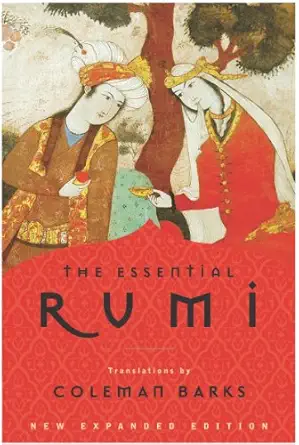
2. A Year with Rumi: Daily Readings
Best for: Building a daily reading habit on the road
365 short readings in Barks’s renderings, one for each day. The slow-travel format: a single poem with morning coffee beats fifty in an airport scroll, and the hardcover survives a year in a daypack.
Check Price on Amazon →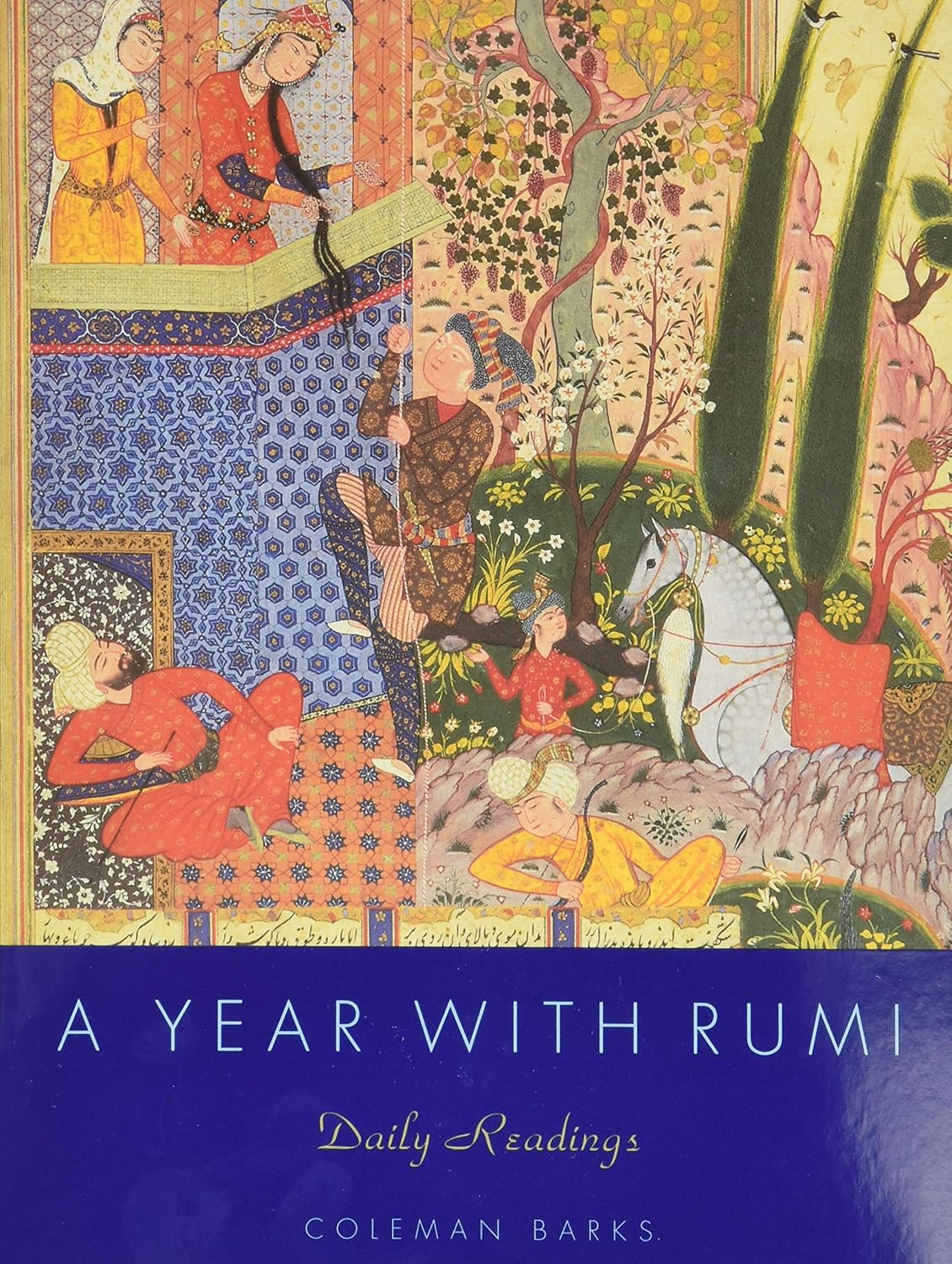
3. The Illuminated Rumi
Best for: The gift copy and the coffee table
Barks’s renderings set into Michael Green’s illustrated collages. The edition people buy after the paperback falls apart, and the one that gets non-readers to pick Rumi up off the table.
Check Price on Amazon →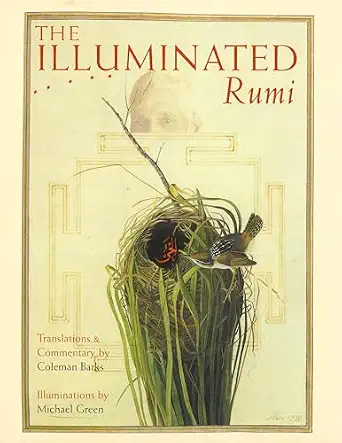
4. The Spiritual Poems of Rumi (Nader Khalili)
Best for: Readers who want a second voice beside Barks
Nader Khalili, the Iranian-born architect celebrated for his earth-built houses, translated Rumi with an ear for the original’s directness. A useful corrective read alongside Barks: same poet, noticeably different temperature.
Check Price on Amazon →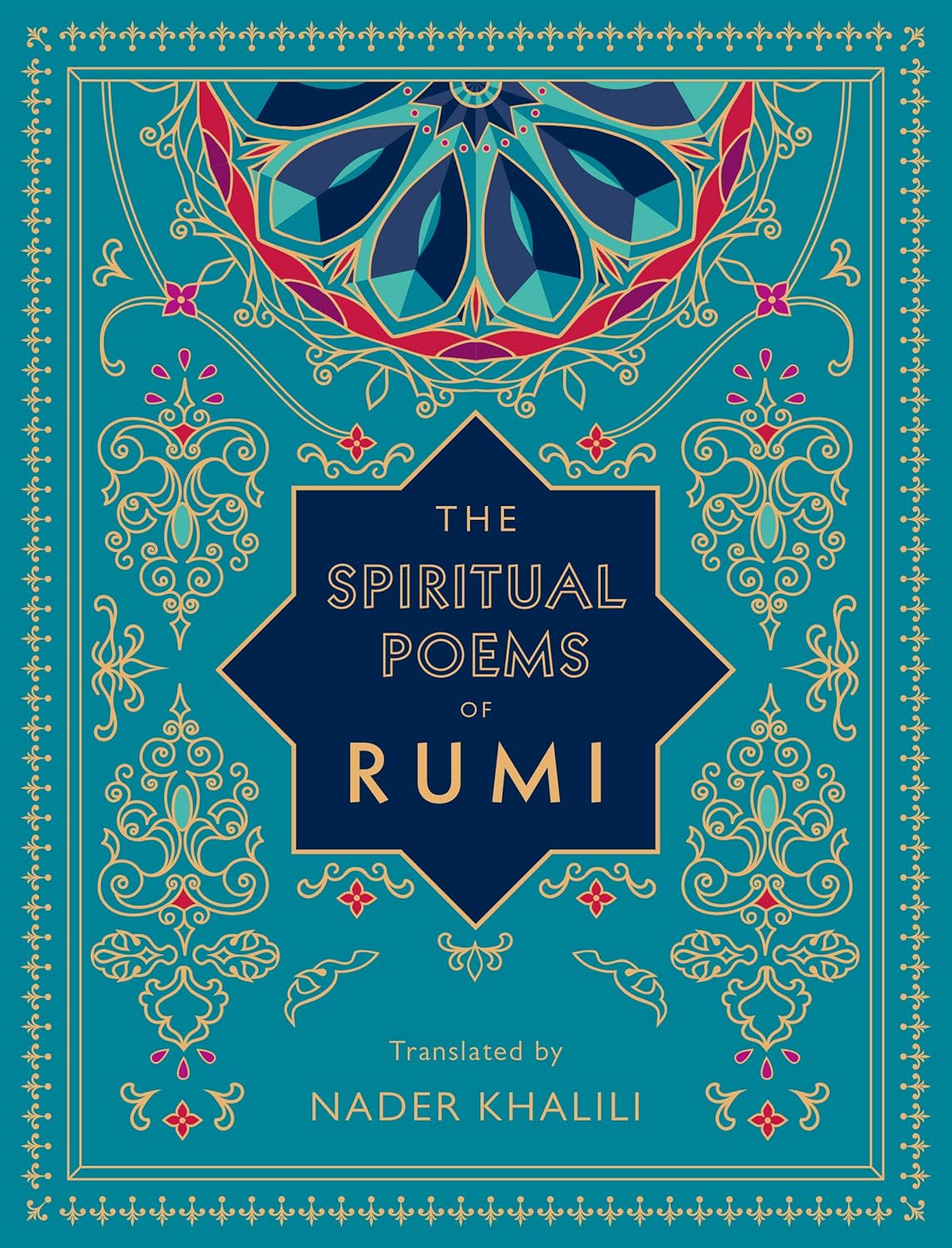
5. Rumi's Little Book of Life
Best for: The pocket, the carry-on and the hostel bunk
Maryam Mafi’s compact translation of 196 short poems on the garden of the soul, the heart and the spirit. Genuinely pocket-sized, which is why copies keep surfacing in hostel book exchanges worldwide.
Check Price on Amazon →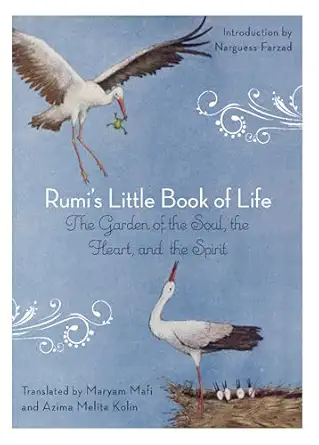
His Travel Philosophy in His Own Words
The one travel instruction with an undisputed home in his work is practical: “Whoever travels without a guide needs two hundred years for a two-day journey.” It sits in Book III of the Masnavi, his six-volume teaching poem, and it is not really about hiring a tour leader. The guide is the teacher, the friend who has been further down the road than you; Rumi’s was Shams. But like most great travel lines it works at every altitude, and anyone who has lost an afternoon to the wrong bus station can confirm the arithmetic.
The deeper thread runs inward. The rendering the quote sites love, about having no need to travel anywhere because the journey is within yourself, carries a genuine Divan image of entering your own mine of rubies, and the famous Barks line about travel bringing power and love back into your life belongs to the same argument: the going out is fuel for the going in. That places Rumi at the source of a current that runs through the whole contemplative school of travel writing, the one Pico Iyer works when he argues that the journey completes in stillness, and that Elizabeth Gilbert rode through an Indian ashram in Eat, Pray, Love. Eight centuries upstream of both, a man in Konya was already insisting that the point of crossing the world is what it does to the crosser, which is why his lines anchor so many of the best solo travel quotes.
And the instruction he keeps repeating is the simplest one: leave. “Why do you stay in prison when the door is so wide open?” asks the Barks rendering of his community-of-the-spirit poem, and the field quote, the most famous meeting place in modern poetry, points somewhere beyond the map entirely. For a man who spent his last forty years in one city, Rumi is relentless about doors, roads and departures, because the door he means is rarely the one in the wall. Read him before a trip and he will improve the trip; read him after and he will explain what happened to you.
Memorable Rumi Quotes by Theme
The Famous Lines
Travel brings power and love back into your life.
— Rumi The Essential Rumi (Coleman Barks rendering, 1995) The most shared Rumi travel quote online. It appears in Barks's Essential Rumi; no specific Persian original line has been identified, so the careful label is a Barks rendering rather than a translation.
Whoever travels without a guide needs two hundred years for a two-day journey.
— Rumi Masnavi, Book III (13th century) The travel line with the cleanest paper trail, from his six-book teaching poem. The guide he means is a teacher for the inner road, but it holds up impressively well at the bus station.
The Journey Within
You have no need to travel anywhere. Journey within yourself, enter a mine of rubies and bathe in the splendor of your own light.
— Rumi Divan-e Shams-e Tabrizi (popular English rendering) The mine-of-rubies image is genuinely his, from the Divan; the smooth English phrasing is a modern rendering. The whole inner-journey school of travel writing is downstream of this idea.
Out beyond ideas of wrongdoing and rightdoing, there is a field. I'll meet you there.
— Rumi The Essential Rumi (Coleman Barks rendering, 1995) Barks's most famous rendering, from a Divan quatrain. Probably the most quoted Rumi in English, at weddings, in films and on at least one departure-gate tattoo.
The Open Door
Why do you stay in prison when the door is so wide open?
— Rumi The Essential Rumi, "A Community of the Spirit" (Coleman Barks rendering, 1995) The booking-confirmation quote. From one of Barks's most anthologised renderings, and the line most likely to end up screenshotted the night before a one-way flight.
It's your road, and yours alone. Others may walk it with you, but no one can walk it for you.
— Not Rumi (modern fabrication) Appears in no Masnavi or Divan translation The most common Rumi fake. It circulates on every aggregator under his name, and scholars and the r/Rumi community have searched his works for it in vain. Nobody knows who wrote it; we do know it was not a 13th-century Persian mystic.
A sourcing note, because this page exists to be the accurate one and our editorial standards demand receipts: alongside the road fake above, the line about living life as if everything is rigged in your favor also circulates under Rumi’s name with no home anywhere in his works. And the Barks question deserves honesty rather than outrage: Coleman Barks reads no Persian and reworks Victorian literal translations into free verse, which is why his Rumi sounds like a wise friend and the scholarly Rumi sounds like a medieval theologian. Both are worth reading; they are just not the same thing, and we label which is which. Quotes coming loose from their sources is what happens to the most quotable voices in any language, a story we tell in full in the famous misattributed Mark Twain sailing quote investigation.
For the full canon in context, browse the 100 best travel quotes mega-pillar, where the journey-within line holds down the philosophical end.
Other Voices on the Inner Journey
Frequently Asked Questions about Rumi
What is Rumi's most famous travel quote?
Online, it is “Travel brings power and love back into your life,” which appears in Coleman Barks’s The Essential Rumi (1995) as a free rendering rather than a literal translation. The travel line with the cleanest source in Rumi’s own work is from the Masnavi, Book III: “Whoever travels without a guide needs two hundred years for a two-day journey.”
Did Rumi really say "It's your road, and yours alone"?
No. The line appears in no translation of the Masnavi or the Divan-e Shams, and scholars and Rumi readers have searched for it in vain. It is a modern fabrication that aggregator sites shelve under his name. The same goes for “Live life as if everything is rigged in your favor,” which also has no home in his works.
What is the best Rumi book to start with?
Start with The Essential Rumi if you want the famous lines in their best-known English form. Read Nader Khalili’s The Spiritual Poems of Rumi beside it for a voice closer to the Persian, and pack Maryam Mafi’s Rumi’s Little Book of Life when bag space is the constraint. The Illuminated Rumi is the gift edition.
Was Rumi himself a traveller?
Profoundly. His family fled the Mongol advance when he was a child, and the road from Balkh ran roughly 2,500 miles through Nishapur, Baghdad, Mecca, Damascus and Karaman before settling in Konya around 1228. He spent his last four decades in that one city, which is exactly the shape of his philosophy: the outer journey first, the inner journey forever.
Why do Rumi quotes vary so much between books?
Translation, mostly. Rumi wrote in Persian; Victorian scholars like R. A. Nicholson translated him literally; Coleman Barks, who reads no Persian, reworked those translations into modern free verse that became wildly popular. The same line can exist in three very different English versions, and plenty of viral “Rumi” exists in no version at all. Check the source before you ink it.
Rumi’s Lasting Legacy for Travellers
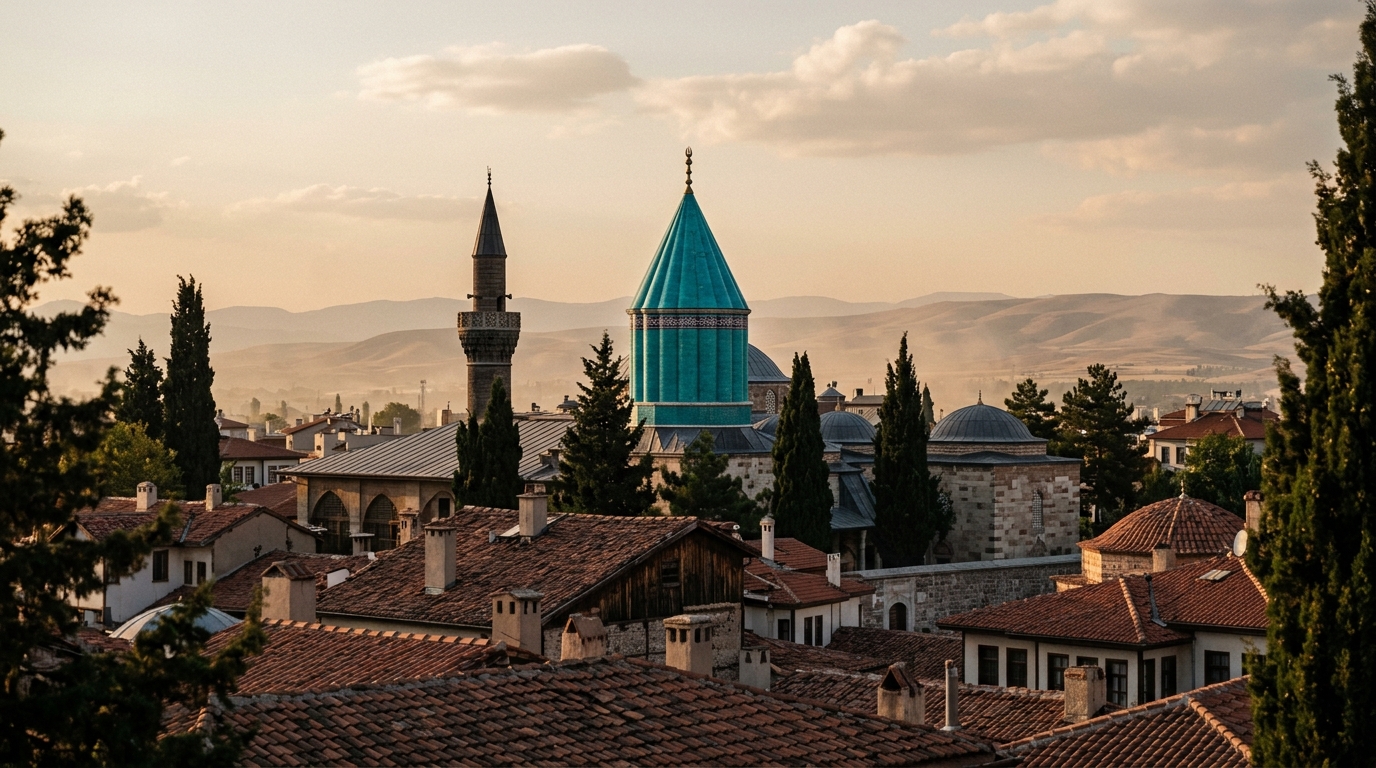
Eight centuries on, people still physically travel for Rumi. His shrine in Konya draws millions of visitors a year, and every December the city fills for Seb-i Arus, the anniversary of his death, which the Mevlevi order marks not with mourning but with the whirling sema he left them. That is the legacy in miniature: a refugee who turned displacement into the most portable philosophy of travel ever written, where every departure gate opens inward. He made the inner journey a legitimate destination, and every traveller who has gone somewhere far away to sort themselves out is working from his map. If you buy one book, make it The Essential Rumi. If you are building a shelf for the road, start with our guide to the best books for solo travelers, then browse the rest of our author bio library for travel wisdom with its sources intact.