
Pico Iyer: Travel Quotes, Books, and the Art of Going Nowhere
Verified Pico Iyer travel quotes sourced to essay, book and talk, the five books worth reading first, and how the most famous living travel writer became the great advocate of staying still.

Pico Iyer wrote the sentence that modern travel runs on: we travel, initially, to lose ourselves; and we travel, next, to find ourselves. He published it in an essay called “Why We Travel” in Salon in March 2000, and it has been quoted, cropped, pinned and printed on departure-lounge walls ever since, almost never with the essay’s name attached. The man behind the line is stranger and better than the aggregators suggest. Born in Oxford to Indian academic parents, educated at Eton, Oxford and Harvard, an essayist at Time by 25, Iyer has spent more than three decades living in a small flat in suburban Nara, Japan, owning no car, and slipping away several times a year to a Benedictine hermitage on the Big Sur coast. The world’s most famous travel writer is also the world’s most persuasive advocate of going nowhere, and he insists those are the same argument. This page does the sourcing properly: every Pico Iyer travel quote below is cited to the essay, book or talk it actually comes from, the famous line he merely borrowed from Emerson is returned to its owner, and the five books worth reading are here with their receipts.
Early Life and Roots
Siddharth Pico Raghavan Iyer was born in Oxford, England, on 11 February 1957, the son of two Indian academics: the political philosopher Raghavan N. Iyer and the religious scholar Nandini Nanak Mehta. When he was seven the family moved to Santa Barbara, California, and from the age of nine he was crossing the Atlantic alone several times a year, commuting between a Californian home and an English boarding school. He has pointed to that childhood as the making of him: a boy with an Indian face, an English accent and an American address, at home in airports before he was old enough to drive. The credentials that followed were almost comically gilded, Eton, then a double first at Oxford, then Harvard, and by 1982 he was writing essays on world affairs for Time in New York. The desk job lasted four years before the road won.
Career Milestones, Japan, and the Hermitage
Video Night in Kathmandu (1988), his account of the West washing through Asia in the late eighties, reinvented what a travel book could be and made his name before he turned 32. The Lady and the Monk (1991) recorded his first year in Kyoto, where he met Hiroko Takeuchi, the woman he would build his life with. Since 1992 the most mobile writer of his generation has lived in a two-room flat in suburban Nara, Japan, without a car, renewing his visa for decades and writing by hand. The Global Soul (2000) made him the laureate of airports and jet lag; The Open Road (2008) distilled more than thirty years of conversations and journeys with the Fourteenth Dalai Lama, whom he has known since his father introduced them in 1974. And running underneath it all is the quietest thread: since 1991 Iyer has made more than a hundred retreats to the New Camaldoli Hermitage, a Benedictine monastery above the Big Sur coast, the practice that produced The Art of Stillness (2014), four TED talks with millions of views, A Beginner’s Guide to Japan (2019), and Aflame (2025). He never formally converted to anything; he just kept returning to the silence.
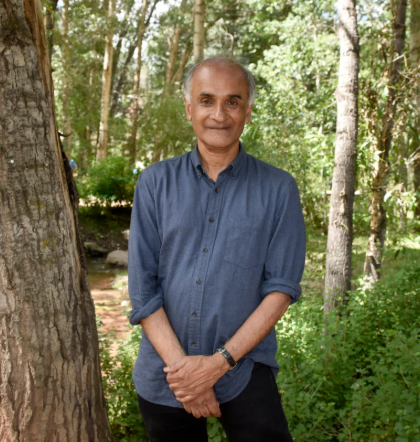
Pico Iyer’s Best Books and Recommended Works
1. The Art of Stillness: Adventures in Going Nowhere
Best for: Anyone whose trips keep getting faster and meaning less
The travel book about not travelling. Grown from his TED talk and his three decades of hermitage retreats, it makes the case that stillness is what turns movement into meaning. An hour to read, years to use.
Check Price on Amazon →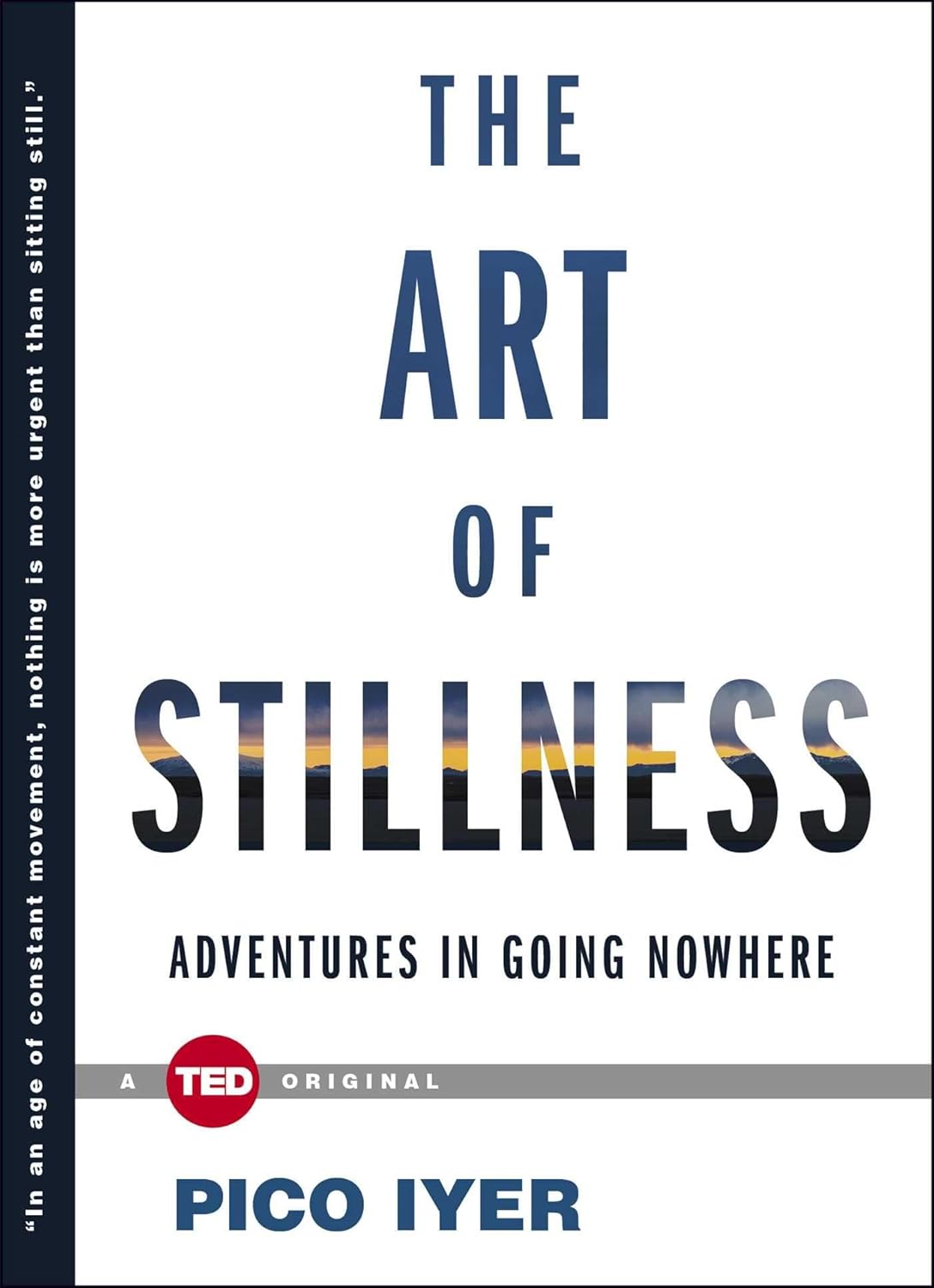
2. Video Night in Kathmandu: And Other Reports from the Not-So-Far East
Best for: Readers who want the reporter Iyer at full speed
Ten essays from 1980s Asia, where Rambo posters hang in Kathmandu and Manila sings perfect Motown. The 1988 debut that reinvented travel writing and still reads like dispatches from the future.
Check Price on Amazon →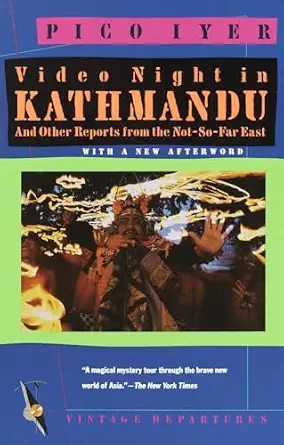
3. The Open Road: The Global Journey of the Fourteenth Dalai Lama
Best for: The journey as a lifetime of conversations
Iyer has known the Dalai Lama since 1974, when his father introduced them. Thirty years of travels and talks distilled into the rare book about a famous figure written from genuine friendship.
Check Price on Amazon →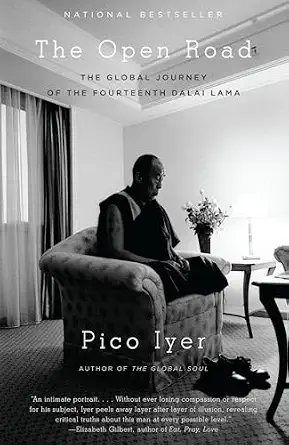
4. A Beginner's Guide to Japan: Observations and Provocations
Best for: Japan-bound travellers who want depth without a guidebook
Three decades of living in Nara distilled into aphorisms and provocations. The insider-outsider book on Japan: short enough for the flight over, sharp enough to argue with for the whole trip.
Check Price on Amazon →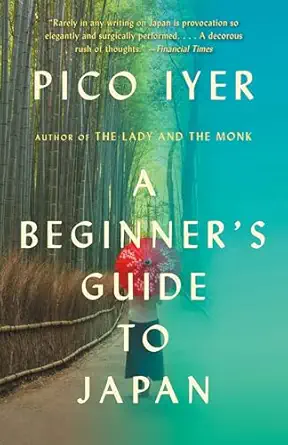
5. Falling Off the Map: Some Lonely Places of the World
Best for: Travellers drawn to the places nobody visits
Dispatches from the world’s most isolated countries: North Korea, Iceland, Bhutan, Paraguay. Travel writing from the edges of the map, at a secondhand-paperback price.
Check Price on Amazon →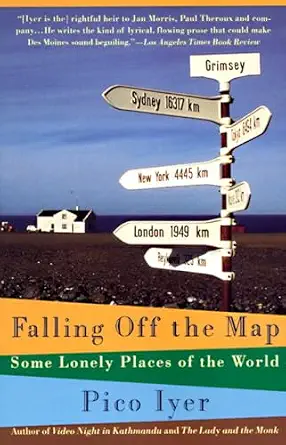
His Travel Philosophy in His Own Words
Iyer’s philosophy starts with the double movement. The full opening of “Why We Travel” (Salon, 2000) runs: “We travel, initially, to lose ourselves; and we travel, next, to find ourselves.” Losing comes first, and that order is the whole argument. We go abroad to be unmade a little, to have our certainties confiscated at customs, and only then does the finding start. Later in the same essay he gives the romance its precise mechanism: “And if travel is like love, it is, in the end, mostly because it’s a heightened state of awareness, in which we are mindful, receptive, undimmed by familiarity and ready to be transformed. That is why the best trips, like the best love affairs, never really end.” Travel, for Iyer, is not the miles. It is the attention.
The second thread is the return. In his 2013 TED talk “Where is home?”, the man who grew up commuting between continents said: “Movement is a fantastic privilege, and it allows us to do so much that our grandparents could never have dreamed of doing. But movement, ultimately, only has a meaning if you have a home to go back to.” It is the contemplative answer to the question every long-term traveller eventually faces, and it places him at the quiet end of a spectrum whose restless end belongs to Paul Theroux, the friend and rival who measures journeys in railway miles. Where the memoir school, Cheryl Strayed and Elizabeth Gilbert among them, treats motion as the method of repair, Iyer treats stillness as the destination motion is for. His lines anchor many of the best solo travel quotes precisely because solitude is his subject either way.
And the destination, in the end, is a chair. The signature passage of The Art of Stillness (2014) completes the argument his Salon essay began: in an age of speed, nothing is more invigorating than going slow; in an age of distraction, nothing is more luxurious than paying attention; in an age of constant movement, nothing is more urgent than sitting still. He has spent over a hundred retreats at a Big Sur hermitage testing the claim. The most famous living travel writer keeps insisting that the point of seeing the world is to come back changed enough to see your own kitchen, and he is probably right.
Memorable Pico Iyer Quotes by Theme
Why We Travel
We travel, initially, to lose ourselves; and we travel, next, to find ourselves.
— Pico Iyer Why We Travel (Salon, March 2000) The most quoted modern statement of why people leave home, almost always shared without its source. The original uses a semicolon; we keep it.
And if travel is like love, it is, in the end, mostly because it's a heightened state of awareness, in which we are mindful, receptive, undimmed by familiarity and ready to be transformed. That is why the best trips, like the best love affairs, never really end.
— Pico Iyer Why We Travel (Salon, March 2000) The essay's closing argument. Goodreads circulates a version with a typo ("in dimmed"); the original word is "undimmed".
We travel, in essence, to become young fools again, to slow time down and get taken in, and fall in love once more.
— Pico Iyer Why We Travel (Salon, March 2000) From the same essay as the hero quote. Travel as a way of recovering beginner's eyes.
Home and Belonging
Movement is a fantastic privilege, and it allows us to do so much that our grandparents could never have dreamed of doing. But movement, ultimately, only has a meaning if you have a home to go back to.
— Pico Iyer TED talk: Where is home? (2013) From his TED talk, presented here as a talk rather than book text. The contemplative answer to a life spent in departure lounges.
Home is not just the place where you happen to be born. It's the place where you become yourself.
— Pico Iyer TED talk: Where is home? (2013) The line for everyone whose passport and sense of belonging point to different places.
Stillness and Attention
In an age of speed, I began to think, nothing could be more invigorating than going slow. In an age of distraction, nothing can feel more luxurious than paying attention. And in an age of constant movement, nothing is more urgent than sitting still.
— Pico Iyer The Art of Stillness (TED Books / Simon and Schuster, 2014) The signature passage of the book, also delivered from the TED stage in 2014. The travel writer's case for going nowhere.
Travel is a fool's paradise.
— Ralph Waldo Emerson Self-Reliance (1841), quoted by Iyer in Why We Travel The most common Iyer mis-attribution. Emerson wrote it; Iyer quoted him in the Salon essay ("Travel is a fool's paradise, Emerson reminded us"), and quote sites have shelved the line under Iyer ever since. It belongs to Emerson.
A sourcing note, because this page exists to be the accurate one and our editorial standards demand receipts: the Emerson line above is the live mis-attribution, and a second line about travel being a matter of leaving our habits rather than our homes circulates under Iyer’s name with no stable primary source we could verify, so we do not print it as confirmed. Iyer’s own essays use semicolons and long dashes; we preserve his semicolons exactly and adjust only the dash typography. Quotes coming loose from their sources is an occupational hazard of writing this well, a story we tell in full in the famous misattributed Mark Twain sailing quote investigation.
For the full canon in context, browse the 100 best travel quotes mega-pillar, where the lose-ourselves line anchors the modern classics.
Other Voices in Modern Travel Writing
Frequently Asked Questions about Pico Iyer
Who is Pico Iyer and what is he known for?
Pico Iyer (born 1957) is a British-born essayist of Indian descent who has written for Time since 1982. He is best known for Video Night in Kathmandu (1988), The Global Soul (2000), The Open Road (2008) and The Art of Stillness (2014), and is widely considered the leading travel writer of his generation. He has lived in suburban Nara, Japan, since 1992.
What is Pico Iyer's most famous travel quote?
“We travel, initially, to lose ourselves; and we travel, next, to find ourselves,” from his essay “Why We Travel,” published in Salon in March 2000. It is the most quoted modern statement of why people travel, and it almost always circulates without its source.
What are Pico Iyer's best books?
Start with The Art of Stillness if you want the argument, Video Night in Kathmandu if you want the journalism, and A Beginner’s Guide to Japan if you want his adopted home. The Open Road covers his decades of friendship with the Dalai Lama, and Falling Off the Map collects dispatches from the world’s loneliest places.
Where does Pico Iyer live?
Since 1992 he has lived in a small two-room flat in suburban Nara, Japan, with his wife Hiroko, without a car. He also makes regular retreats to the New Camaldoli Hermitage in Big Sur, California, a Benedictine monastery he has visited more than a hundred times since 1991.
Did Pico Iyer say "travel is a fool's paradise"?
No. The line is Ralph Waldo Emerson’s, from his essay “Self-Reliance” (1841). Iyer quoted Emerson in “Why We Travel,” and quote aggregators have shelved the line under Iyer’s name ever since. It is one of the most common attribution mix-ups in travel writing.
Iyer’s Lasting Legacy for Travellers
Iyer’s gift to travellers is the upgrade in ambition. He moved the question from where to go to what the going is for, and then had the nerve to answer that the journey completes at a desk, in a chair, in silence. A generation of slow-travel advocates, digital sabbath keepers and one-bag minimalists are working from arguments he made first and made better. If you read one of his books, make it The Art of Stillness. If you are building a shelf for the road, start with our guide to the best books for solo travelers, then browse the rest of our author bio library for travel wisdom with its sources intact.