Ursula K. Le Guin: Travel Quotes, Best Books, and the Journey That Matters
Verified Ursula K. Le Guin travel quotes sourced to book and chapter, the five books worth reading first, and how a writer who barely left Portland became the most-travelled voice in modern fiction.

Ursula K. Le Guin wrote the single most quoted line about journeys in modern literature, and almost nobody who shares it can tell you where it comes from. It is good to have an end to journey toward; but it is the journey that matters, in the end appears on inspiration boards stripped of its source, which is a quiet shame, because the source is the whole point: a diplomatic envoy and an exiled politician hauling a sledge across eight hundred miles of ice in The Left Hand of Darkness. Le Guin’s own travel was modest. She crossed to France by ocean liner once, met her husband on board, and then spent six decades writing from Portland, Oregon. Yet her imagined worlds, mapped with the anthropological precision she inherited from her parents, made her the most serious travel writer the science fiction shelf has ever held. Every Ursula K. Le Guin travel quote below is cited to book, year and publisher, the famous line that is not hers is flagged, and the five books that hold the journeys are here when you want to go further than a caption.
Early Life and Roots
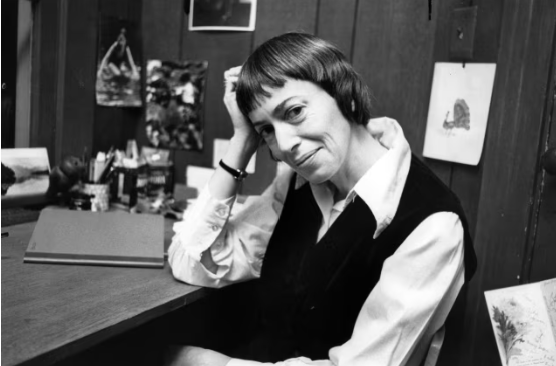
Ursula Kroeber was born in Berkeley, California on 21 October 1929, into a household where understanding other cultures was the family trade. Her father, Alfred L. Kroeber, was one of the founding anthropologists of the American academy; her mother, Theodora Kroeber, wrote Ishi in Two Worlds, the landmark account of the last survivor of the Yahi people. Dinner-table conversation ran on how societies work, what customs mean, and how a stranger should look at a world not built for them, which is to say it ran on the exact skills her novels would later be made of. She read Norse myth and Taoist philosophy as a girl, took degrees at Radcliffe and Columbia in Renaissance literature, and in 1953 boarded the Queen Mary for France on a Fulbright. That crossing was the great literal journey of her life: on board she met the historian Charles Le Guin, married him in Paris within months, and kept his name and her initial for the next sixty-five years. The travel pattern was set early and never changed. Go once, go deep, and bring it all home to the desk.
Career Milestones and a Life of Imagined Voyages
The Le Guins settled in Portland, Oregon in 1958, and from that one house she launched the most ambitious travel itinerary in modern fiction. A Wizard of Earthsea (1968) sent a young mage sailing an archipelago to learn his true name. The Left Hand of Darkness (1969) sent an envoy across the ice of a planet whose people have no fixed gender, and won both the Hugo and Nebula awards. The Dispossessed (1974) sent a physicist between two worlds that cannot understand each other, and won both again, making her the first author to take science fiction’s two biggest prizes twice for novels. The honours that followed crossed shelves the way her characters crossed worlds: a National Book Award in 1973, Library of America publication in her own lifetime, which almost never happens to a living writer, and the 2014 National Book Foundation Medal for Distinguished Contribution to American Letters, accepted with a speech about art, freedom and the resistance to capitalism that promptly travelled further than most novels do. She died in Portland on 22 January 2018, at home, which for her was never the opposite of travelling. It was where the voyages were written.
Ursula K. Le Guin’s Best Books and Recommended Works
1. The Left Hand of Darkness
Best for: First-time Le Guin readers and anyone chasing the journey-matters quote to its source
The 1969 masterpiece that contains her most famous travel line. An envoy and an exile haul a sledge across eight hundred miles of ice, and the slowest journey in science fiction becomes its deepest meditation on friendship and going. Hugo and Nebula winner.
Check Price on Amazon →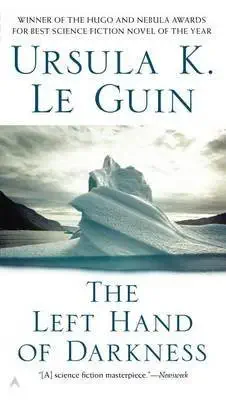
2. The Dispossessed: 50th Anniversary Edition
Best for: Travellers between worlds, cultures or convictions
Her double Hugo and Nebula winner about a physicist who leaves one world for its estranged twin. The novel that gives travellers the line true voyage is return: a meditation on what you can carry between societies and what will not translate.
Check Price on Amazon →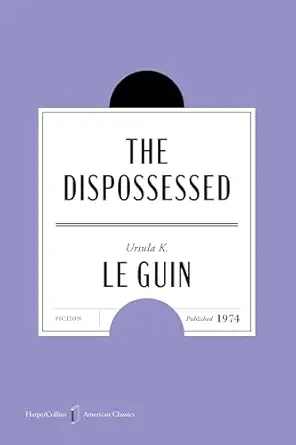
3. A Wizard of Earthsea
Best for: Readers who want the coming-of-age voyage that started the Earthsea cycle
The 1968 classic where a young mage learns his true name by sailing an island archipelago drawn with a cartographer’s love. Coming-of-age travel as identity, and the entry point to one of fantasy’s great worlds.
Check Price on Amazon →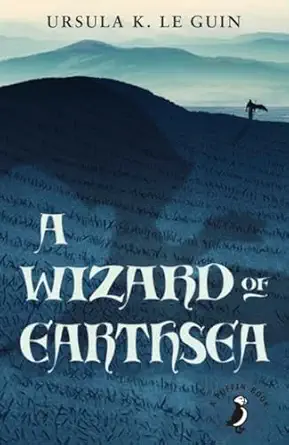
4. The Wave in the Mind: Talks and Essays
Best for: Writers and readers who want Le Guin's mind without the spaceships
Talks and essays on writing, reading and being, collected in 2004. Where her thinking about imagination as a way of travelling gets said in her own voice, no narrative required.
Check Price on Amazon →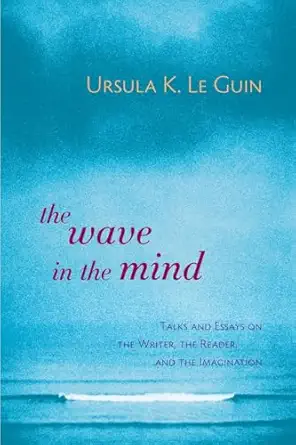
5. No Time to Spare: Thinking About What Matters
Best for: Anyone who wants the view from the far end of a long, well-lived journey
Her late blog essays, collected in 2017. Cats, breakfast, ageing, fantasy and the state of the world, written by an 80-something who measured her journeys in decades rather than miles.
Check Price on Amazon →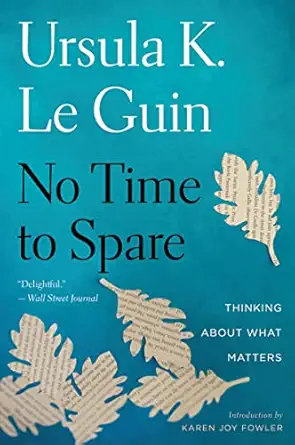
Her Travel Philosophy in Her Own Words
Le Guin’s travel philosophy starts by demoting the destination. The famous line, spoken by Estraven in The Left Hand of Darkness (1969), Chapter 5, is usually shared as comfort, but in the book it is survival advice on the ice: “It is good to have an end to journey toward; but it is the journey that matters, in the end.” Note what it does not say. It does not say the destination is worthless; it says the destination is good precisely because it gets you walking. Everything that changes you happens on the way.
The second thread is return. The homecoming counterweight to the journey line is carved, in the novel, on a gravestone: “To be whole is to be part; true voyage is return,” from The Dispossessed (1974). She sharpened the same idea elsewhere in the book: “You can go home again… so long as you understand that home is a place where you have never been.” Travel, in Le Guin’s accounting, is not completed at the farthest point. It is completed when you walk back through your own door carrying everything the road put in you, and find the place changed because you are.
And underneath both threads runs her honesty about what going costs. “When you light a candle, you also cast a shadow,” she wrote in A Wizard of Earthsea (1968), and the whole Earthsea cycle is that sentence at sea: every voyage out throws a darkness that has to be faced, named and owned. She had no patience for wanderlust as decor. Going somewhere, in her books, is the most consequential thing a person can do, which is exactly why it matters.
Memorable Ursula K. Le Guin Quotes by Theme
The Journey That Matters
It is good to have an end to journey toward; but it is the journey that matters, in the end.
— Ursula K. Le Guin The Left Hand of Darkness (Ace Books, 1969), Chapter 5 The most quoted journey line in modern fiction, almost always shared without its source. This is the book and chapter it lives in.
The only thing that makes life possible is permanent, intolerable uncertainty: not knowing what comes next.
— Ursula K. Le Guin The Left Hand of Darkness (Ace Books, 1969), Chapter 5 From the same chapter as the journey line. The traveller's condition, stated as a law of life.
Home and Return
To be whole is to be part; true voyage is return.
— Ursula K. Le Guin The Dispossessed (Harper & Row, 1974) Inscribed on the philosopher Odo's gravestone in the novel. The shortest complete theory of travel she ever wrote.
You can go home again… so long as you understand that home is a place where you have never been.
— Ursula K. Le Guin The Dispossessed (Harper & Row, 1974) Lightly trimmed from the novel's longer sentence; the ellipsis is ours. The homecoming paradox every long-term traveller eventually meets.
Becoming and the Inner Voyage
When you light a candle, you also cast a shadow.
— Ursula K. Le Guin A Wizard of Earthsea (Parnassus Press, 1968) The cost of every setting-out, from the first Earthsea book. No voyage without a shadow thrown.
There's a point, around the age of twenty, when you have to choose whether to be like everybody else the rest of your life, or to make a virtue of your peculiarities.
— Ursula K. Le Guin The Wave in the Mind (Shambhala, 2004) From her essay collection, and we cite it as essay text. The decision that sends most travellers out the door in the first place.
A sourcing note, because this page exists to be the accurate one: the wander line you may have arrived here looking for, not all those who wander are lost, is not Le Guin. It belongs to J.R.R. Tolkien, from the poem in The Fellowship of the Ring, and the aggregator sites routinely shelve it under her name because the registers rhyme. We source it properly on our J.R.R. Tolkien travel quotes page. Lines drifting loose from their authors is an occupational hazard of being this quotable, a story we tell in full in the famous misattributed Mark Twain sailing quote investigation.
For the full canon in context, browse the 100 best travel quotes mega-pillar, where the journey-matters line anchors the journey theme.
Other Voices in Classic and Modern Travel Writing
Frequently Asked Questions about Ursula K. Le Guin
Who was Ursula K. Le Guin and what made her famous?
Ursula K. Le Guin (1929-2018) was an American author best known for The Left Hand of Darkness (1969), The Dispossessed (1974) and the Earthsea cycle. She was the first author to win both the Hugo and Nebula awards twice for novels, won the National Book Award, and received the 2014 National Book Foundation Medal for Distinguished Contribution to American Letters.
What is Ursula K. Le Guin's most famous travel quote?
“It is good to have an end to journey toward; but it is the journey that matters, in the end,” from The Left Hand of Darkness (1969), Chapter 5. It is one of the most quoted journey lines in modern literature and almost always circulates without its source.
What are Le Guin's best books for travellers?
Start with The Left Hand of Darkness, the ice-planet crossing that contains the journey-matters line. The Dispossessed is her book about moving between worlds, and A Wizard of Earthsea is the coming-of-age sea voyage. The Wave in the Mind and No Time to Spare collect her essays.
Did Ursula K. Le Guin travel much?
Her literal travel was modest. She crossed the Atlantic on the Queen Mary in 1953 on a Fulbright to France, met her husband Charles on board, and then made Portland, Oregon home for six decades. Her imagined worlds, mapped with anthropological precision inherited from her parents, did the travelling.
What does "true voyage is return" mean?
The line from The Dispossessed (1974) is inscribed on the grave of the philosopher Odo in the novel. Le Guin’s point is that a journey only completes when what you learned comes home with you; departure is only ever half the trip.
Le Guin’s Lasting Legacy for Travellers
Le Guin’s gift to travellers is permission to value the going over the getting there, granted by a writer who tested the idea against eight hundred miles of fictional ice rather than a long weekend away. She is proof that the deepest travel is attention, not mileage: she watched the world from one desk in Portland and saw further into how cultures meet, clash and change each other than most writers manage with a lifetime of stamps in the passport. If you read one of her books, make it The Left Hand of Darkness. If you travel with one idea of hers, make it the return: the trip is not over until what you learned comes home. For more travel wisdom with its sources intact, browse the 100 best travel quotes or the rest of our author bio library.