Maya Angelou: Travel Quotes, Best Books, and the Wisdom of Belonging Everywhere
Verified Maya Angelou travel quotes sourced to book and year, the five books worth reading first, and the journeys through Europe, Cairo and Ghana that shaped the most quoted voice in American letters.
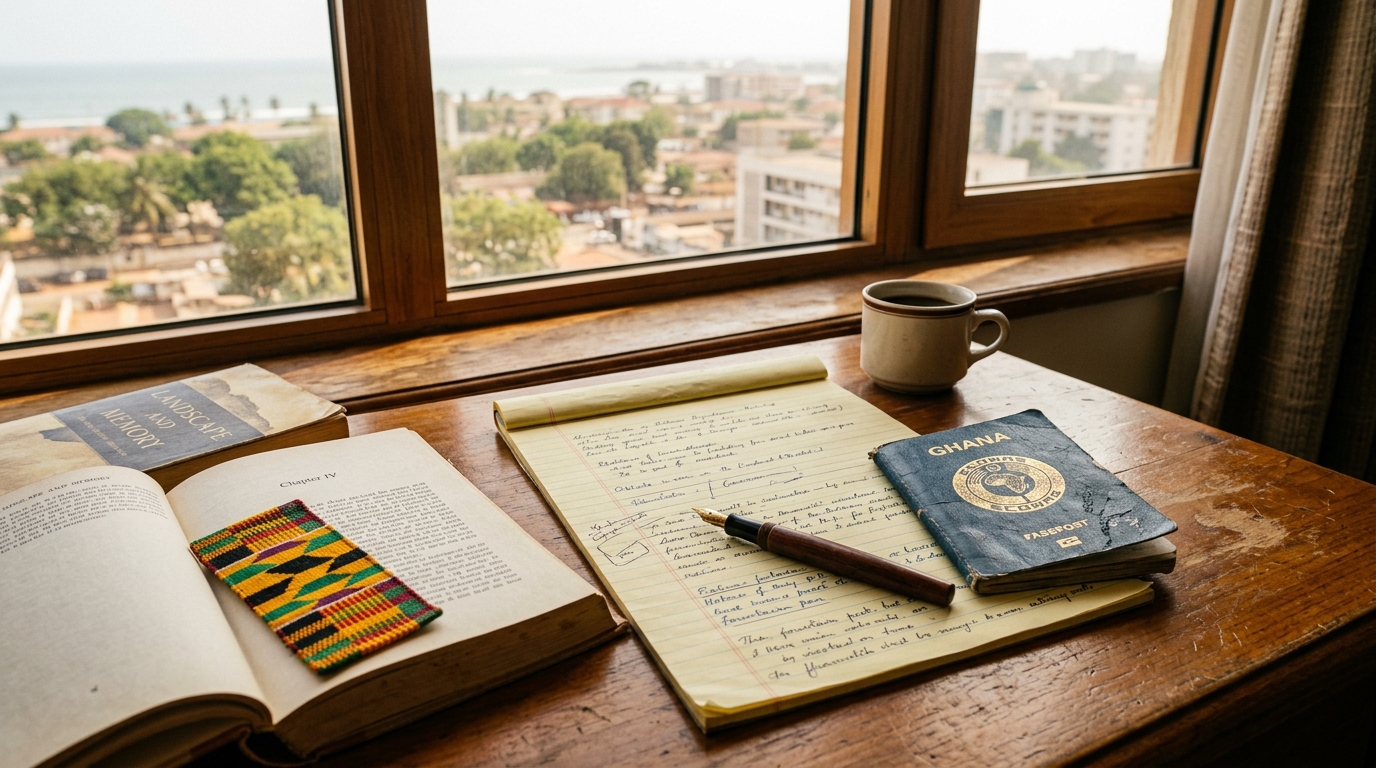
Maya Angelou is the most quoted American voice on travel and understanding, and unlike most names on the inspiration boards, she earned every line on the road. Before I Know Why the Caged Bird Sings made her famous, she had toured 22 countries across Europe with an opera company, edited a newspaper in Cairo, and spent three years living and working in Accra, Ghana, an expatriate chapter she turned into one of the great American travel memoirs. She spoke French, Spanish, Italian, Arabic and Fante, most of it learned in transit. Her travel lines circulate constantly and get sourced almost never; the aggregator sites blend her essays with interview remarks and pin at least one famous quote on her that researchers trace to someone else entirely. This page does it properly. Every Maya Angelou travel quote below is cited to book, year and publisher where it belongs to one, the interview lines are labelled as interview lines, and the five books that hold the journey are here when you want to go deeper than a caption.
Early Life and Roots
Marguerite Annie Johnson was born in St. Louis, Missouri on 4 April 1928 and raised mostly in Stamps, Arkansas, where her grandmother ran the general store that anchors the early chapters of Caged Bird. Her childhood was split by trauma she would later write about with unflinching care, and for almost five years she barely spoke. The silence built the writer: she spent it reading everything in reach, memorising Shakespeare and Dunbar, learning what words could carry. Her first journeys were the forced shuttles of a fractured family, St. Louis to Stamps to San Francisco, and they taught her early that home is a question rather than an address. In wartime San Francisco she became, at 16, the city’s first Black female streetcar conductor, talking her way into a job that did not hire Black women by showing up every day until it did. The pattern was set: doors were not opened for her, so she travelled through them anyway.
Career Milestones and a Life in Motion
Before the books came the stage, and with it the world. In 1954-55 Angelou toured 22 countries through Europe as a dancer and singer in the State Department production of Porgy and Bess, picking up languages in port cities and discovering she could be at home anywhere. She cut the calypso album Miss Calypso in 1957, moved to New York to write, then crossed the Atlantic for the chapter that changed everything: Cairo, where she worked as associate editor of The Arab Observer, and then Accra, Ghana, where from 1962 to 1965 she worked at the university and lived among the Black American expatriates she would immortalise as the Revolutionist Returnees. Home again, she served as northern coordinator for Dr. Martin Luther King Jr.’s Southern Christian Leadership Conference. Then in 1969 came I Know Why the Caged Bird Sings, the first nonfiction bestseller by a Black American woman, and six more autobiographies followed it. She read On the Pulse of Morning at the 1993 presidential inauguration, the first inaugural poet since Robert Frost, and received the Presidential Medal of Freedom in 2011. Her writing ritual stayed portable to the end: a rented hotel room, a legal pad, a deck of cards, and the discipline of a traveller who could work anywhere. She died in Winston-Salem, North Carolina on 28 May 2014.
Maya Angelou’s Best Books and Recommended Works
1. I Know Why the Caged Bird Sings
Best for: First-time Angelou readers and anyone who wants the origin of the voice
The 1969 memoir that changed American autobiography. Stamps, St. Louis and San Francisco through the eyes of a girl who turned silence into the most commanding voice of her generation. The caged bird is the first travel metaphor she ever wrote.
Check Price on Amazon →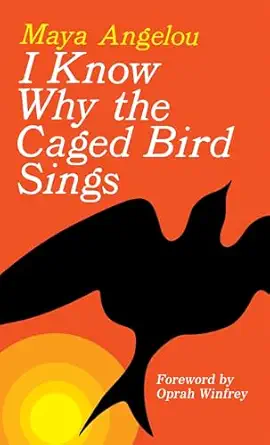
2. All God's Children Need Traveling Shoes
Best for: Travellers, expats, and anyone who has gone looking for home somewhere else
Her years among the Black American expatriates of 1960s Ghana, and the hard, beautiful discovery that no one ever goes home again. One of the great American expat memoirs, and the most travel-native book she wrote. Also on Audible, read by Uzo Aduba.
Check Price on Amazon →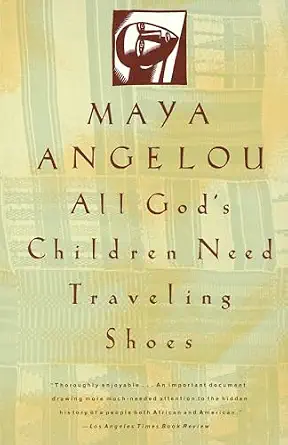
3. Wouldn't Take Nothing for My Journey Now
Best for: Readers who want the wisdom neat, one short essay at a time
The 1993 essay collection where Passports to Understanding lives, which makes it the home of her most famous travel quote. Short, direct pieces on style, faith, complaint and the road. The most giftable book on this page.
Check Price on Amazon →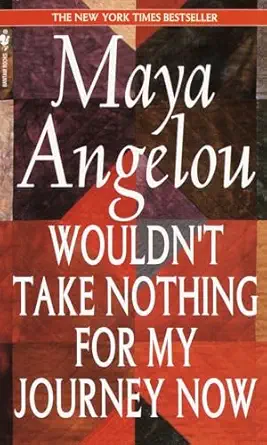
4. The Complete Poetry
Best for: Anyone who met her through Still I Rise and wants the rest
Every poem in one volume, from Phenomenal Woman and And Still I Rise to On the Pulse of Morning, the poem she read at the 1993 inauguration. The travelling rhythm of her prose, distilled.
Check Price on Amazon →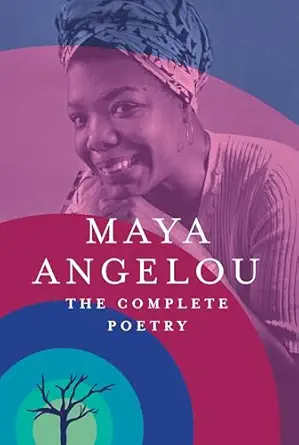
5. Letter to My Daughter
Best for: An afternoon read that distils a lifetime of hard-won lessons
Short essays addressed to the daughter she never had, drawing on Stamps, San Francisco, Africa and everywhere between. The travel lessons arrive folded inside the life lessons, which was always her way.
Check Price on Amazon →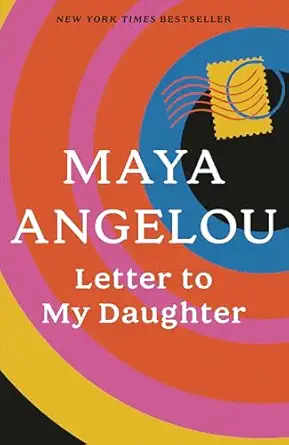
Her Travel Philosophy in Her Own Words
Angelou’s travel philosophy begins where most travel writing is too polite to start: with prejudice. Her most famous line on the subject, from the essay Passports to Understanding in Wouldn’t Take Nothing for My Journey Now (1993), claims less than the inspiration posters do and means more: “Perhaps travel cannot prevent bigotry, but by demonstrating that all peoples cry, laugh, eat, worry, and die, it can introduce the idea that if we try and understand each other, we may even become friends.” Note the honesty of that perhaps. She had crossed too many borders to believe a passport cures anything by itself. What travel offers, in her telling, is evidence, the daily accumulating proof that the human family is one family, and evidence is where friendship gets its chance.
The second thread is home, and she earned her authority on it the hard way. “The ache for home lives in all of us, the safe place where we can go as we are and not be questioned,” she wrote in All God’s Children Need Traveling Shoes (1986), the memoir of her Ghana years. The book is the rare travel story whose destination is the question itself: she went to Africa looking for the home history had taken, and found something harder and truer. “If the heart of Africa still remained elusive, my search for it had brought me closer to understanding myself and other human beings,” she concluded. The journey did not hand her a homeland. It handed her the self that could be at home anywhere, which is the better souvenir.
She put the destination of all that travel most plainly in conversation. “You only are free when you realize you belong no place, you belong every place, no place at all. The price is high. The reward is great,” she told Bill Moyers in a 1973 interview. It is the most radical line in her travel canon, and like Ernest Hemingway in Paris or Jack Kerouac on the road, she paid the price in person before recommending the reward. Belonging everywhere is not issued at birth. It is built, border by border, conversation by conversation, and her whole shelf is the construction record.
Memorable Maya Angelou Quotes by Theme
Travel and Understanding
Perhaps travel cannot prevent bigotry, but by demonstrating that all peoples cry, laugh, eat, worry, and die, it can introduce the idea that if we try and understand each other, we may even become friends.
— Maya Angelou Passports to Understanding, in Wouldn't Take Nothing for My Journey Now (Random House, 1993) Her most famous travel line, usually shared with no source. This is the essay it comes from.
You are the sum total of everything you've ever seen, heard, eaten, smelled, been told, forgot: it's all there.
— Maya Angelou Interview, collected in Conversations with Maya Angelou (1989) An interview remark, not a book line, and we cite it as one. The traveller's case for paying attention.
Home and Belonging
The ache for home lives in all of us, the safe place where we can go as we are and not be questioned.
— Maya Angelou All God's Children Need Traveling Shoes (Random House, 1986) From the Ghana memoir, written by a traveller who went looking for home and found something truer.
You only are free when you realize you belong no place, you belong every place, no place at all. The price is high. The reward is great.
— Maya Angelou Interview with Bill Moyers (1973), collected in Conversations with Maya Angelou An interview line, cited as one. The most radical sentence in her travel canon.
Courage and Change
What you're supposed to do when you don't like a thing is change it. If you can't change it, change the way you think about it. Don't complain.
— Maya Angelou Wouldn't Take Nothing for My Journey Now (Random House, 1993) The verified book form of the change-your-attitude line the internet paraphrases.
If the heart of Africa still remained elusive, my search for it had brought me closer to understanding myself and other human beings.
— Maya Angelou All God's Children Need Traveling Shoes (Random House, 1986) The closing wisdom of the Ghana years: the search remakes the searcher.
A sourcing note, because this page exists to be the accurate one: the most shared quote bearing her name, about people forgetting what you said and did but never forgetting how you made them feel, is one she may never have written. Quote researchers trace the core of it to Carl W. Buehner in 1971, years before it began circulating under Angelou’s byline, so we do not print it as hers. Lines drifting loose from their authors is an occupational hazard of being this quotable, a story we tell in full in the famous misattributed Mark Twain sailing quote investigation.
For the full canon in context, browse the 100 best travel quotes mega-pillar, where the passports line anchors the understanding theme.
Other Voices in Modern Travel Wisdom
Frequently Asked Questions about Maya Angelou
Who was Maya Angelou and what made her famous?
Maya Angelou (1928-2014) was an American poet, memoirist and civil rights activist. She became famous with I Know Why the Caged Bird Sings (1969), the first of seven autobiographies, read “On the Pulse of Morning” at the 1993 presidential inauguration, and received the Presidential Medal of Freedom in 2011.
What is Maya Angelou's most famous travel quote?
“Perhaps travel cannot prevent bigotry, but by demonstrating that all peoples cry, laugh, eat, worry, and die, it can introduce the idea that if we try and understand each other, we may even become friends,” from the essay “Passports to Understanding” in Wouldn’t Take Nothing for My Journey Now (1993).
Did Maya Angelou write a travel book?
Yes. All God’s Children Need Traveling Shoes (1986), the fifth volume of her autobiography, covers her years living among Black American expatriates in Ghana in the early 1960s. It is widely considered one of the great American expat memoirs.
Where did Maya Angelou live and travel?
Beyond the United States she toured 22 countries across Europe with the opera Porgy and Bess in 1954-55, worked in Cairo as associate editor of The Arab Observer, and spent three years in Accra, Ghana. She spoke French, Spanish, Italian, Arabic and Fante.
What are Maya Angelou's best books?
Start with I Know Why the Caged Bird Sings, then All God’s Children Need Traveling Shoes for the travel years, Wouldn’t Take Nothing for My Journey Now for the essays, The Complete Poetry for the poems, and Letter to My Daughter for the distilled life lessons.
Angelou’s Lasting Legacy for Travellers
Angelou’s gift to travellers is the deepest one in this library: she redefined what the trip is for. Not escape, not collection, but evidence, the patient accumulation of proof that all peoples cry, laugh, eat, worry and die, and that you can belong every place once you stop demanding the world issue you a single home. She crossed oceans to learn it and spent fifty years writing it down. If you read one of her books, make it I Know Why the Caged Bird Sings. If you travel with one, make it All God’s Children Need Traveling Shoes. And for more travel wisdom with its sources intact, browse the 100 best travel quotes or the rest of our author bio library.