
J.R.R. Tolkien: Travel Quotes, Best Books, and the Truth About 'Not All Those Who Wander Are Lost'
Verified J.R.R. Tolkien travel quotes sourced to book and chapter, the five books behind them, and the real meaning of the most quoted travel line in English.

J.R.R. Tolkien never wrote a travel book, and he still wrote the most quoted travel line in English. “Not all those who wander are lost” sits on more backpacks, vanboards and departure-lounge tattoos than any sentence by an actual travel writer, and almost everyone using it has the meaning backwards. Tolkien was an Oxford philologist who left England a handful of times in his life, yet The Hobbit (1937) and The Lord of the Rings (1954-55) are, at their bones, the two great journey stories of the twentieth century: the going out, the road that costs you something, the coming home changed. That is why his lines keep ending up next to Mark Twain and Robert Louis Stevenson in every serious collection of travel writing. This page does what the quote graphics will not: every Tolkien travel quote below is sourced to book, chapter and year, the famous line gets its real context back, and the five books that earned all of it are here when you want to read deeper.
Early Life and Roots
John Ronald Reuel Tolkien was born in Bloemfontein, in what was then the Orange Free State, on 3 January 1892, and his first journey was the one that shaped everything: shipped to England at three for his health, he never saw his father again. He grew up around Sarehole Mill on the rural edge of Birmingham, a landscape of hedgerows, millponds and one very good tree that readers of the Shire chapters will recognise instantly. Orphaned at twelve, raised under the guardianship of a Catholic priest, he went up to Oxford on a scholarship and fell into the study that became his life: philology, the archaeology of words. Then came the war. Tolkien served as a signals officer at the Somme in 1916, lost two of his closest friends in the space of months, and was invalided home with trench fever. He said later that the dead marshes and the approaches to Mordor owed something to northern France. The biographical shape matters for everything he wrote about journeys: the man who gave English its most famous wandering line knew exactly what it cost to leave home, and what it meant when you could not go back to the version of home you left.
Career Milestones and Travel Writing
The public career starts with a blank exam page. Marking papers in the summer of 1930 or thereabouts, Tolkien wrote a sentence that arrived from nowhere: “In a hole in the ground there lived a hobbit.” The Hobbit (George Allen & Unwin, 1937) grew from that line into the cleanest there-and-back-again travel arc in fiction, a homebody dragged onto the road who returns with better stories and worse manners. The publisher asked for more hobbits; what they got, seventeen years later, was The Lord of the Rings (1954-55), the fellowship-on-the-road epic he composed in longhand around a full Oxford teaching load as Rawlinson and Bosworth Professor of Anglo-Saxon and later Merton Professor of English. The mythology behind both books, the work he considered his real life’s project, appeared posthumously as The Silmarillion (1977), edited by his son Christopher. Tolkien himself travelled modestly: a formative walking tour of the Swiss Alps in 1911 that he later said walked straight into Bilbo’s Misty Mountains crossing, holidays in Cornwall and Ireland, and a happy late-life trip to Italy. He died in Bournemouth on 2 September 1973. The road goes ever on; he mostly watched it from a study window, and described it better than the people on it.
J.R.R. Tolkien’s Best Books and Recommended Works
1. The Hobbit
Best for: Readers who want the cleanest journey-there-and-back-again arc in fiction
The 1937 original. A comfortable homebody gets talked onto the road, suffers, improvises, and comes home permanently changed. The single best fictional argument for travel as transformation, and the book where “the Road goes ever on and on” first appears.
Check Price on Amazon →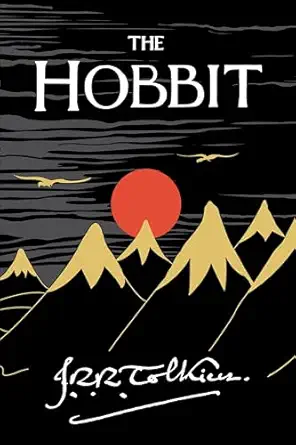
2. The Lord of the Rings (3-Book Paperback Box Set)
Best for: Readers who want the wander poem in its real context
The fellowship-on-the-road epic, seventeen years in the writing. Companions, weather, geography that feels walked rather than invented, and the burden of going on when you would rather stop. Book I, Chapter 10 is where “Not all those who wander are lost” actually lives.
Check Price on Amazon →
3. The Silmarillion (Illustrated by J.R.R. Tolkien)
Best for: Readers who want the cosmology behind the wandering
The mythological backdrop to everything, published posthumously in 1977 and edited by Christopher Tolkien. This edition carries Tolkien’s own paintings and maps. For the traveller-reader, it is where the geography of Middle-earth gets its deep history.
Check Price on Amazon →
4. The Letters of J.R.R. Tolkien (Revised and Expanded Edition)
Best for: Readers who want Tolkien explaining what he actually meant
Where Tolkien talks back. Letter 144 discusses Aragorn and the purpose hidden inside his wandering years, which makes this the primary source for the correction this page exists to make. The revised edition adds roughly 150 letters to the 1981 original.
Check Price on Amazon →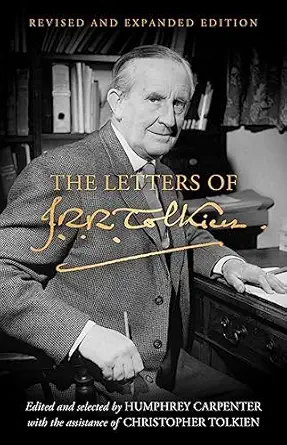
5. The Atlas of Middle-Earth by Karen Wynn Fonstad (Revised Edition)
Best for: The traveller-reader who wants to follow every league of the journeys
The companion every Tolkien reader eventually buys. Fonstad, a professional cartographer, mapped every journey in the books with distances and day counts. Maps as the geography of inner journey, and proof of how carefully Tolkien made his roads walkable.
Check Price on Amazon →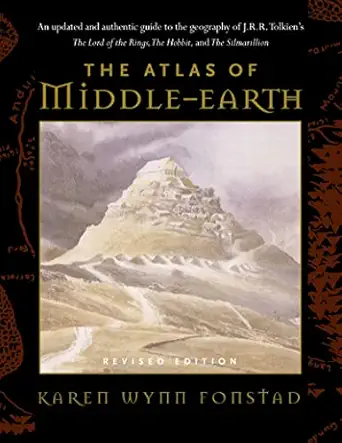
Tolkien’s Travel Philosophy in His Own Words
Tolkien’s travel philosophy starts at the front door, and it starts with respect for what the door is holding back. The line he gives Frodo, remembering Bilbo’s warning, is the whole posture: “It’s a dangerous business, Frodo, going out your door. You step onto the road, and if you don’t keep your feet, there’s no knowing where you might be swept off to.” (The Fellowship of the Ring, Book I, Chapter 3, 1954). Most travel writing sells the road as freedom. Tolkien sells it as a current: step in and you surrender some control over where you end up. That is not a warning against going. It is a warning against pretending the going is safe.
The second movement is the pull. In The Hobbit (1937), respectable Bilbo Baggins hears the dwarves sing about mountains and something gives way: “Then something Tookish woke up inside him, and he wished to go and see the great mountains, and hear the pine-trees and the waterfalls.” Every traveller recognises the moment. And once you are out, the road has its own grammar of possibility: “Still round the corner there may wait / A new road or a secret gate” (A Walking Song, The Fellowship of the Ring, Book I, Chapter 3). Gildor the elf supplies the version for people who think they can opt out entirely: “The wide world is all about you: you can fence yourselves in, but you cannot for ever fence it out.” (same chapter). Staying home, in Tolkien, is not neutral. The world comes for the Shire anyway.
The third movement is the one the quote graphics always miss: home. “Home is behind, the world ahead, / And there are many paths to tread” runs the walking song, but the song is sung by hobbits whose entire journey is an attempt to earn the right to go back. The road in Tolkien is not an escape from home; it is the thing that teaches you what home was. Bilbo returns to Bag End changed and slightly disreputable. Frodo returns and finds he can no longer stay. Between those two homecomings sits everything honest that has ever been written about long travel, and Tolkien got there decades before the gap-year memoir was invented.
Memorable J.R.R. Tolkien Travel Quotes by Theme
The Road and the Call to Adventure
The Road goes ever on and on, down from the door where it began. Now far ahead the Road has gone, and I must follow, if I can.
— J.R.R. Tolkien The Hobbit (George Allen and Unwin, 1937); reprised in The Fellowship of the Ring (1954) Bilbo's walking song, the oldest road-tune in the legendarium.
It's a dangerous business, Frodo, going out your door. You step onto the road, and if you don't keep your feet, there's no knowing where you might be swept off to.
— J.R.R. Tolkien The Fellowship of the Ring, Book I, Chapter 3 (George Allen and Unwin, 1954) Frodo, recalling Bilbo's warning about the road.
For more lines in this vein, browse our adventure and exploration quotes guide, where Tolkien’s road songs sit alongside the explorers and mountaineers who took the literal version of his advice.
Wandering With Purpose
All that is gold does not glitter, / Not all those who wander are lost; / The old that is strong does not wither, / Deep roots are not reached by the frost.
— J.R.R. Tolkien The Fellowship of the Ring, Book I, Chapter 10 (George Allen and Unwin, 1954) Bilbo's poem about Aragorn, sent in Gandalf's letter to Frodo. Context below.
The wide world is all about you: you can fence yourselves in, but you cannot for ever fence it out.
— J.R.R. Tolkien The Fellowship of the Ring, Book I, Chapter 3 (George Allen and Unwin, 1954) Gildor Inglorion to Frodo, on the limits of staying home.
Purposeful solo wandering has its own shelf. See our solo travel quotes guide, where the Aragorn poem keeps company with writers who wandered alone on actual roads.
‘Not All Those Who Wander Are Lost’: The Context Most People Miss
Here is the correction this page exists to make. The line is not a standalone travel motto, and Tolkien did not write it about you, or about travel. It is the second line of a riddle-poem Bilbo wrote about one specific person: Aragorn, the exiled king living rough as the ranger Strider. Gandalf includes the poem in a letter so Frodo can recognise a dangerous-looking stranger in an inn as a friend. Every line describes Aragorn’s hidden identity: the gold that does not glitter is the king in muddy boots, and the wandering that is not lost is deliberate, decades-long, purpose-soaked exile. Tolkien confirms the reading in his letters, where he discusses Aragorn’s long preparation for kingship (The Letters of J.R.R. Tolkien, Letter 144). The poem’s own Wikipedia article documents how thoroughly the internet has stripped that context.
Does the misreading matter? For a bumper sticker, no. For understanding Tolkien, completely. Read as a travel motto, the line flatters aimlessness. Read in context, it makes a harder and better claim: that some people who look like drifters are running on deeper navigation than the people judging them. That version survives contact with real travel, and real life, far better than the Instagram version. It is the same pattern we document with the famous misattributed Mark Twain sailing quote: the internet does not just misattribute quotes, it sands the meaning off the real ones. Quote the line proudly. Just know it is a compliment to purposeful wanderers, not a permission slip for lost ones.
Home is behind, the world ahead, / And there are many paths to tread.
— J.R.R. Tolkien A Walking Song, The Fellowship of the Ring, Book I, Chapter 3 (George Allen and Unwin, 1954) Sung by hobbits whose whole journey is about earning the way back.
For the full canon in context, browse the 100 best travel quotes mega-pillar, where Tolkien’s road songs anchor the adventure theme.
Other Voices in Classic Travel Literature
Frequently Asked Questions about J.R.R. Tolkien
Who was J.R.R. Tolkien and what made him famous?
John Ronald Reuel Tolkien (1892 to 1973) was an English writer, philologist and Oxford professor, best known for The Hobbit (1937) and The Lord of the Rings (1954-55). He created the most influential fictional world in twentieth-century literature, with journeys and the road at its centre, and effectively founded modern fantasy as a genre.
What does 'Not all those who wander are lost' actually mean?
It is the second line of a poem Bilbo wrote about Aragorn, delivered in Gandalf’s letter to Frodo in The Fellowship of the Ring (Book I, Chapter 10). The wandering it describes is Aragorn’s deliberate, identity-concealing exile as the ranger Strider, decades of preparation for kingship. It is a compliment to purposeful wanderers, not a generic endorsement of aimless travel.
What are Tolkien's best travel-themed books?
The Hobbit (1937) is the cleanest journey-there-and-back arc in fiction. The Lord of the Rings (1954-55) is the fellowship-on-the-road epic, and where the wander poem lives in context. The Letters of J.R.R. Tolkien contains his own commentary, including Letter 144 on Aragorn. Fonstad’s Atlas of Middle-Earth maps every journey in the books.
What is Tolkien's most famous travel quote?
“Not all those who wander are lost” is the most quoted, from The Fellowship of the Ring (1954). “It’s a dangerous business, Frodo, going out your door” is the one travellers actually paraphrase, from the same book. Both are routinely shared without their context.
How can I read more from Tolkien?
Start with The Hobbit for the travel arc, then The Fellowship of the Ring for the road poem in context, then The Letters of J.R.R. Tolkien for the author explaining himself. The Tolkien Estate (tolkienestate.com) and the Tolkien Society (tolkiensociety.org) are the official primary sources.
Tolkien’s Lasting Legacy for Travellers
Tolkien’s gift to travellers was not a quote you can cross-stitch onto a cushion. It was a 1,200-page argument that the road remakes whoever walks it, and that some wandering only looks aimless from the outside. The famous line endures because it names something true about purposeful people, which is exactly why it deserves better than life as a generic caption. If you read one Tolkien book for the journey, make it The Hobbit. For the wander line in its true context, The Letters of J.R.R. Tolkien is the primary source. And for more travel wisdom that survives a fact-check, browse the 100 best travel quotes or sit with our adventure and exploration quotes.